Thanks for reading The Briefing, our nightly column where we break down the day’s news. If you like what you see, I encourage you to subscribe to our reporting here.
Greetings!
To a casual observer, OpenAI and Anthropic might have appeared—until recently—to be the Uber and Lyft of the AI world, with Anthropic the distant rival to the dominant OpenAI. That feels to be less the case nowadays. In fact, Anthropic—with its disciplined focus on serving businesses and expectations it will turn a profit several years before OpenAI does—is starting to look like a surer bet. Anthropic CEO Dario Amodei’s appearance at The New York Times’ DealBook summit on Wednesday demonstrated why. Amodei came across as thoughtful in his approach to risk management, unlike an unnamed other person who, as Amodei put it, “constitutionally just wants to YOLO things.” (For more on the contrast between the two, check out this article.)
YOLO is the perfect description of OpenAI CEO Sam Altman’s growth strategy. The latest example was Thursday’s Wall Street Journal report that Altman had explored the idea of OpenAI buying control of a rocket company. Why stop at rockets? What about cars? Consider that in the past couple of years, Altman has expanded OpenAI’s purview from running the hugely popular ChatGPT to include designing its own chip, building data centers, designing AI-specific devices, developing hardware and software for robots, expanding ChatGPT into shopping, launching a web browser and a search engine, investing in a company affiliated with one of his main backers, Thrive, and partnering with a bunch of other companies to make ChatGPT a kind of superapp.
All this comes before OpenAI gets anywhere close to making money or finding a way to pay for the $1.4 trillion in commitments it has taken on to get enough computing capacity to run ChatGPT as it grows. It seems predictable, then, that as part of the “code red” Altman declared this week to fight an ascendant Google, he said OpenAI would delay some initiatives, as my colleagues reported.
If OpenAI investors are lucky, this code red will prove a permanent shift in strategy, where Altman decides to narrow his focus to the most important priorities, such as ensuring that ChatGPT retains its technological edge and gets to profitability sooner. That would mean ditching some of his more blue-sky projects (such as the devices). But there’s also a possibility that Altman is, to use Amodei’s word, constitutionally incapable of carrying out anything other than a YOLO-based strategy. If that’s the case, Altman might be better as OpenAI’s chair, in the role of thinking about the future, while someone with their feet on the ground actually runs the company. Perhaps OpenAI needs its own Dario Amodei.
Meta Rethinks Reality (Labs)
Meta Platforms is considering cutting as much as 30% of the employees in the Metaverse unit of its Reality Labs division, according to reports in The New York Times and Bloomberg on Thursday. After losing nearly $80 billion on Reality Labs in the past five years, it seems Meta CEO Mark Zuckerberg is pulling back—a bit.
The Times report cautioned that he wasn’t pulling back on the metaverse (of course not!). But given that he is spending tens of billions on AI, cutting costs elsewhere seems prudent. Meta stock, which has been on the outs on Wall Street lately, rose 3.4% on news of the coming cuts. Investors do like layoffs.
Last week, Gap Inc. launched a chatbot to field product-related questions from Gap.com visitors, but the chatbot ended up discussing topics that fell outside the scope of questions it was supposed to handle, including intimacy products, sex toys, and Nazi Germany, according to a person with knowledge of the matter. The Information reproduced some of the results Thursday.
Enterprise AI startup Sierra, privately valued at $10 billion, powered the chatbot for Gap. Rachel Whetstone, head of communications at Sierra, which was co-founded by former Salesforce co-CEO Bret Taylor, said the issue stemmed from a coordinated effort to trick its customers’ chatbots to respond to inappropriate questions.
“Since last week, a bad actor has been attempting to maliciously jailbreak over a dozen of our customers’ AI agents,” Whetstone said in a statement. “There have been multiple attempts, and it appears our built-in abuse detection system has intercepted all of them except for Gap, where we’d inadvertently misconfigured the agent’s guardrails. These controls have now been properly configured, and the agent remains live. We sincerely apologize to Gap.”
It isn’t clear how many Gap customers engaged in off-color topics with the assistant, and Gap spokespeople didn’t respond to requests for comment.—Kevin McLaughlin
In Other News
• Amazon is negotiating its future relationship with the U.S. Postal Service, the company confirmed, although the company denied a Washington Post report that it was considering ending its contract with the USPS in favor of its own delivery service.
• Nvidia said one of its most powerful AI servers, which enables 72 chips to work in unison, can boost the performance of some of the world’s top open-source AI models by a factor of 10.
• Apple said general counsel Kate Adams and Lisa Jackson, vice president of environment, policy and social initiatives would both retire in the coming months. More here.
Today on The Information’s TITV
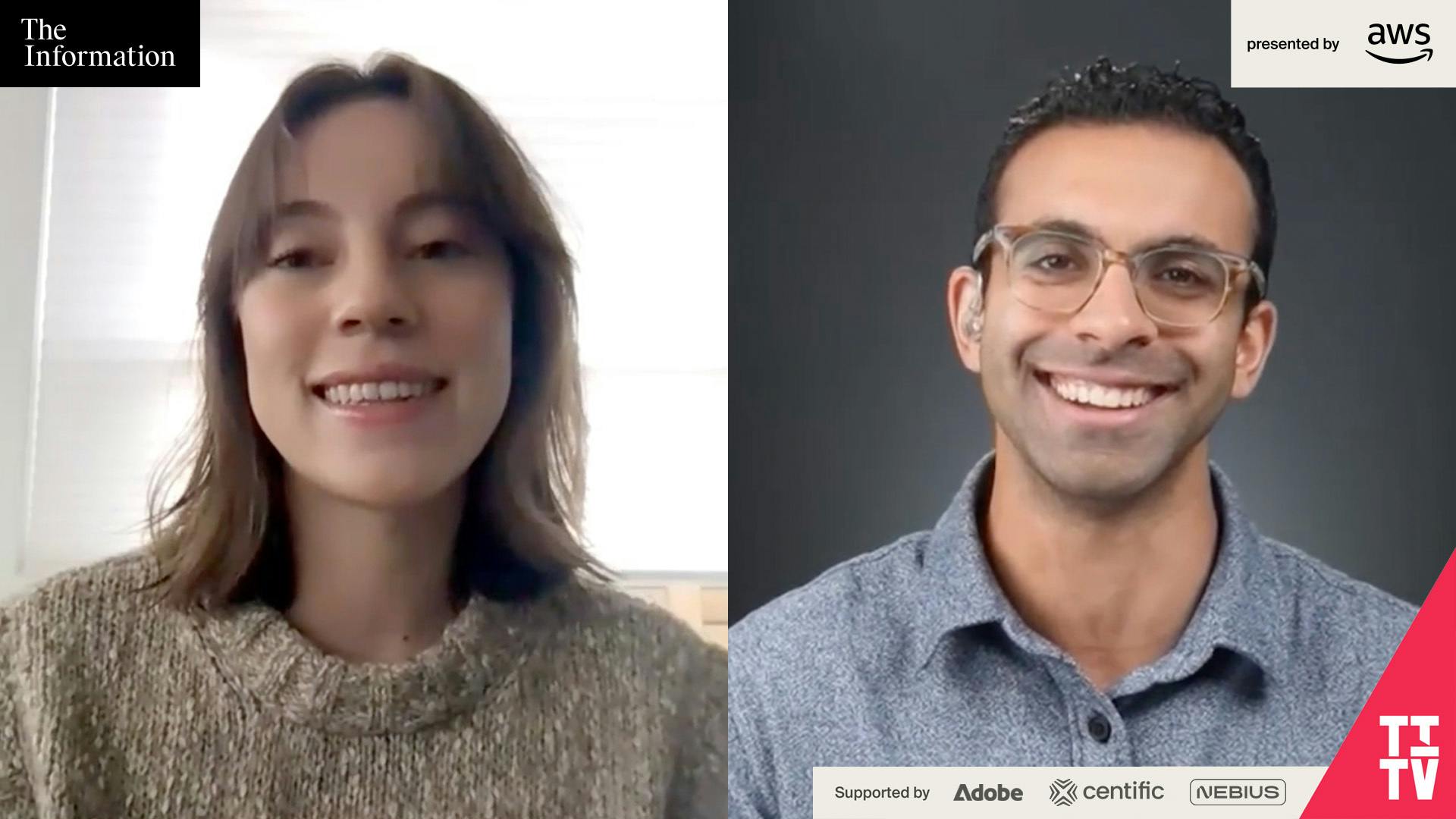
Check out our latest episode of TITV in which Akash speaks with AI reporter Stephanie Palazzolo about OpenAI’s forthcoming Garlic model.
Recommended Newsletter
Start your day with Applied AI, the newsletter from The Information that uncovers how leading businesses are leveraging AI to automate tasks across the board. Subscribe now for free to get it delivered straight to your inbox twice a week.
Join The Information’s Kevin McLaughlin and executives from Atlassian and Eliza for an inside look at how companies are successfully driving AI adoption and seeing real results.