| | In today’s edition: Trump hopes as US tour will help sell his economic agenda to Americans, and SCOT͏ ͏ ͏ ͏ ͏ ͏ |
| |  | Washington, DC |  |
| |
|
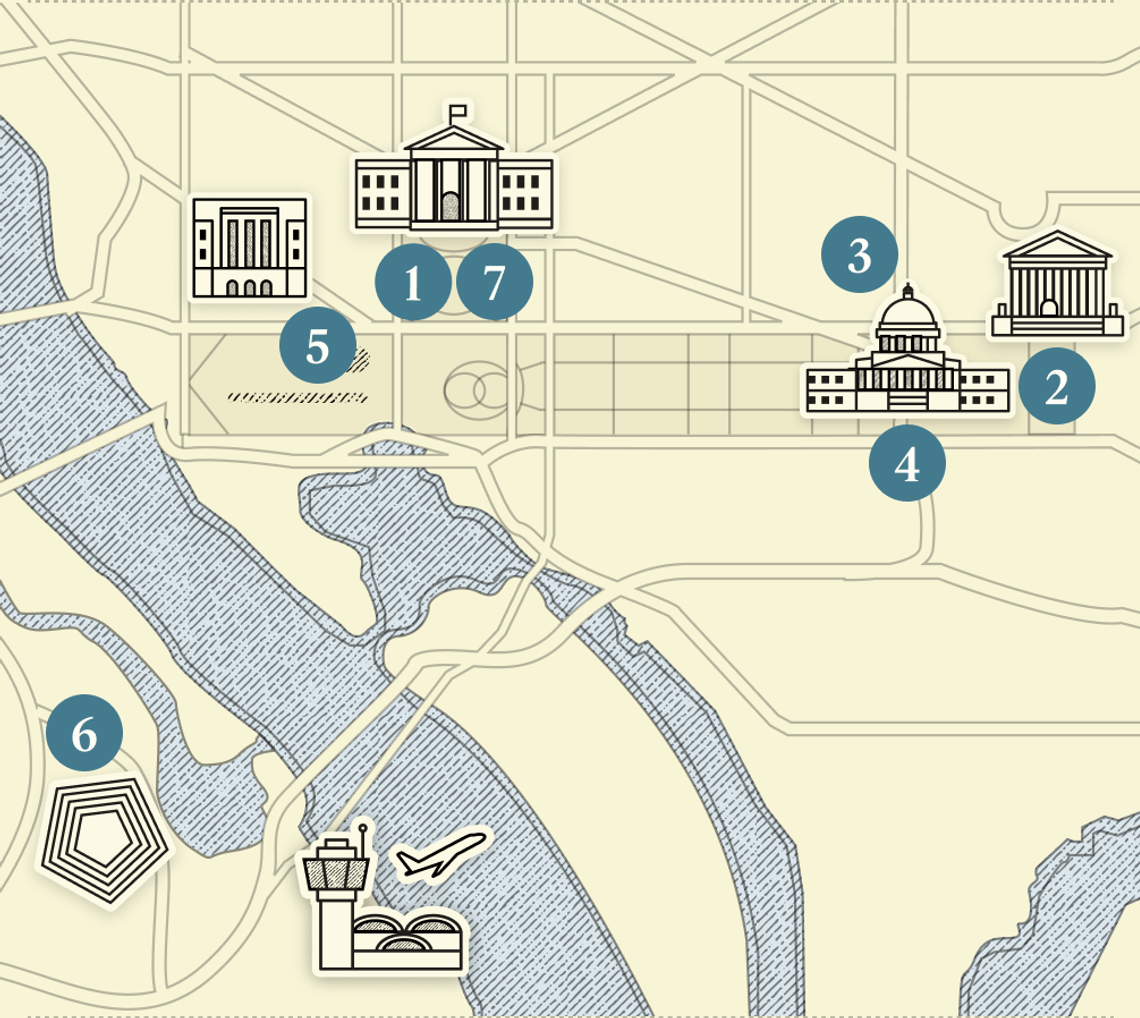 - GOP’s economic pitch
- Texas gets its maps
- H-1B visa scrutiny
- Health care dealmaking?
- Inflation report eyed
- Caribbean strike divides Hill
- Natsec strategy released
PDB: US to ban travel from more than 30 countries  Trump, Carney, Sheinbaum to meet on sidelines of FIFA draw … Vaccine panel takes delayed vote on hepatitis B shot … Netflix closing in on deal for Warner Bros. |
|
Republicans stuck in economic muddle |
 Kevin Lamarque/Reuters Kevin Lamarque/ReutersThe Trump White House hopes to improve Americans’ faith in the economy with a new sales pitch for this year’s major economic legislation — and maybe try for a sequel, Semafor’s Shelby Talcott and Burgess Everett report. The bill was supposed to be the centerpiece of Republicans’ 2026 midterm campaign, but the administration now wants to educate voters heading into the midterms, with President Donald Trump planning more domestic travel to discuss the economy. “There is a substantial lack of knowledge amongst the public” about what was in the bill, an administration official told Semafor. Meanwhile, the party still isn’t sure what to do next on health care, and there’s debate over whether to attempt a second megabill. “I don’t expect my Democratic colleagues to stick their neck out and join with us when we don’t have a consensus on our side,” Sen. John Kennedy, R-La., told Semafor. |
|
SCOTUS boosts GOP with Texas map ruling |
 Hannah McKay/Reuters Hannah McKay/ReutersThe Supreme Court’s decision to let Texas redraw its congressional maps for 2026 hands a clear victory to Trump and Republicans, who now stand to gain five safer US House seats — and have better prospects of hanging onto the majority. The court’s three liberal justices dissented from the decision, which clears the way for an unprecedented mid-decade redistricting that happened at the behest of the White House. A federal judicial panel in the state struck down the maps last month. Several Texas candidates had already started running without clarity on the maps, while others were eyeing a final decision as they planned their futures. The decision promises to shake up redistricting discussions in other states; one Virginia state senator posted on X that “I got something waiting for Texas.” |
|
Dem questions Trump admin on H-1B visas |
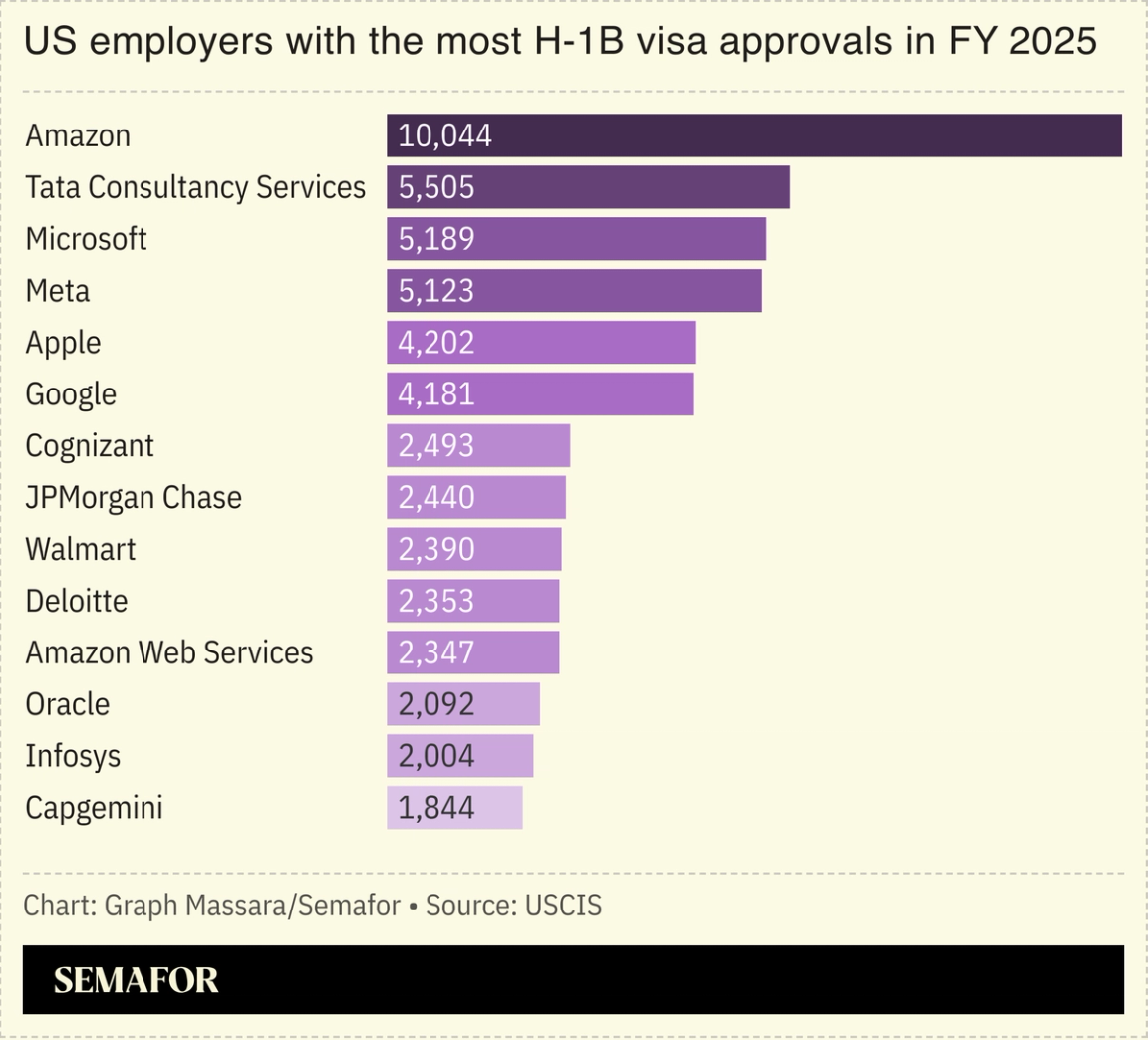 A potential 2028 Democratic presidential contender is aligning — in broad strokes — with Trump’s skepticism of the high-skilled worker visa program. Sen. Ruben Gallego, D-Ariz., urged the Trump administration to step up oversight of H-1B visas, accusing big tech companies of abusing the program by hiring foreign workers while laying off American workers. In a letter sent this week and shared first with Semafor, Gallego didn’t call out particular companies but described a “concerning trend in the technology and banking sectors,” suggesting the program is being used to “undercut or replace” American employees. The letter inquires about the administration’s push earlier this year to step up H-1B enforcement. Assistant Attorney Gen. Harmeet Dhillon said in a statement that the department’s civil rights division is “currently investigating some of the largest tech companies in America to determine if they’re complying with federal law.” — Morgan Chalfant |
|
Collins pitches ACA subsidy compromise |
 Kylie Cooper/Reuters Kylie Cooper/ReutersSenate Republicans will block Democrats’ straight extension of expiring Obamacare subsidies next week. What could Republicans get behind instead? Sen. Susan Collins, R-Maine, is pitching a two-year package that would include a $200,000 income cap and eliminate zero-dollar premium packages. She said she’s talked to Democrats about it, calling the cap “very generous.” But would enough Republicans support her plan? Sen. Kevin Cramer, R-N.D., said he’s “certainly open to it” and it “might be the sweet spot.” But Sen. John Cornyn, R-Texas, said at this point he’s “not for any extension of the expiring Biden-era bonus subsidies.” In other words, Republicans can give up on the idea of health care unity. Rather than starting with a bill all Republicans support, Cramer suggested dealmakers should try and assemble a coalition of an equal number of senators from each party to move forward. — Burgess Everett |
|
Inflation report to help Fed chart course |
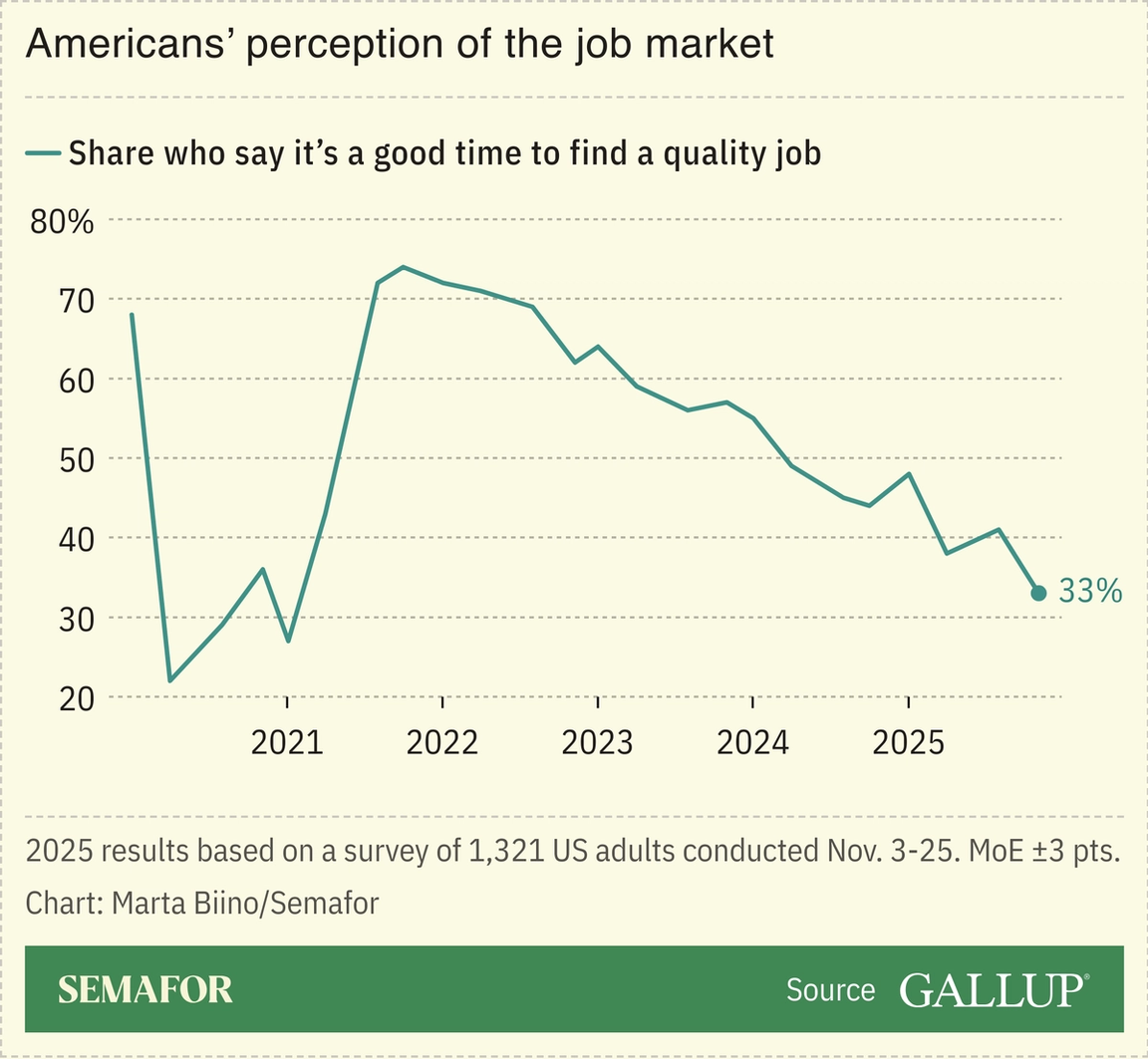 The federal government’s release of a delayed inflation report today will help chart the course for the Federal Reserve as it decides on a rate cut next week. The personal consumption expenditures price index — the Fed’s preferred inflation gauge — will come out this morning, providing the first look at the measure since late September (it was delayed amid the government shutdown). Economists expect a reading of 2.8%, per Barron’s. The central bank has had limited government data on the labor market, too, and private-sector reports have helped fill the gap. A recent ADP report showing payrolls declined in November heightened expectations for a rate cut. At this point, investors are all but certain the Fed will cut at its final meeting of 2025 — and will react badly to any surprise. |
|
Lawmakers divided over boat strikes |
 Evelyn Hockstein/Reuters Evelyn Hockstein/ReutersLawmakers are divided along party lines over the Trump administration’s strikes on alleged drug boats in Latin America. Gen. Dan Caine, chairman of the Joint Chiefs of Staff, and Navy Adm. Frank Bradley briefed lawmakers on Thursday and showed them a full video of a double strike in the Caribbean, including a second strike after survivors were spotted. Sen. Jack Reed, the top Democrat on the Senate Armed Services Committee, said he was “deeply disturbed,” while Rep. Jim Himes, the top Democrat on the House Intelligence Committee, called it “one of the most troubling things I’ve seen in my time in public service.” Republicans like Senate Intelligence Committee Chair Tom Cotton disputed those characterizations. Lawmakers also said that Bradley said he had not been ordered to leave no survivors. That could help Defense Secretary Pete Hegseth, who is facing blowback but retains Trump’s backing. — Shelby Talcott |
|
White House publishes security blueprint |
 Marco Bello/Reuters Marco Bello/ReutersThe Trump administration will prioritize deployments in the Western hemisphere to battle drug trafficking and migration, the White House said in a landmark strategy paper that was quietly published overnight. The long-awaited national security strategy falls short of the tough rhetoric against China that hawks in Washington have called for — its release was reportedly delayed by a push to soften language about Beijing. Criticism of Russia over its invasion of Ukraine is also muted, though ostensible allies in Europe are lambasted for censorship and lax migration policies. Still, as Politico’s senior foreign affairs correspondent noted, “Trump is mercurial by nature, so it’s hard to predict how closely or how long he will stick to the ideas laid out.” |
|
 In Washington, economic power no longer follows party lines. The old frameworks — left vs. right, House vs. Senate, Republican vs. Democrat — no longer fully explain how economic power moves in the Capitol. Today’s influence moves through a wide network, from traditional power brokers to ideological outliers, dealmakers, and policy entrepreneurs. Join us Dec. 10 for one-on-one conversations with leaders including Sen. Josh Hawley (R–Mo.), Rep. Suzan DelBene (D-Wash.), and Sen. Mark Warner (D–Va.), as we map the people moving capital, shaping policy, and redrawing the blueprint of economic power. Dec. 10 | Washington, DC | Request Invitation |
|
Debatable: State-level AI regulations |
 A push by the White House to block states from regulating artificial intelligence set off a fierce debate in the Republican Party this week. House Republicans ultimately failed to attach the controversial ban on state-level AI rules to annual defense policy legislation, but the battle isn’t over. Trump is among those taking the side of industry, which doesn’t want to navigate a labyrinth of state laws. Others in the GOP warn of federal overreach. “While there should be a national standard that is a floor that allows AI to pursue the extent of its civilian capabilities, I think we also want to allow states that want to go further to do so,” Sen. Cynthia Lummis, R-Wyo., told Semafor. Meanwhile, Nathan Leamer of the industry-aligned Build American AI group said that a patchwork of state regulations is a “disaster for our economy.” |
|
 Beltway NewslettersPunchbowl News: “We’re trying to go through the concerns that our members have and hoping we can land something soon,” Senate Majority Leader John Thune said of struggles to achieve Republican consensus on the 2026 funding package. Playbook: The Democratic Governors Association is set to vote on its new vice chair Saturday, with Michigan Gov. Gretchen Whitmer expected to secure the nomination. Axios: Impact, a new online fundraising platform whose leaders include a Trump 2024 adviser, is going head-to-head with current leader WinRed in the battle to process GOP dollars. WaPo: Soccer governing body FIFA has mounted an extensive charm offensive to win over President Trump, including arranging for one of Trump’s favorite bands, the Village People, to perform at the World Cup draw today. White House- President Trump is eyeing an announcement before Christmas about the next phase of the Israel-Hamas peace deal and plans to outline a
|
|
|


