Policy changes, but facts endure. AP delivers accurate, fact-based journalism to keep the world informed in every administration. Support independent reporting today. Donate.
|
|
|
In the news today: The Supreme Court is allowing next year’s elections to be held under Texas’s congressional redistricting plan, favorable to the GOP and pushed by President Donald Trump; a video is revealed in Luigi Mangione’s murder case; and how the next Olympic drug crisis could be coming through the mail. Also, why police had to wait almost a week to recover a stolen Fabergé pendant. |
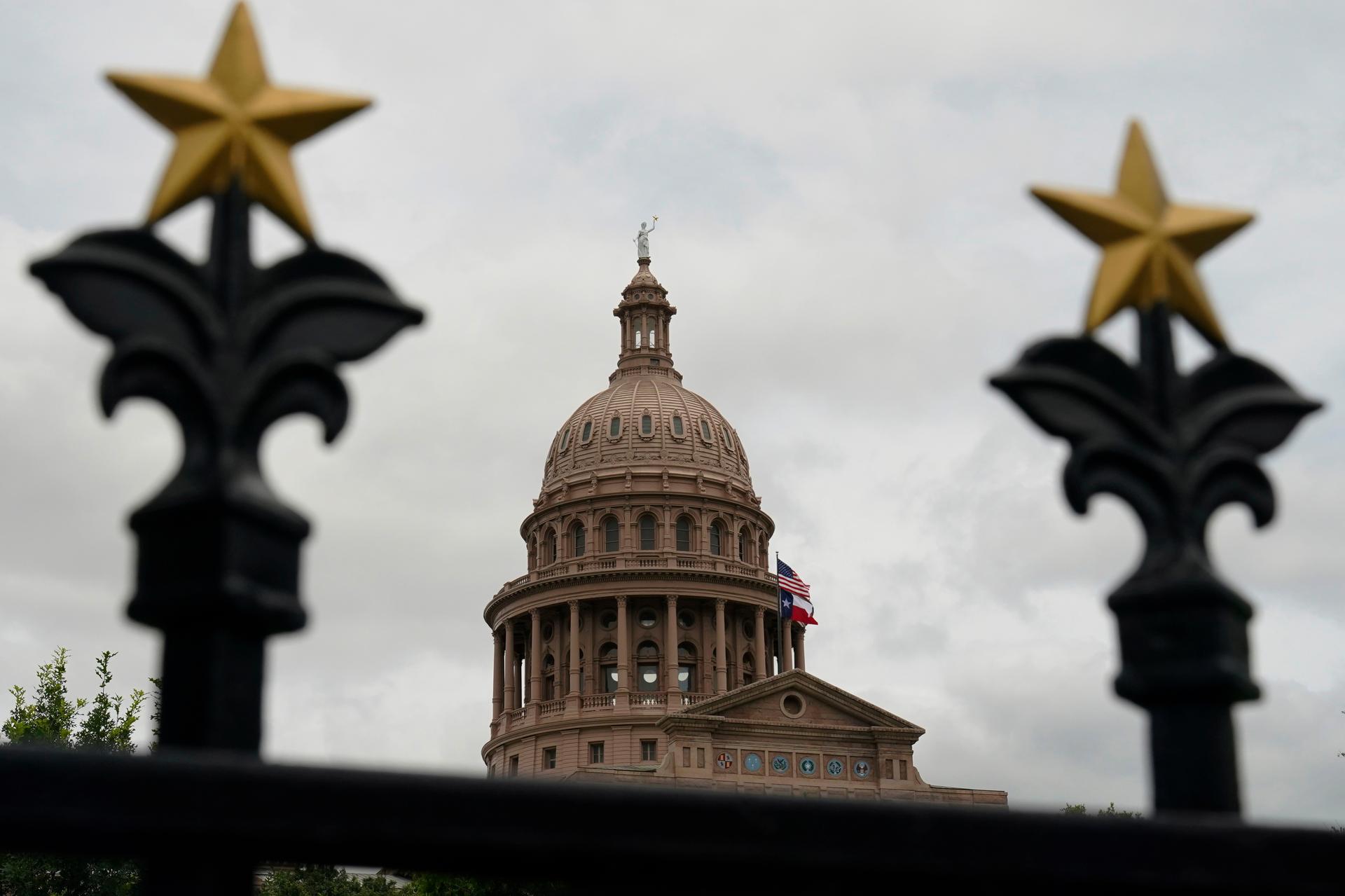
The State Capitol is seen in Austin, Texas, 2021. (AP Photo/Eric Gay, File) |
Supreme Court allows Texas to use a congressional map favorable to Republicans in 2026
|
A divided Supreme Court on Thursday came to the rescue of Texas Republicans, allowing next year’s elections to be held under the state’s congressional redistricting plan favorable to the GOP and pushed by President Donald Trump despite a lower-court ruling that the map likely discriminates on the basis of race. Read more.
|
|
|
The Supreme Court’s order puts the lower court’s 2-1 ruling blocking the map on hold at least until after the high court issues a final decision in the case. Justice Samuel Alito had previously temporarily blocked the order while the full court considered the Texas appeal. The justices cast doubt on the lower-court finding that race played a role in the new map, saying in an unsigned statement that Texas lawmakers had “avowedly partisan goals.”
In dissent, Justice Elena Kagan wrote for the three liberal justices that her colleagues should not have intervened at this point. Doing so, she wrote, “ensures that many Texas citizens, for no good reason, will be placed in electoral districts because of their race. And that result, as this Court has pronounced year in and year out, is a violation of the Constitution.” The high court’s vote “is a green light for there to be even more re-redistricting, and a strong message to lower courts to butt out,” Richard Hasen, an election law expert at the University of California at Los Angeles law school, wrote on the Election Law Blog.
|
|
|
Police video shows Luigi Mangione said he didn't want to talk. They kept asking questions
|
Minutes after police approached Luigi Mangione in a Pennsylvania McDonald’s, he told an officer he didn't want to talk, according to video and testimony at a court hearing Thursday for the man charged with killing UnitedHealthcare CEO Brian Thompson. Read more. |
|
|
Although Mangione signaled he wasn't interested in speaking, police continued asking questions, and he continued answering, video showed. Nearly 20 minutes passed before police informed him of his right to remain silent.
Although Mangione signaled he wasn't interested in speaking, police continued asking questions, and he continued answering, video showed. Nearly 20 minutes passed before police informed him of his right to remain silent.
Mangione has pleaded not guilty to state and federal murder charges. The hearing, which started Monday and could extend to next week, applies only to the state case.
|
| |
Doping at your doorstep: The next Olympic drug crisis could be coming through the mail
|
A trove of so-called research chemicals known as peptides, many of them banned by the World Anti-Doping Agency and some not approved for human use in the United States, are available with the simple click of a button through online retailers. Read more.
|
|
|
The easy availability of the drugs, combined with their hard-to-detect nature, is precisely the toxic combination that doping regulators and Olympic officials are trying to avoid.
With the Milan Cortina Games just two months away, they are hoping to break a string of scandals involving the Russians and Chinese that have disrupted the Games, both summer and winter, since 2014.
Whether the proliferation of the drugs could be the trigger point of the next Olympic scandal could take years to uncover. Like some of the blood-boosting drugs they purport to mimic, most peptides disappear from the blood quickly, which makes them hard to detect. The International Olympic Committee stores blood samples for up to 10 years to account for possible improvements in detection long after the event ends.
|
|
|
|