We Gave Students Laptops and Took Away Their Brains Decades of data show a clear pattern: The more schools digitize, the worse students perform.
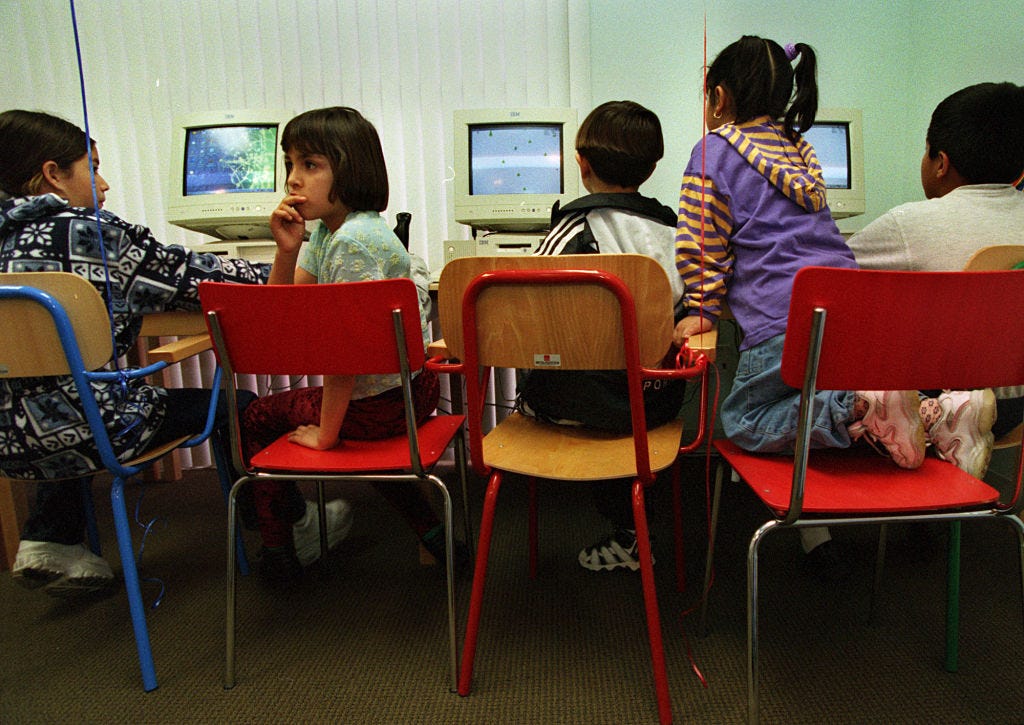
“Over the past two decades, educational technology has exploded from a niche supplement into a $400 billion juggernaut,” reports Jared Cooney Horvath. (George Wilhelm/Los Angeles Times via Getty Images)
When people think about excessive technology in schools, their minds usually go to phones. But according to a new book from neuroscientist Jared Cooney Horvath, we’re overlooking the true culprits: the laptops sitting on students’ desks. In “The Digital Delusion: How Classroom Technology Harms Our Kids’ Learning—and How to Help Them Thrive Again,” Horvath explains why consuming information through screens leads to falling performance, fractured attention, and the slow erosion of rigorous thought. We’re proud to publish an exclusive, adapted excerpt from the book that answers an urgent question: Why, after generations of progress, are today’s children less intellectually capable than their parents? —The Editors
This might be one of the hardest truths today’s parents have to face: This article is featured in Education. Sign up here to get an update every time a new piece is published. Our children are less cognitively capable than we were at their age. The daughter who once loved school, but now dreads it. The son who used to devour books, but now scrolls until midnight. Fading memory, slipping focus. Something is wrong, and many of us have felt it...
Become a paid subscriber Get access to our comments section, special columns like TGIF and Things Worth Remembering, tickets in advance to our live events, and more. UPGRADE TODAY |