The Weekend

|
Dec 6, 2025
|
|
|
|
| Welcome, Weekenders! |
| First, an exciting announcement: Amy Dockser Marcus, a Pulitzer Prize–winning former Wall Street Journal reporter, is joining The Information to cover health and science for Weekend. She begins next week. |
| Amy has long chronicled those two fields, penning memorable pieces about fertility, DNA testing and how many of you badly want to live quite a long time. I can’t wait to share her stories here. Goodness only knows what she’ll uncover next.—Abram Brown, Weekend editor |
| Now, in this newsletter: |
| • The Big Read: Hock Tan’s Broadcom is Nvidia’s nightmare |
| • The Arena: Serena Williams raises the stakes around weight-loss drugs in sports |
| • Plus, our Recommendations: “Hungry Dogs With James Patterson,” “Crick” and “Pluribus” |
| |
| Sam Altman has called a “code red” at OpenAI, according to a scoop a couple days ago from our Stephanie Palazzolo and Erin Woo. What theatrics! It makes me think of red alerts in “Star Trek.” Usually when those shipwide alarms went off, the Enterprise would narrowly evade danger. And occasionally, the intrepid starship would end up looking like this. |
| Here on this planet, OpenAI’s code-red era will tell us a great deal about Altman’s ability to lead OpenAI in an entirely different environment than what he’s experienced before. And anyone interested in assessing OpenAI’s possible trajectory as a public company should pay attention: Its future will look more like the present than the past. Altman’s business once enjoyed a sizable lead in AI, but it doesn’t any longer. Most significantly, Google’s Gemini 3 chatbot has made ChatGPT’s seem quite dated. And plenty of other competitors have materialized, too, with tens of billions of dollars committed to vaporizing OpenAI. |
| In Altman, OpenAI enjoys an expansive, creative leader. But let’s face it, he’s never appeared to be the most disciplined sort. That’s evident from how he seems to flit from one idea to the next. For example, we learned on Thursday that he has considered getting into space rockets. That concept is as much about Altman having another opportunity to kick Elon Musk in the shins as it is about anything else, and it would come amid his expanding interests in hardware, robots, shopping and many other things. (Some newsroom should hire a reporter to do nothing but report on “Sam’s fanciful and half-baked ideas.” That person would have a heckuva good time.) On a more intimate level, Altman’s willy-nilly approach is also apparent just by that video of him cooking; in the clip, he promises his off-screen dining companion “some sort of pasta” dish, then proceeds to chop up an enormous amount of garlic—enough to make any meal inedible or repel several flocks of vampires. |
| Yet what Altman needs most in this period is the type of concerted, disciplined effort Google must’ve put forth to catch up with OpenAI. That should involve Altman getting out of the one-upmanship game that has monopolized the attention of large language model makers such as OpenAI: Someone releases a better model, then someone releases another. And it goes on—and on. |
| Moreover, if OpenAI wants to seriously put some distance between itself and Google again, I have to think it would be better to focus on a couple specific applications with two distinct qualities: They have meaningful utility to people, and they’re not what Gemini 3 already does well. This change in thinking would require OpenAI to do more than release features like slop video or erotica—or better image generation than Google’s very impressive Nano Banana can achieve. |
| I mean, seriously, fun and frivolity can appear great in the moment, but things can get hairy fast—as Altman has found out. |
| What else from this week… |
| • Netflix wants to buy Warner Bros. Our Martin Peers thinks it’s a “$82.7 billion blunder.” My main thought: Netflix is offering Warner Bros. a $5 billion breakup fee if the deal gets scuppered, and such a figure may be worth it to Netflix, which has $426 billion in market cap, if that stops a resurgent Paramount from getting Warner Bros. for several years. Also, I suspect the price hikes from a combined Netflix-Warner will make the “Squid Games” pot of money seem like a small amount. |
| • MrBeast, the uber-popular YouTube stunt master, hopes to launch a fintech. I can see the synergies now: Here, win $50,000 burying yourself in maggots—get paid fast with MrBeast direct deposit! |
| • What do billionaire Henry Kravis and actor Steve Martin have in common? A mutual love of a fancy, AI-powered hearing aid, which has become an it gadget among the wealthy and famous—and the aged. You know, the kind of thing a person talks up over the early bird special at the Chateau Marmont. |
| • Jared Isaacman tried to secure his nomination as NASA chief by decrying any close relationship with Elon Musk, whose SpaceX has deep ties to the agency. “It’s funny that in a world where everybody has a phone with a camera on it, there are no pictures of us at dinner, at a bar, on an airplane or on a yacht,” he said during Congressional testimony. I chuckled at this defense tactic because he’s making an antiquated argument. Sure, perhaps there really isn’t an authentic such image, but someone could get one together fast just by firing up Nano Banana. |
| And geez, no one wants anything to do with Elon anymore—just ask Ashlee Vance, the former Bloomberg reporter who wrote a chummy biography of Musk and optioned it to HBO. Well, Vance on Wednesday said the network has killed the adaptation and he’d like to find a new home for the project. I expect it’ll find resurrection at some streamer more interested in winning points with conservative viewers. |
| • Eric Schmidt’s doomer-ish act on AI goes on. |
| • By trying to be more welcoming to people with disabilities, America’s most elite schools and institutions have tipped into farce—with a tendency toward over-accommodation that has hastened a total misuse of what constitutes a disability, according to The Atlantic. (You know the problem is completely out of control when a liberal standard-bearer like The Atlantic sounds the alarm on the topic.) |
| At Stanford, for example, 38% of undergraduates say they have a disability—leaving Professor Paul Graham Fisher, co-chair of the school’s disability task force, throwing up his hands in despair: “What if it hits 50 or 60 percent? At what point do you just say, ‘We can’t do this’?”—Abram Brown |
| |
|
|
 |
|
| As AI mania has intensified lately, Hock Tan has thrown Broadcom into overdrive, with the company’s stock shooting up almost sevenfold in the past three years. Broadcom’s custom chips are in enormous demand, a key component of the AI dreams for some of the world’s largest companies, including Google, OpenAI and Meta Platforms. And Broadcom’s software business has greatly expanded, too, through a series of plucky deals—most notably the $84 billion purchase of VMware two years ago. |
| How has Tan done it? Our Jemima McEvoy, Qianer Liu and Wayne Ma have an immensely enjoyable Big Read on that very subject, detailing Tan’s no-frills, no-nonsense management of the trillion-dollar company. For instance, take the idea of layoffs: Broadcom has them regularly—regardless of overall performance. At quarterly meetings, meanwhile, Tan likes to discuss the “line of doom,” a marker of underperforming parts of Broadcom’s business. And since Tan keeps a steely grip on every aspect of spending, Broadcom employees have been known to resort to jealously guarding even the most basic office supplies, such as printer paper. |
| Tan’s approach has earned him admirers among the tech elite, who seem to wish they could apply the same mentality at their own companies without risking revolt. It has also earned Tan his fair share of detractors. “People think of him as some sort of ogre,” said Michael Hurlston, a former Broadcom senior vice president and longtime industry executive. “I think his empathy level is—I wouldn’t say it isn’t there, but he’s just connected to the business more than the people.” |
|
 |
|
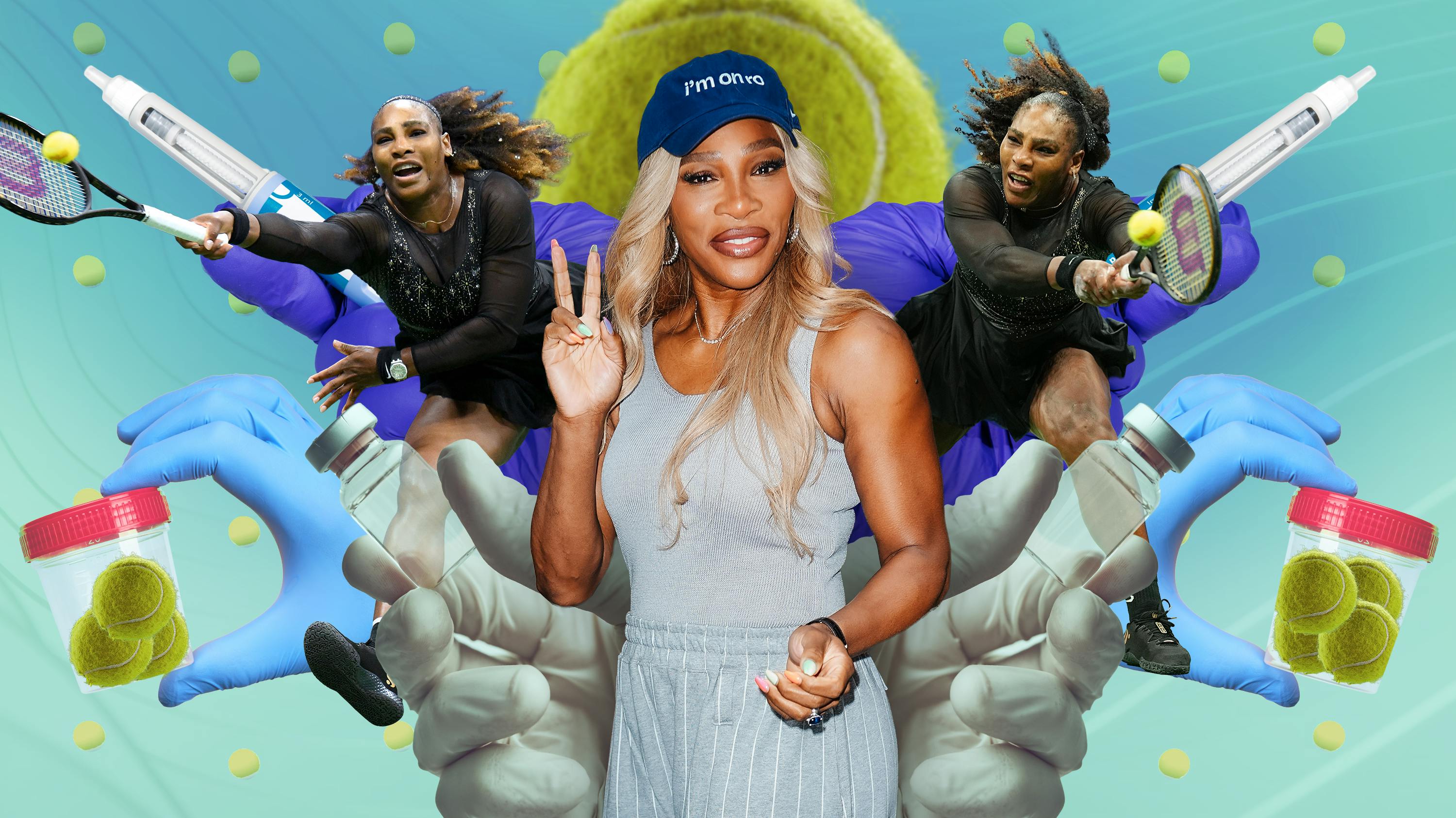
| With the tennis legend’s reentry into the pool for anti-doping testing, Serena Williams becomes the most prominent athlete linked to GLP-1 drugs—just as regulators weigh whether they belong in elite competition, our Sara Germano writes. |
| Abram Brown is the editor of The Information's Weekend section. You can reach him at abe@theinformation.com or find him on X. |
| |
 |
| Listening: “Hungry Dogs With James Patterson” |
| When I worked at Forbes, the magazine had a big birthday: It turned 100 years old. To mark the occasion, we threw a big birthday party, which attracted a lot of rich and famous people: Warren Buffett, Jerry Jones, Ray Dalio—that kinda crowd. Stevie Wonder performed. Everyone was in fine spirits and chatty, but the hands-down most interesting conversation I had was with a dumpy fellow I didn’t recognize, who introduced himself just as James. After a couple drinks and a good deal of charming talk, I finally unearthed the guest list from where I’d stashed it in the back of my mind and figured out his identity: James Patterson, the prolific best-selling author, who I imagine must spend the downtime at cocktail parties writing plotlines in his head. |
| Well, Patterson is onto something else, putting his adept chitchat skills to good use hosting a new podcast, “Hungry Dogs.” Yes, it does fall within the often bland genre where one celebrity talks to another celebrity, but so far, I’ve appreciated the fairly eclectic guest list, which has included singer Dolly Parton, actors Kathy Bates and B.J. Novak, and fellow author David Baldacci. And as I was just saying, Patterson certainly isn’t a dull conversationalist.—Abram Brown |
| Reading: “Crick” by Matthew Cobb |
| Really, IBM is to blame. Watson this—Watson that. We oughta talk more about James Watson’s collaborator, Francis Crick, a man of many captivating flaws and contrasts. Actually, at one point in “Crick,” author Matthew Cobb, a British biologist, draws an analogy between Crick and Pablo Picasso, another complicated genius. It fits. |
| “Crick” devotes a good amount of time to the science that led Crick and Watson to discover the structure of DNA, an accomplishment for which they won a Nobel Prize in 1962. And with exhaustive research, Cobb firmly rejects the decades-old suspicion that Crick and Watson stole data and a key X-ray image from another colleague, a young woman named Rosalind Franklin. |
| Enjoyably, “Crick” makes sure to follow its title subject out of the laboratory, too—and for good reason. Crick led a very active life outside work, pursuing a number of hobbies, like peyote and extramarital affairs. Crick, an Englishman, delighted in thumbing his nose at the British upper classes, refusing a title from the queen and picking a fight with a very aged Winston Churchill. He hated religion and spoke his mind about his distaste for it at every chance. And while Crick’s friends would remark on his limited sense of humor, he did enjoy a party: When he won the Nobel, for instance, he spent the evening drinking and shooting off fireworks from his Cambridge, England, rooftop. |
| What Crick didn’t enjoy was talking about himself. “Francis may not have liked the idea of this book being written,” Cobb concedes. (Crick himself did publish a slim, 182-page memoir, “What Mad Pursuit,” in 1988.) “But I like to think he would have enjoyed it, had it been about someone else.”—A.B. |
| Watching: “Pluribus” (Apple TV) |
| | | | |
