Thanks for reading The Briefing, our nightly column where we break down the day’s news. If you like what you see, I encourage you to subscribe to our reporting here.
Greetings!
When you’re on your back foot, as OpenAI has lately been, what better way is there to take the offense than to announce a Mickey Mouse deal? Take OpenAI’s partnership with Walt Disney Co., unveiled on Thursday morning. Disney will make a $1 billion equity investment in the ChatGPT creator and will license 200 characters from its film and TV library to OpenAI's Sora video-generation app, including Mickey Mouse, Darth Vader, Luke Skywalker and Iron Man. Sora users will be able to conjure up short videos featuring those characters—what fun! But while it’s great for OpenAI, the deal doesn’t seem so good for Disney.
What does Disney get out of this arrangement, other than the risk of having a deranged OpenAI user make an offensive video featuring a Disney character? (Both Disney CEO Bob Iger and OpenAI CEO Sam Altman said on CNBC that OpenAI would put “guardrails” in to prevent that outcome, but does anyone believe that will work?) Disney is presumably earning a licensing fee, although the announcement makes no mention of one. My colleague Sri Muppidi hears that Disney’s licensing compensation will be via the grant of equity warrants, at OpenAI’s latest valuation of $500 billion. (That’s in addition to the shares Disney is buying.) That implies Disney’s licensing payment is dependent on OpenAI’s valuation rising in the future.
You’d think Disney would be getting something a bit more solid. After all, the company deserves a huge licensing fee, one worth shouting about from the rooftops, considering that allowing the use of its characters on Sora will massively enhance the nascent OpenAI app.
Other aspects of the deal also appear to favor OpenAI. Disney is putting in money for an equity stake it can ill afford, given that it only had $5.7 billion in cash on its balance sheet at the end of September. Disney is also committing to becoming a “major customer” of OpenAI, which implies it will spend money on OpenAI services. And Disney is letting OpenAI use its good name as a shield against criticism from some in Hollywood about the dangers of Sora making clips that feature famous people without their permission. (It’s worth noting that Iger has ties to OpenAI investor Thrive, which may have facilitated the negotiation.)
To be sure, despite the announcement, the partnership is not exactly a done deal. The deal is “subject to the negotiation of definitive agreements, required corporate and board approvals and customary closing conditions.” OpenAI has done this kind of thing before—when Nvidia announced its planned investment of up to $100 billion in OpenAI, it was cast as a letter of intent, with the details still needing to be sorted out. (As of mid-November, Nvidia said the deal hadn’t yet been finalized.) OpenAI seems to like the attention these announcements get. As for Disney, it gets the frisson of appearing to be AI forward. Every old-school company wants to be seen as technologically savvy. It’s likely no coincidence Disney stock rose 2.4% on Thursday. But the risks seem much greater for Disney than the benefits.
Broadcom’s Budding AI Chip Business
Broadcom is slowly but surely becoming a slightly bigger force in developing specialized AI chips. Its latest earnings result, for its fiscal fourth quarter ending Nov. 2, showed 74% higher AI chip revenue of $6.5 billion, well ahead of Broadcom’s projection of 66% growth in that business. Even better, Broadcom projected that it would double AI chip revenue (year on year) to $8.2 billion in its fiscal first quarter.
What isn’t so great is that other parts of Broadcom’s business—which account for most of its revenue—aren’t growing as fast. CEO Hock Tan told analysts on a conference call Thursday night that Broadcom’s non–AI chip revenue was expected to be “stable” in the first quarter, which implies it’s not growing at all.
In the fourth quarter, Broadcom’s overall top line expanded 28%. The company forecast a similar growth rate for the fiscal first quarter. That likely explains Wall Street’s negative reaction. Broadcom stock fell 4.5% in after-hours trading. Given that the stock has soared 75% so far this year, investors can be forgiven for not overreacting.
In Other News
• Nvidia plans to host a private startup summit next week focused on solving data center power problems that could hold up the development of AI, according to several people who were invited.
• Pinterest is acquiring tvScientific, the companies announced. The advertising technology company helps smaller companies buy ads on streaming television.
• Harness, an eight-year-old startup that helps developers manage updates and scan for security bugs in AI applications, announced $240 million in Series E funding led by Goldman Sachs Alternatives at a valuation of $5.5 billion, up from $3.7 billion after its last round three years ago.
• OpenAI on Thursday released a new flagship AI model, GPT-5.2, as the company tries to improve its ChatGPT chatbot and enterprise sales relative to those of rivals Google and Anthropic.
• Michael Hsu, the former Acting Comptroller of the Currency under President Biden, has joined early-stage VC firm Core Innovation Capital as a venture partner.
Today on The Information’s TITV
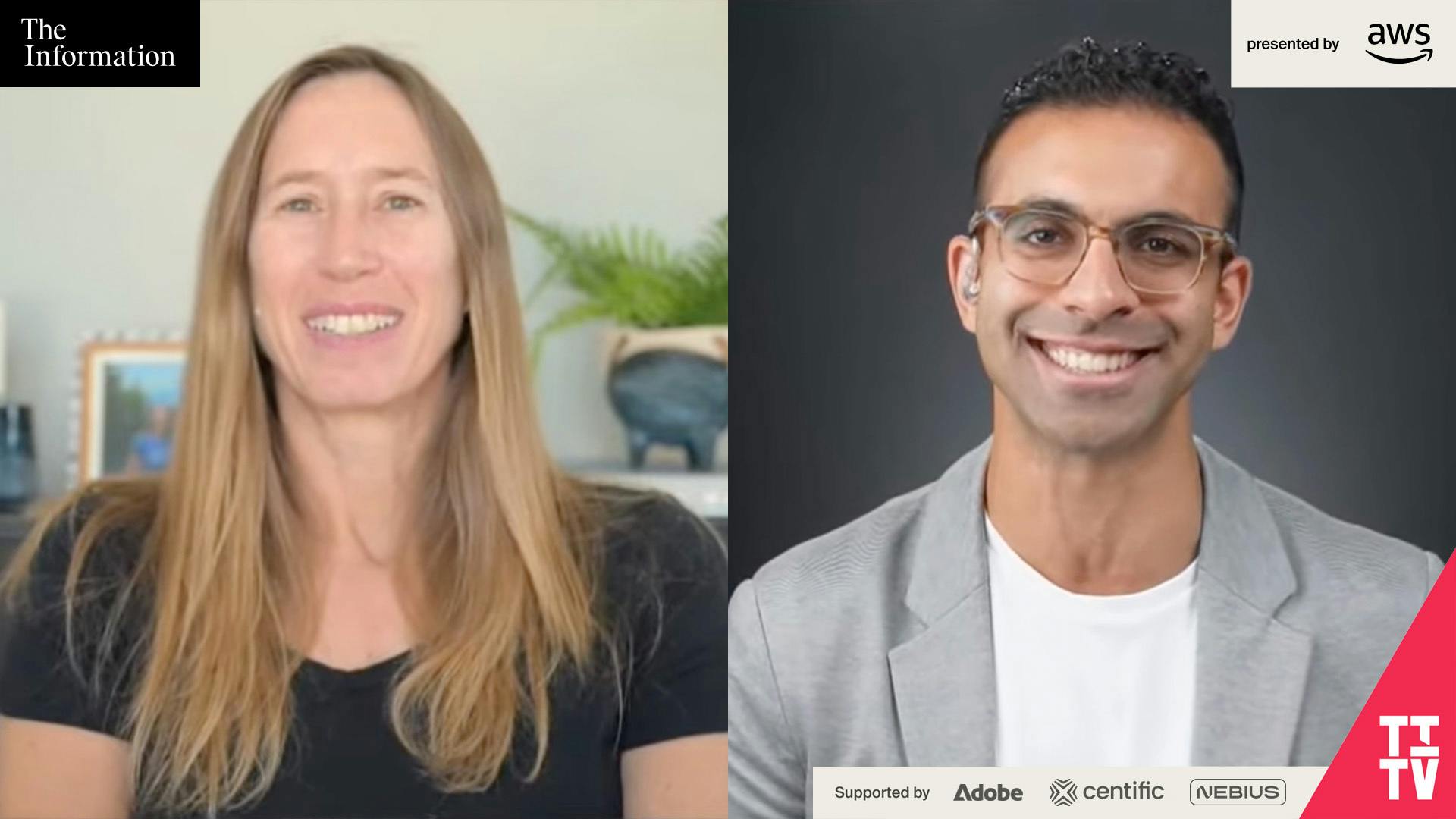
Check out our latest episode of TITV in which we speak with the former head of e-commerce at TikTok U.S. about her new startup CEO role.
Recommended Newsletter
Start your day with Applied AI, the newsletter from The Information that uncovers how leading businesses are leveraging AI to automate tasks across the board. Subscribe now for free to get it delivered straight to your inbox twice a week.