Talent Development Isn’t a Nice-to-Have. Does your organization downplay talent development? When companies neglect or minimize their employees’ growth, treating it secondary to “real work,” the consequences are real: critical skills gaps that hinder productivity; disengaged workers and low retention; and reduced innovation that leads to competitive vulnerability. Octopus Organizations mitigate these risks by treating talent development as a critical, continual investment. Here’s how to model this in your organization.

Read online 

Manage email preferences

Harvard Business Review | The Management Tip of the Day
 

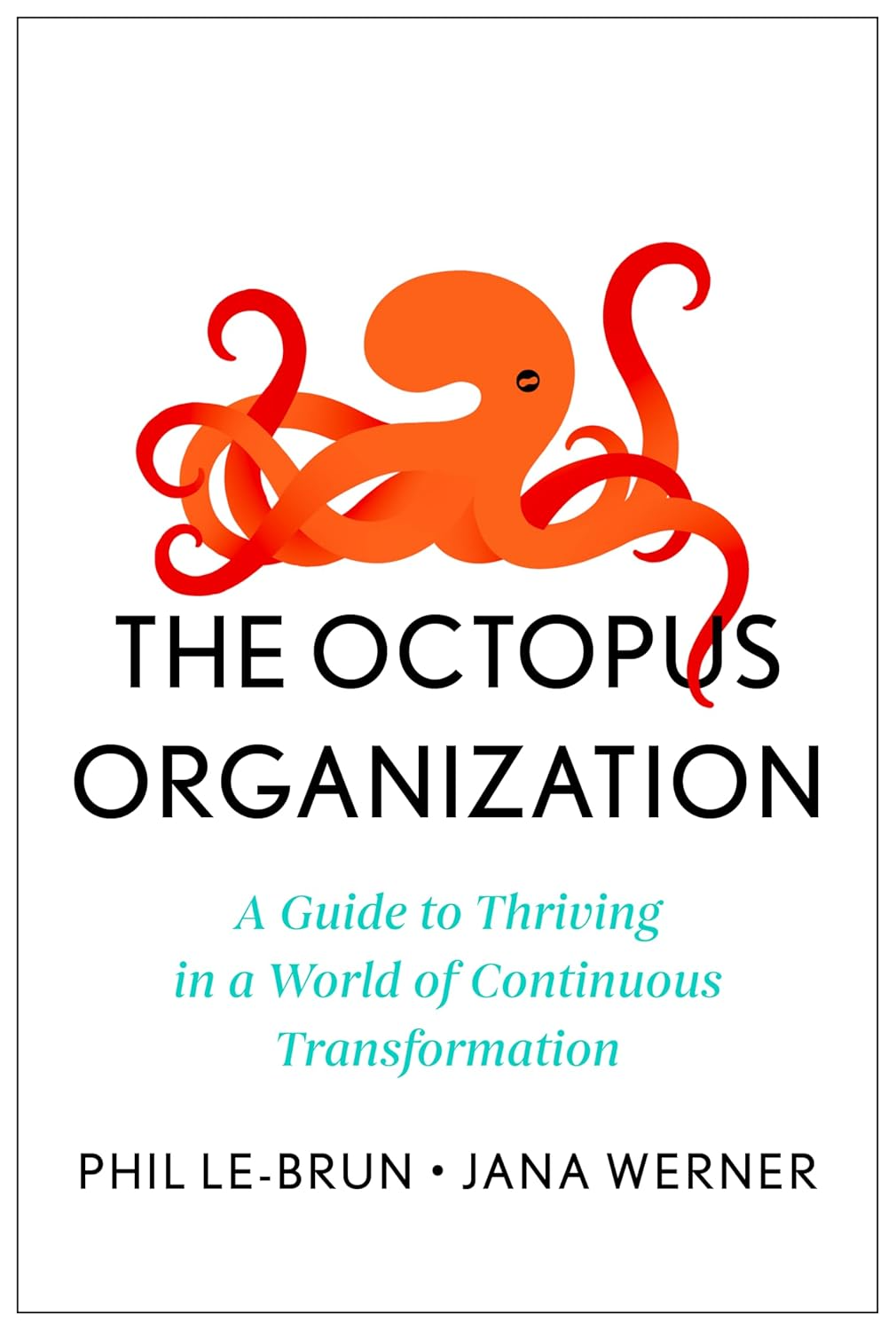
This week’s tips are adapted from Phil Le-Brun and Jana Werner’s new book, The Octopus Organization: A Guide to Thriving in a World of Continuous Transformation (HBR Press). An “Octopus Organization” is flexible, decentralized, and built for change. The journey to becoming one begins with identifying “antipatterns”: formulaic responses to complex challenges that can set organizations back. This week, we’re outlining five of these antipatterns—and how to overcome them.  

Today’s Tip

Talent Development Isn’t a Nice-to-Have

Does your organization downplay talent development? When companies neglect or minimize their employees’ growth, treating it secondary to “real work,” the consequences are real: critical skills gaps that hinder productivity; disengaged workers and low retention; and reduced innovation that leads to competitive vulnerability. Octopus Organizations mitigate these risks by treating talent development as a critical, continual investment. Here’s how to model this in your organization. 

Make learning the work. Embed training exercises into projects. This could be a two to three–day sprint at the beginning of an initiative to learn new tools or techniques. Consider creating time for retrospective reflection on skills learned, such as structured debriefs, after-action reviews, and journaling prompts. 

Create micro-learning content. You don’t need intensive, long training modules. Sometimes short videos, articles, or interactive exercises are all your employees need.  

Strategically plan skills development. Proactively identify near-future skills needed based on organizational goals and conduct regular skills-gap analyses. Link learning to career progression opportunities, and incorporate skills-development goals into performance reviews.  

Enable self-organized curiosity groups. Encourage employees to create groups around topics of shared interest. These groups can discuss how they’re learning and experimenting with new tools, technologies, or systems. You might also develop a “skills swap” marketplace, where employees can list skills they have and want to teach, as well as the skills they don’t have and want to learn. 

Create space for regular development conversations. Use regular one-on-one meetings as dedicated development conversations. This shifts managers’ roles from taskmaster to coach, making development a continuous part of the work rhythm.

 
Book cover for The Octopus Organization: A Guide to Thriving in a World of Continuous Transformation.

Adapted from

The Octopus Organization: A Guide to Thriving in a World of Continuous Transformation

by Phil Le-Brun and Jana Werner

Book cover for The Octopus Organization: A Guide to Thriving in a World of Continuous Transformation.

Adapted from

The Octopus Organization: A Guide to Thriving in a World of Continuous Transformation

by Phil Le-Brun and Jana Werner


ADVERTISEMENT


A person holding a tablet displaying the HBR subscriptions webpage.

Stay ahead of the issues shaping modern leadership

An HBR subscription gives leaders steady insight when priorities shift fast.

Choose your plan

 
Coaching Real Leaders with Muriel Wilkins

Podcast

Do I Really Want to Be CEO?

A leader struggles with defining what she can do, versus what she wants to do.

Listen now
 

The HBR App:
Get the best in leadership thinking on-the-go.

Download on the App Store.
Get it on Google Play
 
X Icon Facebook IconInstagram Icon

You are receiving this because you registered at hbr.org to receive The Management Tip of the Day emails, or you provided us with your email address.

If you prefer not to receive The Management Tip of the Day emails, please unsubscribe.

You may also Manage Email Preferences, view our Privacy Policy, or Contact Us.

To ensure email delivery, add emailteam@emails.hbr.org to your address book, contacts, or safe sender list.


Harvard Business Publishing, 20 Guest St, Suite 400, Brighton, MA 02135  

Copyright © 2025 Harvard Business School Publishing. All rights reserved.