|



8 Insights into Real-World Cloud Security Postures (Sponsored)
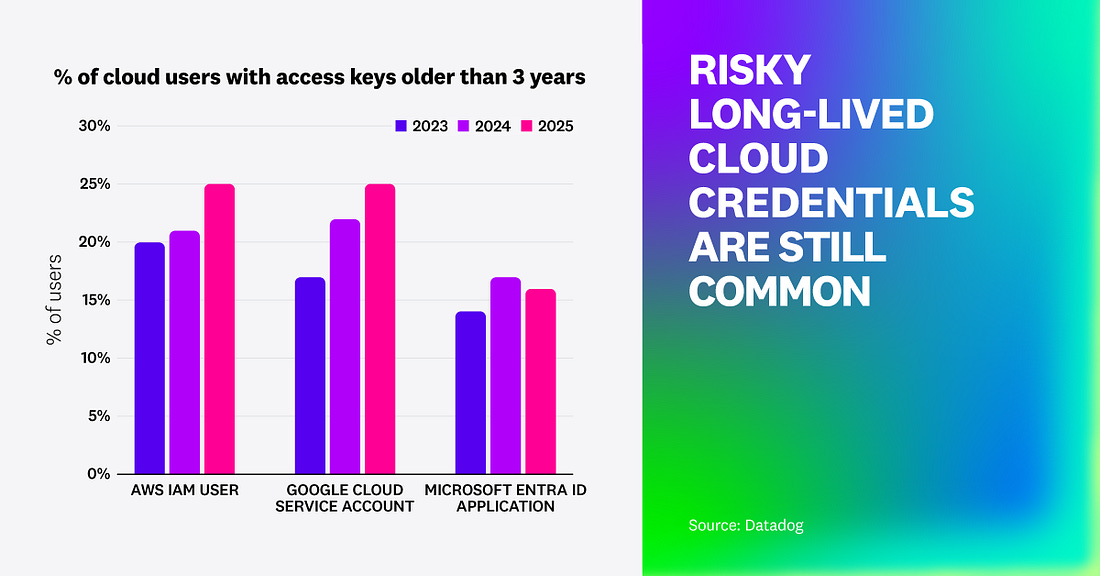 |
To better understand the vulnerabilities and threats facing modern DevOps organizations, Datadog analyzed security posture data from a sample of thousands of organizations that use AWS, Azure, or Google Cloud.
In this report, you’ll gain valuable cloud security insights based on this research including:
How long-lived credentials create opportunities for attackers to breach cloud environments
Adoption of proactive cloud security mechanisms such as S3 Public Access Block or IMDSv2 in AWS
Most common risks when using managed Kubernetes distributions
This week’s system design refresher:
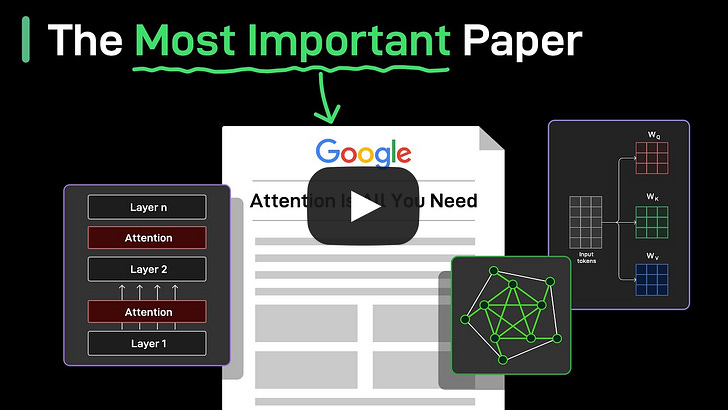
Transformers Step-by-Step Explained (Youtube video)
Database Types You Should Know in 2025
Apache Kafka vs. RabbitMQ
The HTTP Mindmap
How DNS Works
SPONSOR US
Transformers Step-by-Step Explained (Attention Is All You Need)
Database Types You Should Know in 2025
There’s no such thing as a one-size-fits-all database anymore. Modern applications rely on multiple database types, from real-time analytics to vector search for AI. Knowing which type to use can make or break your system’s performance.
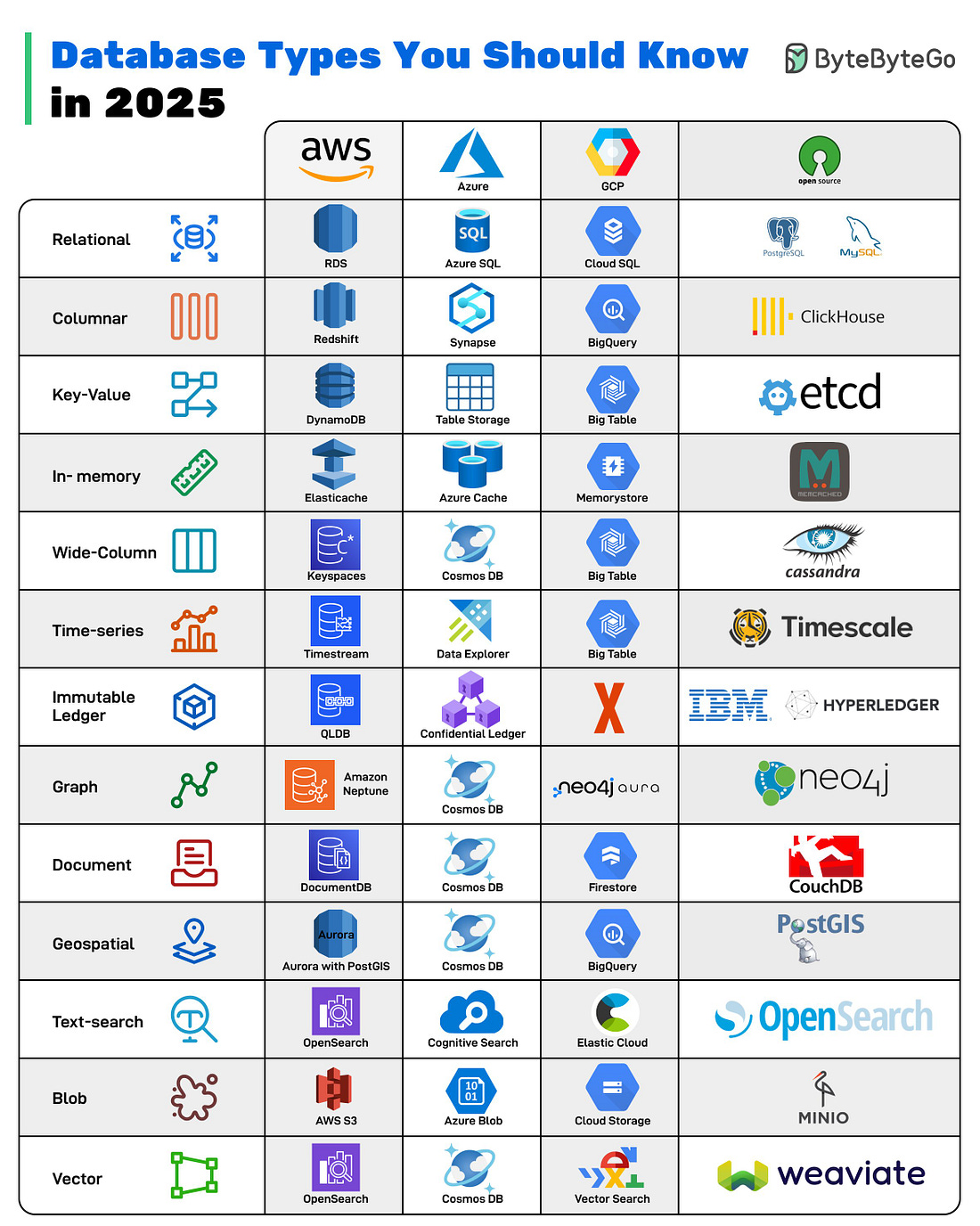 |
Relational: Traditional row-and-column databases, great for structured data and transactions.
Columnar: Optimized for analytics, storing data by columns for fast aggregations.
Key-Value: Stores data as simple key–value pairs, enabling fast lookups.
In-memory: Stores data in RAM for ultra-low latency lookups, ideal for caching or session management.
Wide-Column: Handles massive amounts of semi-structured data across distributed nodes.
Time-series: Specialized for metrics, logs, and sensor data with time as a primary dimension.
Immutable Ledger: Ensures tamper-proof, cryptographically verifiable transaction logs.
Graph: Models complex relationships, perfect for social networks and fraud detection
Document: Flexible JSON-like storage, great for modern apps with evolving schemas.
Geospatial: Manages location-aware data such as maps, routes, and spatial queries.
Text-search: Full-text indexing and search with ranking, filters, and analytics.
Blob: Stores unstructured objects like images, videos, and files.
Vector: Powers AI/ML apps by enabling similarity search across embeddings.
Over to you: Which database type do you think will grow fastest in the next 5 years?
Apache Kafka vs. RabbitMQ
Kafka and RabbitMQ both handle messages, but they solve fundamentally different problems. Understanding the difference matters when designing distributed systems.
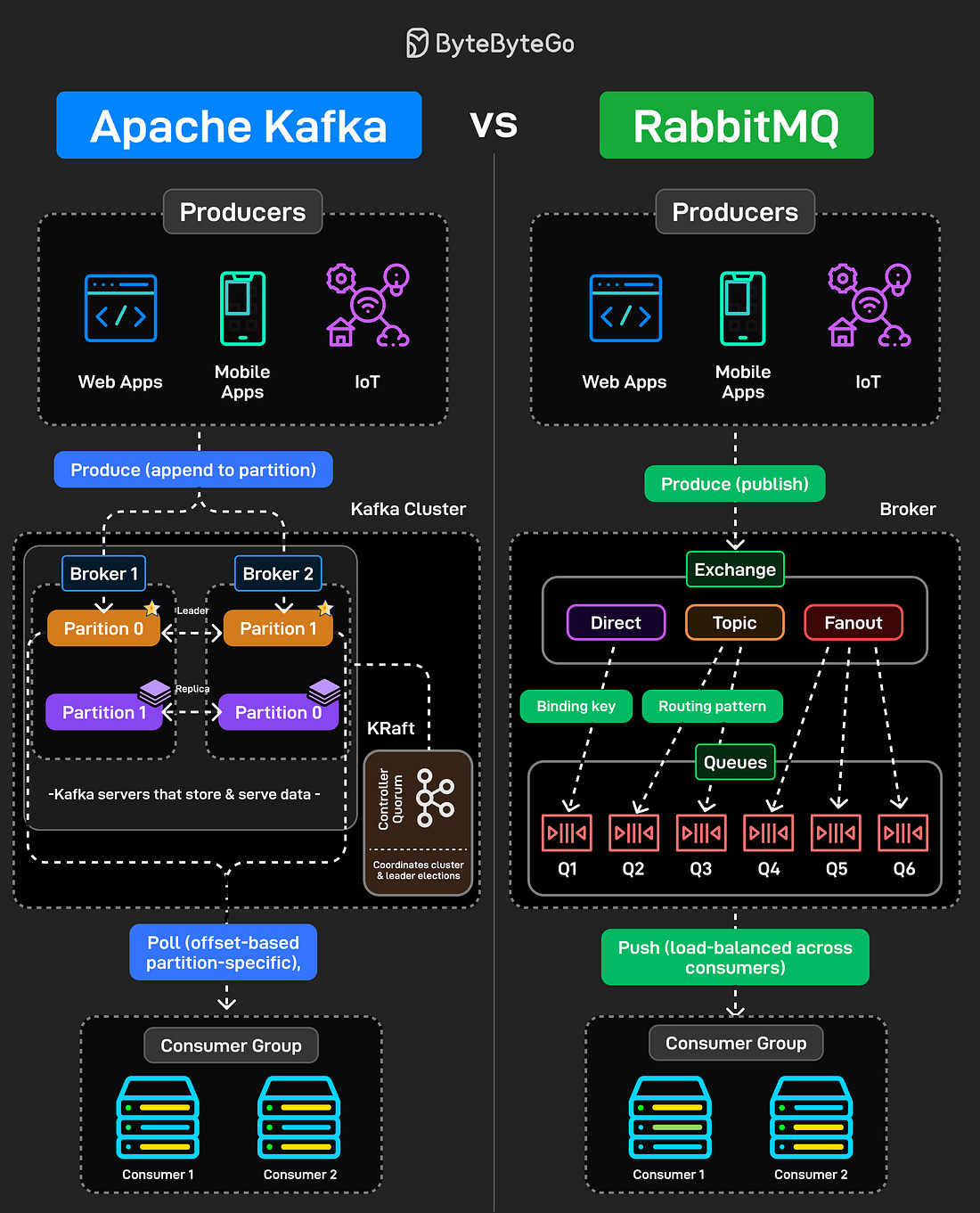 |
Kafka is a distributed log. Producers append messages to partitions. Those messages stick around based on retention policy, not because someone consumed them. Consumers pull messages at their own pace using offsets. You can rewind, replay, reprocess everything. It is designed for high throughput event streaming where multiple consumers need the same data independently.
RabbitMQ is a message broker. Producers publish messages to exchanges. Those exchanges route to queues based on binding keys and patterns (direct, topic, fanout). Messages get pushed to consumers and then deleted once acknowledged. It is built for task distribution and traditional messaging workflows.
The common mistake is using Kafka like a queue or RabbitMQ like an event log. They’re different tools built for different use cases.