| | Oracle’s stock slides on data center doubts, the EU prepares for a big decision on Russian assets, a͏ ͏ ͏ ͏ ͏ ͏ |
| |  | Flagship |  |
| |
|
The World Today | 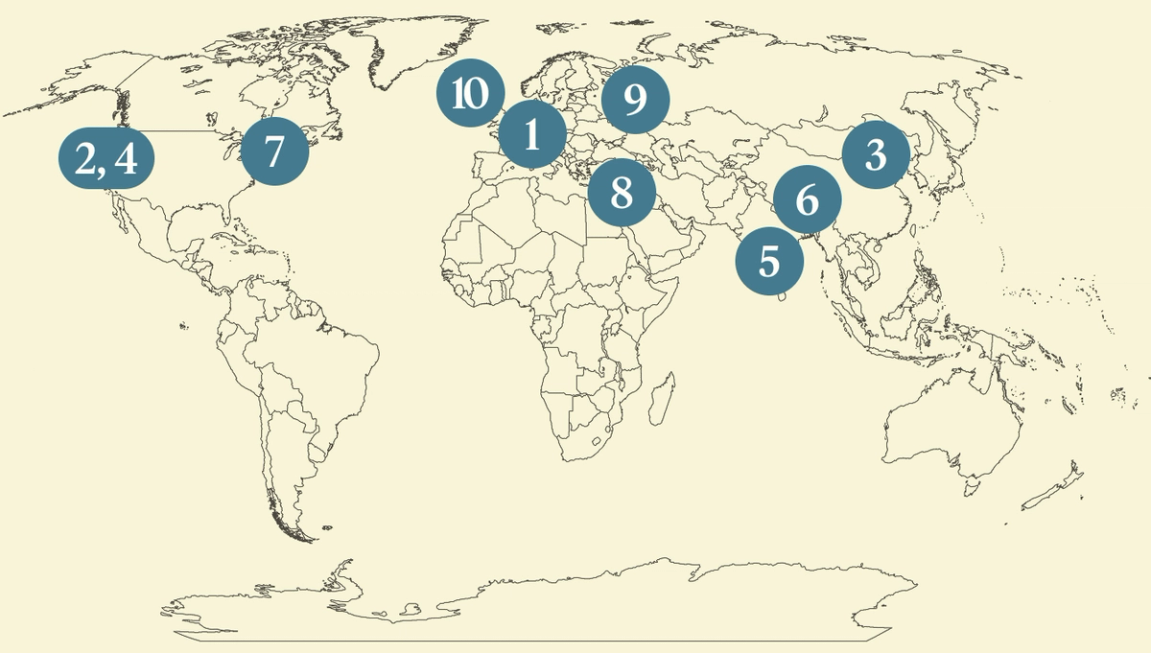 - EU to decide on Russia assets
- Oracle data center in doubt
- China chip breakthrough
- Combatting Nvidia’s lead
- India sees e-commerce boom
- Bhutan’s bitcoin city
- US climate center targeted
- The geopolitics of water
- Russia blocks Roblox
- Public domain day 2026
 Japan’s answer to Jersey Shore. |
|
EU faces big decision on Russian assets |
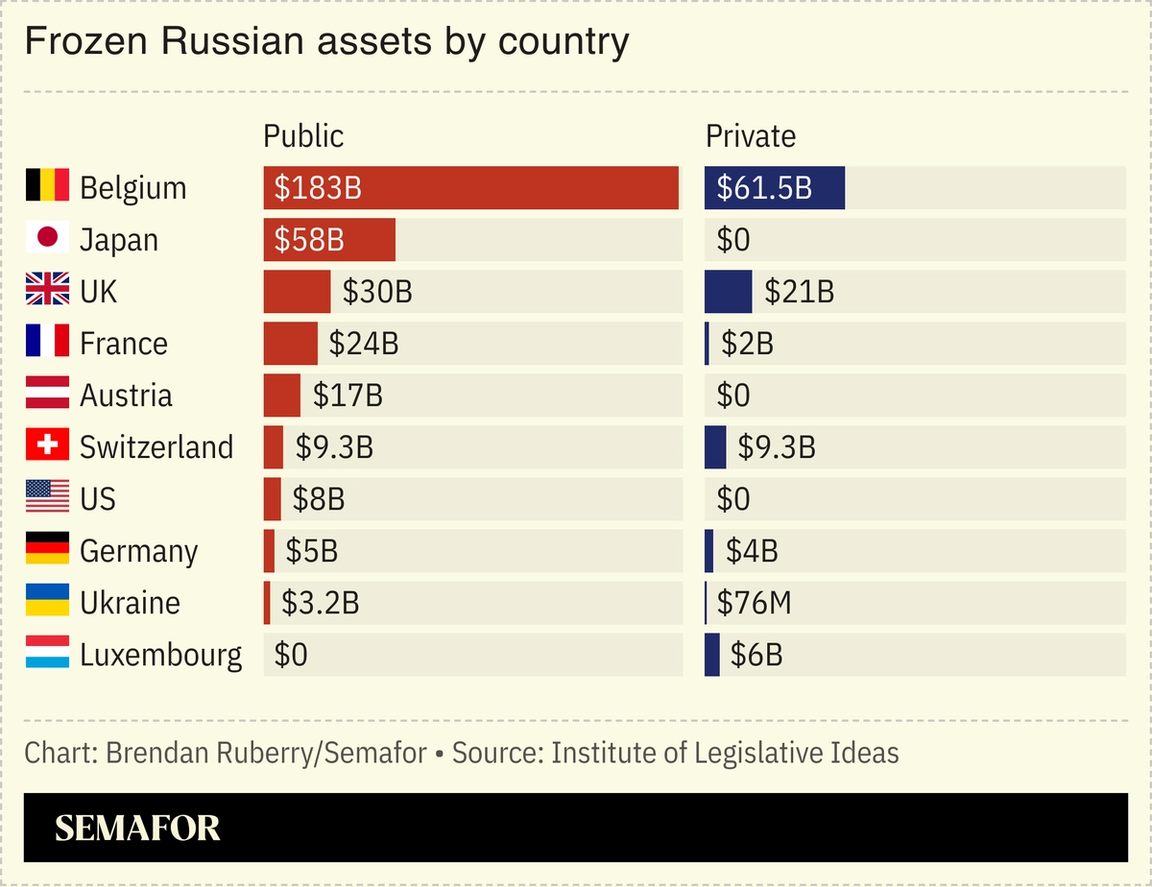 EU leaders meet Thursday to decide whether to unlock frozen Russian assets to support Ukraine’s war efforts, a momentous decision with political, legal, and military ramifications. The bloc holds $246 billion in Russian assets, but it has been divided over whether to use the funds as a loan to Kyiv. The effort has taken on greater urgency as Washington has stopped providing new aid to Ukraine. Failure to unlock the assets means Europe “would not have the money to sustain Ukraine economically and militarily into 2026 and on,” the head of an Italian think tank argued. But Belgium, where most of the funds are held, is especially fearful of blowback from Russia in the form of lawsuits and hybrid warfare tactics. |
|
Oracle stock falls on data center worries |
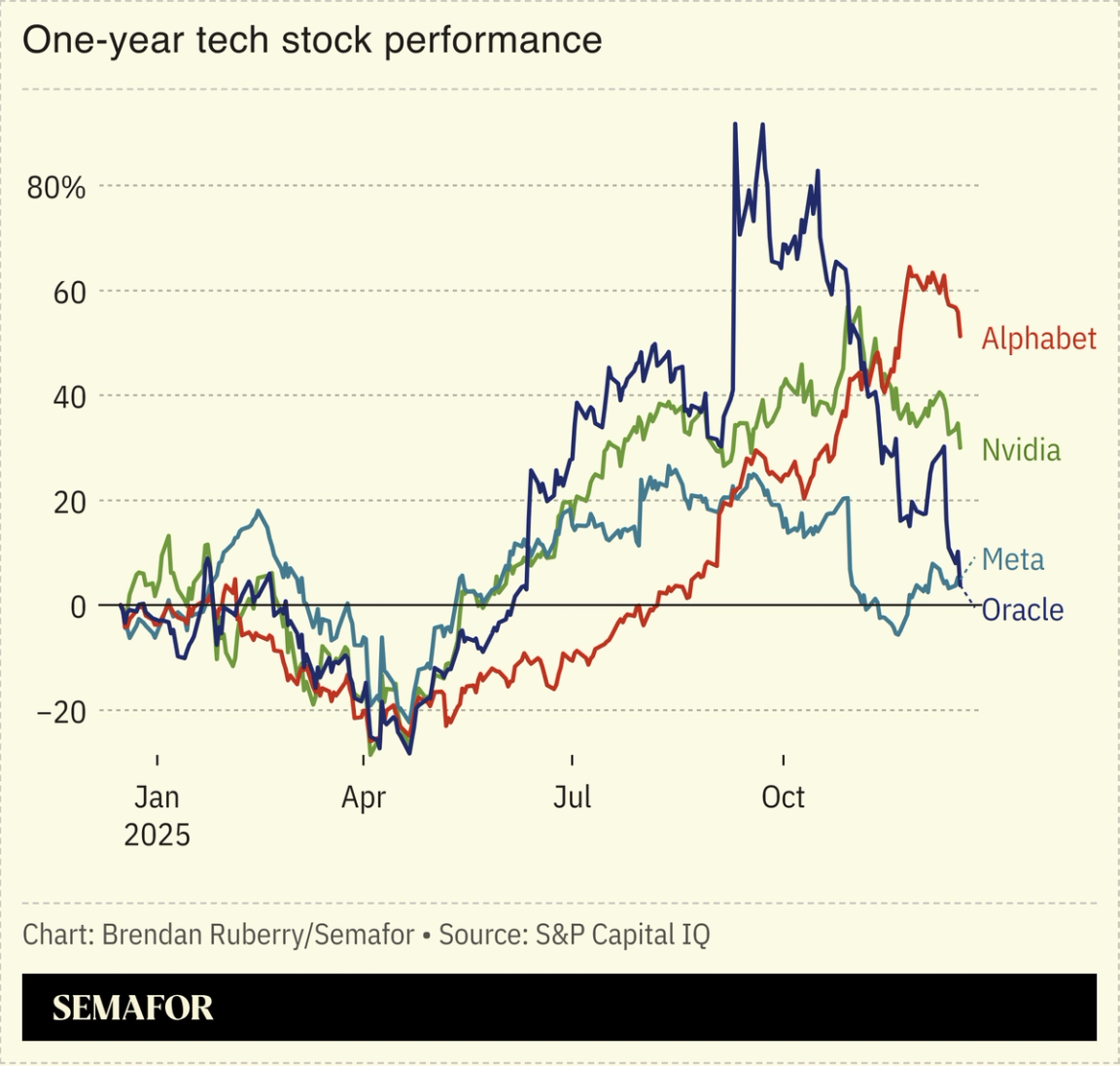 Oracle’s stock took a hit Wednesday over stalled negotiations for the funding of a US data center project, elevating worries on Wall Street and in Washington about the billions pouring into AI infrastructure. The Financial Times reported that Oracle’s primary backer for its largest data center projects won’t finance a $10 billion, 1-gigawatt facility in Michigan over concerns about the software giant’s rising debt and AI spending. Cloud-computing firms including Oracle, Microsoft, and Meta have amassed a combined $500 billion in obligations toward data center leases, Bloomberg reported. These future commitments have invited closer scrutiny from investors — amid fears of an AI bubble — as well as from US lawmakers concerned about voter backlash to rapid AI buildout. |
|
China advances on AI ‘Manhattan Project’ |
 ASML employees in Veldhoven. Michael Kooren/Reuters ASML employees in Veldhoven. Michael Kooren/ReutersChinese scientists have prototyped a machine capable of producing powerful AI chips despite Western efforts to prevent such advances, a Reuters investigation revealed. The extreme ultraviolet lithography system, which etches tiny circuits onto silicon wafers, was built by former engineers of Dutch semiconductor giant ASML who worked under fake names and used parts from older ASML machines; one prominent China watcher suggested it was a “massive security failure” by Dutch authorities. The project, which aims to produce working chips by 2028, marks a major breakthrough in Beijing’s quest for semiconductor self-sufficiency, described by some as China’s own Manhattan Project. Investors appear bullish on China’s homegrown processors: Shares in a chip startup soared 693% in its trading debut Wednesday. |
|
Tech giants look to trim Nvidia’s lead |
 Ann Wang/Reuters Ann Wang/ReutersSome of the biggest US tech players are teaming up in an effort to chip away at Nvidia’s lead in AI computing. Google is working closely with Meta on a new initiative to hasten the adoption of its AI chips, Reuters reported, part of Google’s larger effort to compete with Nvidia's dominant processors. And OpenAI is reportedly in talks to raise at least $10 billion from Amazon and use its chips, as the e-commerce giant’s nascent semiconductor division looks to pick up steam. The interconnected nature of the deals, though, reflects the circularity that has defined the AI boom’s financing, spurring fears of a bubble that has already fueled steep stock-price slides from CoreWeave and Oracle. |
|
Differing strategies for Indian e-commerce |
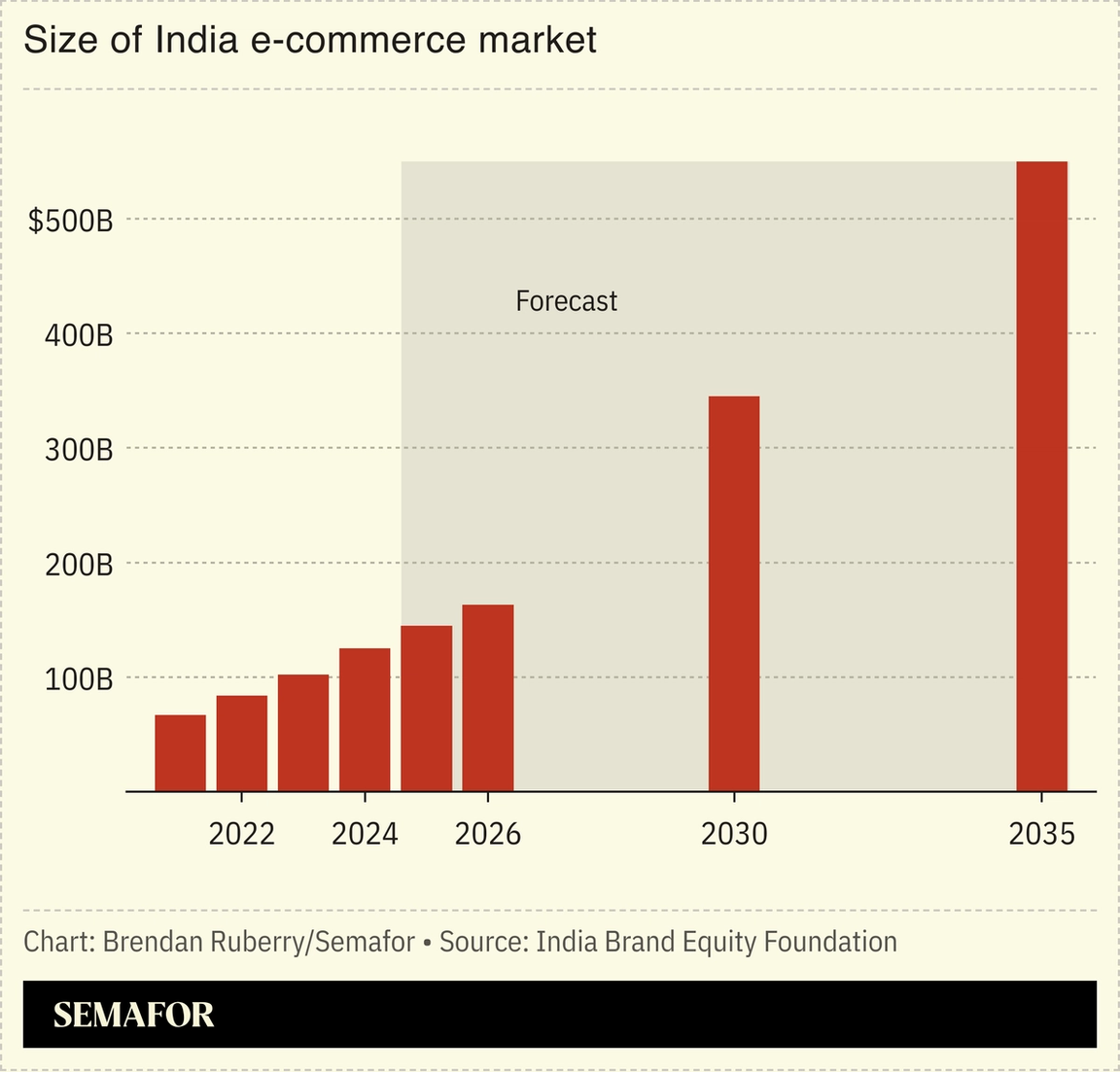 Indian investors are hungering for e-commerce and food delivery stocks. Meesho, a platform offering affordable and unbranded retail products, became India’s best-performing major IPO of 2025 after its debut last week. And grocery delivery firm Zepto is planning to file for a $500 million IPO, Bloomberg reported: The company promises 10-minute delivery times, part of a crowded Indian quick-commerce market racing to ship goods at hyperspeed. Both developments reflect the “divergent ways in which an increasingly unequal India shops online,” Nikkei wrote: High-income customers gravitate toward the quick-commerce options, while firms like Meesho believe lower-income Indians are willing to wait to receive goods at a lower price. |
|
Bhutan to fund new city with bitcoin |
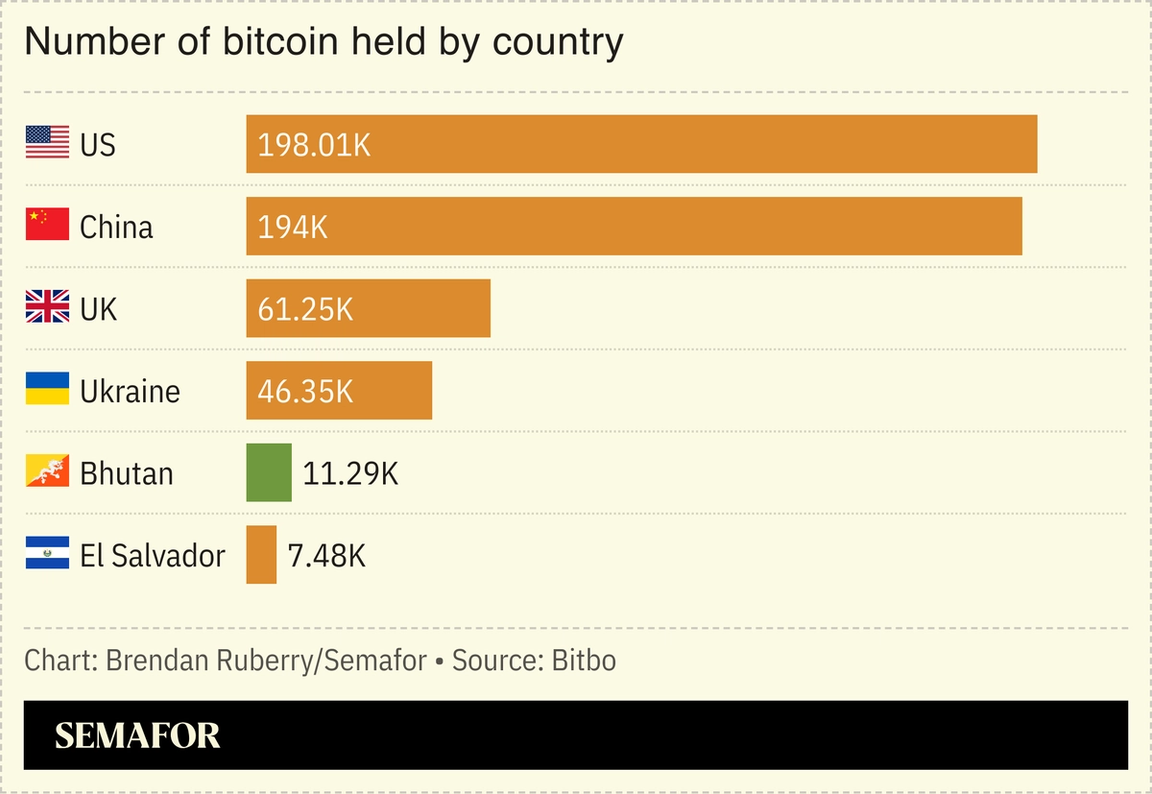 Bhutan is pledging up to 10,000 bitcoin to build a new mega-city, a reflection of how much national governments have embraced the cryptocurrency. The small Himalayan kingdom has amassed deep bitcoin reserves over the years by converting surplus hydropower into digital tokens. The allocation being put toward Gelephu Mindfulness City is valued at roughly $860 million to $1 billion, and marks one of the world’s most ambitious sovereign uses of bitcoin for national infrastructure, Bitcoin Magazine wrote. The new city is part of Bhutan’s efforts to diversify its economy, but the bitcoin strategy carries risk, as a fall in price could dent the country’s coffers. |
|
Trump takes aim at weather research lab |
 John Greim/LightRocket via Getty Images John Greim/LightRocket via Getty ImagesUS President Donald Trump plans to dismantle a major climate and weather lab, prompting alarm among scientists who hailed its groundbreaking work. The administration called the Colorado-based National Center for Atmospheric Research a hub for “climate alarmism” in the US. Colorado’s Democrat governor noted that NCAR’s work “goes far beyond climate science.” One expert argued the dismantling would “decimate… the kind of weather, wildfire, & disaster research underpinning half a century of progress in prediction, early warning, & increased resilience,” while a climate scientist lamented that it was “like taking a sledgehammer to the keystone holding up our scientific understanding of the planet.” GPS dropsondes — instruments dropped into the eye of a hurricane to gather data — were developed at NCAR. |
|
Water could become MidEast flashpoint |
 Sayed Hassib/Reuters Sayed Hassib/ReutersWater is poised to become a flashpoint in Middle East tensions as countries wrestle for control over limited regional resources, a former Israeli politician argued. Tehran is currently facing a severe water shortage fueled by drought and poor water management, putting pressure on Iran’s leaders and spurring urgent calls to move the capital. There are also signs that water infrastructure could escalate tensions in the region: Israel’s incursions into Syria are partly aimed at control over a dam, former Foreign Minister Shlomo Ben-Ami wrote in Project Syndicate: “If Middle Eastern countries want to avoid a new wave of disasters and conflicts, they must place water at the center of their diplomatic strategies, beginning with more robust water-sharing arrangements.” |
|
Russia’s Roblox ban causes uproar |
 Protesters in Tomsk. Anton Isakov/Reuters Protesters in Tomsk. Anton Isakov/ReutersRussia blocked the video game platform Roblox, leading to uproar among the country’s children. Roblox allows users to create and share games, and is wildly popular with young people. But Moscow is tightening its grip over online activity as part of a tech nationalism drive: It recently shut down WhatsApp and FaceTime, and has steered users toward domestic apps. President Vladimir Putin’s press secretary said he had received “many” letters from distraught children about the Roblox ban, The Washington Post reported. Kremlin officials have accused the app of hosting “LGBT propaganda” and other content that could “negatively affect the spiritual and moral development of children.” Western countries have also moved to restrict Roblox over child safety concerns. |
|
Miss Marple entering US public domain |
 Berkley BerkleyThe earliest Nancy Drew mysteries, the first outing of Agatha Christie’s elderly detective Miss Marple, and Swallows and Amazons are among the works entering the US public domain on Jan. 1, 2026. Until 1978, copyright terms in the US were 95 years from publication, so works from 1930 — including All Quiet on the Western Front and Animal Crackers — will become free to be repurposed, reimagined, and generally mucked around with. The law then changed to be the author’s life plus 70 years, but that won’t matter until 2073, so there will still be nearly half a century of classics being repurposed into “B-grade horror films and ill-advised erotica,” noted Copyright Lately. This year sees Betty Boop getting a horror reboot. |
|
|


