As we near the six-month mark of the official shutdown of the U.S. Agency for International Development (USAID), extensive grant cancellations have halted access to lifesaving medications, treatments, and food assistance for millions of people.
Many cuts have targeted aid programs throughout Africa, where nearly 58% of deaths under the age of 5 and 50% of newborn fatalities take place. The root of this tragedy is chronic underfinancing of health, write Rajat Khosla, executive director of the Partnership for Maternal, Newborn and Child Health, and Patrick Ndzana Olomo, head of economic policy and sustainable development at the African Union Commission. They offer key takeaways from this fall’s Ordinary Session of the African Union Specialized Technical Committee on Finance, Monetary Affairs, Economic Planning and Integration, where delegates met to elevate health financing as a core element of fiscal and economic policy and to align health and finance institutions.
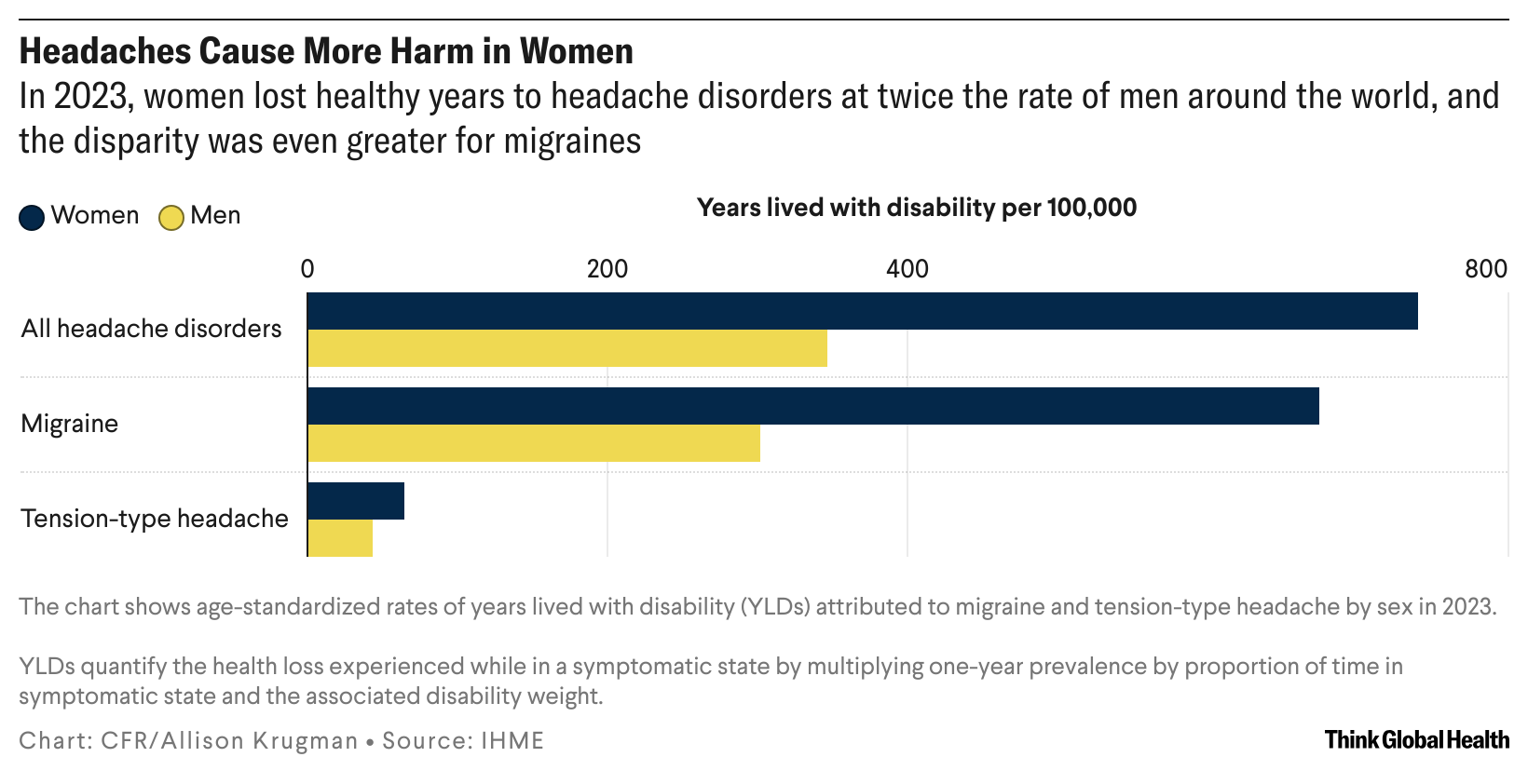
Next, the holidays can be a season of joy—but also of headaches, as travelers wait in long airport lines or nod along during lengthy conversations with family. Yvonne Yiru Xu, a research scientist at the University of Washington’s Institute for Health Metrics and Evaluation, and Andreas Kattem Husøy, a neurologist resident at St. Olav’s University Hospital, describe how the overuse of common pain medications could feed the global burden of headaches and migraines, which they estimate via a new study in the Lancet Neurology.
The TGH newsletter concludes with a visit to Mumbai, India—where journalist Puja Changoiwala provides a field report about overcrowded railway trains that claim 10 lives a day on average. She speaks with victims’ family members and analyzes how administrative delays are stalling efforts to improve safety.
Until next week!—Nsikan Akpan, Managing Editor, and Caroline Kantis, Associate Editor