| | The US intercepts another vessel off the coast of Venezuela, China and India ease visa rules on each͏ ͏ ͏ ͏ ͏ ͏ |
| |  Damascus Damascus | New Delhi | Shanghai |
 | Flagship |  |
| |
|
The World Today |  - US pursues more oil tankers
- Test of US-Syria relations
- West Bank settlements expand
- US right-wing media divides
- China, India ease visa rules
- Bolivia in ‘economic tailspin’
- AI could ‘collar-flip’ UK
- Indian drone deliveries tick up
- Luring in-person shoppers
- Best 2025 China books
 A snapshot of Mali on the eve of its independence. |
|
US intercepts another tanker off Venezuela |
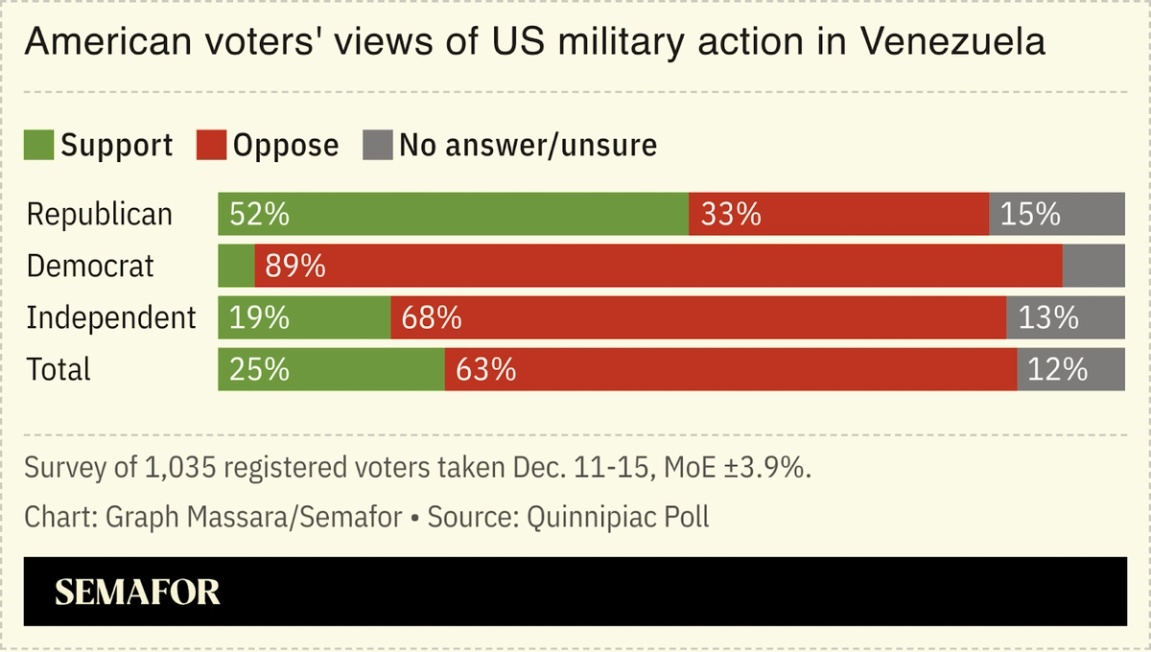 The US intercepted a second tanker carrying Venezuelan oil and was pursuing a third on Sunday, marking an escalation in Washington’s campaign against Caracas. The action, 10 days after the US apprehended another tanker, shows that Washington considers “almost all oil tankers carrying Venezuelan crude” subject to possible seizure, Axios wrote. President Donald Trump last week declared a “blockade” on sanctioned tankers going to and from Venezuela, a move that imperils Cuba, given its reliance on cheap Venezuelan oil. But it suggests Trump’s options on Venezuela are “narrowing,” The Washington Post wrote: He has “all but abandoned the public pretense that his goal is simply stopping migrants and drugs,” rather than ousting President Nicolás Maduro. |
|
US’ strikes on Syria test new leadership |
 US Air Force Photo/Handout via Reuters US Air Force Photo/Handout via ReutersThe US’ strikes against dozens of Islamic State targets in Syria highlight the challenges Damascus’ new government faces as it restores ties with Washington. Friday’s retaliatory attacks, which followed the killing of two American soldiers and a civilian interpreter, posed a test for the ties between the US and Syria just more than one year after rebel groups toppled Bashar al-Assad. New President Ahmed al-Sharaa reportedly backed the operation as he tries to unite disparate factions within his country, but some “more hard-line supporters could bristle at strikes by a Western country on their homeland,” The New York Times wrote. “The government is trying very hard to walk a thin line,” an expert said. |
|
Israel approves more West Bank outposts |
 Mussa Qawasma/Reuters Mussa Qawasma/ReutersIsrael approved 19 new settlements in the occupied West Bank on Sunday, advancing its quest for control of the territory. The move, spearheaded by Israel’s hard-right finance minister, effectively completes the repeal of a 2005 disengagement plan that led to the evacuation of several settlements, Haaretz noted. Israeli settlers have built a record number of new outposts in the West Bank, which are considered illegal under international law, over the past two years. “The goal is to win on the ground what might otherwise be lost at a negotiating table,” The New York Times wrote. The expansion, experts say, threatens the establishment of a Palestinian state, which in turn could threaten Gaza reconstruction plans and regional relations. |
|
Divisions deepen on US right |
 Cheney Orr/Reuters Cheney Orr/ReutersA conference featuring some of the US’ most prominent conservative figures revealed an American right marred by divisions over its future. At the Turning Point USA gathering, hosted by the group founded by slain activist Charlie Kirk, commentator Ben Shapiro denounced Tucker Carlson and other popular voices in President Donald Trump’s MAGA movement over their promotion of conspiracy theories and friendly interactions with antisemites. Carlson later took the stage and mocked Shapiro. Factions of the MAGA movement are fighting for influence ahead of the 2028 presidential election — Kirk’s widow, Turning Point CEO Erika Kirk, endorsed Vice President JD Vance on Friday — with Carlson in particular setting off a debate over where Republicans stand on rejecting hate speech, The Washington Post wrote. |
|
India, China ease visa rules |
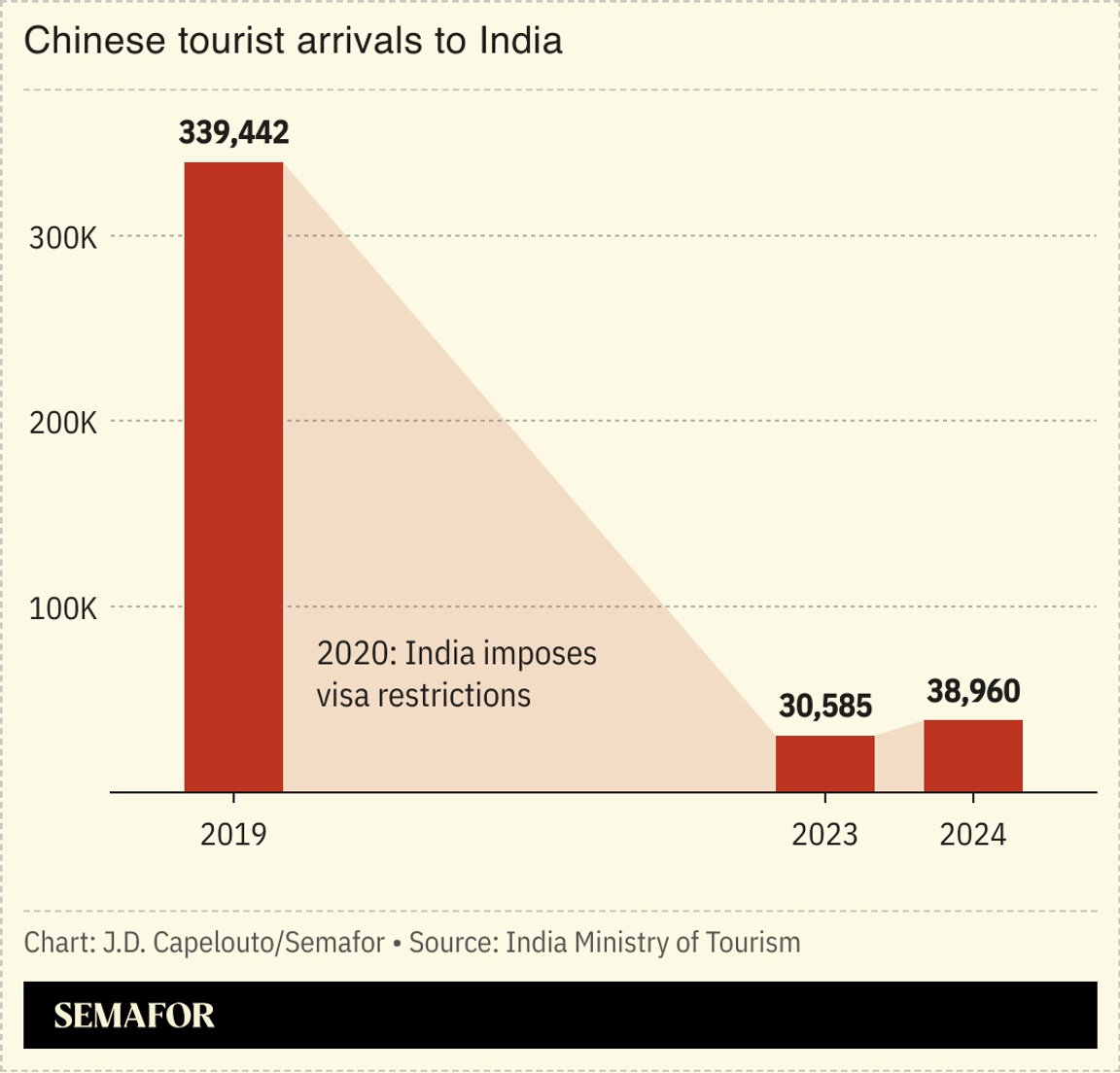 China and India eased visa rules for each other, as once-icy relations between the world’s two most populous nations continue to thaw. Starting Monday, Beijing is letting Indian citizens apply for visas online, sparing them from time-consuming, in-person office visits. And India streamlined its visa process for foreign technicians and factory engineers, giving a boost to an industry that leans on Chinese professionals, The Hindu noted. The countries have cautiously rekindled ties this year, including by resuming direct flights, as US President Donald Trump’s tariff regime pressures both economies. But even as analysts expect tourism and business ties to pick up, rising anti-Indian sentiment in China fueled by nationalist actors threatens the rapprochement, a researcher wrote in The Diplomat. |
|
Bolivia is in ‘economic tailspin’ |
 Claudia Morales/Reuters Claudia Morales/ReutersBolivia ended two decades of fuel subsidies and declared an “economic emergency” as the new center-right government in La Paz looks to stabilize public spending and tame double-digit inflation. US Secretary of State Marco Rubio hailed the moves as “meaningful reforms” that would help the country attract US investment. Bolivia is hoping to secure an Argentina-style US currency swap to halt its “economic tailspin,” The Wall Street Journal reported, and is dangling in return access to its untapped lithium reserves, among the world’s largest. Under mandates to slash spending and crack down on gang violence, “the true revolutionary fervor in today’s Latin America… is primarily evident on the ideological right,” the editor of Americas Quarterly noted. |
|
AI wave could ‘collar-flip’ UK |
 James Manning/PA Images via Getty Images James Manning/PA Images via Getty ImagesAn AI data center boom in the UK could trigger a “collar flip” in which financial analysts and securities brokers, not blue-collar workers, become the group most at risk of job disruption, research suggests. “We’re not used to a politics where the left-behind might be the people you least expect,” a London pollster said. He pointed to data showing that high-income areas that opposed Brexit also carry the highest rate of “automation risk” from AI. “These are not places accustomed to revolt or revolution,” Bloomberg wrote. But similar to the US, and despite the data centers’ projected economic benefits, some parts of Britain are seeing populist backlash to construction plans, with neighbors citing environmental and energy concerns. |
|
 Stay informed with Foreign Affairs This Week — a free roundup of the week’s top articles curated by the editors of Foreign Affairs, delivered every Friday. From global insights to must-read analysis, it’s the smartest way to end your week. Sign up today and stay ahead of the conversation. |
|
Drone deliveries rising in India |
 Ronen Zvulun/Reuters Ronen Zvulun/ReutersDrone deliveries are rapidly expanding in India, increasing efficiency but making gig workers nervous that their jobs are being automated. Medical drone deliveries have been used in remote areas for a while, but several companies are setting up shipping in dense urban zones, Nikkei reported. In the US, retailers including Walmart and Amazon are testing drone deliveries in some cities, and similar systems are in use in Ireland and Israel. One Tel Aviv company makes thousands of takeout deliveries a month with its drones. Proponents say the shift to drones will reduce costs, but that may not be the case yet: McKinsey estimated that delivering one package by drone costs as much as seven times more than by van. |
|
Retailers lure in-person shoppers |
 Jeenah Moon/Reuters Jeenah Moon/ReutersThis holiday season, some retailers are betting that memorable in-person experiences can lure people away from their screens. At the FAO Schwarz toy store in Manhattan, customers can pay extra to go on a guided, hourlong shopping spree. Or they can pay for tours from toy soldiers before the store opens or after it closes. “It’s all about creating something unforgettable,” a company executive said. At New York City’s Lego Store, shoppers can build custom toys. And at Louis Vuitton in Shanghai, customers browse in a store shaped like a ship. The future of retail is about “retailtainment,” a mix of storytelling, shopping and entertainment, Louis Vuitton’s CEO said, as the industry fights for customers who prize rewarding experiences over same-day delivery. |
|
|


