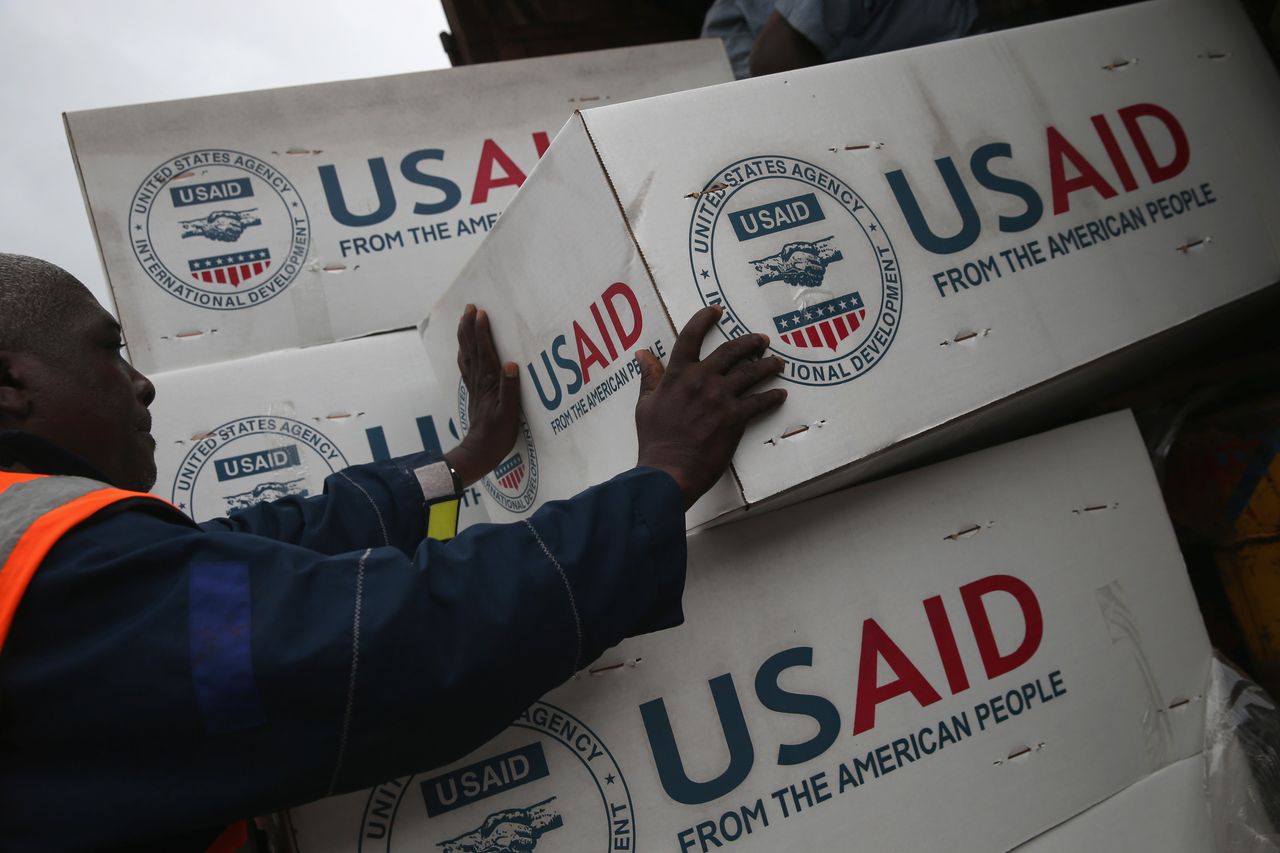
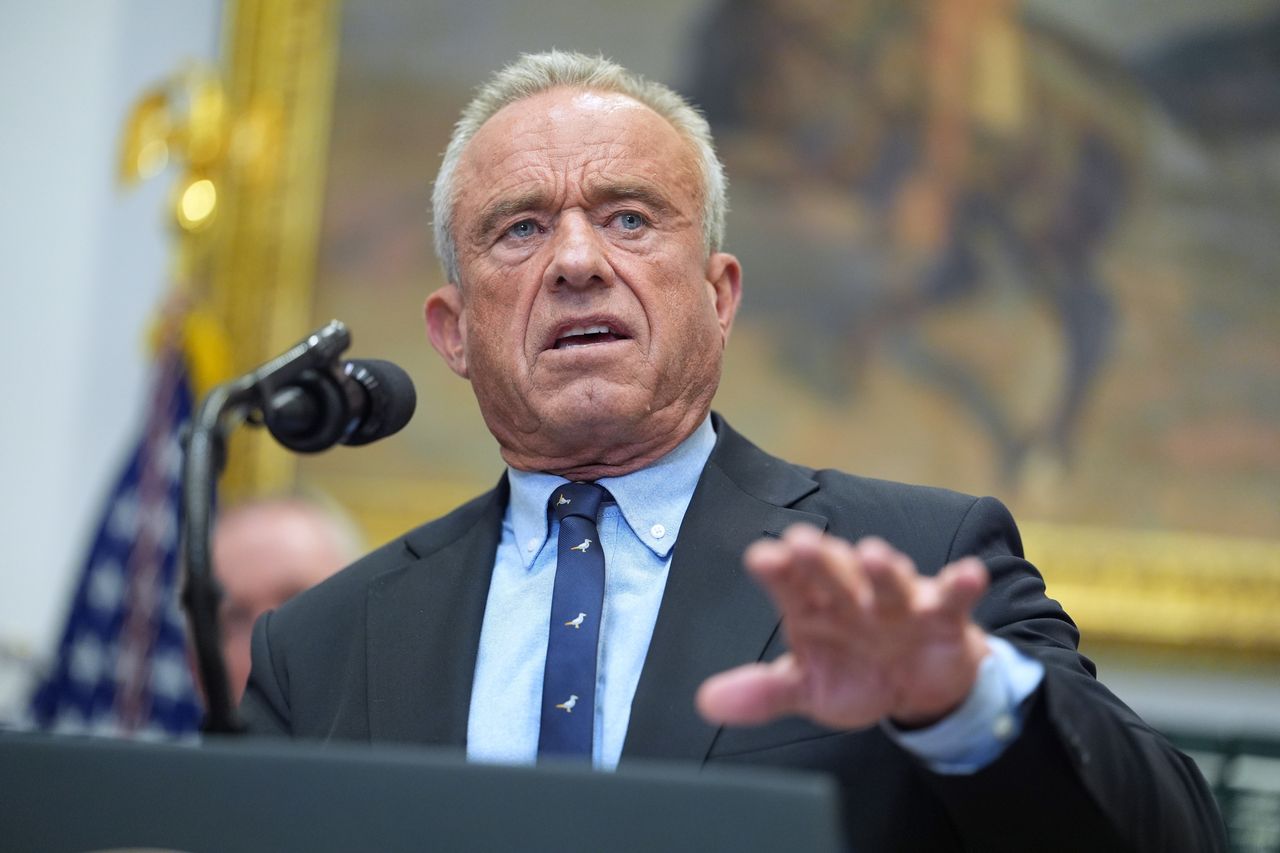
| |  | The Watch List | 1. MAGA upends global health agenda — On his first day in office, President Donald Trump ordered federal agencies to begin withdrawing the U.S. from the World Health Organization, an agency of the United Nations that acts as a coordinating body on health initiatives, thereby completing a process he began in 2020 during his first term. — Trump also moved to freeze U.S. foreign aid. Then, shortly after Trump’s inauguration, the administration began placing dozens of USAID officials on leave. Elon Musk — then leading the Department of Government Efficiency (DOGE) effort to slash government programs — identified the U.S. Agency for International Development, or USAID, as a bastion of corruption. In February, Musk wrote on social media that it was “time” for the agency — which led humanitarian aid operations around the world since Congress established it in 1961 — “to die.” The next month, the Trump administration formally moved to dissolve the agency. What’s left of USAID was moved under the State Department. Eliminating many of USAID’s programs has already resulted in nearly 700,000 deaths around the world, according to a tracker set up by Boston University infectious disease modeler Brooke Nichols. ESSENTIAL WAPO READS ON THE TOPIC: — “Congolese rape survivors search in vain for medicine after USAID cuts,” Katharine Houreld reports today. — “Trump’s USAID pause stranded lifesaving drugs. Children died waiting,” Meg Kelly, Joyce Sohyun Lee, Rael Ombuor, Sarah Blaskey, Andrew Ba Tran, Artur Galocha, Eric Lau and Katharine Houreld report in this in-depth and interactive story. — “USAID cuts may cause 14 million more deaths in next five years, study says,” Kelsey Ables writes. WHAT’S NEXT The U.S. withdrawal from the WHO is expected to become official in January. The U.S. had been the organization’s largest funder, and WHO is projected to cut about 2,000 jobs to account for the loss in revenue. In September, the State Department released the America First Global Health Strategy, leaning on negotiating new bilateral foreign aid agreements that require foreign governments to “co-invest” in the efforts. Earlier this month, the department announced that it would be signing agreements with dozens of countries in the coming weeks. Several lawsuits challenging the foreign aid cuts and dissolution of USAID are working their way through the courts. The Justice Department recently filed to block Musk and others from being deposed in one of those cases. 2. Health agency cuts It wasn’t just foreign health agencies: The Trump administration has moved to overhaul the federal health bureaucracy writ large, slashing thousands of jobs at agencies that review drugs, drive biomedical research, and work to prevent gun deaths and drownings. — The Department of Health and Human Services has marketed the cuts as a way to refocus a priority on combating chronic illness and making government agencies more efficient and responsive. The chaos began shortly after Trump’s inauguration, with the firing of thousands of probationary health agency workers, some of whom were reinstated shortly thereafter — including workers in roles that help regulate medical devices and the nation’s food supply. The Agriculture Department also tried to reverse some of the workers it had let go — people who were handling the government’s response to a (rapidly spreading) avian flu. In March, the department announced that it would slash 10,000 jobs across various health agencies, in addition to the 10,000 employees who took buyouts or retirement offers. The Washington Post reported that senior leaders at agencies including the National Institutes of Health, the Centers for Disease Control and Prevention, and the Food and Drug Administration were put on leave as part of the purge. By the summertime, HHS began rushing to hire hundreds of workers back, including more than 700 at CDC. The federal government shutdown kicked off additional rounds of layoffs and reinstatements. — In addition to the broader cuts, Health Secretary Robert F. Kennedy Jr. has overseen the firing of top officials — including former CDC Director Susan Monarez, The Post’s Lena H. Sun, Dan Diamond and Lauren Weber scooped — after she refused to resign while being pressured on vaccine policy. Several other CDC officials resigned following her firing. In a Senate hearing weeks later, Kennedy said he fired Monarez because she wasn’t “trustworthy.” Objections to agency leadership — including Kennedy and FDA Commissioner Marty Makary — and frustration over the rounds of staffing cuts has led other career staffers to quit, prompting questions about brain drain at top health agencies. The FDA’s office that oversees drug approvals is on its fifth leader this year. Tracy Beth Høeg recently took the helm following the resignation of longtime FDA official Richard Pazdur, who had only been in the role for less than a month. The Post’s Dan Diamond and Rachel Roubein scooped that he had been frustrated by several FDA initiatives meant to speed the approval of new medications, worried they may be unsafe or illegal. The overall net change in health agency employment isn’t fully known, but HHS spokesperson Andrew Nixon tells me that the FDA’s “size, like HHS itself, is compatible with the pre-pandemic headcount.” ESSENTIAL WAPO READS ON THE TOPIC: — “The year Trump broke the federal government,” Hannah Natanson and Meryl Kornfield wrote over the weekend, examining the timeline of the sprawling DOGE cuts across the government and the lives of people those cuts have impacted. — “How public health has been upended in Trump’s first 100 days,” a project by Washington Post staff. — “In coal country, Trump’s cuts to health programs put miners in danger,” Maxine Joselow and Ricky Carioti reported from West Virginia. — “Trump administration races to fix a big mistake: DOGE fired too many people,” reported Hannah Natanson, Adam Taylor, Meryl Kornfield, Rachel Siegel and Scott Dance. — “As CDC crumbles, fears grow about vaccines, pandemics and health crises,” Lena H. Sun, Lauren Weber and David Ovalle reported. WHAT’S NEXT I’ve reported in Health Brief about how investors, patient groups and drugmakers are frustrated with how the FDA has been operating, and it appears as if the agency is trying to find its way. The upheaval in staffing has been particularly prominent at the FDA and the CDC, though the FDA recently said it’s going to go on a hiring spree. Makary said in a social media post that the agency is onboarding 1,000 new scientists. Nixon, the HHS spokesperson, said the FDA “recently selected for hire 500 reviewers, inspectors and investigators who will start work after completing their onboarding.” He said the agency will be hiring even more people, sifting through about 11,500 applications. | 

_tstmp_1756933376-1920-1080.png)