| | Trump’s allies distance themselves from him over his Greenland rhetoric, India projects strong econo͏ ͏ ͏ ͏ ͏ ͏ |
| |  Bogotá Bogotá | Minneapolis |  New Delhi New Delhi |
 | Flagship |  |
| |
|
The World Today |  - Trump Greenland backlash
- US eyes Venezuela oil
- Possible Colombia detente
- Beijing courts Africa
- India projects strong growth
- US multilateralism retreat
- ICE officers kill driver
- Investors back AI firms
- China’s influencer push
- Stone Age poison arrows
 An early, pseudonymous Stephen King novel entirely unlike its Arnold Schwarzenegger-led adaptation. |
|
Trump faces Greenland backlash |
 Sarah Meyssonnier/Reuters Sarah Meyssonnier/ReutersUS President Donald Trump’s threats to annex Greenland are sparking backlash among allies. His secretary of state will meet with Denmark’s and Greenland’s leaders over the issue soon. Internationally, the UK — usually keen to maintain warm relations with Trump — said the island should decide its own future, and joined other European nations in saying Greenland “belongs to its people.” US Republicans also voiced concern, with several telling Semafor that the administration should tamp down its rhetoric. The campaign is, perhaps unsurprisingly, creating a problem between lawmakers and the Danish ambassador: One House staffer said that every time the Greenland issue comes up, the diplomat “emails everyone and complains and comes and does meetings and yells at us.” |
|
US eyes long game for Venezuela oil |
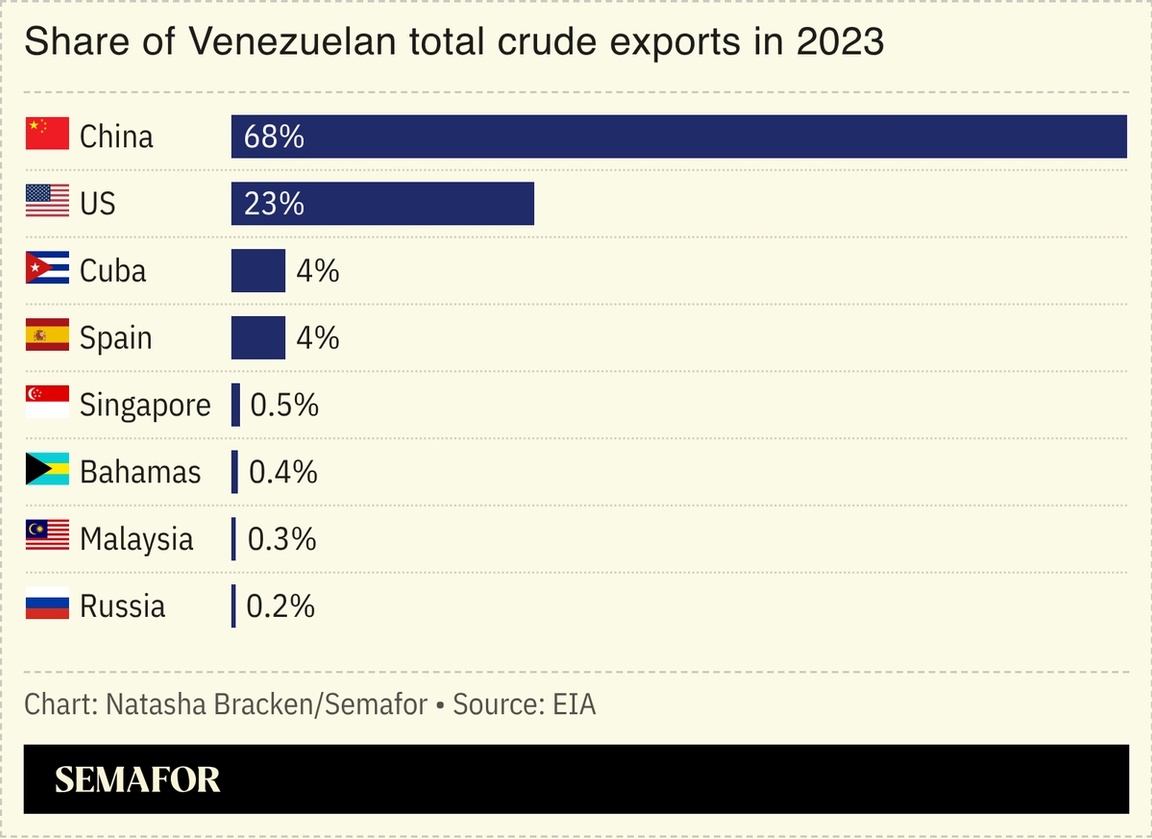 The US energy secretary said Washington will sell Venezuelan oil “indefinitely,” further cementing the outsize control the White House plans to have over Caracas’ economy. In the days since it captured Venezuela’s leader, the US has said the South American country will hand over crude worth about $3 billion. Washington is also reportedly discussing plans to partially take over Venezuela’s state-owned oil company, and will host American oil executives at the White House on Friday. Venezuela has the world’s largest stated oil reserves, and Chevron is already in talks to expand its license there, Reuters reported, while other energy CEOs have expressed interest in projects. But many want “serious guarantees” before diving in, according to the Financial Times. |
|
US-Colombia meet could ease tensions |
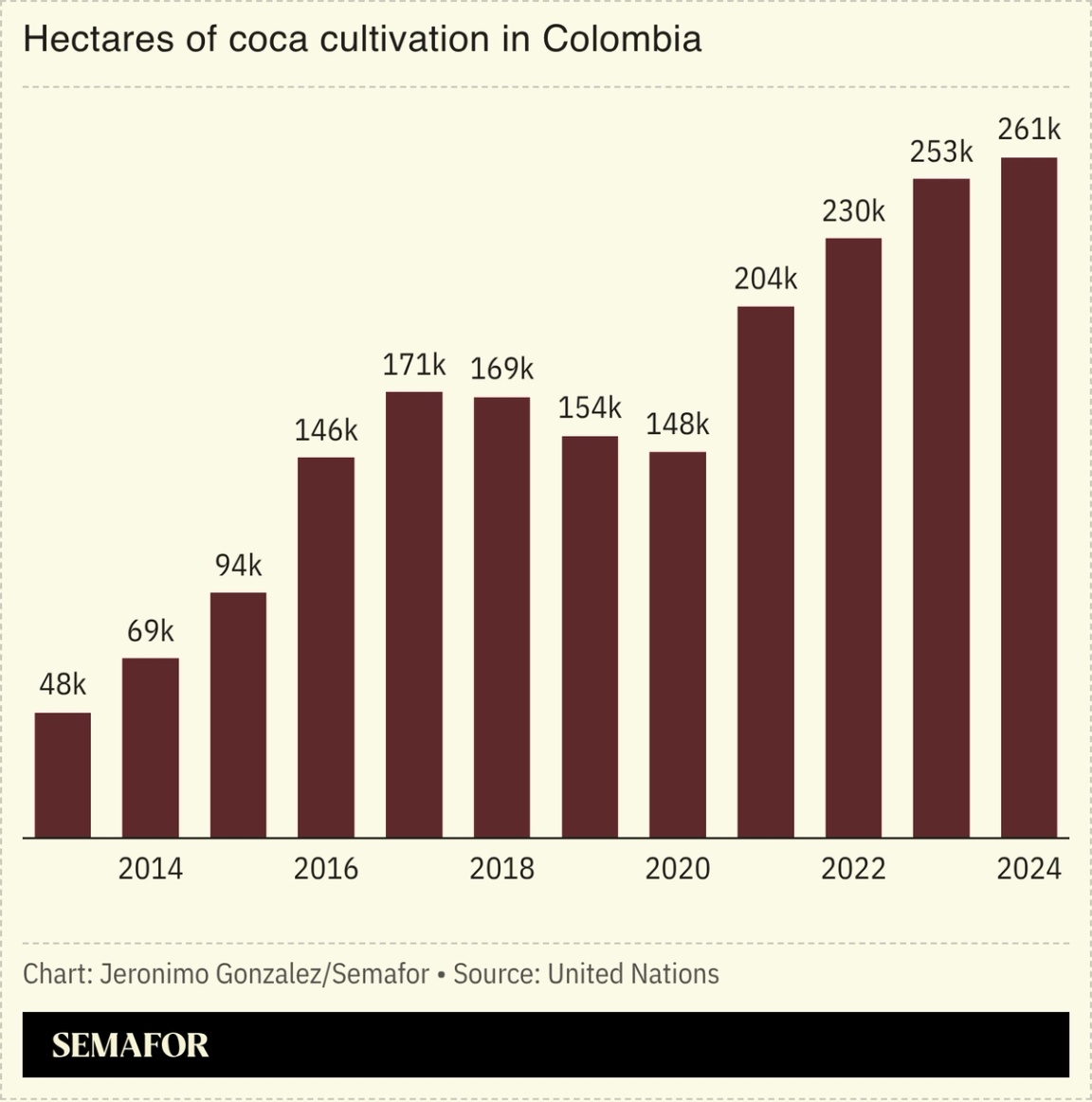 US President Donald Trump offered to host his Colombian counterpart for talks soon, pointing to a detente just days after he suggested Washington could follow up its intervention in Caracas with one in Bogotá. Colombia — a hub of the global drug trade — and the US have seen relations deteriorate since Trump came to office, with Trump saying a potential operation in Colombia “sounds good” after American troops spirited Venezuela’s leader to New York City for trial on narco-trafficking charges. The stakes extend beyond drugs, and indeed beyond Bogotá: Colombia is home to significant reserves of oil as well as precious metals, and following the Venezuela move, Trump told reporters that “Cuba is ready to fall,” too. |
|
Beijing courts Africa with New Year tour |
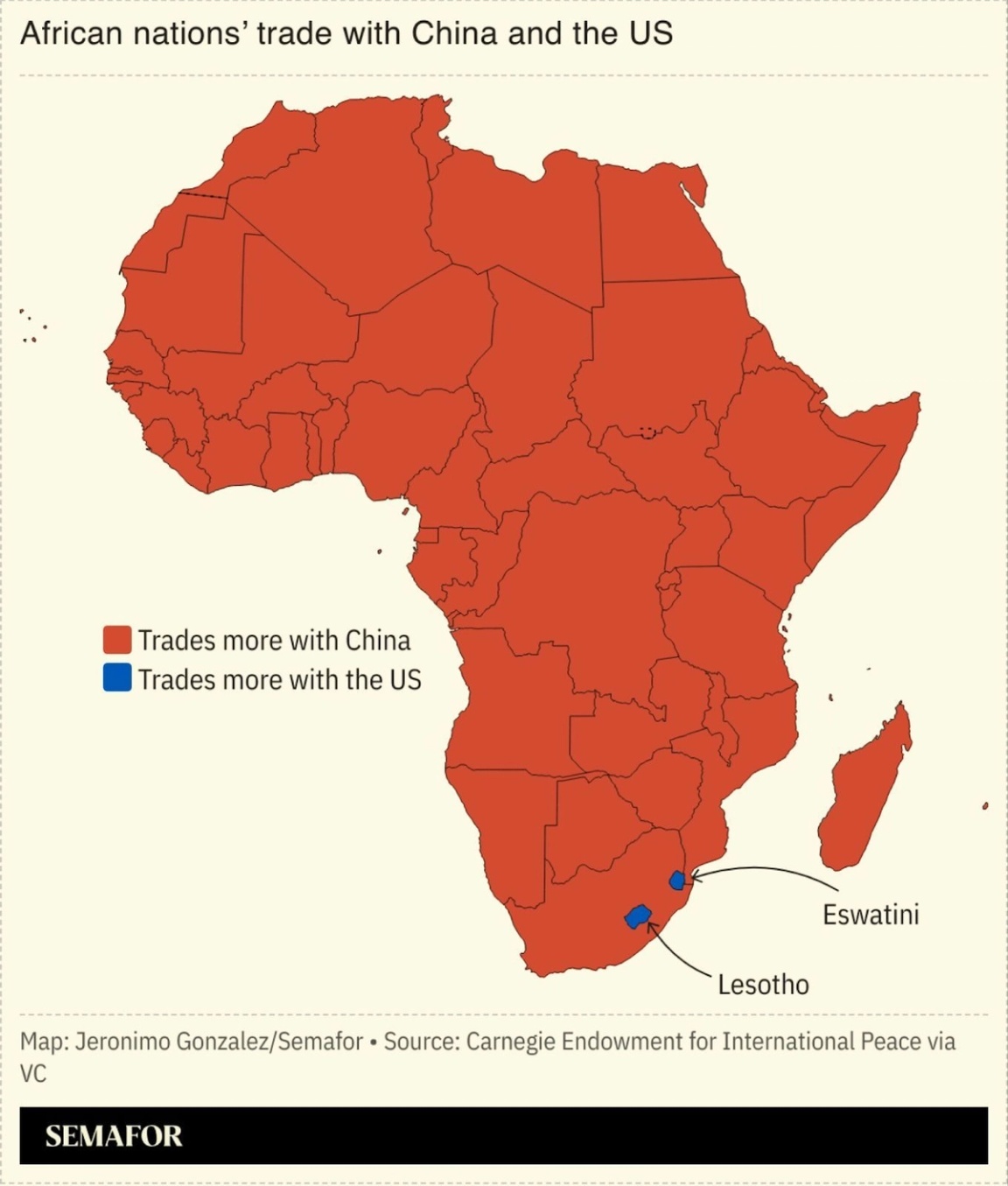 China’s top diplomat Wang Yi courted key East African nations on a tour of the region, part of efforts to capitalize on frustration with the US on the continent. The country’s foreign ministers have traditionally made their first annual overseas trip to Africa, symbolic of Beijing’s push to improve ties. On the itinerary for 2026 are Ethiopia, Lesotho, Somalia, and Tanzania, each of which has seen worsening ties with Washington since the start of US President Donald Trump’s second term. The China-Global South Project noted that Wang will likely frame Beijing as a stable, rule-abiding partner, one which recently announced zero-tariff market access for a raft of African nations — a sharp contrast with its superpower rival. |
|
India forecasts stronger growth |
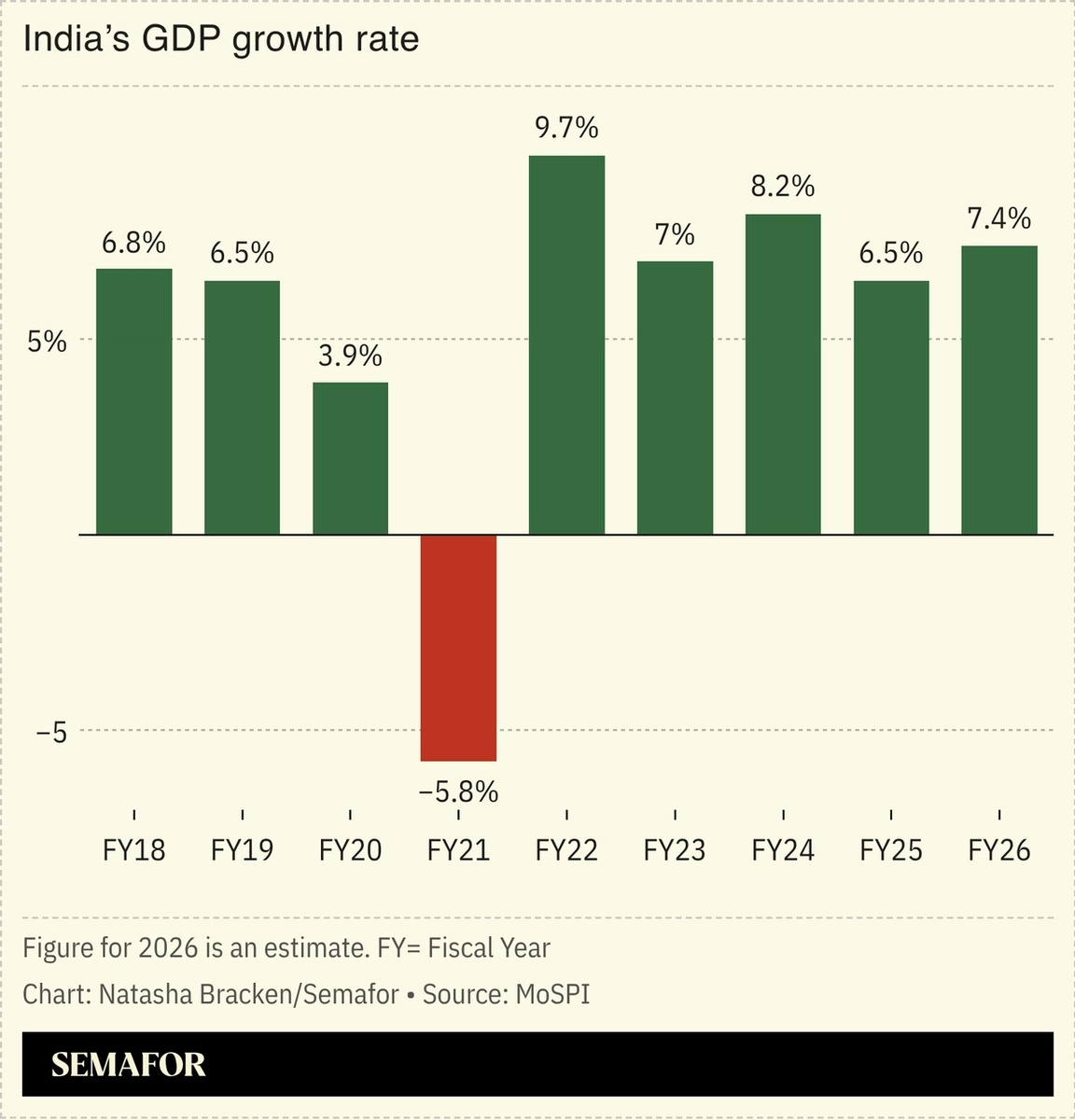 India projected its economy would expand more than previously expected, maintaining its status as the world’s fastest-growing major nation. The figures suggest the country is weathering trade tensions with the US, as well as regional security and political issues. Remarkably, the central bank has cut its inflation forecast, pointing to something of a Goldilocks period in which growth is not accompanied by significant price rises. Still, experts voiced caution. “India has experienced apparent structural accelerations before, only for them to fade when global conditions turned or domestic imbalances resurfaced,” a former central bank chief warned in the Financial Times. “Has India entered a structurally higher growth phase? The most defensible answer is — provisionally.” |
|
US multilateralism retreat |
 A thermometer seen behind the flag of the United Nations Framework Convention on Climate Change. Wolfgang Rattay/Reuters A thermometer seen behind the flag of the United Nations Framework Convention on Climate Change. Wolfgang Rattay/ReutersUS President Donald Trump withdrew Washington from dozens of international entities, including the Intergovernmental Panel on Climate Change, further cementing Washington’s retreat from multilateralism. The White House said the groups, most of them UN-backed, were “wasteful, ineffective, or harmful,” and would no longer receive “the blood, sweat, and treasure of the American people.” Trump has long been skeptical of international bodies: On the first day of his second term, he withdrew from the World Health Organization and the Paris Agreement, having already quit both during his first stint in office before his successor Joe Biden rejoined. He has also suggested that the US might leave NATO. |
|
ICE kills driver in Minneapolis |
 Tim Evans/Reuters Tim Evans/ReutersUS Immigration and Customs Enforcement officers killed a woman in Minneapolis, sparking a row between local authorities and the federal government. Video showed men on foot approaching a car, which attempted to drive off before an officer fired repeatedly. The Department of Homeland Security said the woman tried to run over police, accusing her of “domestic terrorism,” a characterization Mayor Jacob Frey called “bullsh*t.” Minnesota is at the center of the country’s immigration debate: Trump called the local Somali community “garbage” and accused them of mass benefit fraud, while a civil liberties group has sued the DHS, alleging ICE officers assaulted residents. Frey blamed the agents for the death, saying “To ICE: Get the f*ck out of Minneapolis.” |
|
 Semafor this week announced it secured major financing, funding it plans to use for an expansion of its global newsroom and live journalism business. The Wall Street Journal described our audience as “C-suite executives, government leaders and public policymakers,” and reported that we’re building “a brand on par with business publications such as The Economist or the Financial Times.” Crucially, Reuters noted, whereas major publishers are “facing declines in traffic,” Semafor generated a profit in 2025, our third full year of operations. Media and business executives taking part in the fundraising included founding backers such as Henry Kravis of KKR and Carlyle’s David Rubenstein, with new backers including European media investors and former US Commerce Secretary Penny Pritzker. |
|
AI investors brush off bubble fears |
 Dado Ruvic/Illustration/Reuters Dado Ruvic/Illustration/ReutersFears of an AI bubble do not appear to have slowed investors. Anthropic raised $10 billion at a $350 billion valuation in a new funding round, while Elon Musk’s xAI took $20 billion, doubling its valuation in a year to $230 billion, despite an ongoing row about its chatbot creating sexualized images of children. Both companies are expected to go public this year, and Anthropic — whose model is popular with businesses for its coding strength — projects breaking even by 2028. OpenAI is also seeking additional capital, and has invested hundreds of billions in data centers. The AI boom is driving demand for chips, with semiconductor manufacturer Samsung forecasting record earnings and seeing a 125% increase in its share price last year. |
|
|


