| | In this edition, the Trump administration is heading to Davos “in force,” and Costco is in wait-and-͏ ͏ ͏ ͏ ͏ ͏ |
| |  | Business |  |
| |
|
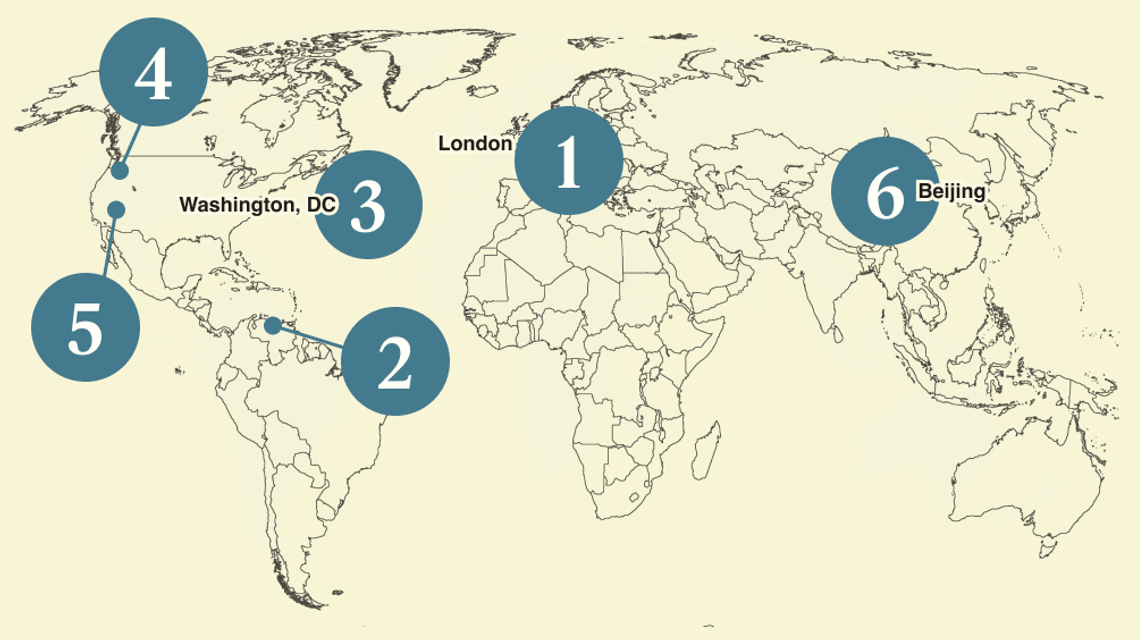 - White House ‘coming in force’ to Davos
- Venezuela lobbying rush
- Fight over rental homes
- Costco mum on tariff refunds
- Data centers’ NIMBY glowup
- China outlook ‘bleak’
|
|
 A bit of business news about Semafor: We just closed a $30 million fundraising round on the back of our first year of profitability — neither an easy feat in this media age. We’ve come a long way since the summer of 2022, which we spent in a very hot, very small office in Little Italy, designing our news offering and hoping that people would read it. Thank you for reading, and for spreading the word. The most important part of this milestone is what this money lets us do: invest in our journalism. Semafor Business has an ambitious year planned. We’ll take this briefing to five days a week, with the help of new reporters and editors we’ll be adding over the next few months. (Stop leaking to the competition; we’d rather just hire them. Send us your recommendations!) We’ll also be adding China to the Semafor coverage map. And we will, naturally, be launching a business podcast. Stay tuned. Programming note: I’ll be in London next week and then in Davos for the World Economic Forum. If you’re in either spot, drop me a line! And sign up for our Davos pop-up newsletter, back by popular demand. |
|
Trump administration comes ‘in force’ to Davos |
 Yves Herman/Reuters Yves Herman/ReutersTreasury Secretary Scott Bessent, Commerce Secretary Howard Lutnick, and Energy Secretary Chris Wright are slated to join President Donald Trump at Davos later this month, Semafor scooped. Jamieson Greer, head of US trade policy; Steve Witkoff, special envoy to the Middle East; AI and crypto czar David Sacks; Michael Kratsios, head of the White House’s science and technology policy; and Mehmet Oz, head of the Centers for Medicare and Medicaid Services are also part of the planned delegation, an official familiar with the planning told Semafor, adding that the final list could change. “The administration is coming in force,” said Dave Ackerman, who is organizing the USA House in Davos — which for the first time is being recognized by the US State Department as the country’s official headquarters on the Promenade. Trump will be making his third in-person trip to Davos, the high temple of a global, multilateral order he has upended as president. He said Wednesday that he would use the appearance to tout his administration’s affordability efforts. |
|
Lobbyists see Venezuela bonanza |
 Gaby Oraa/Reuters Gaby Oraa/ReutersTrump is counting on investment from the US private sector to rebuild Venezuela’s economy. Lobbyists see an opening — and dollar signs. “There hasn’t been a bigger opportunity since the fall of the Soviet Union for people’s lives to be changed for the better, for wealth creation at every level,” said Robert Stryk, whose firm, Stryk Global Diplomacy, has been a registered lobbyist for the Venezuelan government since 2020. He spoke with Semafor from Caracas, where Delcy Rodríguez’s government is trying to firm up its hold on power and stay in the good graces of the White House. Stryk, who publicly thanked Trump for capturing Maduro in a letter this week, is a self-styled cowboy lobbyist with a long career proudly operating in what he calls the “sh*tbag world.” US companies have been mostly quiet since Maduro’s capture, suggesting they don’t see a battered South American country emerging from years of despotism as a home-run market. That’s especially true for big oil producers, which learned hard lessons in Iraq and elsewhere about the risks of nation-building and are still owed billions of dollars by Venezuela for past projects. “This is not Iraq. This is not Syria,” Stryk said. “This is a country that has a deep bureaucracy and no massive hatred toward the United States. Their national pastime is baseball.” (Stryk says Maduro cut short their first meeting in Caracas, years ago, to watch Game 7 of the World Series.) |
|
Trump targets corporate landlords |
 Octavio Jones/Reuters Octavio Jones/ReutersTrump’s willingness to attack even his biggest supporters has put Wall Street real-estate investors in the hot seat. The president said he will seek to ban big funds from owning single-family houses, a trend he blamed for putting home ownership “increasingly out of reach.” He didn’t provide details of the ban, which might require congressional action and blindsided Republicans. Data suggests about 3% of homes nationwide are owned by institutional investors, though that may overlook bigger footprints in individual markets. Blackstone, which essentially invented this business at scale when it launched Invitation Homes in the wake of the 2008 housing crisis, says it owns 1% of the nation’s 46 million rental homes. (Building anger over the trend was sharp enough for BlackRock, which isn’t in this business, to spin up a website explaining that it isn’t Blackstone.) Investors bought one-third of homes that sold in the second quarter of 2025, their highest share in five years. But most are small landlords that own fewer than 10 houses, and bigger firms have been selling more homes than they buy, according to real-estate data provider BatchData. Homebuilders, which were heavy Republican donors in the 2024 campaign, rely on institutional investors to buy homes that might otherwise go unsold and manage their cash flows. |
|
Costco on tariff-refund standby |
We checked in with Costco ahead of the Supreme Court’s ruling on Trump tariffs — expected as soon as Friday — to see if the wholesale club would pass along refunds to members if the decision went their way. For now, there’s no clear answer. 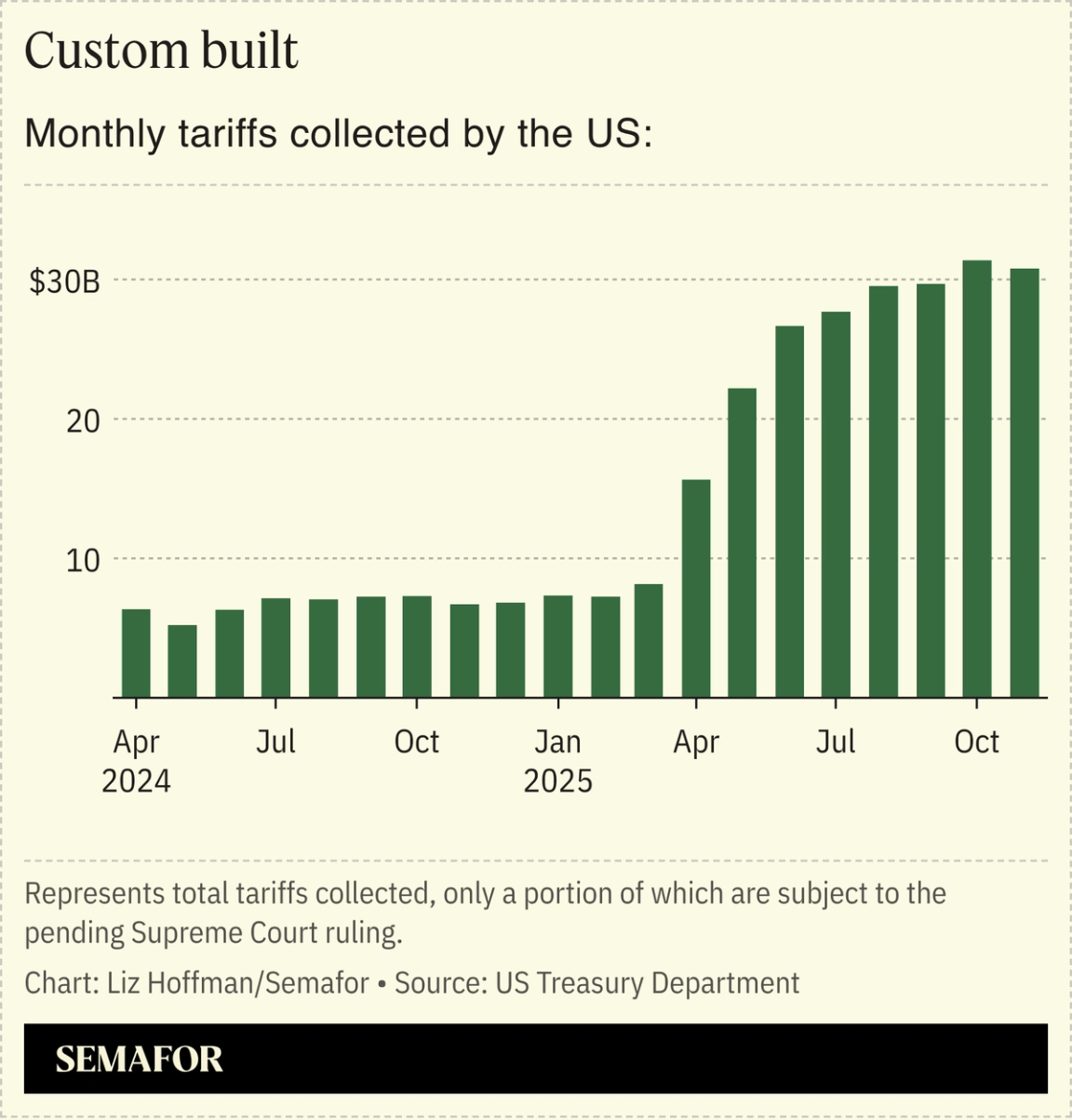 Costco was among the largest of more than 1,000 retailers that sued, arguing that the president had exceeded his emergency powers in enacting some of the tariffs. (Those based on national-security grounds have a stronger legal basis.) Oral arguments in November went badly for the administration, and prediction markets currently put 70% odds on the Supreme Court overturning the tariffs. Justice Amy Coney Barrett asked plainly of the plaintiffs: “If you win, tell me how the reimbursement process would work. It seems to me like it could be a mess.” Costco’s unique business model — its strict membership card policy means it knows every single shopper and what they bought — means it’s possible to return money directly to customers. That’s something Walmart or Target, neither of which has sued, can’t do. “While I appreciate your interest in our perspective, we are not commenting on this topic at the present time,” Costco CFO Gary Millerchip told us. |
|
Data centers get makeover to fight NIMBYism |
 Courtesy of Gensler Courtesy of GenslerTech companies’ response to the growing local pushback to data centers: make them prettier. Vertical gardens, museum-esque facades, and natural materials are examples of architectural flair aimed at winning over communities, Semafor’s Rachyl Jones reports. “When we’ve seen municipalities push back, the clients are very, very willing to do what they ask,” an executive at Gensler, the architecture firm that helped design JPMorgan’s new Manhattan headquarters, told Rachyl. Gensler boosted headcount in its data-center group by 40% over the past year. The speed of the data-center construction boom has awakened traditional NIMBY backlash, but this time it’s amplified by unease over AI’s job-killing potential. Residents have sued to stop new projects, flooded town hall meetings, and voted tech sympathizers out of local office. The key, one designer said, is for companies to spend enough to win over communities without letting investors think they’re wasting money: “What you really need is a forward-thinking billionaire.” |
|
A ‘bleak’ outlook for China |
 Go Nakamura/Reuters Go Nakamura/ReutersWhat’s next for China? The country’s giant debt bubble didn’t burst in 2025, but neither did its biggest problem — weak domestic demand for the goods it manufactures — show signs of abating. Beijing treaded lightly on consumer stimulus while touting big AI breakthroughs and staring down Trump on tariffs. Semafor’s Andy Browne talked to Chinese economists and analysts about the big risks for 2026, from its huge real-estate overhang to the suicidal price competition to the limits of its EV global takeover. President Xi Jinping’s goal of making China a technology superpower “tops any concerns he may have over what has become a two-speed economy: a booming export-driven one … and a domestic one mired in pitiless competition among businesses for scarce profits, rising joblessness, and crushing deflation,” Andy writes. |
|
 What smart money knows — Polymarket is the world’s largest prediction market, with a 90%-plus accuracy track record. In The Oracle by Polymarket, you’ll meet the forecasters who spot what others miss: the political outsider who bought Mamdani at 8%, the trader who cracked Google’s search algorithm. From elections to finance to sports, learn to see the world like a world-class forecaster. Get the free newsletter. |
|
➚ BUY: Rock. Stocks of rare-earth miners climbed after China, miffed about comments by Japan’s prime minister on Taiwan, put new restrictions on exports to Tokyo. ➘ SELL: Roll. Samsung’s “Ballie” robot, a wheeled companion that promised to automate home tasks, has been shelved indefinitely. |
|
 Companies & Deals |
|
|


