| | Stocks tumble as Donald Trump escalates transatlantic tensions over Greenland, the UK approves a mas͏ ͏ ͏ ͏ ͏ ͏ |
| |  COPENHAGEN COPENHAGEN | NEW DELHI |  NANJING NANJING |
 | Flagship |  |
| |
|
The World Today |  - ‘Sell America’ trade returns
- Warning on US foreign debt
- Europe urged to fight back
- Chinese embassy in London
- India diversifies trade
- Ukraine faces energy crisis
- China’s record solar losses
- Finnish shipbuilding boost
- Inequality and anxiety link
- ‘Historic’ vehicle crackdown
 Japan’s snow monsters slim down. |
|
Stocks tumble on Greenland uncertainty |
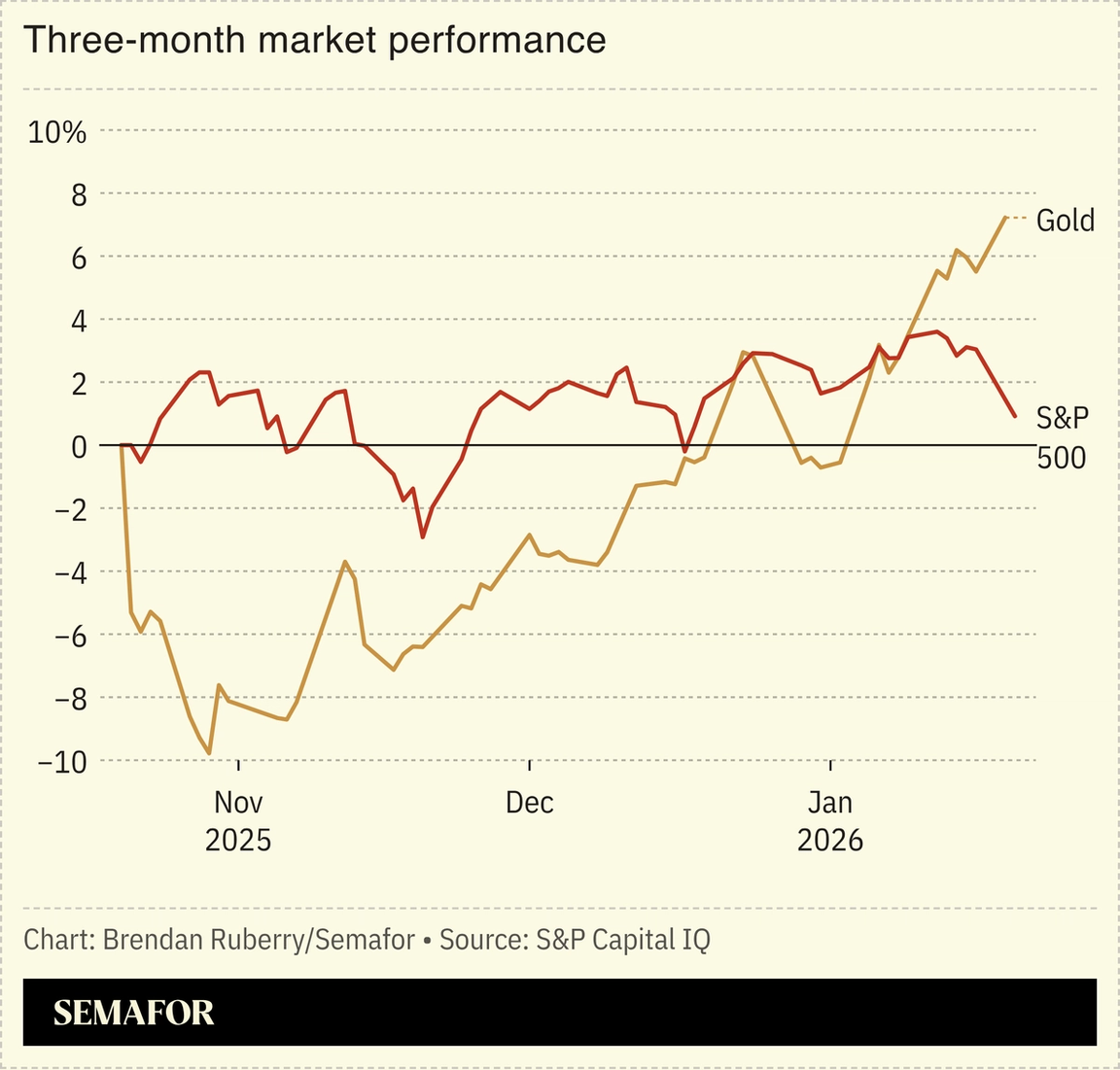 US stocks suffered their worst day since October on Tuesday as transatlantic tensions flared over US President Donald Trump’s efforts to seize Greenland. The dramatic rout — which also saw the dollar fall, while long-term Treasury bond yields ticked up — suggested traders’ willingness to shrug off geopolitical shocks “is beginning to erode,” Bloomberg wrote. Trump’s use of tariff threats for territorial gains, rather than a domestic economic goal, is new, making the potential fallout more unpredictable. “A country will tolerate a lot of economic misery rather than giving up territory,” The Wall Street Journal’s economics commentator argued. Another round of tariffs, coupled with European retaliation, could reignite fears of a US slowdown, while denting Europe’s GDP, Goldman Sachs analysts said. |
|
US foreign debt a vulnerability |
 Firebird Films/Semafor Firebird Films/SemaforThe $9 trillion of US debt owned by foreign countries is an “enormous vulnerability” for Washington, Bridgewater’s Ray Dalio told Semafor in Davos, as nations in Donald Trump’s crosshairs look for ways to oppose his expansionist agenda. The billionaire hedge-fund manager’s warning came as global investors appeared spooked by Trump’s threats to take Greenland. Denmark’s largest pension plan is selling off its $100 million in US Treasury bonds — a move it insisted wasn’t political — while bond giant Pimco is pivoting away from US assets. “The case for global diversification has never been stronger,” a top investment executive said Tuesday. A former US Treasury official, though, argued he was “less apocalyptic” about other countries using US debt load as a cudgel. |
|
Europe urged to stand up to Trump |
 Marko Djurica/Reuters Marko Djurica/ReutersEurope must swap flattery for firmness in responding to Donald Trump’s campaign over Greenland, several prominent European voices argued. Even as some EU leaders sought to appease the US president following his tariff threats, the US president appeared to mock their diplomatic efforts by sharing their text messages. He declared Tuesday there’s “no going back” on his Greenland quest — but Europe “must call Trump’s bluff or risk being bullied into irrelevance,” a veteran British editor argued; a Financial Times columnist echoed it was “more dangerous to roll over… than to fight back.” Despite the risks that forceful economic retaliation carries, “history tells us [that] polite appeasement can have far greater consequences,” Denmark’s former leader noted. |
|
UK approves Chinese mega-embassy |
 Carl Court/Getty Images Carl Court/Getty ImagesThe UK on Tuesday approved plans for China’s new mega-embassy in London, smoothing the path for Prime Minister Keir Starmer to visit China later this month. The 700,000-square-foot building faced pushback from some British and American politicians, citing national security risks, particularly fears of espionage. But in greenlighting China’s biggest embassy in Europe, Starmer is betting on “winning closer trade ties and investment” from Beijing, Reuters wrote. His expected visit to China would be the first by a British leader since 2018, and comes as Beijing looks to capitalize on US-fueled geopolitical disruption to repair and deepen its overseas relationships. China is hosting a stream of Western leaders, and France’s president said at Davos that Europe needs more Chinese investment. |
|
New Delhi widens trade partnerships |
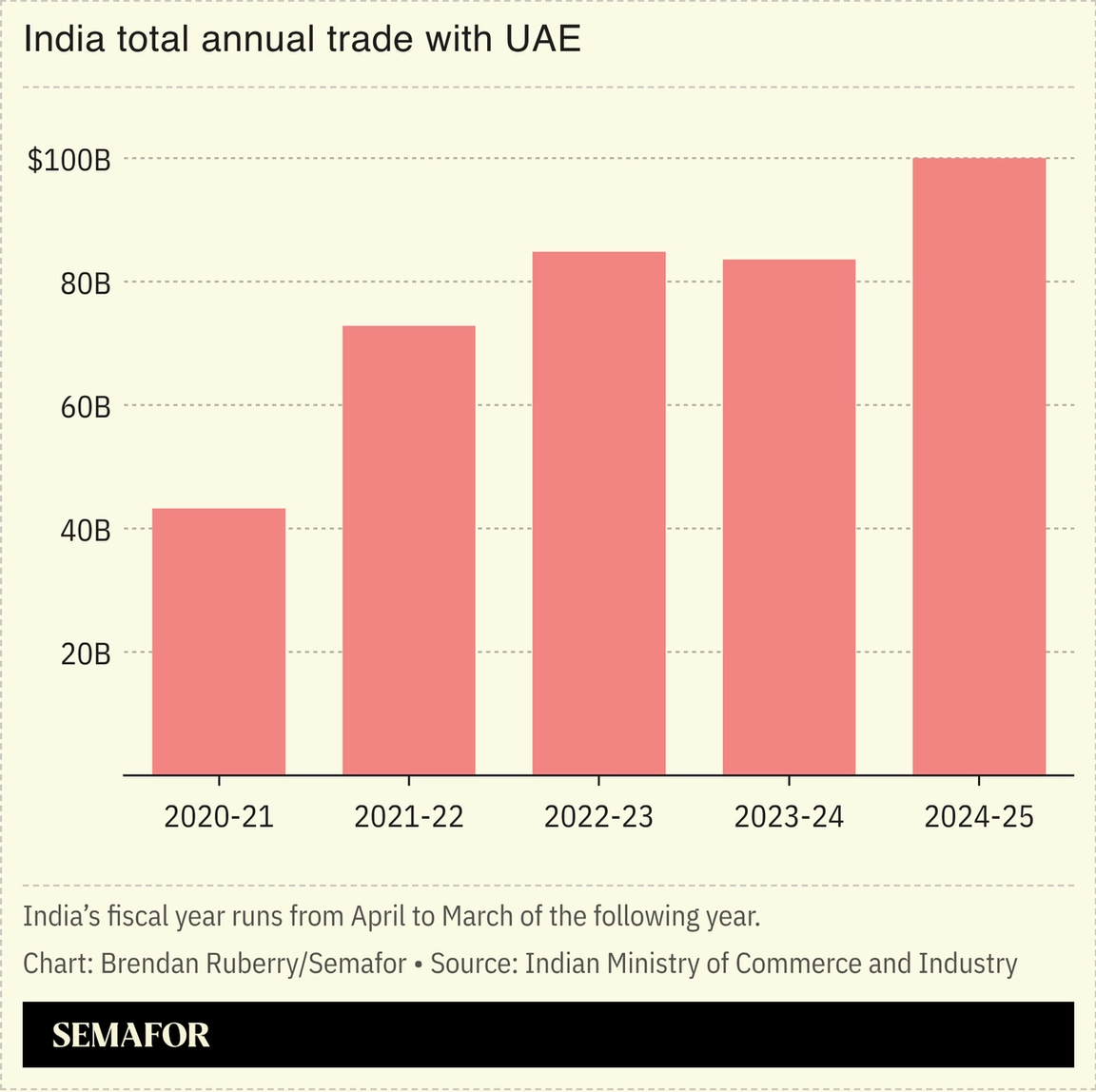 India is pursuing new trade partnerships as a US deal remains elusive. New Delhi on Tuesday inked a major LNG deal with the UAE, with plans to double bilateral trade to $200 billion by 2032. And the European Commission president, who is set to visit India next week, said the two economies are on the cusp of clinching “the mother of all deals.” US-India negotiations, meanwhile, have hit several snags, as New Delhi looks to diversify trade following steep US duties. President Donald Trump’s latest tariff threats against Europe over Greenland offer New Delhi a lesson, an expert told The Times of India: Deals with the US offer no guaranteed protection when economic penalties can be used as leverage. |
|
China solar giants warn of record loss |
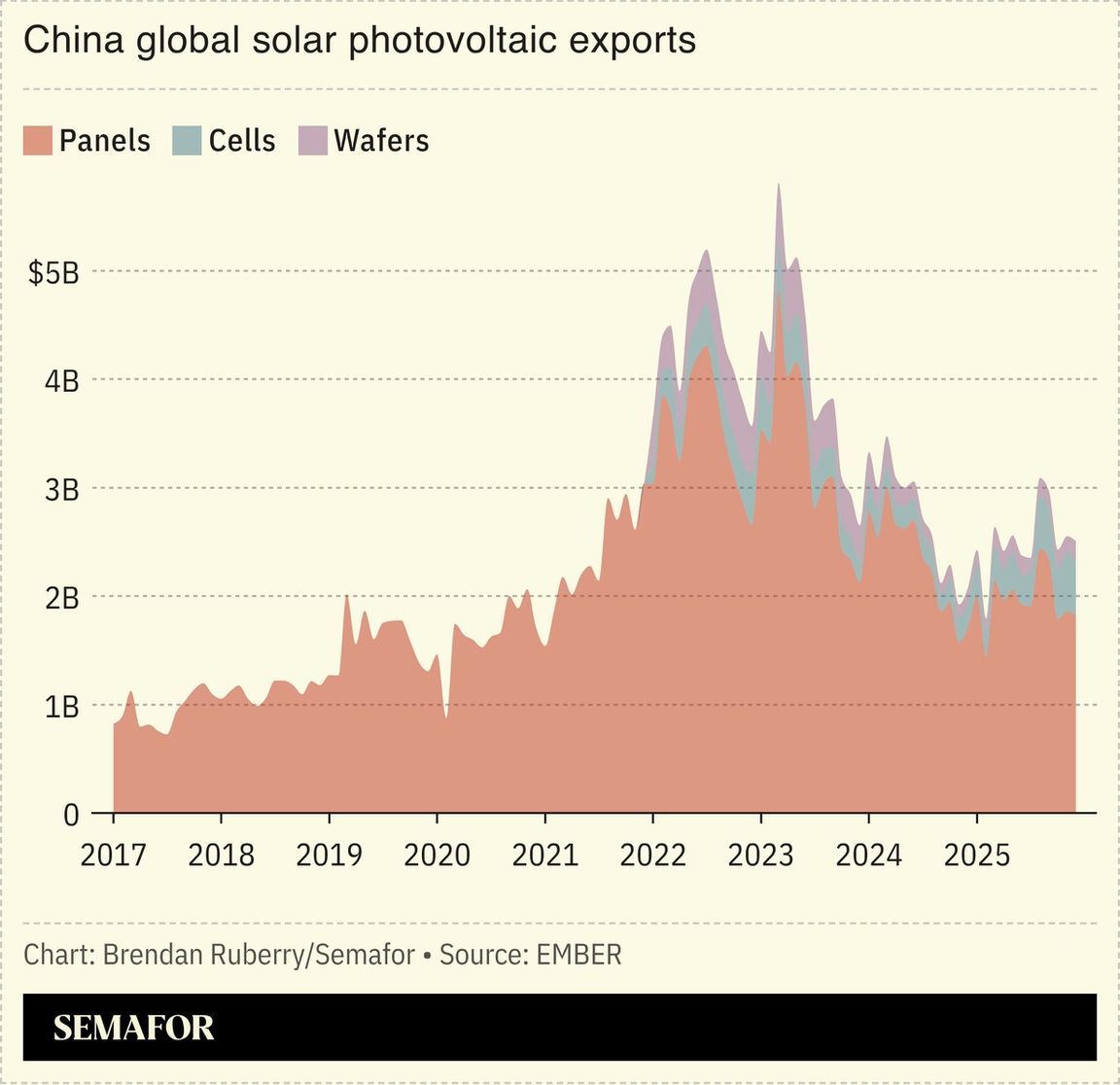 China’s top solar panel companies estimated they lost up to $5.5 billion last year despite the government’s efforts to rein in a punishing price war. The country’s solar installations have surged but were outpaced by a massive supply glut; the companies’ quest for profitability will test the effectiveness of Beijing’s campaign to stamp out so-called “involution,” excessive competition that has plagued other domestic industries. The solar sector is also facing headwinds from rising silver costs. China’s aggressive renewable energy push has seen cheap green power spill beyond its borders, and the “bizarre dynamics have spread” with it, WIRED wrote: Chinese solar panels, for instance, have led to negative electricity prices in Germany. |
|
Greenland pushes Ukraine off the agenda |
 Valentyn Ogirenko/Reuters Valentyn Ogirenko/ReutersUkrainian energy companies are concerned that crises over Venezuela and Greenland are siphoning political oxygen as Kyiv tries to hammer out energy deals with the US. Ukraine’s top energy leaders met in Davos on Tuesday, as Russia’s overnight strikes on the country’s energy infrastructure cut off heating to half of Kyiv. Ukraine still needs much more Western financial support to rebuild and buy more imported gas, especially from the US. President Donald Trump is due to meet with Ukraine’s Volodymyr Zelenskyy in Davos and discuss Kyiv’s recovery, but the mood in the energy sector is bleak. “Now Ukraine is not No. 1, or even No. 5, on the agenda,” a gas CEO told Semafor. |
|
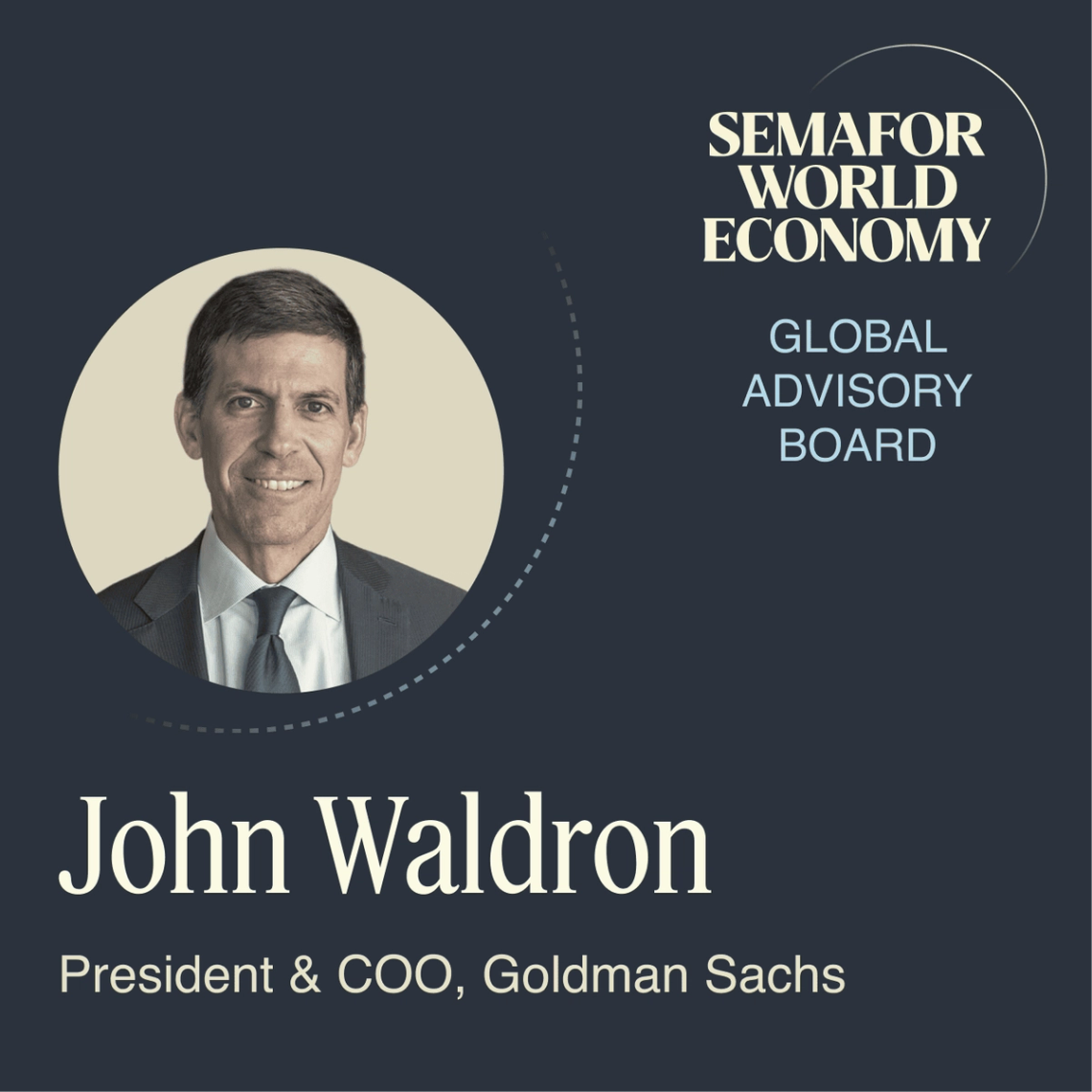 John Waldron, President & COO, Goldman Sachs, is joining the Semafor World Economy Global Advisory Board — a forum of visionary business leaders guiding the largest gathering of global CEOs in the US. The expanded board represents nearly every sector across the US and G20. Joining the Advisory Board at this year’s convening will be our inaugural cohort of Semafor World Economy Principals — an editorially curated community of innovators, policymakers, and changemakers shaping the new world economy with front-row access to Semafor’s world-class journalism, meaningful opportunities for dialogue, and touchpoints designed for connection-building. Applications are now open here. |
|
Inequality, mental health links dubious |
A major analysis of existing literature casts doubt on the link between inequality and mental health. There is a longstanding claim that economic inequality, over and above absolute wealth, harms societies by leading to increased status anxiety: The 2009 book The Spirit Level argued that its knock-on effects included worsening crime and chronic disease. But the new research, examining 168 studies totaling 11 million participants around the world, found that people in more unequal societies did not report lower well-being. Previous studies concluded the opposite, owing to significant publication bias, the researchers suggested: Work finding a null result tended not to be published. The authors argued the research implied that absolute rather than relative poverty should be the target of policy. |
|
Finland’s icebreakers in demand |
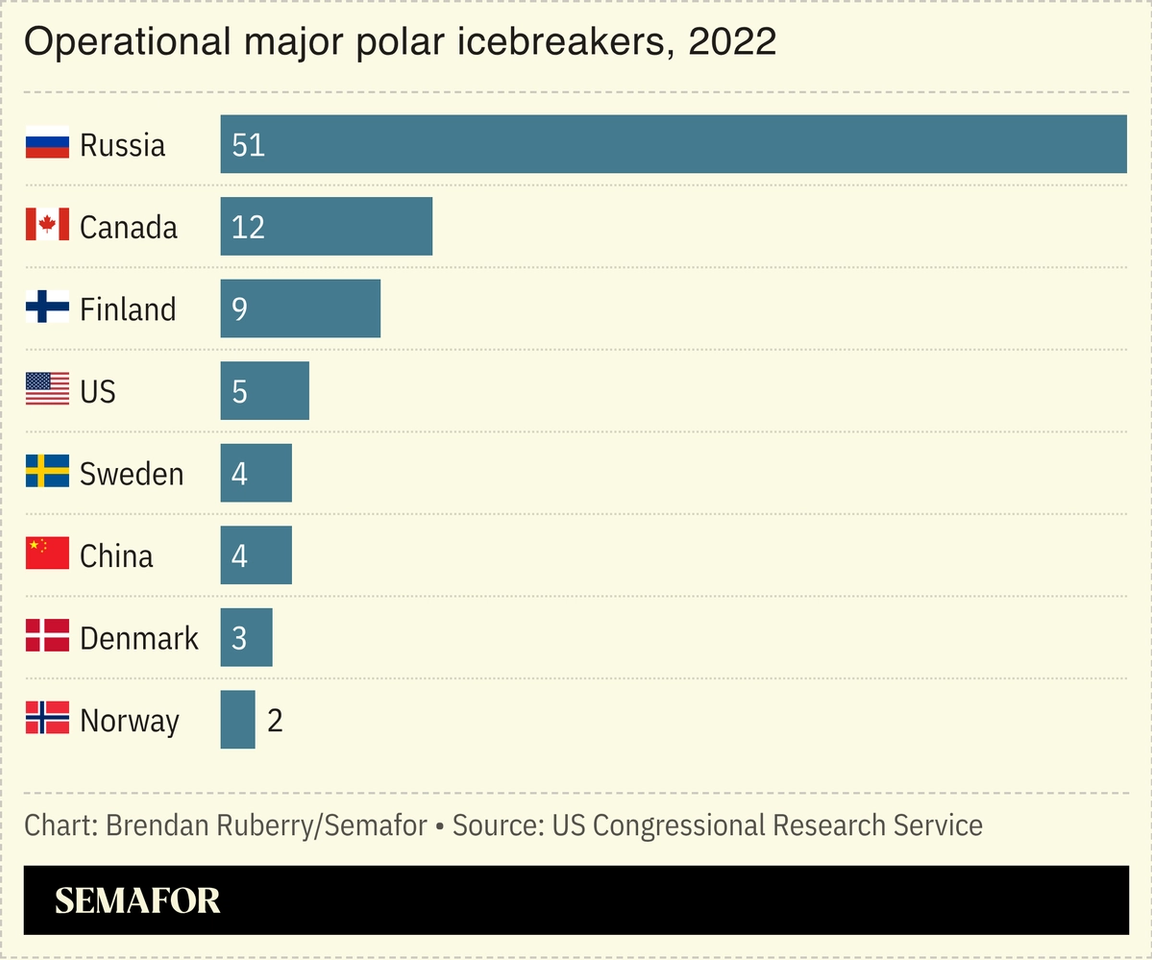 The warming of the Arctic is good news for the Finnish shipbuilding industry. Finland is the “undisputed world leader” in icebreaker manufacturing and design, the BBC reported: It is the only country in the world where all harbors freeze in winter, and icebreakers keep those ports open in the coldest months. Accordingly, 80% of all currently operating icebreakers were designed in Finland, and 60% were built there. Reduced Arctic ice levels are opening up trade routes and access to oil and gas fields, with countries, including the US, scrambling for control of the region. President Donald Trump recently waived a rule requiring the Coast Guard use US-built ships, and ordered four Finnish-made icebreakers alongside seven domestically built but Finnish-designed ones. |
|
|


