| Forwarded this email? Subscribe for more |


 |
| By The Free Press |
It’s Tuesday, January 27. This is The Front Page, your daily window into the world of The Free Press—and our take on the world at large. Today: Simon Sebag Montefiore and Suzane Lentzsch mark Holocaust Memorial Day. Sebastian Junger on how the Democrats lost men. Why did Xi fire his top general—and could the leader himself be next? Arthur Brooks on Brooklyn Beckham and the dangers of family estrangement. All that and more.
But first: Trump’s tactical retreat.
In the first 24 hours after the killing of Alex Pretti by border patrol agents in Minneapolis, Trump administration officials were hyperbolic, inflammatory, and dishonest in their responses to the tragedy. On Monday, amid widespread outrage over the incident and the administration’s reaction, Trump struck a very different tone.
When White House press secretary Karoline Leavitt was asked on Monday about the characterization of Pretti as a “domestic terrorist” by Kristi Noem, Stephen Miller, and others, Leavitt said she hadn’t heard the president describe Pretti that way. Trump, meanwhile, said he had “very good” conversations with Minnesota governor Tim Walz and Minneapolis mayor Jacob Frey—who not long ago he accused of “inciting insurrection.” “We actually seem to be on the same wavelength,” Trump said of Walz.
In other signs of a climbdown, border patrol chief Greg Bovino has reportedly been demoted and will leave Minneapolis today. Border czar Tom Homan is being dispatched to Minneapolis. He has favored a deportation strategy focused on people who are criminals and national security threats, rather than the blunt approach agents have taken in the city so far.
Minneapolis remains at a boiling point, but yesterday, at least, the president seemed not to want to raise the temperature further.
Driving this change in direction is criticism from some of the places you usually expect to have unwavering support for the administration’s approach to deportations. Gabe Kaminsky has that story today. Read it here:
Meanwhile, Jed Rubenfeld untangles the legal and political questions at the heart of the Pretti case—and the tactics used by the Department of Homeland Security more generally. Read his latest column here:
—The Editors
 |
Marking Holocaust Memorial Day: Elie Wiesel’s Doctor, and Simon Sebag Montefiore on the Use and Abuse of History
The last witnesses to the Holocaust are dying. As British historian Simon Sebag Montefiore writes today, that makes the war over the meaning of the Holocaust more important than ever. And yet, at this crucial moment, “Holocaust denial, distortion, inversion, and perversion, combined with an eliminationist antisemitism, have made a spectacular comeback.” Read his full essay on how to fight back against these abuses of history.
In a personal reflection, Suzanne Lentzsch recounts her unlikely relationship with Elie Wiesel, whom she treated as a doctor in New York. Raised in Germany in the shadow of Sachsenhausen concentration camp, Lentzsch found herself caring for one of the most acclaimed chroniclers of the Nazis’ crimes. Read about their relationship:
|
How Democrats Lost Men | ||||
 | ||||
|
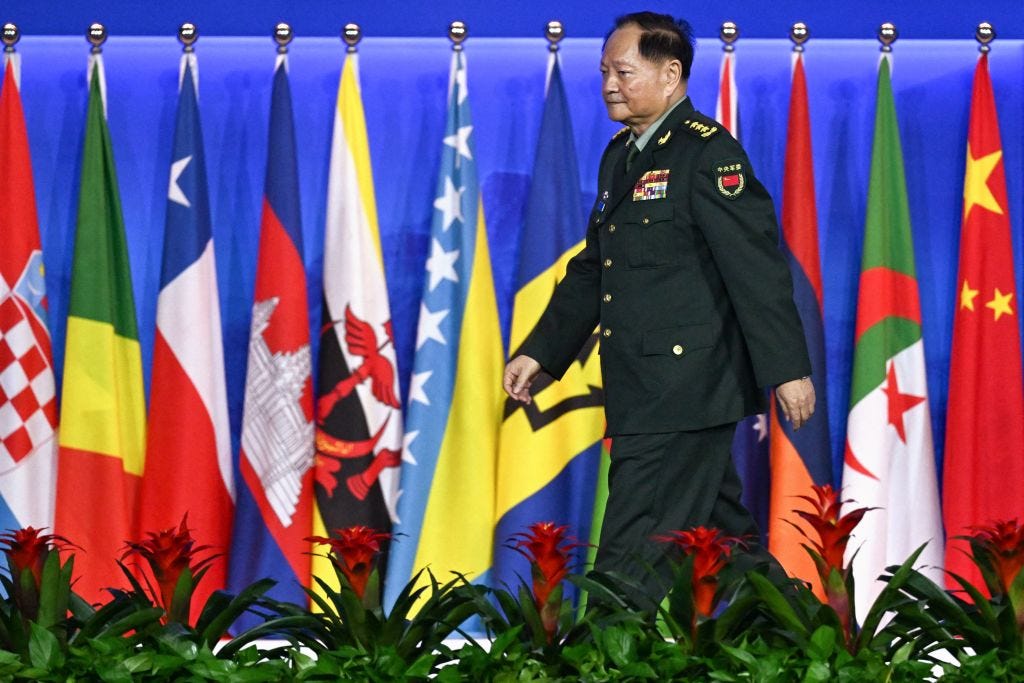
Will China’s Latest Purge Come for Xi Jinping? | ||||
 | ||||
|
Arthur Brooks: Family Estrangement Is a Tragedy | ||||
 | ||||
|
|