Lumina Foundation is working to increase the share of adults in the U.S. labor force with college degrees or other credentials of value leading to economic prosperity.
With job skills and careers evolving faster than ever, the concept of lifelong learning takes on a new sense of urgency. However, the majority of today's colleges and universities still cater to traditional-age learners.
In this interview, Lumina Foundation's Jamie Merisotis explains why the current educational and training system must transform itself, adapt to rapidly changing student demographics, and support learners continuously and flexibly throughout their lives. Merisotis also discusses why higher education needs to shift its focus to help people better understand what they can do with the credential or degree they are earning.
Colleges rely on highly skilled employees from abroad to fill key roles in research, medicine, and other fields. But a new raft of federal and state changes is disrupting that pipeline.
This week, Texas Gov. Greg Abbott, a Republican, ordered a pause on hiring new foreign employees at the state’s public universities until June 2027. The move followed a similar directive from another reform-minded Republican, Florida Gov. Ron DeSantis, who in October told public universities to end “H-1B abuse.” DeSantis was referring to the H-1B visas that allow international scholars to work in the United States.
Beginning next month, a new test will join the SAT and ACT as an admissions option for prospective students applying to the United States’ elite service academies: the Classic Learning Test, an up-and-coming exam that focuses on passages from the Western canon. Secretary of Defense Pete Hegseth lauded the test in a post on X last May, writing, “The CLT is the gold standard, and our academies need to attract the very best.”
The CLT is now accepted by all public institutions in three states, plus the nation’s service academies. But even as it gains popularity, critics question both its content and its quality.
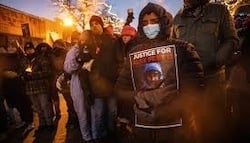
The killing of Alex Jeffery Pretti, a 37-year-old registered nurse who was shot during an encounter with federal immigration agents in Minneapolis, happened just miles from his alma mater, the University of Minnesota Twin Cities. His death follows that of Renee Good, a graduate of Old Dominion University, who was fatally shot by an ICE agent in Minneapolis on January 7.
The events unfolding in Minneapolis have further escalated tensions in a metropolitan area dotted with college campuses. As the region reels with civil unrest, area universities are grappling with how to maintain safe operations. They’re also facing calls for stronger moral leadership.
A year ago, President Trump issued an executive order that put U.S. universities on notice. The Jan. 29, 2025, directive targeted antisemitism on campus and launched investigations at five schools—later widened to 60. Within weeks, federal agencies started withholding billions of dollars in contracts and grants from several high-profile schools and pressuring them to align their policies more closely with Trump's on a range of issues that extended beyond antisemitism.
Elite universities soon began reaching settlements. Each deal between colleges and the administration is unique, but they have common goals: altering the culture at powerful institutions and making their policies more aligned with President Trump's.
Faced with the prospect of applying to college, students and parents are prompting AI chatbots to take on a role somewhere between that of an admissions counselor and a crystal ball. One-third of high school students surveyed in 2024 by the education consulting firm Ruffalo Noel Levitz said they had used AI tools as part of their college planning. The most popular reason they indicated was to research schools.
But does a virtual college coach really know what’s best for students?