|
|
|
|
|
|
|
|
|
The Home of the Week is nestled in a former industrial area in Toronto. Unique vtour Ltd.
|
|
|
|
|
This week: Why the steady interest rate may mean a spring thaw for the housing market, and how inadequate public transit may make it harder to afford a home. Plus, the industry being hammered by the home-sales slump and one property worth a look. |
|
|
|
|
Before we dive in, we want to hear your thoughts about the rise of AI-generated and edited images on rental and real estate listings. Reporter Salmaan Farooqui
wants to hear from buyers, renters and industry professionals about whether you use this tech and any concerns you have. You can e-mail him at sfarooqui@globeandmail.com. |
|
|
|
|
|
|
|
|
|
|
|
|
|
|
Steady interest rate may bring buyers off the sidelines despite uncertainty |
|
|
|
|
|
|
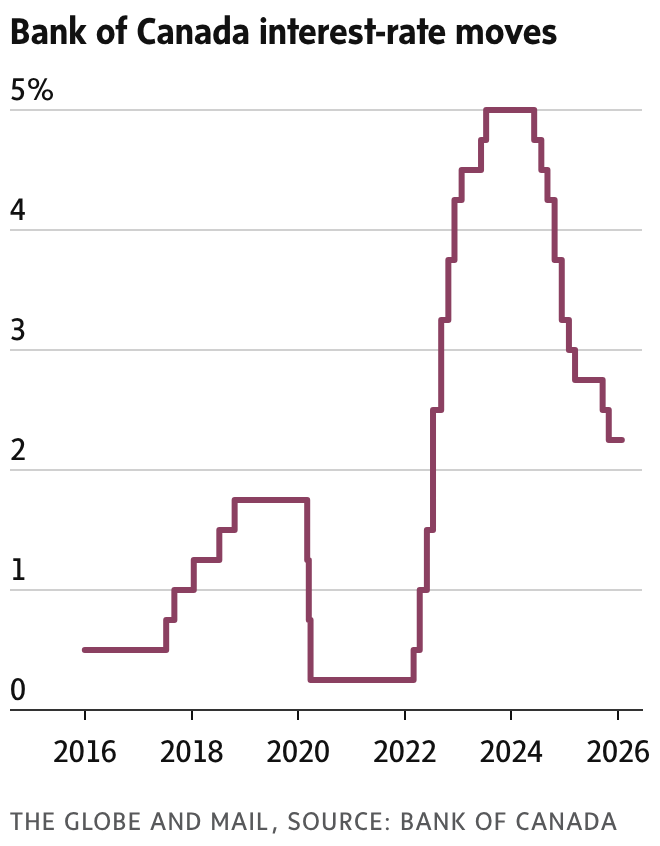
With the Bank of Canada holding interest rates steady
at 2.25 per cent this week, Canada’s housing market could see a spring thaw – so long as U.S. trade negotiations appear to be on track. As Erica Alini reports, many prospective buyers who have held back in hopes of even lower borrowing rates and home prices may finally take the plunge in the wake of the BoC decision. |
|
|
|
|
But just how many will actually come out of hibernation may depend on how Canada’s renegotiation of the USMCA with the United States and Mexico goes (it’s scheduled for a review in July). “A further degradation of the relationship with the U.S. or a clear indication that there would be no reasonable renewal of our trade agreement ... could actually act as a damper on the spring market,” Royal Le Page CEO Philip Soper told Erica. Still, barring any significant trade shocks, Mr. Soper expects homebuyers to come off the sidelines once the typical winter market lull is over. |
|
|
|
|
|
|
|
|
|
|
Furniture sales fall victim to real-estate slump |
|
|
|
|
|
|
|
|
|
Furniture stores like Leon's are used to weathering the booms and busts of the housing market. Fred Lum/The Globe and Mail
|
|
|
|
|
As the Canadian real estate market struggles to regain momentum, a closely-tied industry is also feeling the strain. Furniture sales in Canada have been treading water
for years and are currently more than $200-million below peak months in 2020 and 2021. As Bianca Thompson reports, the retailers are used to riding the boom-and-bust cycles of the housing market, such as when home sales hit record levels and consumers upgraded their spaces during the pandemic. |
|
|
|
|
But some have struggled to adapt to the sluggish market, with giants losing billions of dollars in market value and small and medium-sized firms scrambling to make it at all. That could mean lower prices for those looking to decorate their spaces in the short-term, but also less choice and possibly higher prices in the longer term. |
|
|
|
|
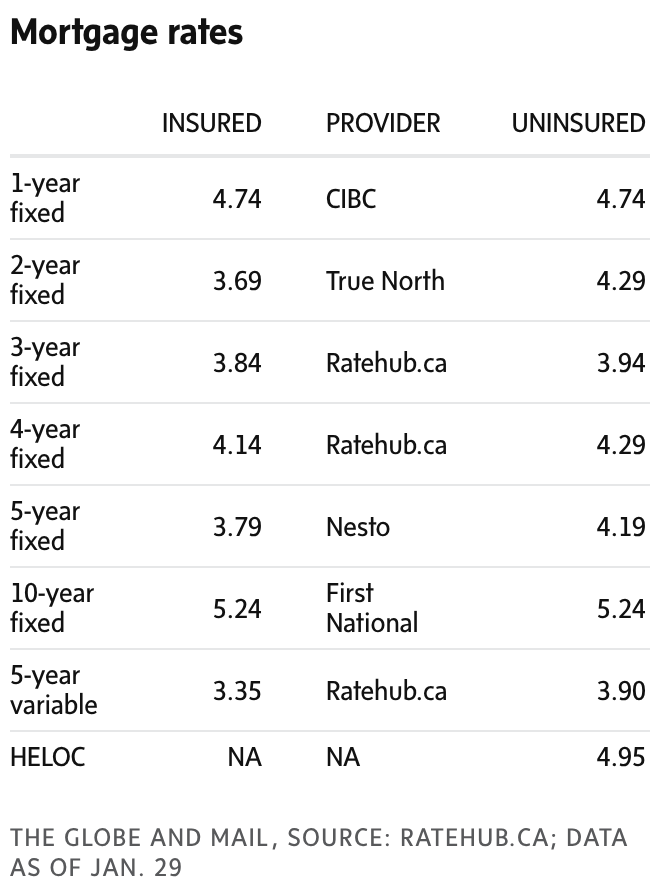
This week’s lowest fixed and variable mortgage rates in Canada |
|
|
|
|
|
|
Rates shown are the lowest available for each term/type and category (insured vs. uninsured) as of market close on Thursday, Jan. 29. |
|
|
|
|
|
|
|
|
|
|
Public transit could become latest wedge between housing haves and have-nots |
|
|
|
|
|
|
|
|
|
Public transit is essential for housing affordability, but inadequate service could fuel inequity. Carlos Osorio/Reuters
|
|
|
|
|
Gridlocked highways, crawling buses and squeeze-yourself-in subway cars aren’t just commuter frustrations and productivity killers. They’re also a sign of another brewing crisis that promises to worsen Canada’s housing crisis – inadequate transit. Experts warn major cities are running up against the limits of their existing transport networks, reports Erica Alini,
and that will further increase inequality between those who already have housing and those trying to secure it. |
|
|
|
|
Despite recent home price declines in some of Canada’s priciest markets – and a shrinking price gap between cities and suburbs – finding cheaper housing now often requires substantially longer commutes. But without improving public transit, and quickly, clogged urban arteries will make settling in a far-flung suburb, a traditional solution for affordability, virtually impossible. |
|
|
|
|
|
|
|
|
|
|
Where design is headed in 2026 |
|
|
|
|
|
|
|
|
|
Heidi Earnshaw, who designed this chair, thinks 2026 will bring a focus on craftsmanship. Alexa Mazzarello/The Globe and Mail
|
|
|
|
|
Everything from tariffs to technology will shape how we live in 2026, including design. Take a peek at the trends and principles six designers think will guide the year ahead. |
|
|
|
|
|
|
|
|