| | Ukraine talks to resume despite Russian attacks, Iran talks to go ahead despite flashpoints in the G͏ ͏ ͏ ͏ ͏ ͏ |
| |  | Flagship |  |
| |
|
The World Today | 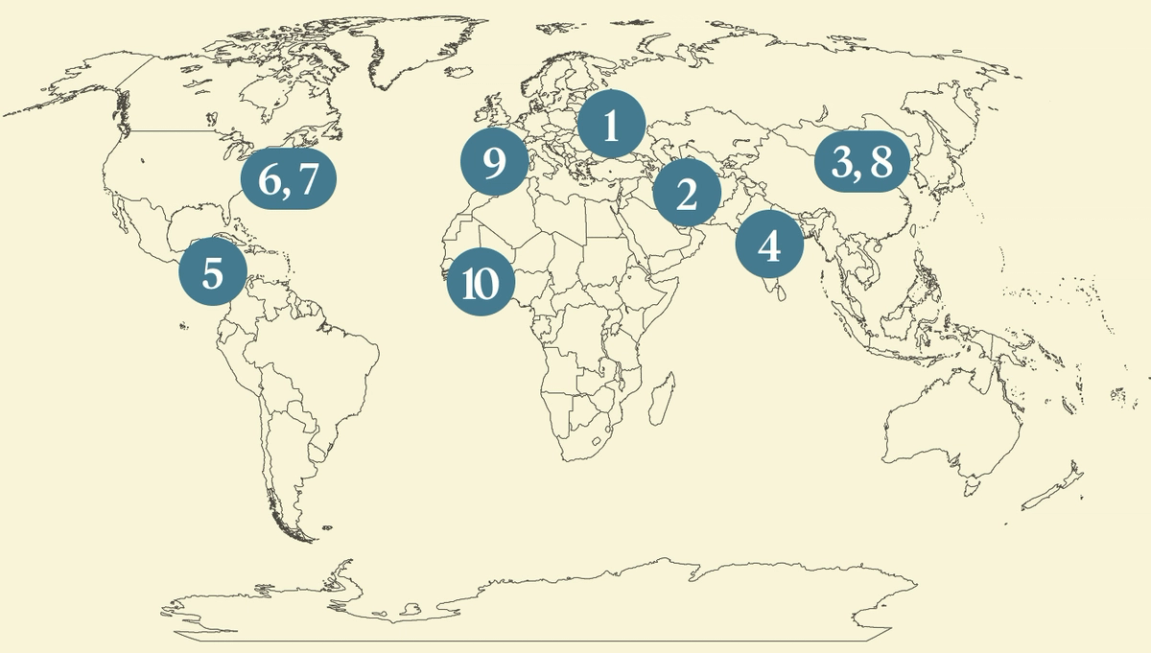 - Ukraine talks to resume
- US, Iran tensions flare
- China’s growth straitjacket
- Trade and security linked
- China’s LatAm setbacks
- US-Africa pact extended
- US backs DRC copper mine
- Sodium batteries’ moment
- Musk’s Europe showdown
- War against Guinea worms
 An Italian novel about the European digital nomad scene. |
|
Russia attacks ahead of talks |
 Stringer/Reuters Stringer/ReutersAnother major Russian attack on Ukraine’s power grid suggested that renewed talks between Moscow, Kyiv, and Washington were unlikely to yield significant breakthroughs. Ukrainian President Volodymyr Zelenskyy said the latest strikes — the largest of the winter so far and coming during a -20°C (-4°F) cold snap — showed that Russia does not “take diplomacy seriously,” and that his negotiators would shift their stance accordingly. The two sides remained far apart even before the attacks: Russian President Vladimir Putin wants Ukraine to give up territory beyond what his forces have already taken, which Zelenskyy refuses; and the Kremlin will not accept any postwar security settlement involving Western troops on Ukrainian soil. |
|
 US Navy photo by Mass Communication Specialist Seaman Apprentice Daniel Kimmelman/Handout via Reuters US Navy photo by Mass Communication Specialist Seaman Apprentice Daniel Kimmelman/Handout via ReutersA series of confrontations between Iran and the US threatened to derail negotiations set for this week. An American jet shot down an Iranian drone in the Arabian Sea, and Iranian boats tried to block a US-flagged tanker. But Washington said Friday’s talks — on Iran’s nuclear program, missile development, and regional influence — would still take place. The US has considerable forces in the Gulf and the incidents suggest that Iranian hardliners do not support the talks, analysts told The Wall Street Journal. If so, they are taking a risk by pushing Washington: The countries traded aerial attacks last summer, and US President Donald Trump has warned of renewed strikes if Tehran doesn’t agree to halt its nuclear weapons development. |
|
China provinces reduce growth targets |
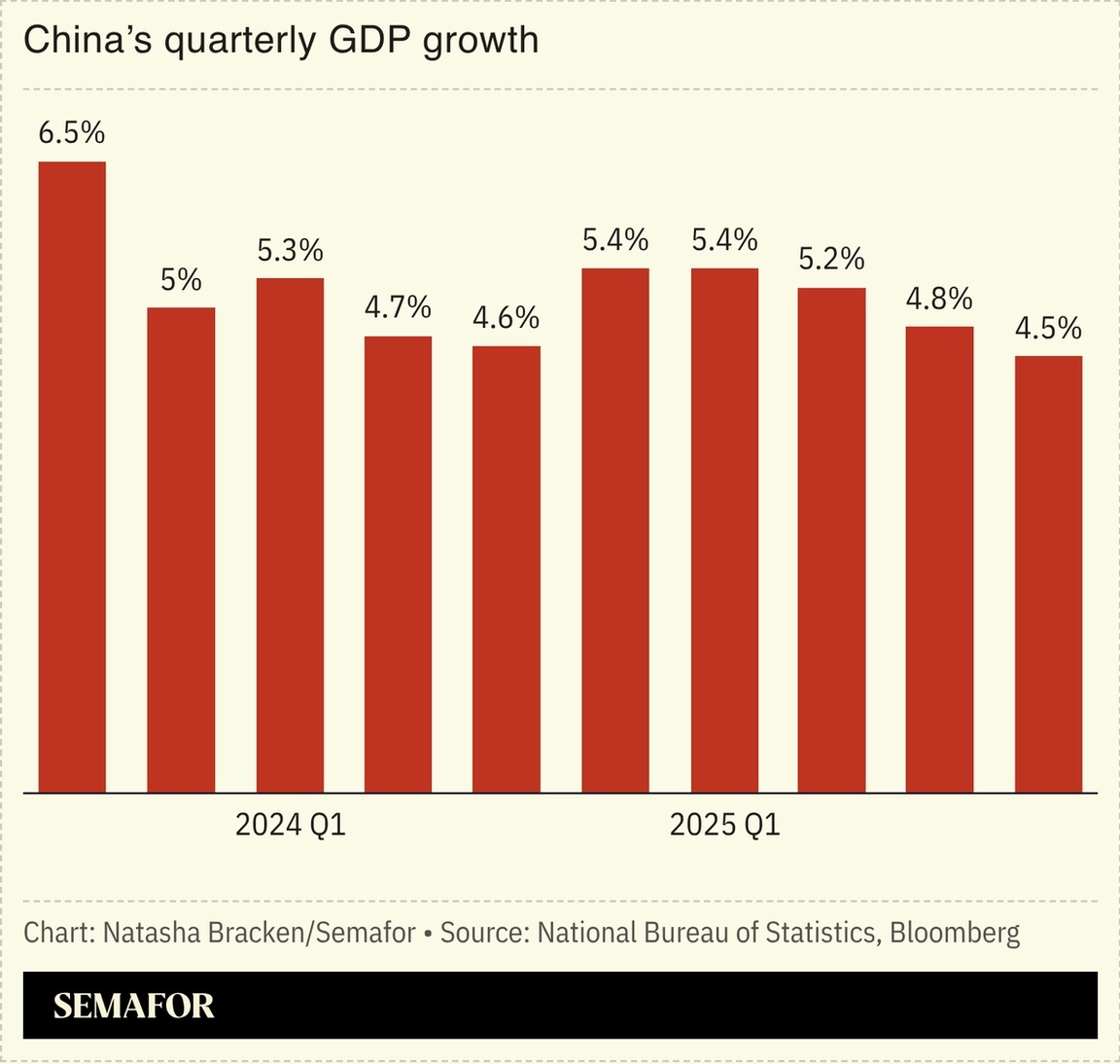 Several Chinese provinces scaled back their economic ambitions for 2026 amid a national downturn. Only one of the country’s 31 regions set a higher target than in 2025, while 14 set lower ones, and many forecast reduced investment and consumption. It is a strong indicator that the national government will do likewise, Trivium China analysts reported, and set a national target below its “around 5%” goal of recent years. The 5% figure has become a “political straitjacket,” The Wall Street Journal’s chief China correspondent argued: Chinese authorities have consistently reported growth around that level, a “statistical miracle” given the country’s economic woes. Chasing it has forced China into spending that has trapped local governments under a mountain of debt, she wrote. |
|
Nations must align trade, security ties |
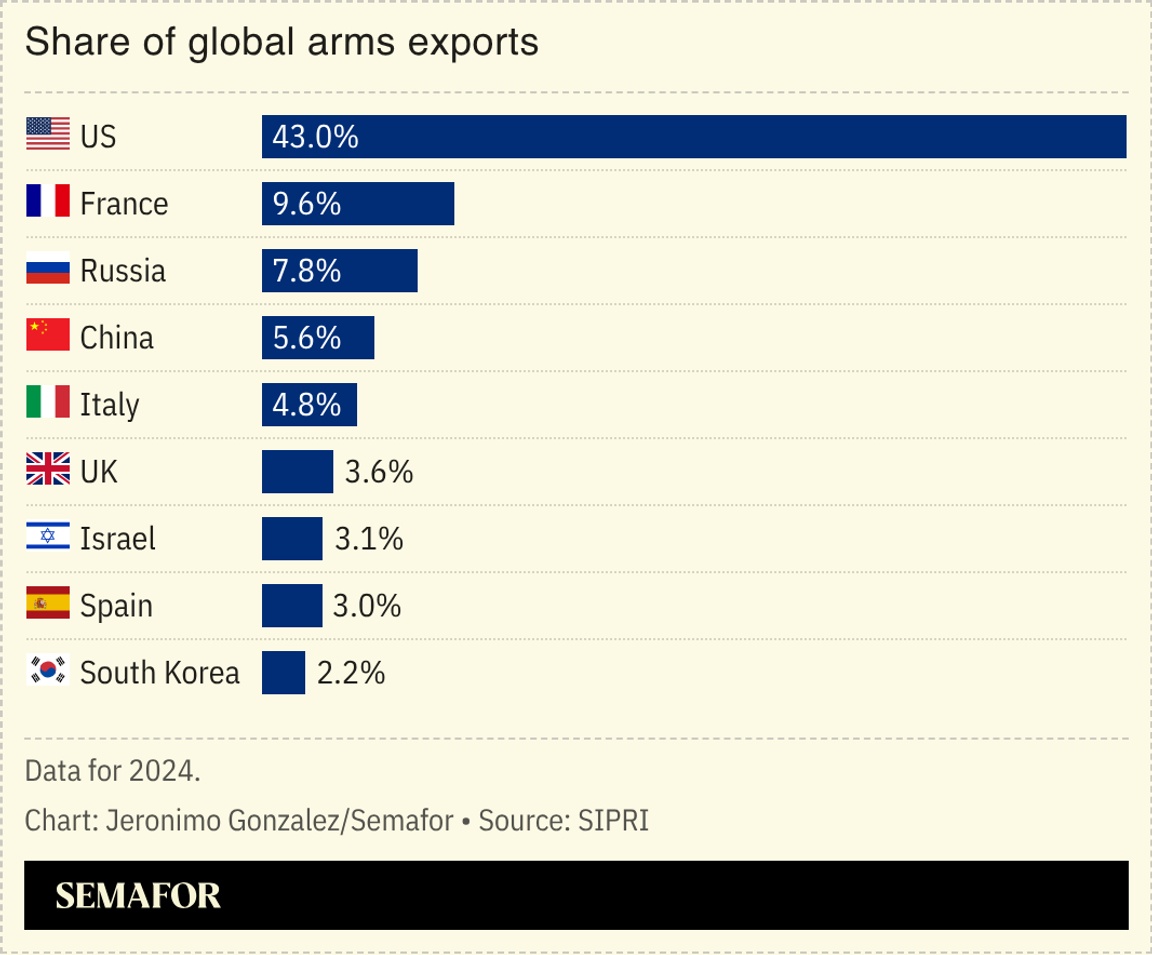 Maintaining strong trade ties with one superpower while seeking defense support from another is no longer compatible in modern geopolitics, a leading former diplomat argued. Southeast Asia and Latin America have pursued this differential strategy, each deepening economic ties with China while relying on the US for a security umbrella. But Washington is increasingly demanding that its allies make economic concessions in exchange for good relations with the US, so “those days are coming to an end,” Mohan Kumar, India’s former ambassador to France and now a professor of diplomacy at the OP Jindal Global University, said on Carnegie’s Interpreting India podcast. “What countries are doing is to broadly bring their trade policy into conjunction with the security policy.” |
|
China’s Latin America setbacks |
 Aris Martinez/Reuters Aris Martinez/ReutersChina has recently suffered a series of setbacks in Latin America as competition with Washington in the region heats up. Panama recently cancelled a Hong Kong firm’s contract to run ports along its canal, while Washington’s capture of Venezuela’s former leader ousted one of Beijing’s closest regional allies. Meanwhile Mexico, seeking closer trade alignment with Washington, imposed a 50% tariff on Chinese goods, and Bolivia scrapped a Chinese miner’s contract as it looks to deepen ties with the US. Though Beijing “has hardly lost its footing” — it remains the region’s biggest trading partner — the moves show “that the geopolitical competition for Latin America is sharpening, and not necessarily in China’s favor,” Bloomberg’s Juan Pablo Spinetto wrote. |
|
US-Africa trade pact extended |
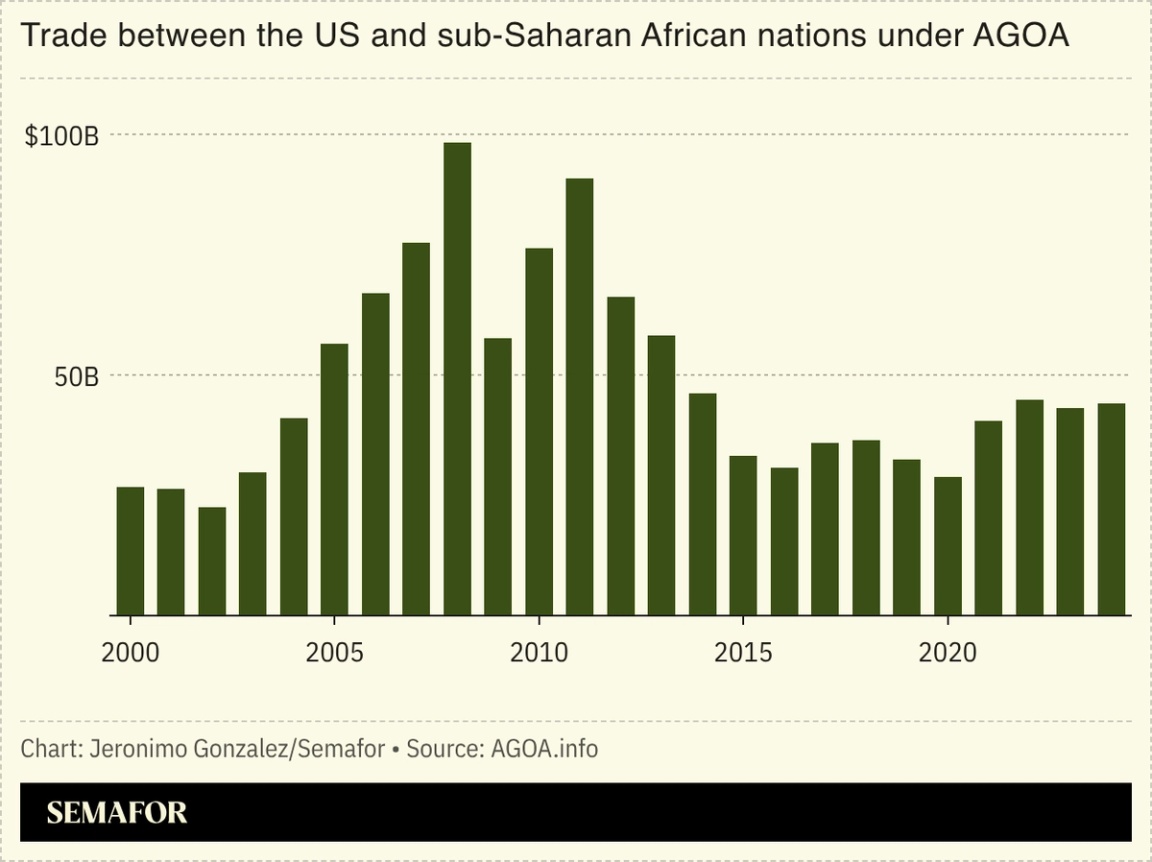 US President Donald Trump agreed to extend a trade deal giving African countries duty-free access to the American market, though the one-year prolongation put exporters in a tough spot. The African Growth and Opportunity Act helped drive African exports to the US, but it also expanded Washington’s trade deficit with the continent. The Trump administration last year imposed harsh tariffs on African imports and AGOA itself expired in September, leaving hundreds of thousands of jobs at risk. While the pact “consistently contributed” to US goals, including boosting access to critical minerals, the 12-month extension “perpetuates uncertainty and discourages sustained, long-horizon investment,” an expert wrote in Foreign Policy. |
|
US fund backs DRC projects |
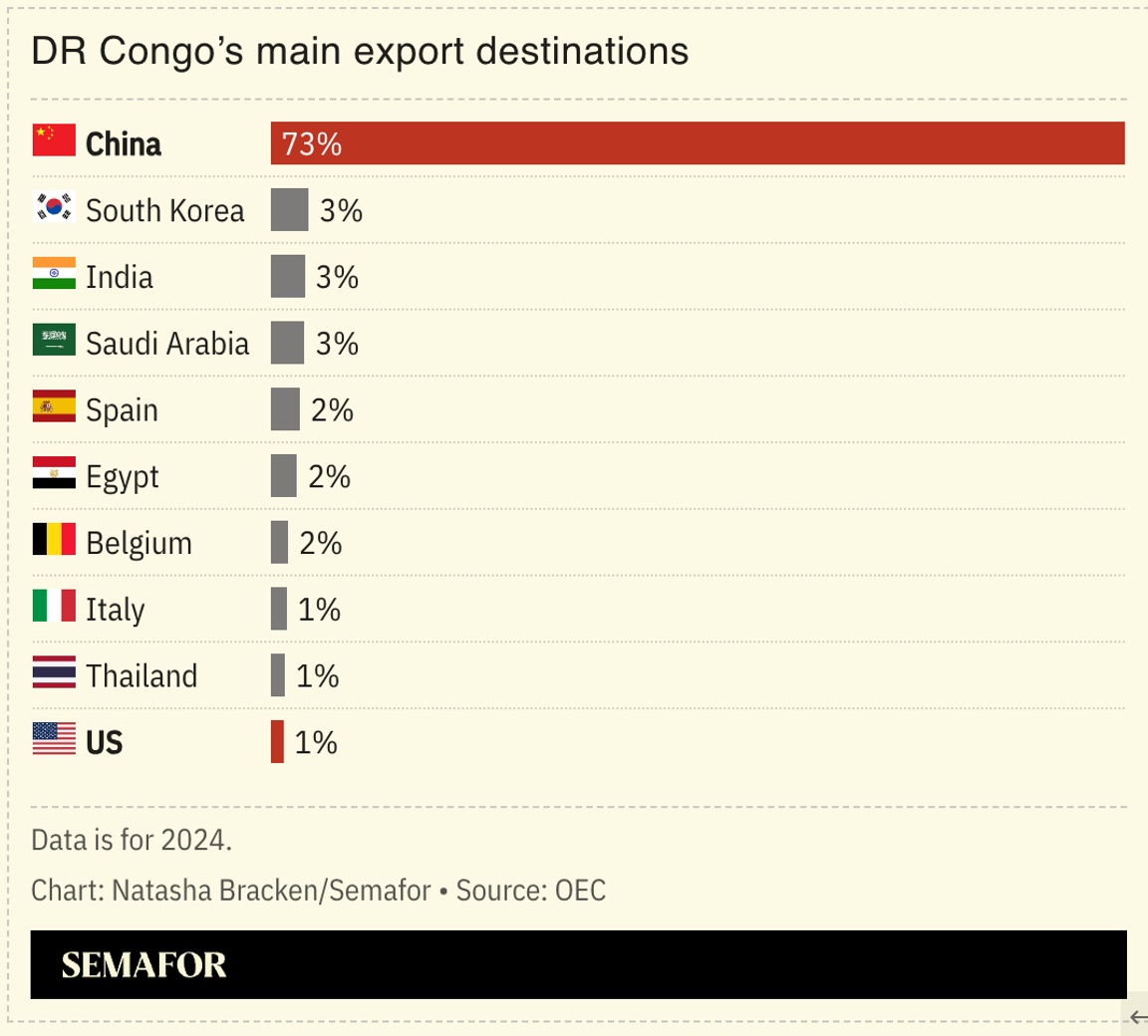 A Washington-backed investment fund agreed to buy a 40% stake in mining giant Glencore’s copper and cobalt projects in the Democratic Republic of Congo, as the race for the continent’s mineral resources accelerates. Though Chinese firms dominate the production of cobalt — a key component in batteries and electronics — the US has stepped up its interest in the metal, part of Western efforts to reduce Beijing’s chokehold on the industry. China produces or refines a large share of the strategic metals, including almost 90% of the world’s rare earths. In response, the EU will reportedly pitch the US on a critical minerals partnership ahead of a summit today in which Washington will host African officials to discuss mining deals. |
|
The promise of sodium batteries |
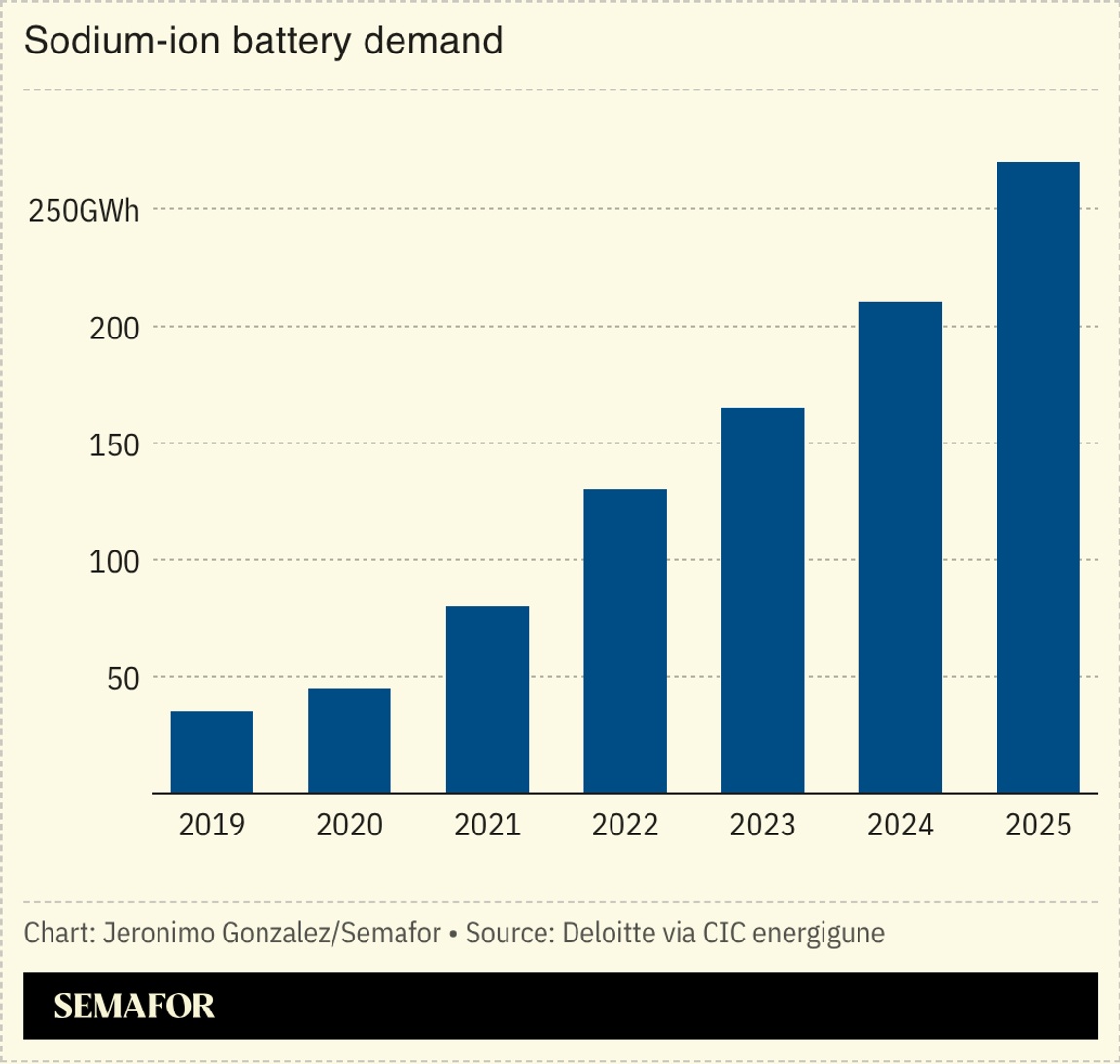 Rising lithium prices could create an opening for sodium batteries. Lithium batteries drive much of the modern economy: EVs, personal devices, and grid energy storage all use them. But lithium is scarce and expensive. Sodium batteries are a potential alternative; they are less energy-dense, limiting their capacity, but sodium is much more abundant and so could drive down prices, especially in situations — such as utility-scale batteries — where size and weight are less important, MIT Technology Review noted. A shift to sodium will not, however, reduce reliance on China, which dominates the industry, notably through battery giants BYD and CATL. |
|
 Denis Balibouse/File Photo/Reuters Denis Balibouse/File Photo/ReutersElon Musk is in a growing row with Europe. Musk called Spanish Prime Minister Pedro Sánchez a “tyrant” and a “fascist totalitarian” for proposing a ban on social media for under 16s, while French police raided X’s Paris office over allegations that its chatbot Grok made sexualized images of children and denied the Holocaust. UK regulators are also investigating xAI, X’s parent company, on similar grounds. Musk has made several controversial public interventions in European politics — including backing the hard-right Alternative for Germany party and criticizing UK Prime Minister Keir Starmer — that have not just deepened his unpopularity, but spurred a consumer backlash against Tesla, which saw 2025 profits down 61% year-on-year in part over plummeting European sales. |
|
Guinea worm nears eradication |
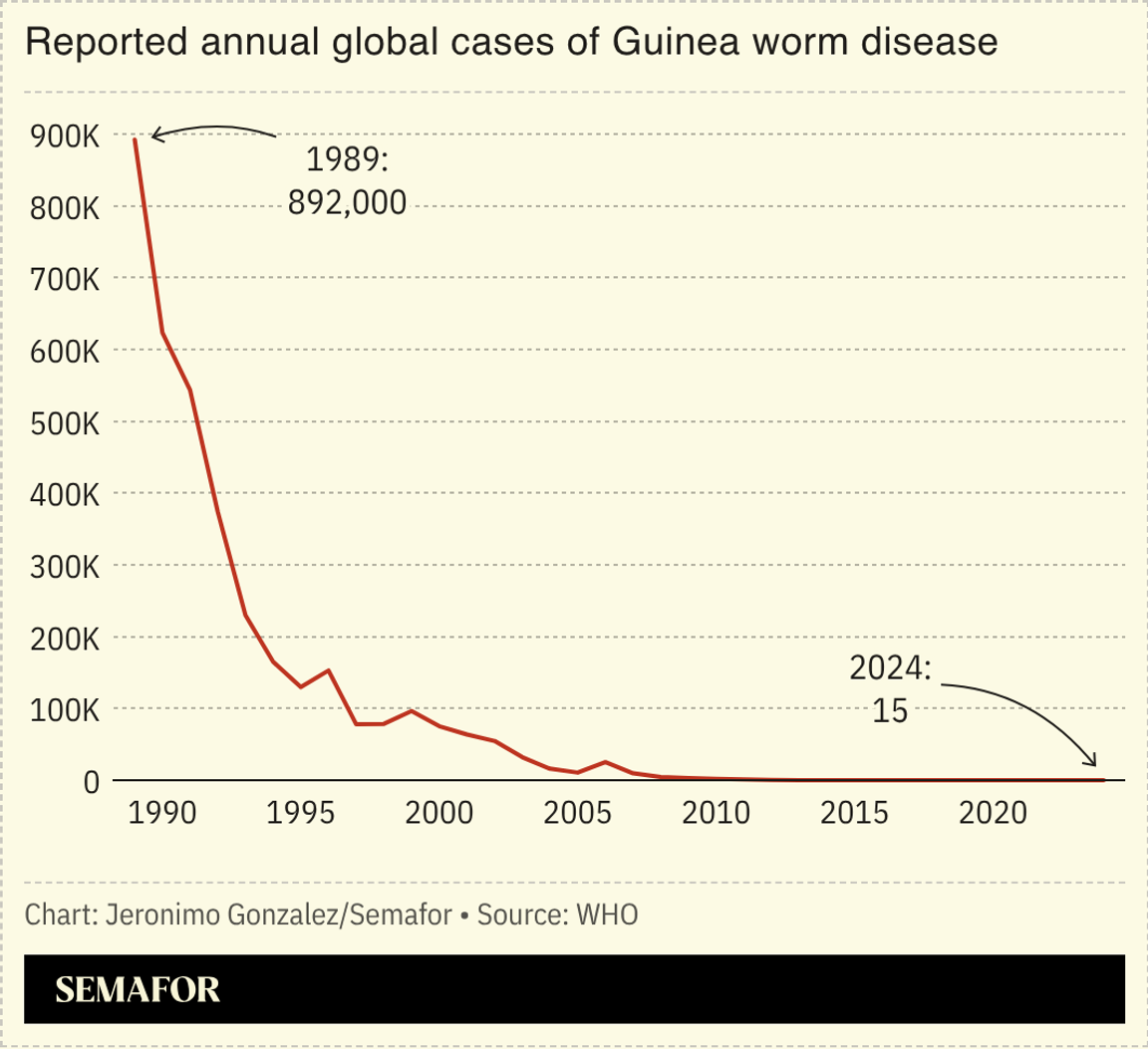 Guinea worm neared global eradication, with just 10 cases reported worldwide in 2025, all of them in Chad, Ethiopia, or South Sudan. When former US President Jimmy Carter founded an eradication program in the mid-1980s, there were millions of infections in developing countries and the only human disease that had ever previously been permanently defeated was smallpox. The parasitic infection, transmitted via contaminated water, leads to three-foot worms emerging from painful leg ulcers, and causes long-term incapacitation and disability. While Carter did not, as he hoped, outlive the last Guinea worm (he died in 2024), he may have come close; the 10 cases mark a 33% decrease year-on-year. |
|
 - Germany’s chancellor sets off on a tour of Gulf countries.
- The sentencing of Ryan Routh — the man convicted of attempted assassination of then-presidential candidate Donald Trump — is due.
- Riyadh hosts the opening of the LIV Golf League season.
|
|
|


