| | Iran demands changes to nuclear talks with the US, Donald Trump and Xi Jinping talk Taiwan, and a ne͏ ͏ ͏ ͏ ͏ ͏ |
| |  DAKAR DAKAR | GUANGZHOU | NAYPYIDAW |
 | Flagship |  |
| |
|
The World Today | 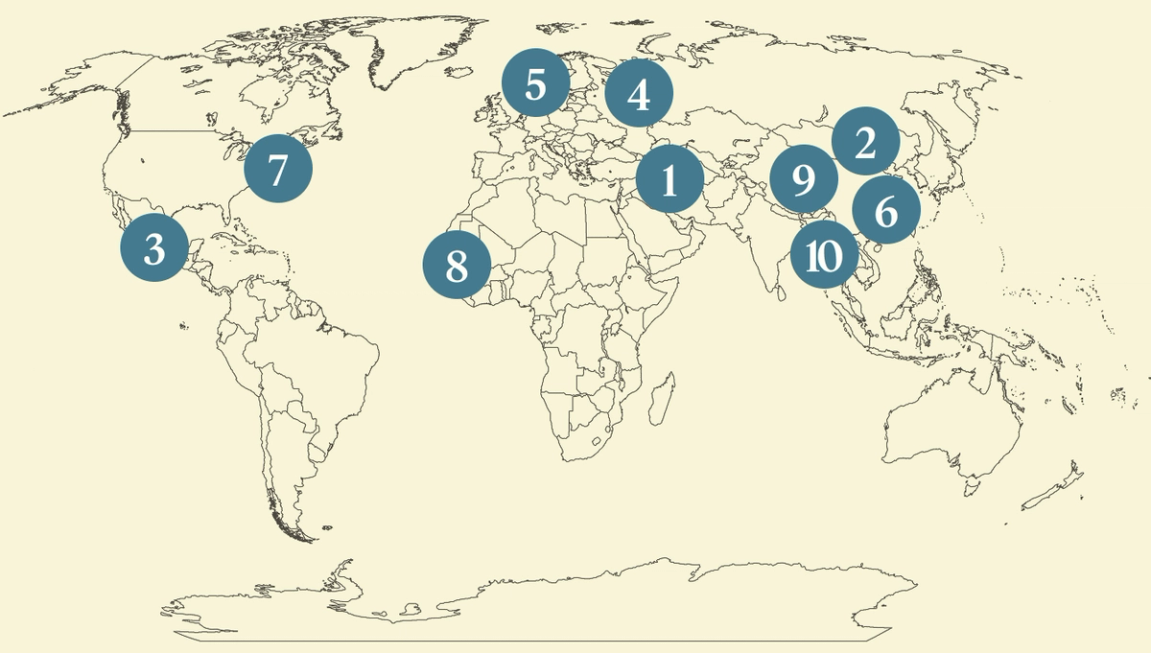 - Iran plays hardball with US
- Trump, Xi hold phone call
- US’ multilateral mineral push
- Moscow targets EU satellites
- GLP-1s as consumer goods
- Supercharged robotaxi surge
- Massive Washington Post cuts
- Influencers as AI avatars
- Dancing on China’s internet
- Yachts move away from teak
 A book that isn’t just for litbros. |
|
Iran demands changes to nuclear talks |
 Majid Asgaripour/WANA (West Asia News Agency) via Reuters Majid Asgaripour/WANA (West Asia News Agency) via ReutersIran abandoned planned nuclear talks with the US in Turkey and proposed limited negotiations in Oman instead, teeing up a tense back-and-forth with Washington that rattled traders Wednesday. Tehran’s hardball tactics, which came after the US shot down an Iranian drone and Iranian boats tried to block a US-flagged tanker, were aimed at “leaving everyone else off balance,” The Wall Street Journal wrote. “This is how tinder gets set for crises to spiral,” a historian argued. The US earlier rejected the change in plans, sparking fears that Washington would resort to military action and sending oil prices up. Lobbying from Middle East leaders got the Friday meeting back on track, Axios reported, but US officials are skeptical a deal is possible. |
|
Trump, Xi hold wide-ranging call |
 Trump and Xi last year. Evelyn Hockstein/Reuters Trump and Xi last year. Evelyn Hockstein/ReutersUS President Donald Trump and Chinese leader Xi Jinping held a wide-ranging call on Wednesday that both leaders welcomed as a sign of warming ties. The call touched on Taiwan, Ukraine, Iran, and trade, suggesting that lingering disagreements on fraught geopolitical issues haven’t derailed the superpowers’ months-old trade truce. Trump has shifted Washington’s approach to Beijing away from a great-power struggle and toward a more transactional relationship centered around trade and tech competition, a Brookings scholar wrote. But, he noted, “there likely will not be a firm floor under the US-China relationship,” which “rarely travels along a straight line for long.” Xi said he hoped he and Trump could steer “the giant ship” of US-China relations “through winds and storms.” |
|
US proposes rare earth trading bloc |
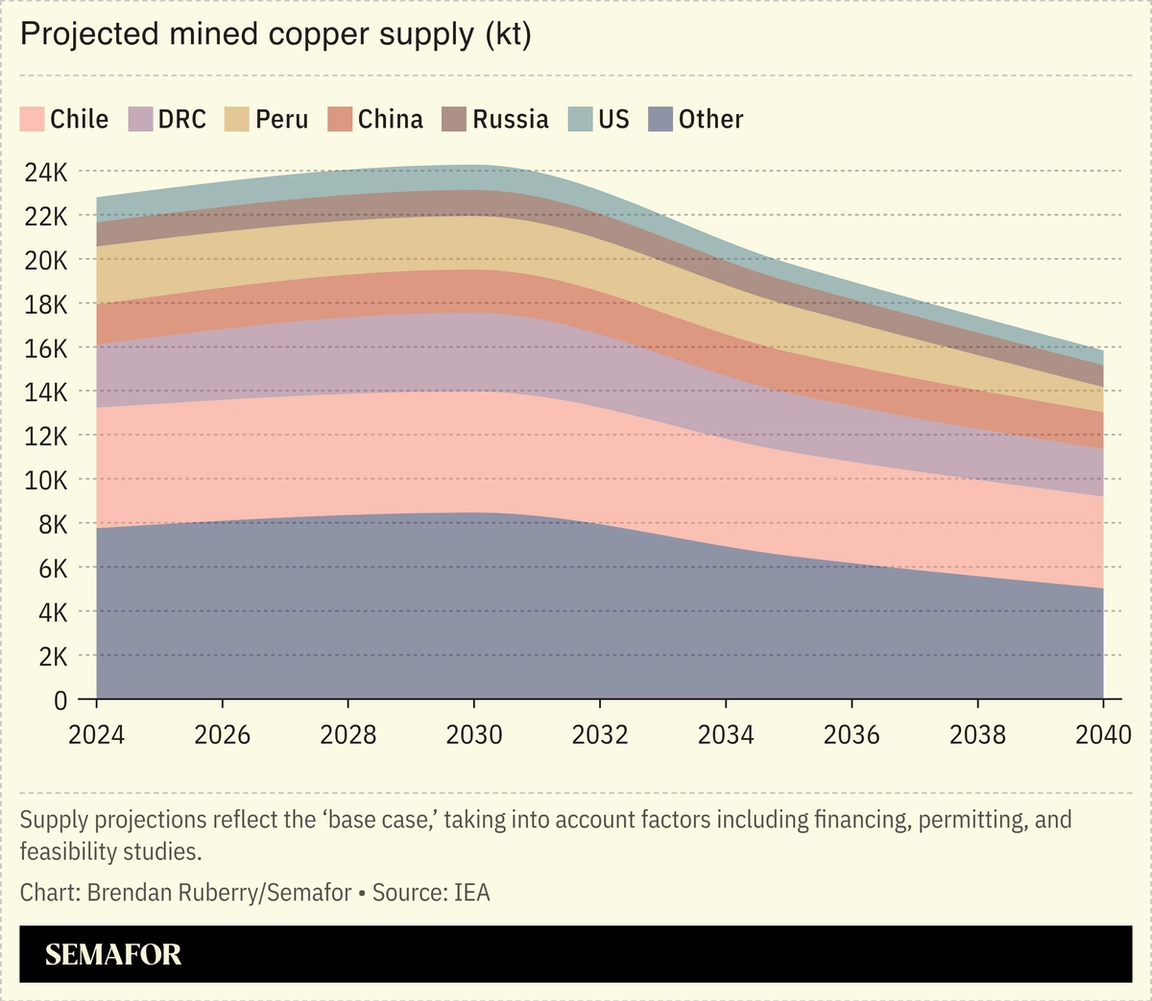 The US is pursuing deals with allies to shore up critical mineral arsenals and blunt China’s ability to disrupt global supply chains. Washington’s talks with Japan, Mexico, and the EU — days after US President Donald Trump announced a $12 billion critical mineral stockpile — focus on implementing price floors for rare earths, to counter Beijing’s pricing power and political leverage stemming from its dominance in mineral processing. The US secretary of state on Wednesday urged collective action to address “dangerously concentrated” supply chains, a rare case of the Trump administration pushing for multilateralism. Trump will want the agreements before his April visit to China to signal that Beijing’s leverage is evaporating against a united front, a China expert wrote. |
|
Russia targets EU satellites |
 Intelsat IntelsatRussian space vehicles have approached European satellites and intercepted their communications, officials believe. Two objects have passed dangerously close to some of Europe’s most important geostationary satellites, the Financial Times reported, and lingered nearby for weeks. The satellites lack advanced onboard computers that could encrypt their transmissions, so the data is easily interpreted; it also leaves them vulnerable to interference. Moscow has stepped up hybrid warfare, attacking infrastructure such as subsea cables, and such interceptions could provide it with a “blueprint for… sabotaging European space systems,” The Parliament wrote. The EU’s defense commissioner has called for a “big bang” approach to space defense: Germany plans to spend $41 billion to boost its military space technology in the next four years. |
|
Novo, Lilly fortunes diverge |
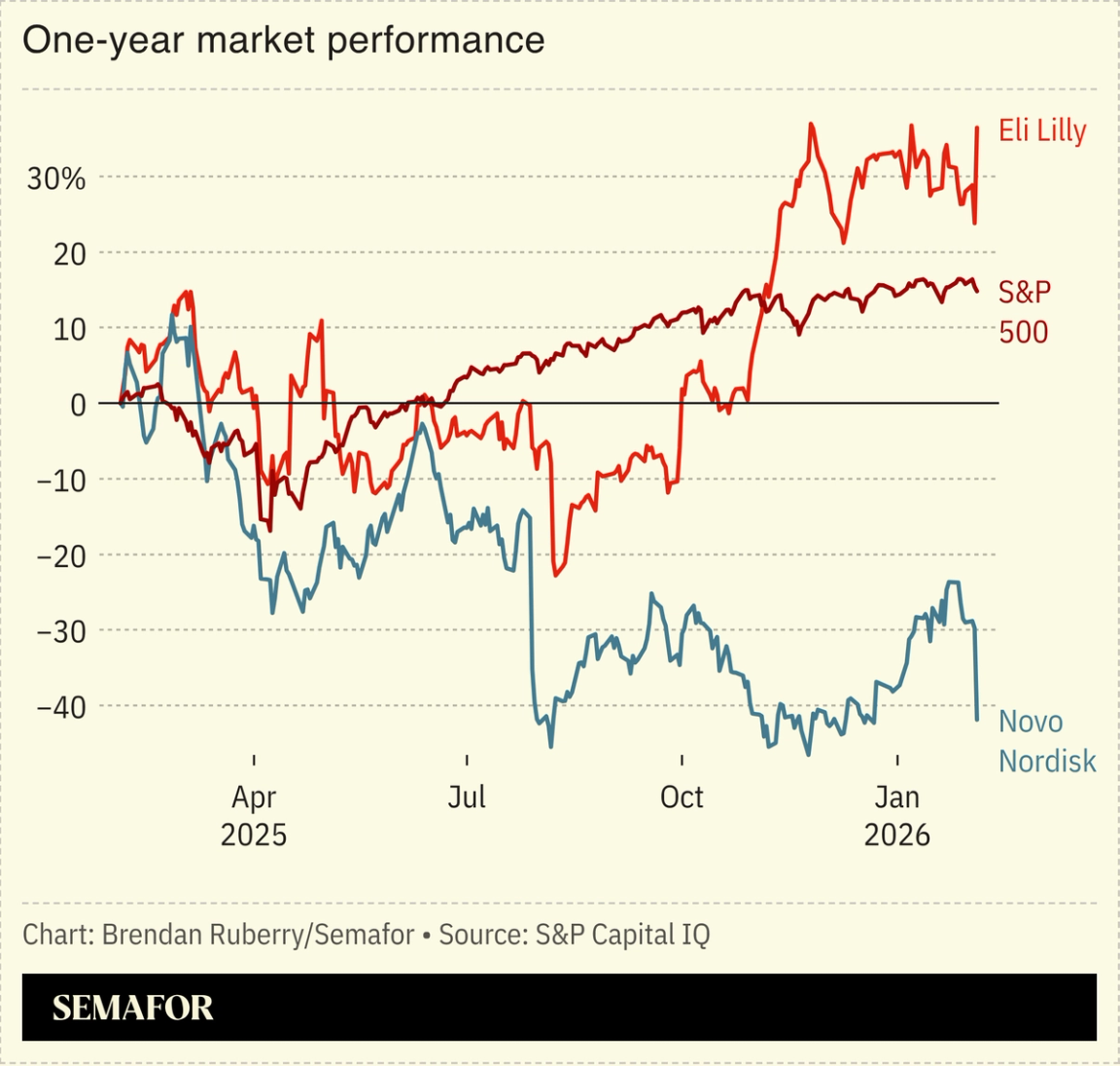 The fortunes of two pharmaceutical giants are diverging based on their weight-loss drug ventures. Eli Lilly shares jumped more than 10% on Wednesday after the US firm reported strong sales of its GLP-1s, Zepbound and Mounjaro. Meanwhile, shares in the Danish heavyweight Novo Nordisk, which makes Ozempic, tumbled after it warned of a 2026 sales decline owing to US pricing pressure. Novo turned the GLP-1 market into the global juggernaut it is today, but Lilly has since surpassed it on several fronts; both are now eyeing weight-loss pills as the next frontier. As prices fall, competition intensifies, and more people embrace the medications, the drugs are behaving “less like traditional prescription medicines and more like consumer products,” Sherwood News wrote. |
|
Robotaxi firms eye global expansion |
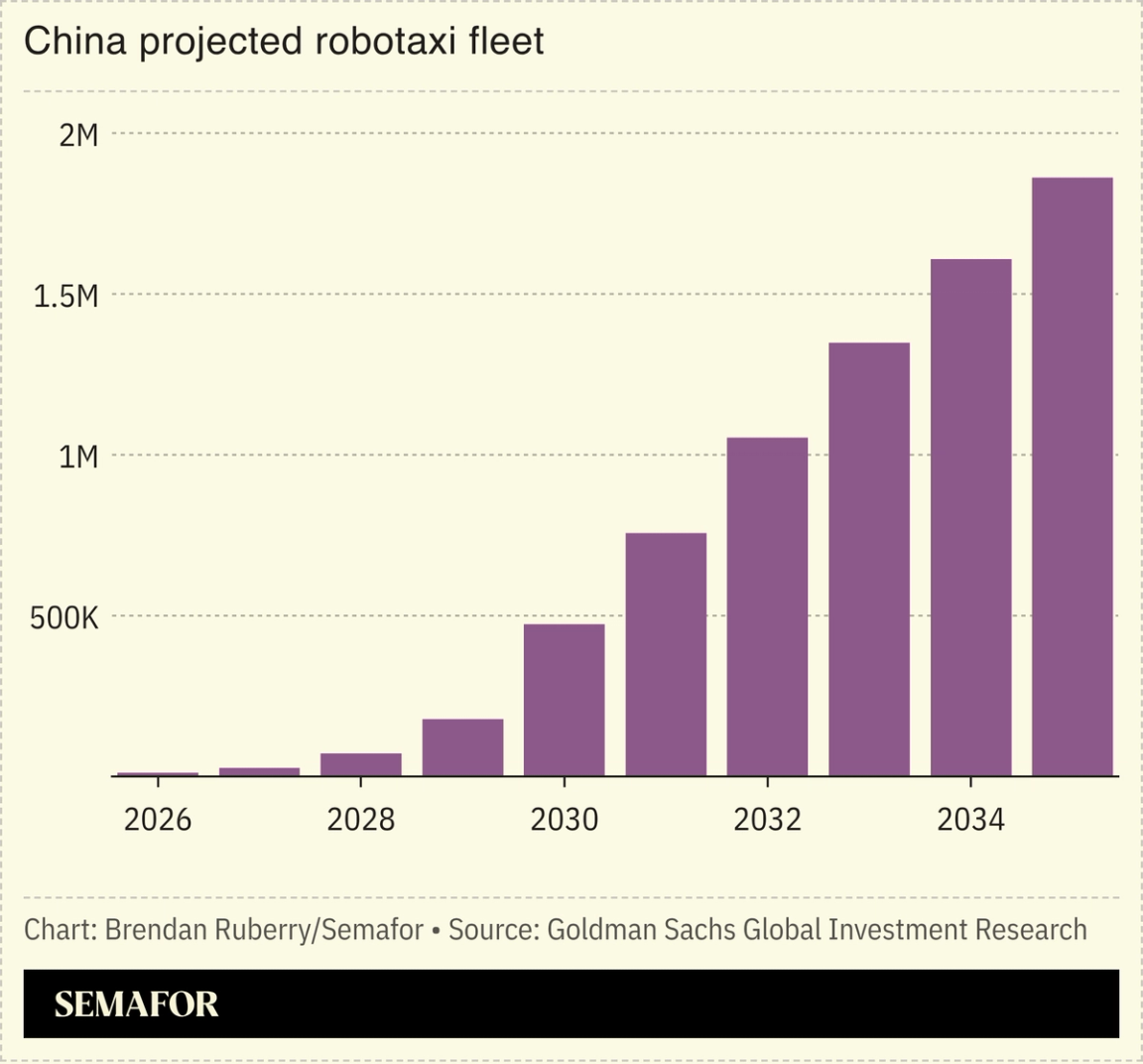 Waymo robotaxis could hit the roads in more than 20 cities this year, the company announced, with a $16 billion investment round fueling its global expansion plans. The Alphabet-owned firm’s ride-hailing service could come to London as soon as September. Waymo’s cars have already driven 173 million fully autonomous miles, mostly in the US, though the UK capital presents a different challenge from California’s urban grids, London Centric noted. Chinese robotaxi firms are also accelerating their global expansion efforts, and some, like WeRide and Pony.ai, have emerged as serious competitors to Waymo, The Wire China wrote. But the government remains concerned over self-driving cars’ safety issues and their impact on China’s 7 million estimated cab drivers. |
|
Washington Post makes massive cuts |
 Annabelle Gordon/Reuters Annabelle Gordon/ReutersThe Washington Post on Wednesday laid off more than 300 journalists, dealing a massive blow to the venerated American paper’s global news coverage. The cuts “mark a sobering low” for the Post, Semafor’s media editor wrote, noting that its billionaire owner Jeff Bezos’ decision to adjust the paper’s political position was disastrous for business. In a scathing rebuke, renowned former Post editor Marty Baron wrote that Bezos’ “sickening efforts to curry favor” with US President Donald Trump drove readers away. The cuts gutted the Post’s international presence across Asia, Europe, and the Middle East, prompting an Asia expert to comment: “The world is becoming less America-centric by the minute while the United States is becoming more America-centric than ever.” |
|
Chinese firm to run TikToker’s AI avatar |
 Eric Gaillard/Reuters Eric Gaillard/ReutersA Chinese firm will control the commercial activities of the world’s most popular TikToker in a deal that will test whether China’s massive livestream e-commerce model can be transplanted to Western markets. Documents suggest that Three Sheep, an influencer agency, will be in charge of Senegalese-Italian creator Khaby Lame’s AI avatar, which could eventually sell products over livestreams. Three Sheep itself is led by a top influencer on TikTok’s Chinese equivalent who helped turn China’s streaming-based e-commerce sector into a huge moneymaker, Flagship’s J.D. Capelouto reported. The press release touted the deal as “designed not merely to monetize attention, but to industrialize it” — signaling an attempt to use China’s export engine to scale up the global influencer economy. |
|
Dancing upon China’s Great Firewall |
 Knopf KnopfChina watchers are praising a new book that explores the history of the Chinese internet through the lens of individuals who flirted with its tightly controlled boundaries. Featuring characters like the founder of a gay dating app, a hip-hop pioneer, and a social media censor, journalist Yi-Ling Liu’s The Wall Dancers illustrates the tension between state and society as China put up its “Great Firewall” of internet censorship and surveillance. The book draws parallels between the Chinese and US internets, which have converged in surprising but significant ways, Bloomberg’s Joe Weisenthal noted, as both become increasingly siloed and nationalistic. “Humans, when given access to some new technology, will behave roughly the same ways,” he wrote. |
|
Yachts seek teak alternative |
 “Koru.” Joe Raedle/Getty Images “Koru.” Joe Raedle/Getty ImagesSuperyacht manufacturers are turning away from teak. The dense wood is highly prized in shipbuilding because it is resistant to salt and rot, as well as beautiful. The highest-quality teak comes from old forests in Myanmar; its sale is banned in the UK, EU, and US, but it still finds its way into supply chains. Jeff Bezos’ $500 million yacht Koru was partially made with illegal Myanmar timber. Stockpiles of pre-sanctions old-growth teak are dwindling, and yachtmakers are turning to alternatives, including heat-treated wood, synthetic woods, and teak laminates. Yachtmaking is a top-heavy business: A Deloitte report found that $30 billion of the industry’s $39 billion market in 2022 came from just 600 boats, worth an average $50 million each. |
|
|


