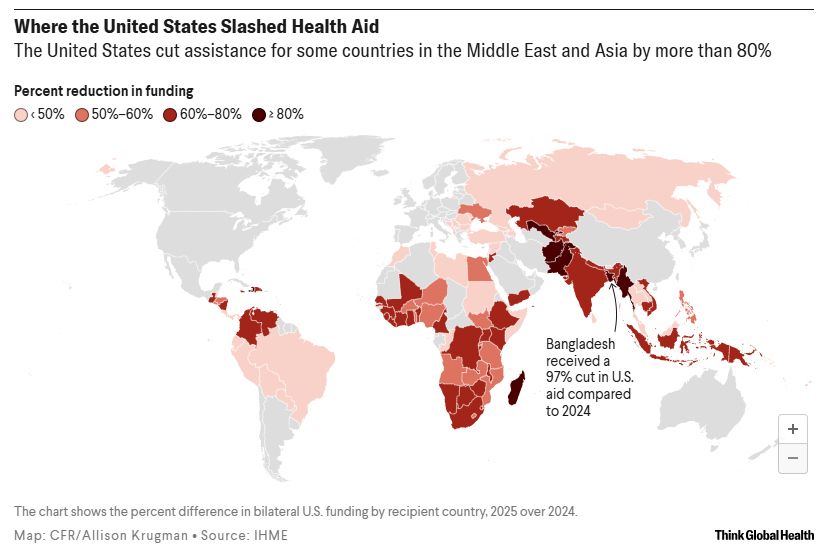
One year after the Trump administration’s sweeping foreign aid cuts and closure of the U.S. Agency for International Development (USAID), funding losses are more dire for many nations than previously estimated. Think Global Health Data Visuals Editor Krugman writes that the new America First Global Health Strategy has left critical HIV/AIDS, tuberculosis, and water programs suspended while African nations scramble to increase domestic health spending amid uncertain U.S. commitments. Read more
|
|
|
Thomas J. Bollyky, Joseph L. Dieleman, AJ Mitchell, Chloe Searchinger, Elena Every |
U.S. Health and Human Services Secretary Robert F. Kennedy Jr. listens while U.S. National Institutes of Health Director Jay Bhattacharya speaks at a press conference. (Kevin Lamarque/Reuters) |
The U.S. National Institutes of Health leadership has argued that the best pandemic preparedness playbook is one that prioritizes making Americans healthier and more resilient to novel pathogens by reducing their burden of chronic diseases. Although healthier life habits alone cannot constitute an effective, comprehensive preparedness strategy, CFR’s Bollyky and colleagues argue, substantial evidence shows that reducing the premature burden of obesity, diabetes, and other noncommunicable diseases would certainly help—and not just in the United States. Read the full article
|
|
|
Prashant Yadav, Stephanie Psaki, William Henagan, Elena Every, Thomas J. Bollyky |
A researcher holds a flow cell used for Illumina, Inc.’s NovaSeq X gene-sequencing system. (Illumina Inc/Reuters) |
Congress finally reauthorized the U.S. Development Finance Corporation (DFC) in mid-December as part of the 2026 National Defense Authorization Act, more than tripling the institution’s funding limit. Senior Fellows Yadav and Henagan, former U.S. Coordinator for Global Health Security Psaki, and others analyze the risks, challenges, and opportunities that will accompany the DFC’s reauthorization and expansion. Read more
|
|
|
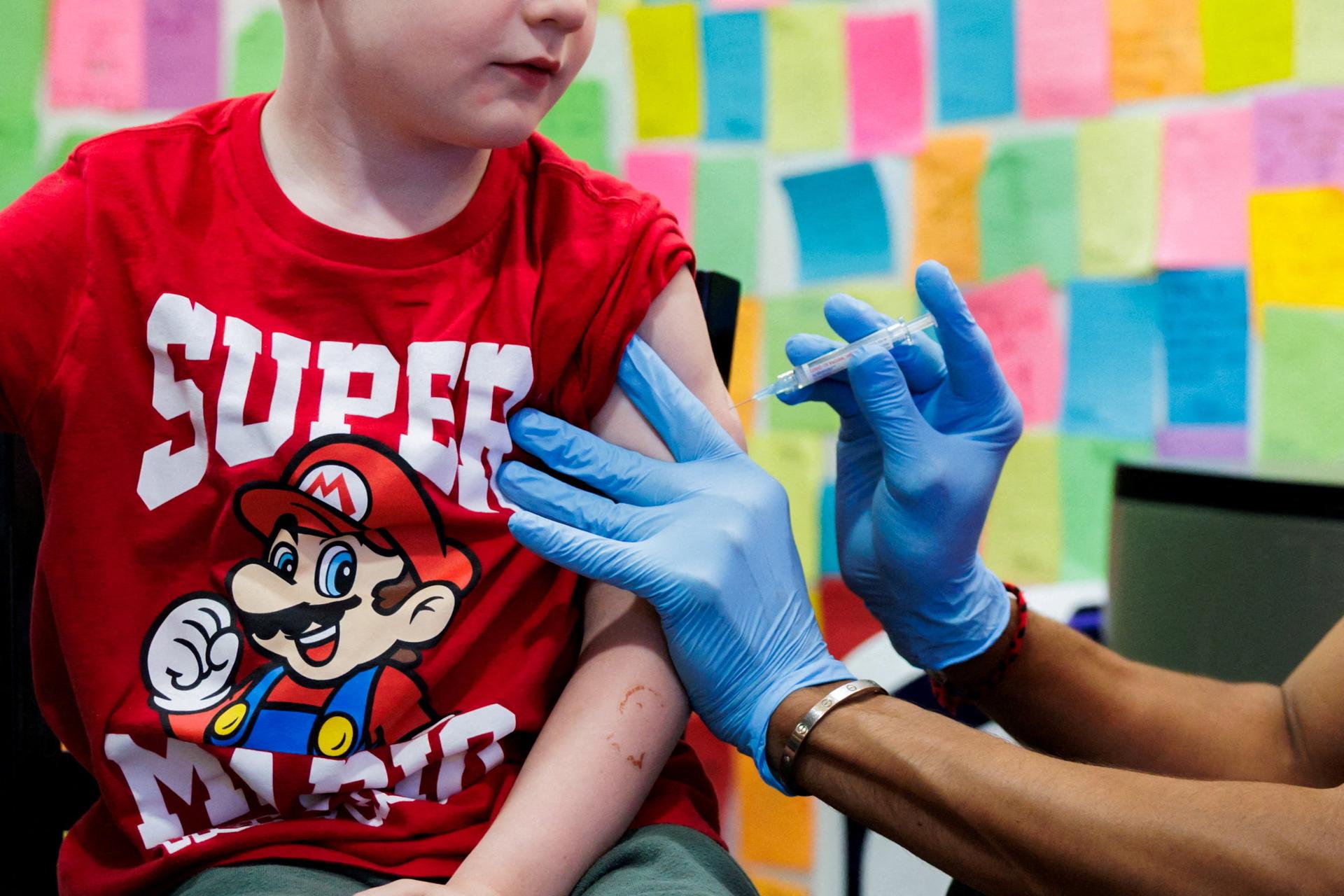
A child receives a dose of the Moderna coronavirus disease vaccine at Skippack Pharmacy in Schwenksville, Pennsylvania. (Hannah Beier/Reuters) |
The U.S. Centers for Disease Control and Prevention revised its vaccine schedule recommendations for children and teens. Think Global Health Managing Editor Akpan interviews law professor Dorit Reiss on the risks and protections for pediatricians and state governments after the shift. Read more
|
|
|
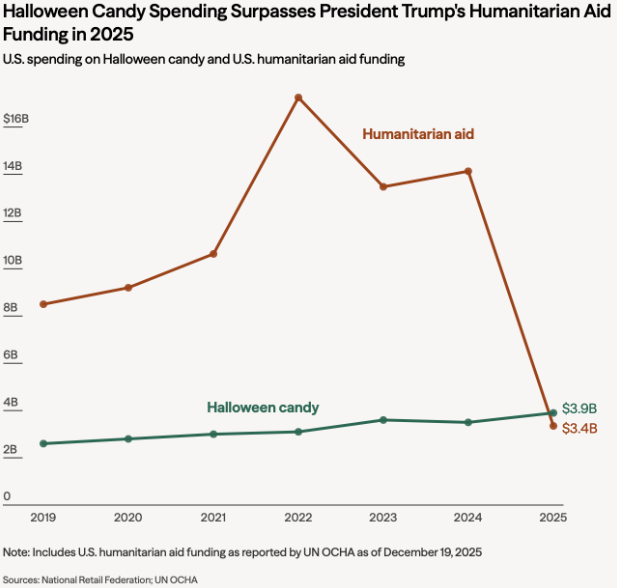
The world faces unresolved conflicts, growing climate crises, attacks on aid workers, two famines, and diminishing political will—along with significant aid cuts. Altogether, 2025 has earned a grim new superlative: the worst humanitarian year on record. Writing for CFR, International Affairs Fellow Vigersky illustrates the scale of 2025’s humanitarian crisis through nine sobering charts. Read more
|
|
|
More on Global Health From CFR |
| |
Think Global Health is a multi-contributor website that examines the ways in which changes in health are reshaping economies, societies, and the everyday lives of people worldwide. |
| |
|
CFR Events on Global Health |
| |
About the Global Health Program |
|
|
|