| | The US and Iran open talks over Tehran’s nuclear program, Stellantis takes a $26 billion hit on its ͏ ͏ ͏ ͏ ͏ ͏ |
| |  | Flagship |  |
| |
|
The World Today | 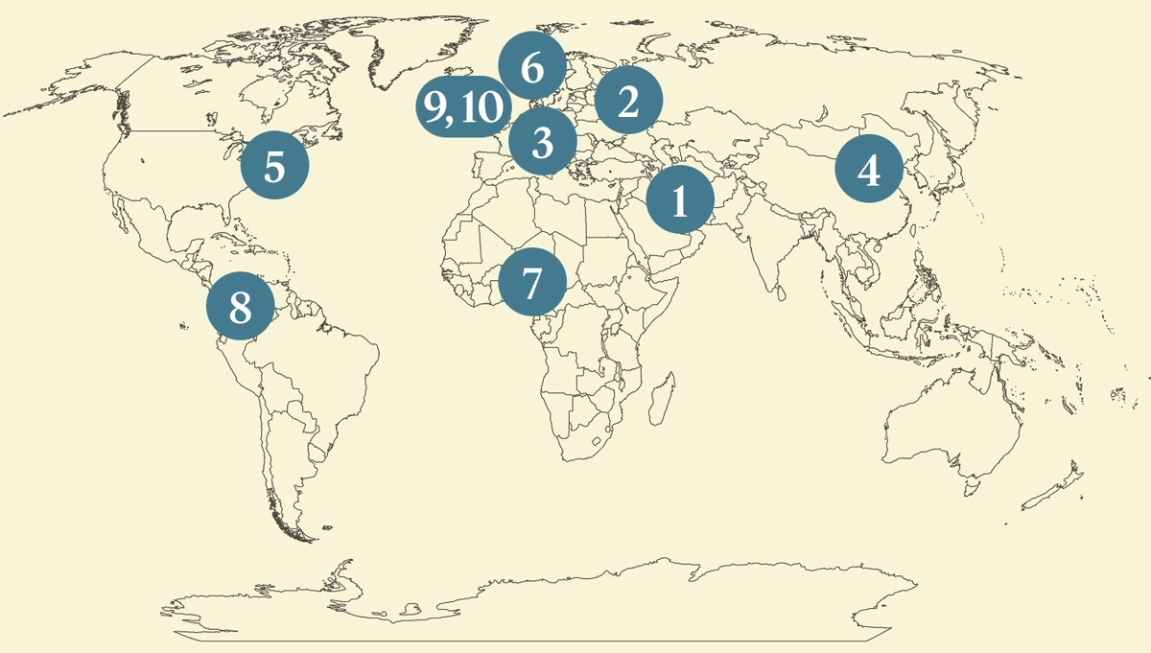 - Pessimism over Iran talks
- Macron reaches out to Putin
- Stellantis takes $26B hit
- Chinese code in US cars
- Bitcoin’s continuing slump
- WEF opens Epstein probe
- Nigeria jihadists kill 170
- LatAm crime fears grow
- Statins safer than thought
- Plan to ban soccer headers
 A book about how and why we disagree. |
|
 Majid Asgaripour/WANA via Reuters Majid Asgaripour/WANA via ReutersThe US and Iran opened negotiations over Tehran’s nuclear program, talks that analysts described as crucial but said were unlikely to yield a breakthrough. Arab states pushed to even ensure the meeting took place, after the two sides disagreed on the talks’ venue and format: The US wanted to include Iran’s support for militant proxies and its crackdown on protesters, whereas Iran insisted on focusing solely on its nuclear program. The specter of violence, meanwhile, hangs over the negotiations. Whatever the result, Iran’s people are unlikely to win respite, the historian Kim Ghattas wrote in the Financial Times: “Any negotiated deal… will enable the survival of the Islamic Republic,” she noted, whereas “war… will expose Iranians to even worse dangers.” |
|
Macron dispatches aide to Moscow |
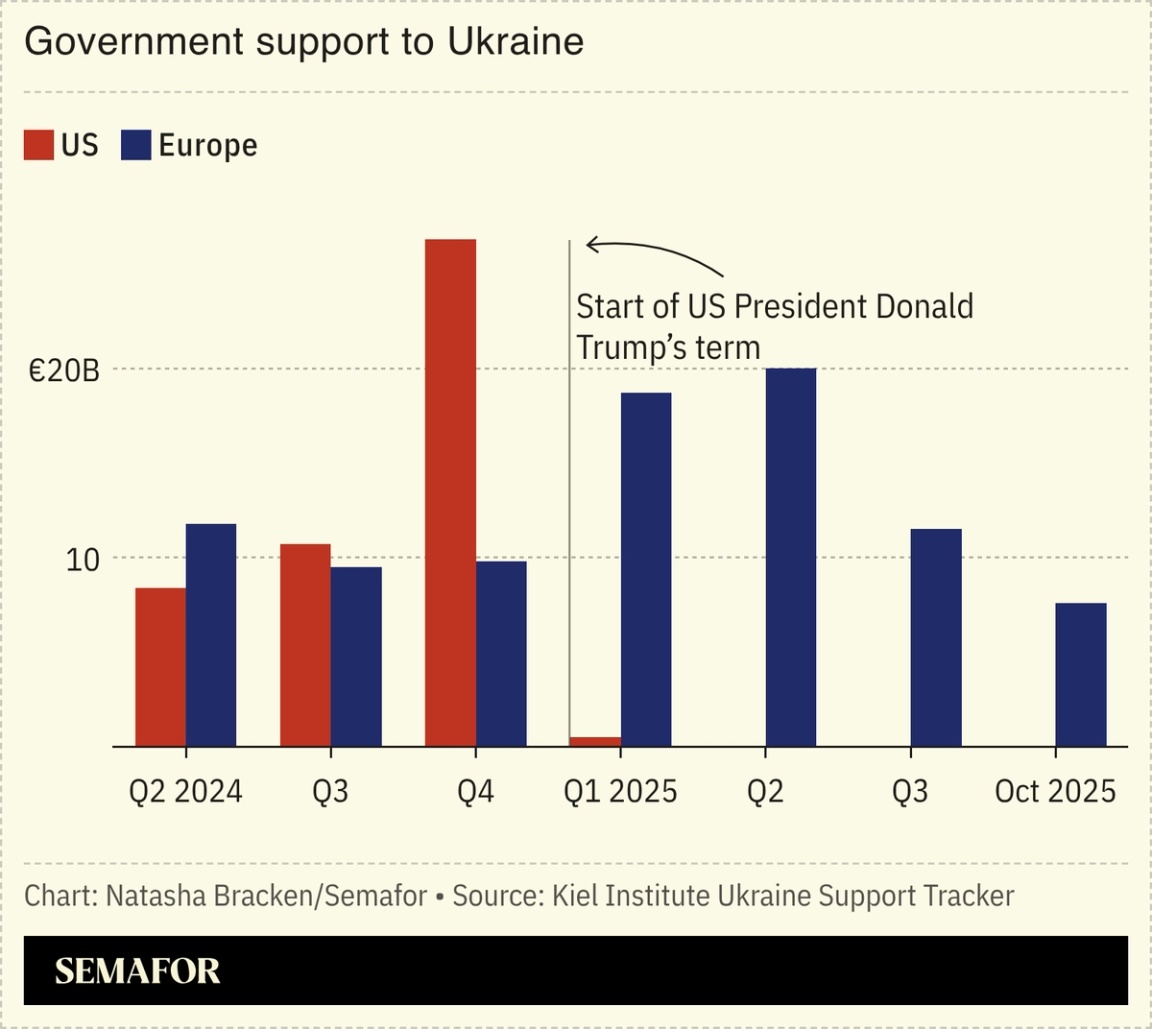 French President Emmanuel Macron sent a top diplomat to Moscow, potentially signalling a resumption of talks with Russia. Macron broke off dialogue with Russian President Putin seven months after the full-scale invasion of Ukraine, but he believes Europeans need their own channels of communication as trilateral talks between Russia, Ukraine, and the US get underway. Other European capitals, including Kyiv and London, consider it too soon to end Putin’s diplomatic isolation, Le Monde reported. But years of war and growing battlefield weakness have led even Ukrainians to think the previously unthinkable: Polling finds that 40% would support handing over territory to Russia, up from 18% in May 2022, after the first Russian assault was repelled. |
|
Stellantis takes hit over EV slowdown |
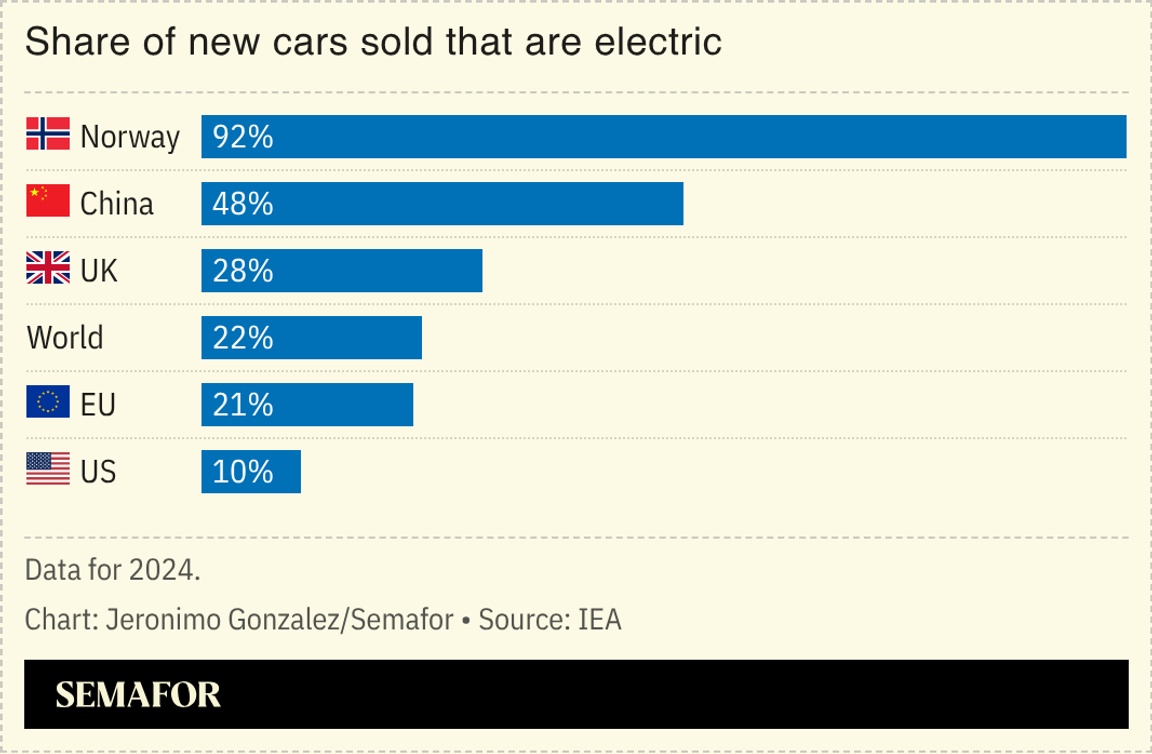 Stellantis said it would take a $26 billion hit after it overestimated the speed of the EV transition. The car giant wanted all of its European sales and 50% of its US ones to be electric by 2030, and had spent heavily on factories, inventory, and R&D to achieve that goal. But consumers have switched more slowly than anticipated, forcing the company to write off much of its investment. Its share price fell 20% on the news. Stellantis is not alone: BYD shares also fell after the Chinese firm announced January sales were the lowest in two years. At least six other Chinese car brands also announced sharp sales drops from December to January, partly related to a reduction in government subsidies. |
|
US automakers race to replace China |
 Daniel Cole/Reuters Daniel Cole/ReutersUS carmakers are racing to replace Chinese code used to run their vehicles, as new rules banning the software on national-security grounds take effect. Modern cars, especially EVs, are packed with internet-connected widgets, many of them containing Chinese technology. However there are fears that the cameras, microphones, and GPS systems in cars could be exploited by Beijing. The changes will create some “of the most consequential and complex auto regulations in decades,” an expert told The Wall Street Journal. Washington’s fears may not be unfounded: Last year, Norway’s public transport authority found that Chinese-made buses operating on its network could be halted remotely, spurring Oslo to introduce anti-hacking measures. |
|
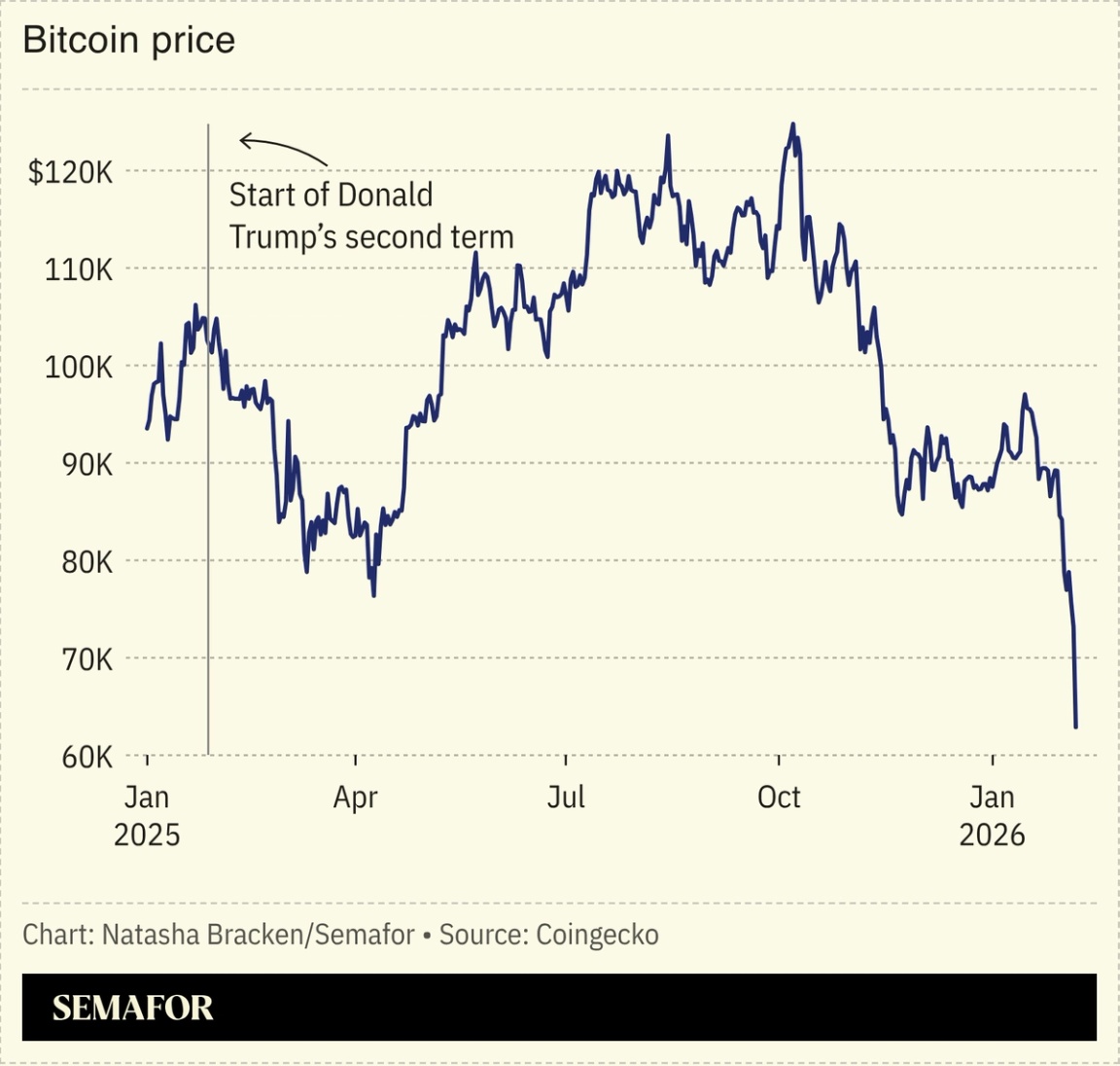 Bitcoin fell to its lowest level since US President Donald Trump’s second term began. The cryptocurrency is trading around $65,000, from an October peak above $126,000. The other biggest cryptocoins and the stock prices of crypto firms are also down. It is “one of the worst crises in the crypto industry” since the FTX fraud of 2022, The New York Times reported. Trump had promised to make the US “the crypto capital of the planet,” but a wider market selloff has hit crypto as well as traditional stocks. The slide may continue: The market “is now in full capitulation mode,” one analyst told Forbes, and falling below the psychologically important $70,000 threshold could trigger further sales. |
|
 Børge Brende. Yves Herman/File Photo/Reuters Børge Brende. Yves Herman/File Photo/ReutersAuthorities opened investigations into former top Norwegian ministers — including World Economic Forum President Børge Brende — over links to deceased sex offender Jeffrey Epstein. Brende, who previously denied contact with Epstein, dined with the financier, newly released files show, while one of Norway’s ex-premiers faces a corruption inquiry. The list of powerful people named in the files is growing: The emails show US Commerce Secretary Howard Lutnick planned a visit to Epstein’s island in 2012, again contradicting his previous statements, while Britain’s prime minister is under pressure over his former Washington ambassador’s connections. The files reveal a “social Ponzi scheme” in which the financier leveraged relationships and information to build yet more relationships, the Financial Times said. |
|
Nigeria deploys army over violence |
 Ibrahim Ndamitso/Reuters Ibrahim Ndamitso/ReutersNigerian President Bola Tinubu deployed an army battalion after suspected jihadist fighters killed 170 people, the latest sign of spiraling violence in Africa’s most populous nation. Though Abuja claims to be ramping up its campaign against radical militias, hundreds of people have been killed or kidnapped so far this year, underscoring the lawlessness that pervades swaths of the country. Meanwhile Washington has increased its scrutiny of Nigerian authorities, accusing them of doing little to protect the country’s Christian population. Last year US forces struck what they described as a jihadist cell in Nigeria, and this week Washington dispatched a small team of troops to the country. Experts fear the security crisis could soon metastasize beyond Nigeria’s borders. |
|
 When now-President Donald Trump decided to put on an apron and serve customers at a McDonald’s drive-thru on the 2024 campaign trail, it put Tariq Hassan, then McDonald’s chief marketer, in a tight spot. On this week’s Mixed Signals, Ben and Max sit down with the former Golden Arches CMO to discuss the Trump episode, why he thinks ad makers should engage with journalists, and what goes into a good celebrity Super Bowl ad. Listen to the latest Mixed Signals now. |
|
LatAm crime worries drive politics |
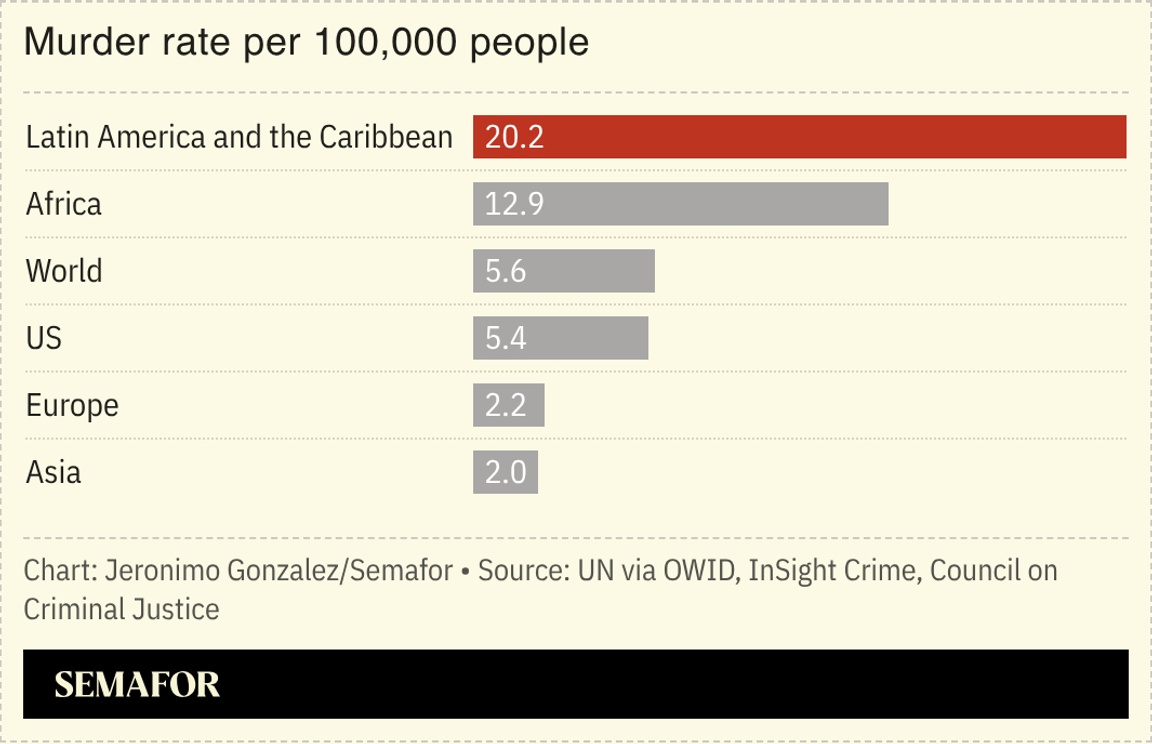 Rising worries over crime are upending Latin American politics, propelling rightist candidates to the top of polls across the region. A surge in cocaine production in Colombia set off a fight for control of trafficking routes across South America, sending crime to record levels: The murder rate in neighboring Ecuador — once one of the region’s safest countries — has grown around sevenfold in the last seven years. Illegal mining and human smuggling have also stoked violence. In response, voters are backing candidates with draconian plans to crack down on violence, many inspired by El Salvador’s authoritarian fight against gangs. “Enough of human rights,” a pensioner who backed Chile’s right-wing president-elect said. “Be tough with the people who are behaving badly.” |
|
Statins safer than thought |
 Luke MacGregor/File Photo/Reuters Luke MacGregor/File Photo/ReutersStatins, cholesterol-lowering drugs taken by 200 million people worldwide, are safer than previously believed, new research suggested. A review of previous studies totalling 123,000 patients found that only four of 66 potential side effects listed on statins’ packaging were actually caused by the drugs, and the rest were equally likely among those people given placebos. Previous data shows statins significantly reduce cardiovascular disease, and the risk-benefit ratio was already sufficiently positive that some experts recommend giving them to all over-50s, even those not at risk of heart disease. The latest research will boost those calls; like GLP-1s, the drugs’ benefits are so great and the risks so low that they are often a good bet even for healthy people. |
|
Soccer calls time on headers |
|
|


