Welcome to CFR’s Daily News Brief. Today we’re covering negotiations in Geneva regarding both Iran and Ukraine, as well as... - U.S. Secretary of State Marco Rubio’s message in Munich
- China’s plan to lift tariffs on African countries
- An investment pledge for Gaza
Our daily coverage of the 2026 Milan-Cortina Olympics continues today. Scroll down for the latest, including surprising firsts for Brazil and Kazakhstan, plus a look at the afterlife of Milan’s Olympic infrastructure. |
|
|
|
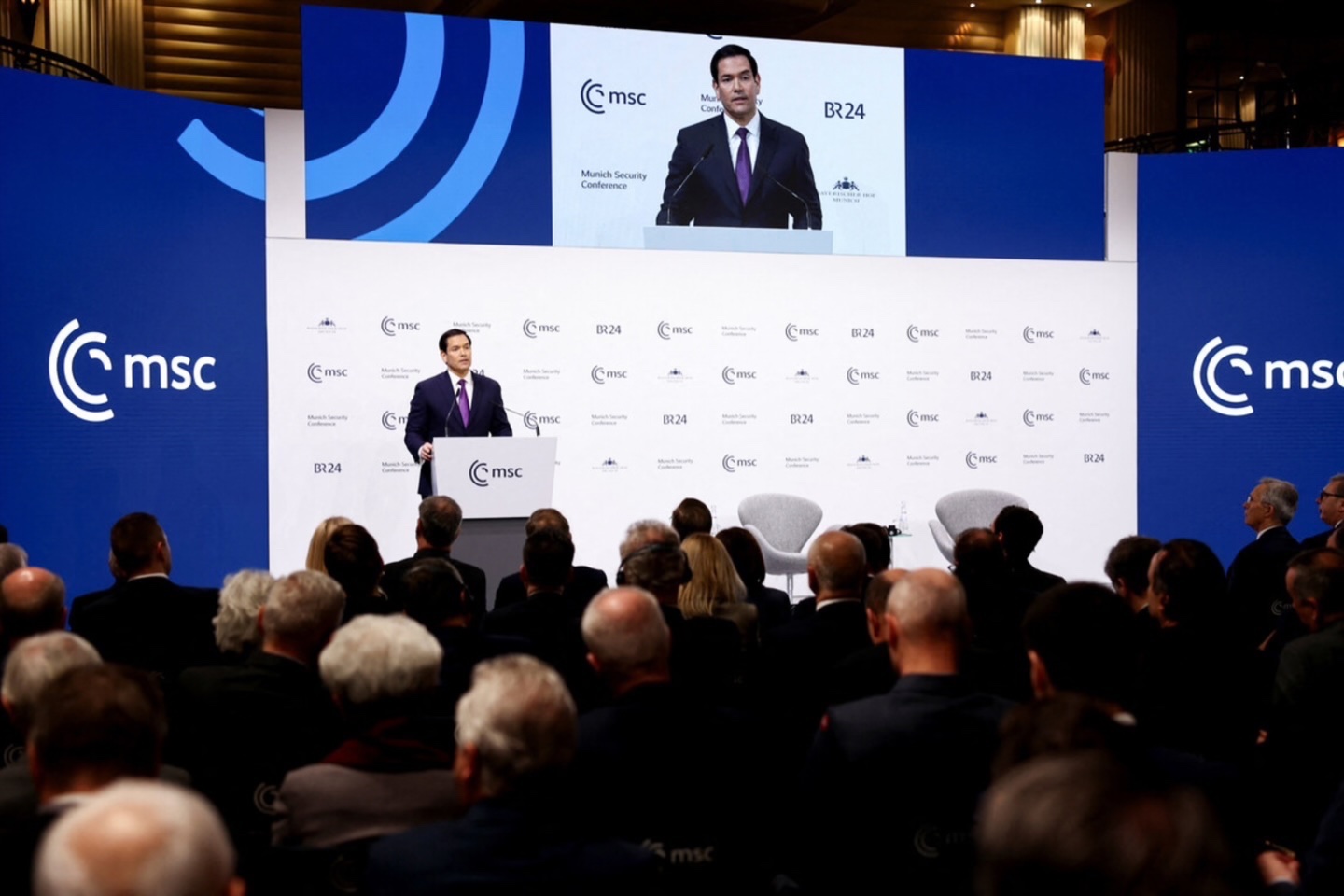
Two separate sets of high-stakes talks are taking place in Geneva today, with U.S. envoys hoping to clinch agreements regarding Iran’s nuclear program and peace in Ukraine. In both cases, U.S. President Donald Trump has called for deals in recent days. At the Munich Security Conference this weekend, U.S. Secretary of State Marco Rubio cast the United States as a vital broker, arguing that the second Trump administration had spurred countries to negotiate over conflicts the United Nations was unable to solve. Yet outstanding differences have led both the Iran and Ukraine negotiations to draw out over several phases.
On Iran, the threat of renewed war looms over the talks. The United States has increased its military deployments in the region, while Iran conducted military drills yesterday in the Strait of Hormuz. Iran’s foreign minister met with the UN nuclear chief yesterday ahead of the Geneva talks. While Tehran seeks a narrow deal on its nuclear program as well as sanctions relief, Washington has signaled it seeks a more expansive agreement that could also address Tehran’s missile stockpile. Trump also suggested on Friday that “the best thing that could happen” would be regime change in Tehran. The sentiment was echoed by hundreds of thousands of demonstrators in cities worldwide this weekend, who gathered to protest Iran’s current regime and its recent crackdown on dissent.
On Ukraine, talks have zeroed in on outstanding disputes over territory. A Kremlin spokesperson said yesterday that Russia would press for territorial concessions as well as other unspecified demands. Ukrainian President Volodymyr Zelenskyy met with backers including the United States in Munich and said he hoped today’s talks would be “serious” and “substantive.” Russia launched a large volley of missile and drone strikes at Ukraine last night, after Ukrainian forces last week recaptured almost as much territory as Russia seized in December, according to AFP analysis of data from the Institute for the Study of War. Its analysts attributed that progress to Russia’s loss of Starlink access.
|
| |
|
“Russia stands little chance of winning the war and achieving their maximalist territorial, political, and military objectives. The trouble, however, is that Ukraine and its Western allies have no coherent strategy for winning the war either...Thus far, the [Trump] administration is unwilling to provide Ukraine with the material support required to change the correlation of forces on the ground and force Putin’s hand.”
|
|
|
|
Rubio in Munich suggested that the transatlantic family would stay together—but require expensive therapy, for which Europe must foot the bill, CFR President Michael Froman writes in The World This Week. |
| |
|
|
Rubio’s message in Munich… In his Munich Security Council address, Rubio called European countries the United States’ “cherished allies and our oldest friends.” While that marked a shift in tone from Vice President JD Vance’s speech at the conference last year, multiple European leaders used their own speeches to signal differences with Washington. German Chancellor Friedrich Merz suggested European countries need not engage in U.S. culture wars, while French President Emmanuel Macron called for Europe to maintain its own policies on digital regulation.
…and in Budapest. While visiting Budapest yesterday, Rubio endorsed Hungarian Prime Minister Viktor Orbán’s bid for a fifth term in upcoming elections in April. “It’s in our national interest that Hungary be successful,” Rubio said, also referencing a “personal relationship” between the two countries’ current governments. Rubio also signed a nuclear cooperation agreement with Hungary.
China’s tariff relief for Africa. China will remove tariffs on goods from fifty-three African countries beginning May 1, the country’s foreign ministry announced. Beijing previewed these plans last year but hadn’t specified a start date. The announcement came after Trump signed a one-year extension earlier this month of duty-free U.S. access for many African goods.
Board of Peace pledge. Members of the Trump-led Gaza Board of Peace on Thursday will announce more $5 billion in aid and postwar reconstruction funds and pledge thousands of personnel to an international stabilization force for the enclave, Trump wrote on social media Sunday. Last year, the European Union, United Nations, and World Bank jointly estimated rebuilding Gaza would take $70 billion.
A micro-reactor takes flight. The U.S. Department of Defense transported a small-scale nuclear reactor across the country via airplane for the first time on Sunday. It said the flight demonstrated the deployability of such mini reactors across the United States, which could ensure military bases are not dependent on the civilian power grid or susceptible to power cuts during overseas missions. Some critics have called for more safety testing before the reactors are widely deployed.
Canada’s new team on U.S. issues. Canadian Prime Minister Mark Carney named longtime public official Janice Charette as the new top trade negotiator to the United States yesterday, ahead of a scheduled review of the U.S.-Mexico-Canada trade deal. In other personnel news, businessman Mark Wiseman assumed his post as Canada’s new ambassador to Washington on Sunday.
Jesse Jackson remembered. U.S. civil rights leader and former two-time presidential candidate Jesse Jackson, whose activism earned him global recognition, has died at 84, his family said today. Jackson marched alongside Martin Luther King Jr. during the civil rights movement. In addition to his social justice advocacy, Jackson worked to help secure the release of detained Americans around the world.
|
| |
|
|
In the first episode of The Spillover podcast, Rebecca Patterson and Sebastian Mallaby examine the “Fragile Four” economies—the United States, France, Japan, and the United Kingdom—and how political instability is spilling over into financial markets.
|
| |
|
|
Today, Macron is visiting India. Today, Mumbai Climate Week begins.
Tomorrow, King Frederik of Denmark begins a three-day state visit to Greenland.
|
| |
|
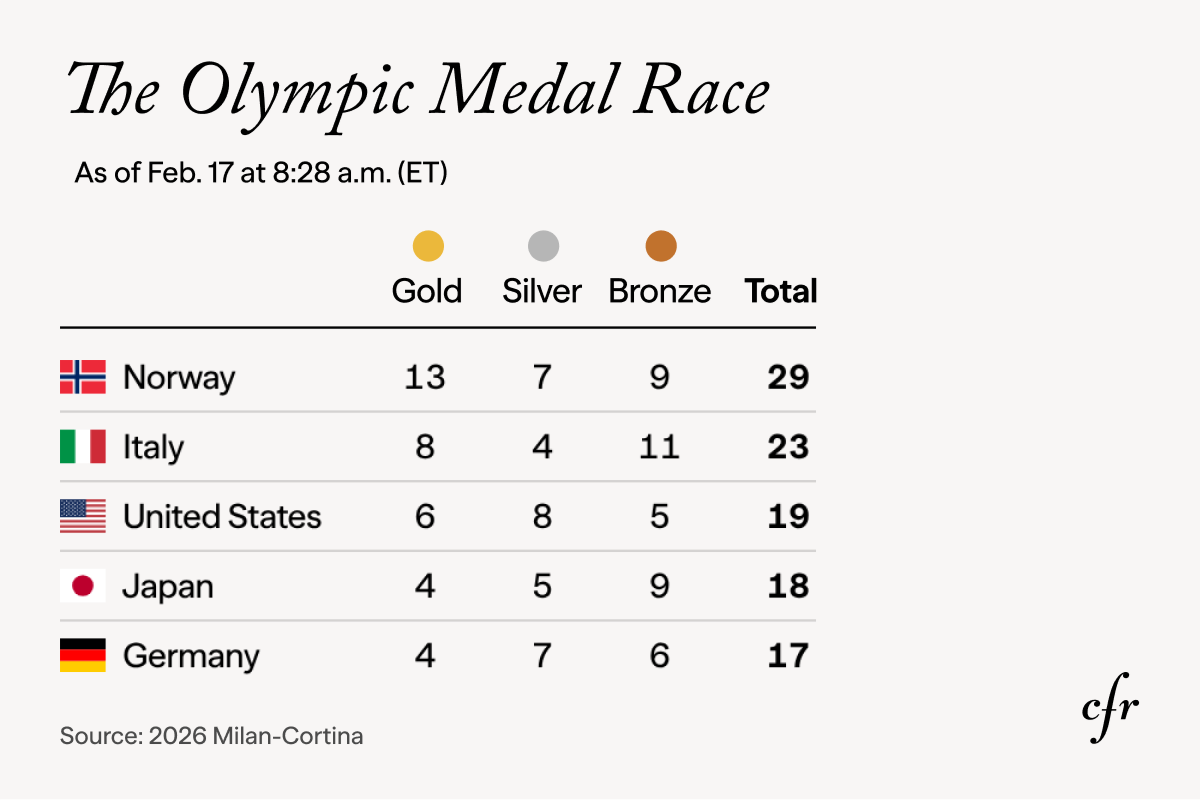
| What You Missed: 2026 Milan-Cortina |
Every morning the Daily News Brief team will share the latest highlights from the 2026 Winter Olympics! Without further ado, here’s what you might have missed over the long weekend.
Surprising firsts. Brazil became the first South American country to win a Winter Olympic gold medal on Saturday with Lucas Pinheiro Braathen’s victory in the giant slalom. Pinheiro Braathen, a Brazilian-Norwegian dual national who lived in Brazil as a child and formerly competed for Norway, celebrated his gold medal by samba dancing on the medal podium. Meanwhile, Kazakhstan’s Mikhail Shaidorov won first in men’s figure skating Friday after favorites Ilia Malinin of the United States and Yuma Kagiyama of Japan fell during their routines. Malinin acknowledged on social media afterwards that athletes sometimes contend with “invisible battles” and “insurmountable pressure.”
Increasingly rare creatures. The mascot of this year’s Olympics—a stoat, the tube-shaped relative of the weasel—has become so popular that small plush dolls of it are almost completely sold out across the Milan and Cortina areas. The doll shortage is perhaps a fitting metaphor for the fact that the real-life stoat population is at risk due to climate change. Each winter, stoats change from brown to white to camouflage with the snow. In recent years, however, their fur has often turned white before later-than-usual snowfall, making them vulnerable to predators.
The tournament and local strains. In an effort to address Milan’s affordable housing shortage, this year’s athlete’s village is slated to become university housing after the Games are over. In recent years increasing numbers of international students and migrants of all kinds—from asylum seekers to ultra-rich individuals attracted by tax incentives—have moved to Milan, and rents have sharply increased. Most of the 1,175 units in the repurposed athletes’ housing will be slightly above the city’s average rent, according to a real estate platform, with a portion designated as affordable housing.
|
| |
|
|