Welcome to CFR’s Daily News Brief. Today we’re covering new U.S. boat strikes in the Caribbean and Eastern Pacific, as well as... - The conclusion of Geneva talks on Iran and Ukraine
-
Japan’s announcement on plans for U.S. investments
- A projection about Germany’s shrinking population
Our daily coverage of the 2026 Milan-Cortina Olympics continues today. Scroll down for news about speed skating, biathlon, and Russia’s return to the Paralympics. |
|
|
|
The U.S. military killed eleven people in strikes on alleged drug trafficking boats in the Eastern Pacific Ocean and Caribbean Sea, it announced yesterday. That made Monday the deadliest day of such strikes this year, and brought the total number of people killed in U.S. boat strikes since September to at least 144. The Trump administration says the strikes are part of its campaign against illegal drug trafficking and claimed it had intelligence confirming the victims were part of drug networks, but did not make that evidence or the men’s identities public.
The details. Yesterday marked the first time U.S. Southern Command (SOUTHCOM) bombed alleged drug boats on both sides of the Panama Canal on the same day. Two strikes were in the Eastern Pacific and one in the Caribbean. SOUTHCOM got a new commander earlier this month: Francis Donovan, formerly the vice commander of U.S. Special Operations Command. Former leader Alvin Holsey retired early near the end of last year. Multiple news outlets reported Holsey had voiced concerns about the boat strike campaign prior to that departure, citing anonymous sources, though neither he nor Pentagon leadership publicly acknowledged a disagreement.
The legal pushback. Late last month, relatives of two Trinidadian men apparently killed in a boat strike filed a wrongful death lawsuit against the United States government in U.S. federal court. The Trump administration has declared it is in an armed conflict with “narcoterrorists” and the White House claimed in response to the lawsuit that the men were drug traffickers. The families said the men were fishermen, had no connections to the drug trade, and posed no imminent threat to the United States. The family of a Colombian man believed to have been killed in another strike filed a complaint in December at the Inter-American Court of Human Rights, where the United States does not consider findings binding. Some experts have said the killings are illegal and extrajudicial, as the military is not allowed to strike civilians unless they pose an imminent violent threat—regardless of alleged criminal activity.
|
| |
|
“A baseline proposition as a matter of international law and domestic law [is] that the United States government can’t go around the world killing people, even the most odious ones, without some lawful basis. And traditionally, or normally, the United States government would go after narcotics trafficking—even the most violent narcotics trafficking—with a combination of interdiction outside of U.S. borders and the use of criminal law within the United States borders.”
|
|
|
| Photo Collage by Lucky Benson |
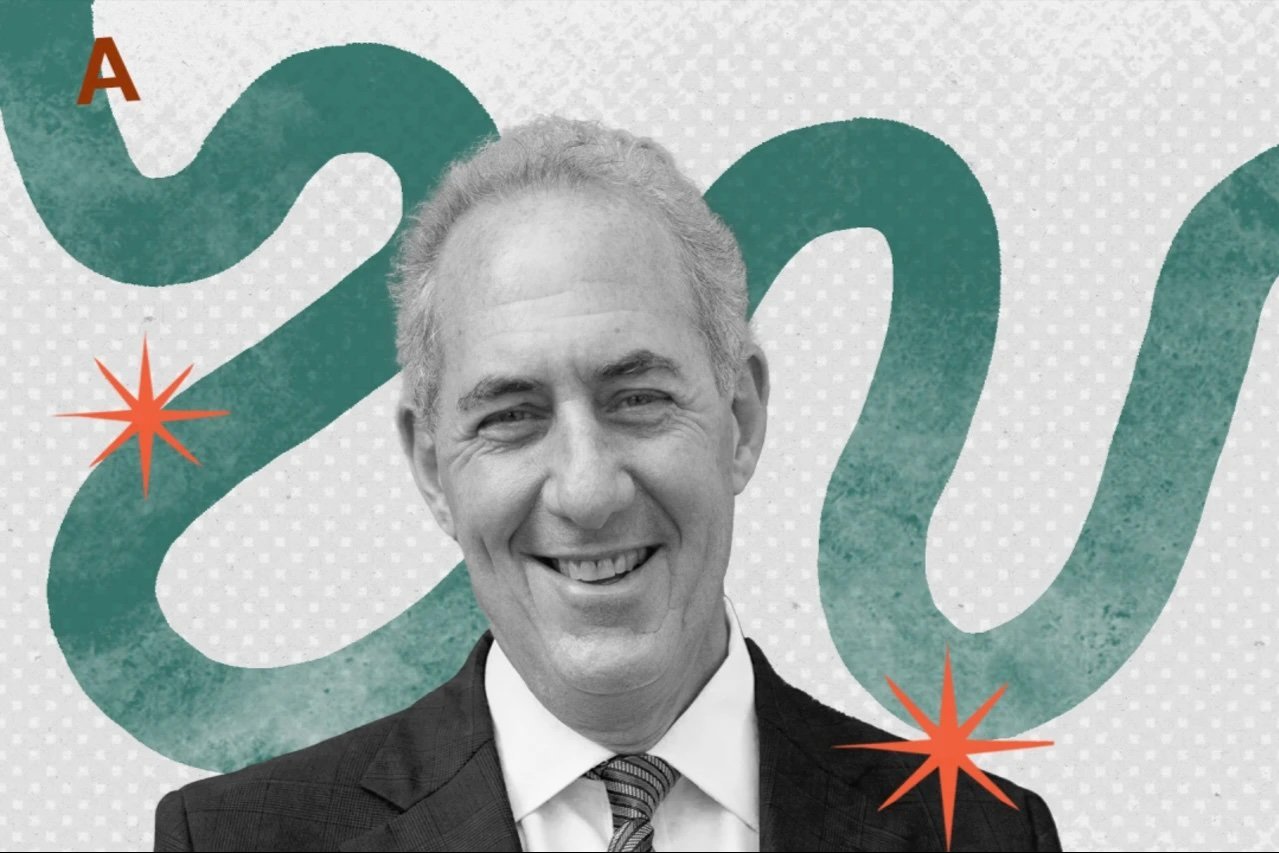
Young people interested in international affairs should consider who they can learn from the most—not only the sector they’re working in—when charting a career path, CFR President Michael Froman tells CFR’s Ivana Saric in this article. |
| |
|
|
Iran talks to continue. U.S.-Iran negotiations in Geneva yesterday ended with a commitment to meet again, but Iran failed to acknowledge certain U.S. red lines, Vice President JD Vance told Fox News. Late on Monday night, Trump reiterated his threat that there would be “consequences” if a deal is not reached. Open-source flight radar data shows that dozens of U.S. fighter jets have moved to positions near Iran this week, while Iran partially closed the Strait of Hormuz during talks yesterday.
Russia confirms Starlink outage. The Russian military has not been able to access Starlink internet terminals for two weeks, the country’s Deputy Defense Minister Aleksei Krivoruchko told state media yesterday. Elon Musk, owner of Starlink parent company SpaceX, has said the company had moved to curb Russia’s unauthorized use of its service. Conflict analysts had credited the Starlink disruption with Ukraine retaking Russian-occupied territory last week, though Krivoruchko denied the outage affected Russia’s drone capabilities. Meanwhile, the United States, Russia, and Ukraine concluded a second day of trilateral peace talks in Geneva today without announcing a breakthrough.
Details on Japanese investments. Japanese firms will invest $33 billion in a natural gas power plant in Ohio, $2.1 billion in an oil export facility in Texas, and $600 million in a diamond grit factory in Georgia, the U.S. Commerce Department said yesterday. The announcement marked the first time that detailed plans emerged from the $550 billion investment pledge that Japan made last year, as it worked to secure a reduced tariff level from the United States.
Germany’s population decline. The country’s population is expected to shrink by almost 5 percent over the next twenty-five years, introducing “significant effects on all areas of the economy and society,” economic think tank Ifo said in a forecast yesterday. That is significantly more than Ifo’s previous forecast of 1 percent, which it revised due to Germany’s low birth rate. It advised policymakers to prepare for strains on the pension and health-care systems, and a sluggish long-term economic growth rate of under half a percent.
Peru’s latest impeachment. The country’s legislature removed President José Jerí yesterday only four months after he took office, following the impeachment and removal from office of former President Dina Boularte. A new leader is set to be appointed by Congress today, with presidential elections held in April and a transfer of power to a newly elected president slated for June. The impeachment complaint against Jerí stemmed from a political scandal involving a Chinese businessman who has had Peruvian government contracts. Jerí’s administration denied misconduct.
EU probe into Shein. European Union (EU) regulators are investigating the Chinese fast-fashion retailer Shein. Allegations that Shein’s recommendation system lacks transparency and that it sells content that could constitute sexual abuse material, such as childlike sex dolls, have led to a probe under the EU’s Digital Services Act. A Shein spokesperson said the company had been working to strengthen its compliance with EU regulations in recent months.
Trump’s Taiwan policy. The White House issued a clarification yesterday that there is no change to its policy on Taiwan after Trump said that he had discussed arms sales to Taipei with Chinese President Xi Jinping. Under a 1982 U.S. policy known as the Six Assurances to Taiwan, the United States pledged not to consult with Beijing on arms sales to Taipei. The U.S. policy on Taiwan was a focus of a recent Trump-Xi call, the Chinese government said.
|
| |
|
|
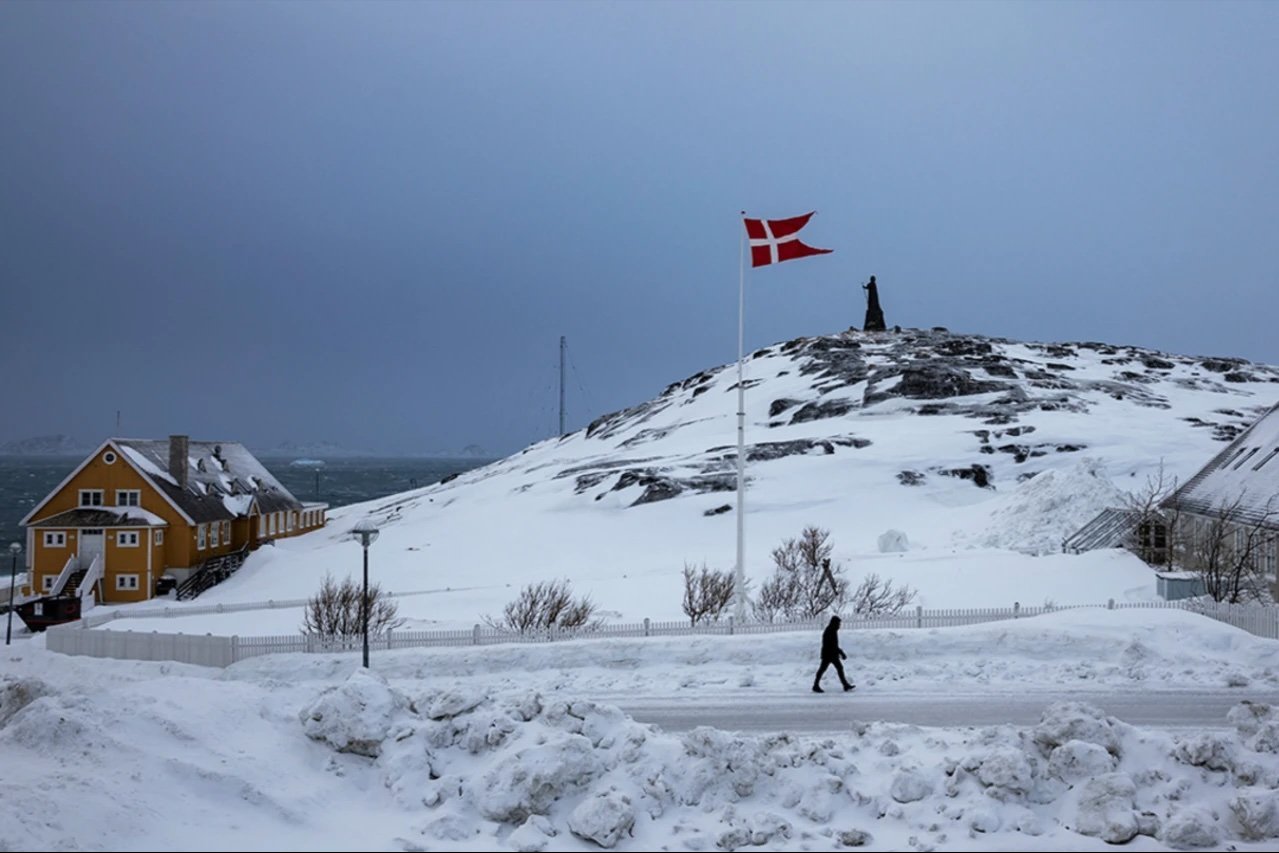
Potential U.S. control over territory in Greenland carries legal, strategic, and diplomatic implications. Four experts lay out the cases for and against such a step at this CFR–Open to Debate event. |
| |
|
| -
Today, King Frederik of Denmark begins a three-day state visit to Greenland.
-
Tomorrow, Indian Prime Minister Narendra Modi speaks at an artificial intelligence summit in New Delhi.
-
Tomorrow, the Gaza Board of Peace meets in Washington, DC.
|
| |
|
| What You Missed: 2026 Milan-Cortina |
Every morning the Daily News Brief team will share the latest highlights from the 2026 Winter Olympics! Without further ado, here’s what you might have missed since yesterday.
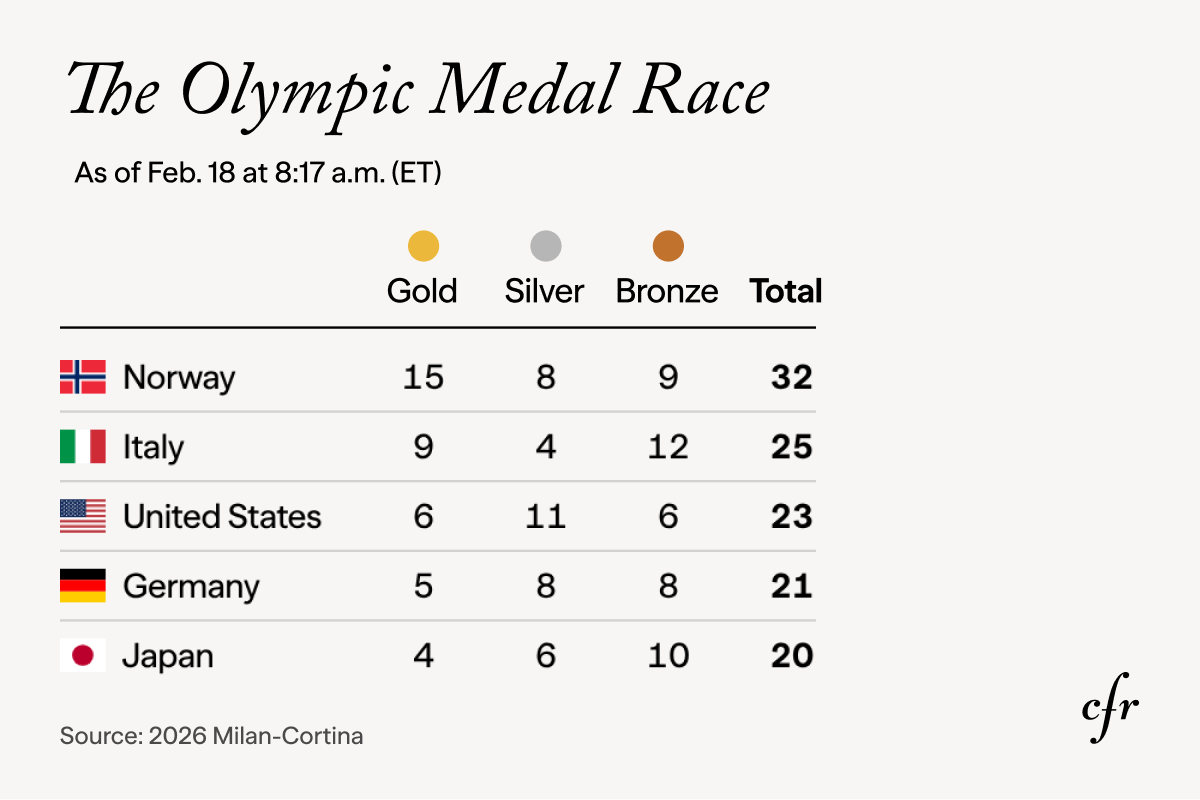
Home team power. In the men’s team speed-skating contest yesterday, Italy surged past the leader, Team USA, late in the race to finish more than four seconds ahead and take Olympic gold. Host country Italy has already blown past its previous record of twenty medals in a Winter Games, earning at least twenty-five by early today. In a cross-cultural moment, one member of yesterday’s Italian team celebrated with a nod to U.S. sporting prowess: a “night night” victory gesture made famous by NBA star Steph Curry.
Bonding at biathlon. Perhaps the most surprisingly in-demand event for spectators at the Milan-Cortina Games is biathlon, a combination of cross-country skiing and rifle shooting. Athletes must ski a 150-meter penalty lap for every shot they miss, adding to “the carnival hilarity of it all,” as The Athletic reported. Northern Italy is already in the sport’s heartland: this year’s Olympic biathlon stadium is usually a venue for the sport’s World Cup. Now, biathlon has also won over new viewers thrilled by its collegial fan atmosphere and unpredictability.
Russia’s and Belarus’s Paralympic reentry. A combined ten athletes from both countries will be allowed to compete under their national flags at this year’s Paralympics in March, the International Paralympic Committee (IPC) said yesterday. IPC members had voted last September to welcome the countries’ athletes back following a 2022 ban at international sporting events because of Russia’s invasion of Ukraine. The decision then went through an appeal process, which it withstood. Many IPC members supported the athlete reinstatement in September because the Paralympics have a theme of inclusion, the BBC reported. Ukraine’s sports minister said at the time the move betrayed Olympic values.
|
| |
|
|