Klipsch’s hi-fi speakers, a winter-sports exhibition at the Triennale Milano and a New Delhi pavilion.
|
Wednesday 18/2/26
|

|
|
London
Paris
Zürich
Milan
Bangkok
Tokyo
Toronto
|
|
|
|

speaking volumes
What better place to start than a garden? This week’s dispatch begins with a new pavilion in New Delhi’s Sunder Nursery biodiversity park. Then: we speak to a British antiques dealer with an eye for furniture, hear about the vintage charm of Klipsch’s La Scala high-fidelity loudspeaker and cool down with a tour round a winter-sports exhibition at the Triennale Milano. First out of the frying pan is Katia Gorschkova, who makes the case for the closed-plan kitchen.
|
|
OPINION: Katia Gorschkova
Everything and the kitchen sink
In 1933, Nancy Willey sent an exasperated letter to Frank Lloyd Wright. “I want an $8,000-$10,000 house for $8,000-$10,000,” she wrote. “Can I have it?” Her frustration stemmed from the fact that Wright had designed a house for the Willeys well beyond their means, so Nancy challenged him to reconsider. The second scheme that the famed architect produced was more affordable and went on to revolutionise how we think about the functionality of modern homes. Through Nancy and Malcolm Willey, Wright learned to design for the middle class, reflected in moves such as renaming the kitchen as the “workspace”. The shift reflected wider social changes, which allowed those in the kitchen to remain connected to the social life of the home while preparing meals, birthing the concept of the open plan kitchen.
Wright’s revolution – aided by the likes of the Brooklyn Borough Gas Company’s kitchen work triangle and Austrian architect Margarete Schütte-Lihotzky’s Frankfurt kitchen – swept through the design world. Fast forward almost a century and you would be hard-pressed to find a contemporary architect who doesn’t yearn to tear down the walls between living and cooking spaces. By the 1990s and 2000s the open kitchen was cemented as a defining feature of modern homes, no doubt fueled by the combination of both cooking and renovation television shows in popular culture. The appeal is undeniable: you can entertain while sautéeing, keeping conversations flowing without pausing to check whether the main course has burned.
|
The caveat, however, is that there is no distinction between work and play. It’s an experience that I’m living through first hand as my landlady rips apart the large kitchen (with views over the garden) in my 100-year-old apartment. She’s converting it into an open plan set-up that now takes up most of my living room. It means that the kitchen will cease to be a refuge and instead become a stage, where every move feels visible. I’m not a fan and I’m not alone. It was Julia Child who quipped, after dropping a potato pancake on the range, “If you are alone in the kitchen, who is going to see?” There is also the question of smells. While the aromas of a well-cooked meal can define a welcoming home, it is hard to imagine a worse fate for living-room fabrics than absorbing lingering notes of garlic and onions.
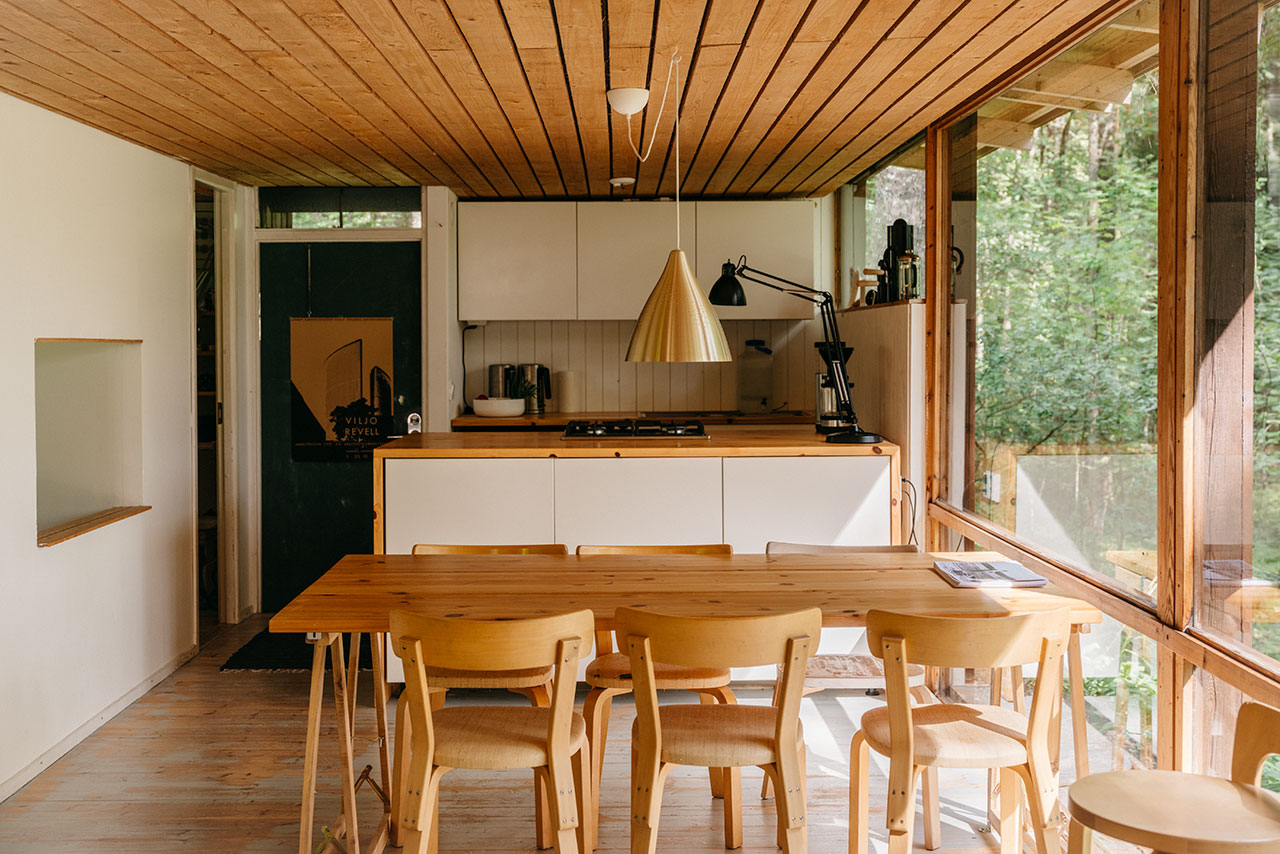
Though an open-plan kitchen might work in compact mid-century homes (pictured), small apartments and airy lofts, a closed kitchen maintains a sense of intimacy that is hard to come by in our already highly supervised world. It’s meant for smaller gatherings and quick get-togethers, where you don’t need to bring out the fine china and set up the dining table. It’s an invitation-only area, away from prying eyes and unsolicited cooking advice.
Despite the success of her largely unedited television programme, The French Chef, Julia Child understood that cooking does not require an audience. The live feel of her show, which included authentic mishaps and the aforementioned drop, invited audiences into her kitchen but conveyed the message that a kitchen was a private, intimate space – and some messes should remain unseen. Even in the Willey house, the kitchen was partially distinct from the dining and living areas, separated by a glass partition wall. Maybe we’ve taken Wright too far. Perhaps good design is not always about bringing everything together so much as knowing what to keep apart.
Katia Gorschkova is a London and Montreal-based writer. For more analysis and insight, subscribe to Monocle today.
|
|
LA GALERIE DU 19M  MONOCLE MONOCLE
|
|
the project: ‘Sacred Nature’, India
Between a rock and smart place
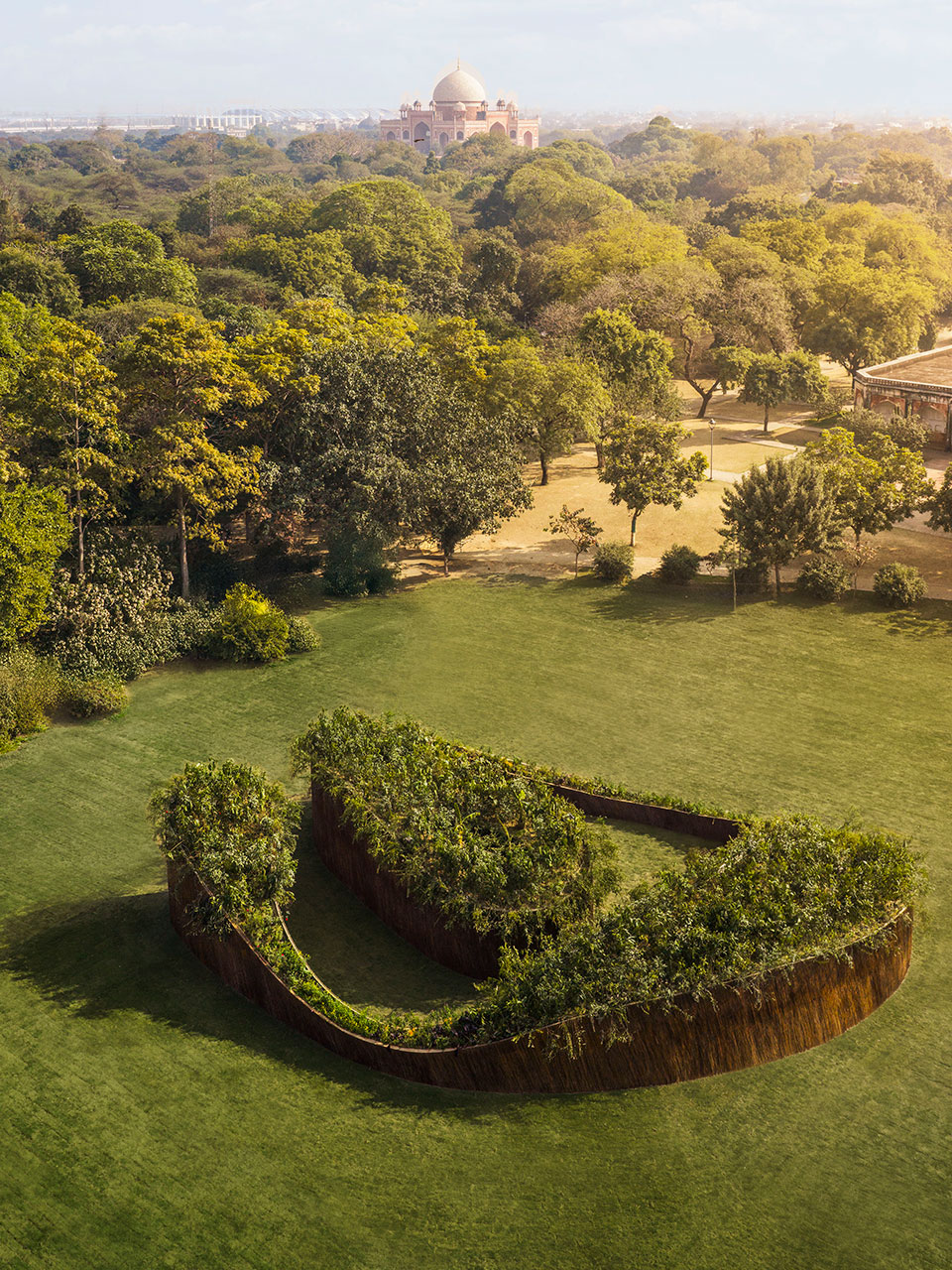
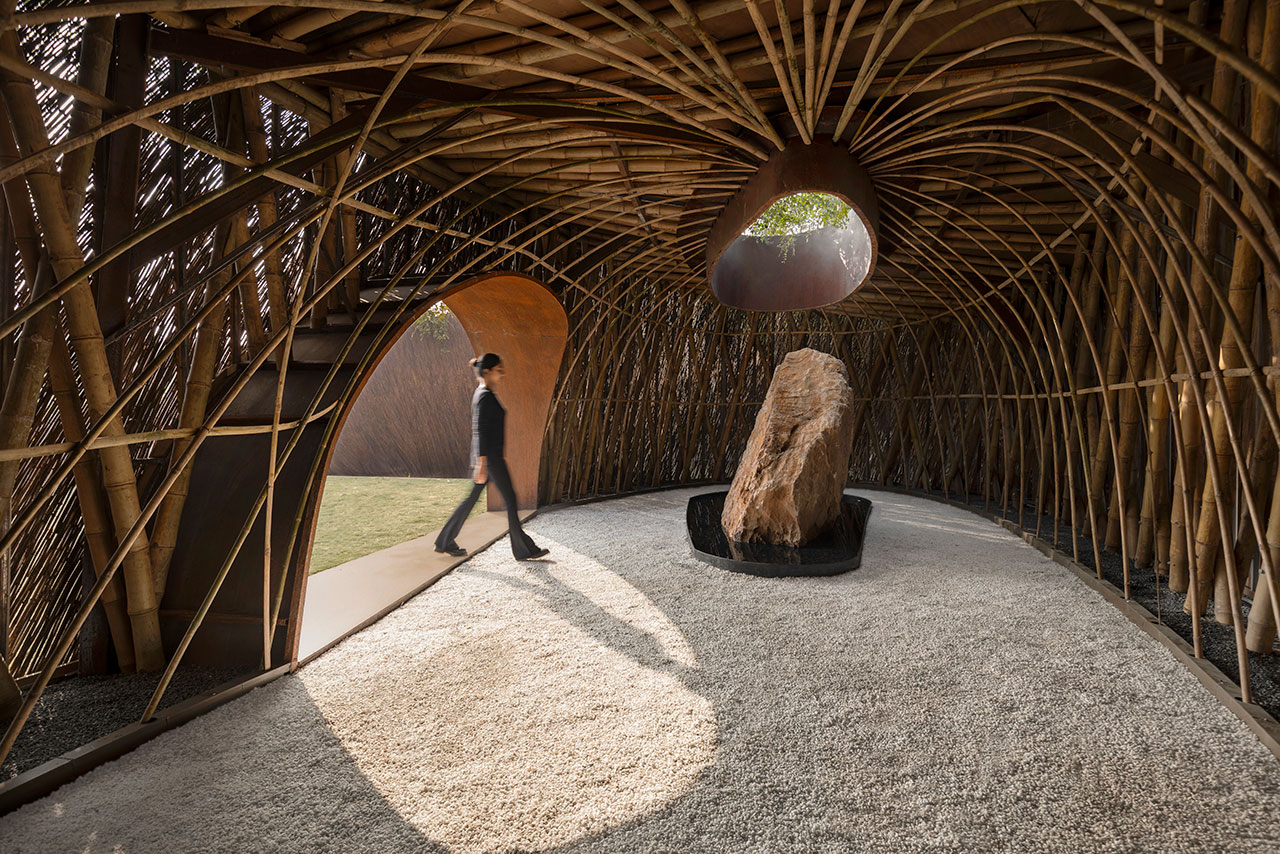
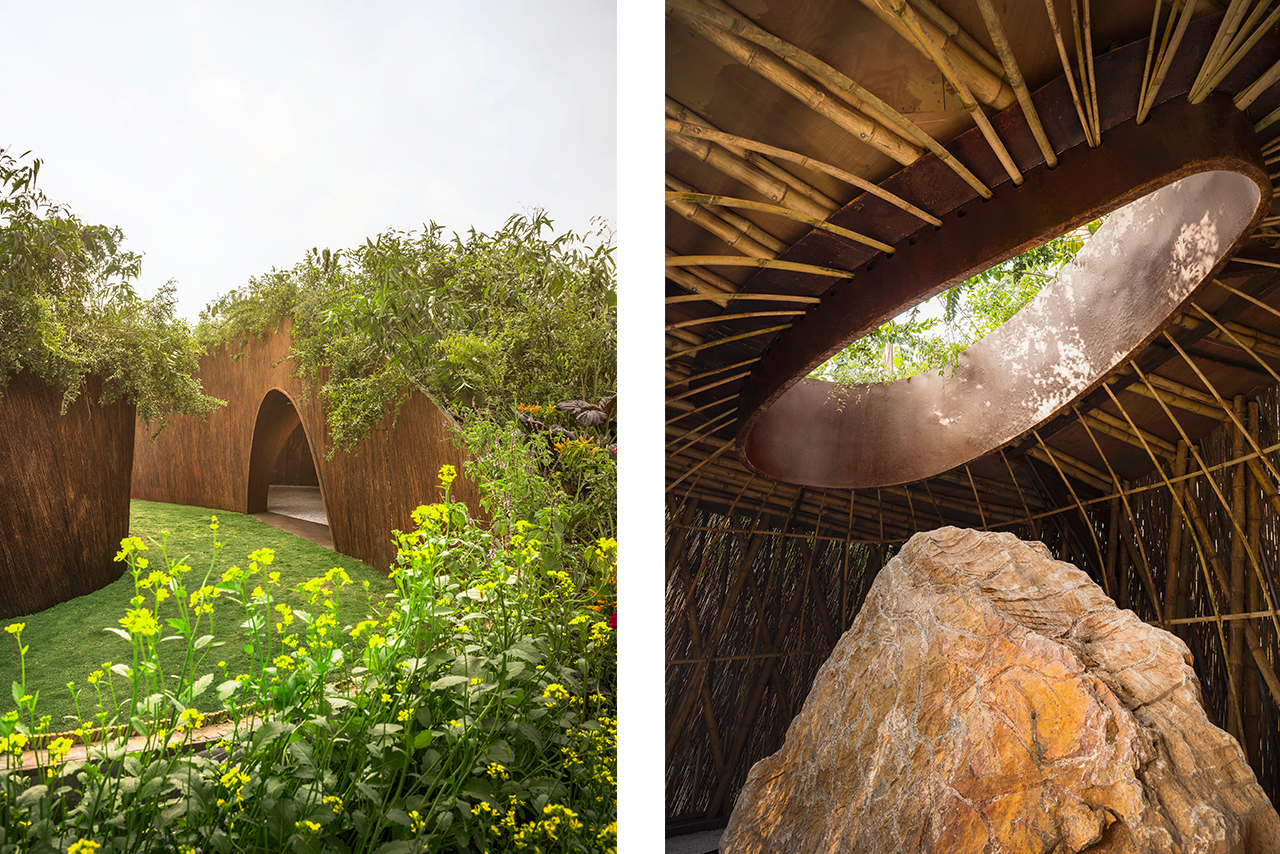
A new temporary pavilion called “Sacred Nature” has been installed in New Delhi’s Sunder Nursery biodiversity park. Commissioned by Indian environmental group Aranyani and launched to coincide with this month’s India Art Fair, the curving structure is crowned with foliage. A narrow curving pathway leads inwards to an open space with a theatre showcasing environmental films on one side, while on the other is an area called The Shrine, which houses a stone monolith from Bhilwara, Rajasthan. “We’ve planted 50 species of plants, both endemic and naturalised, on the roof. Those including tomato and spinach don’t actually belong to our land,” says Aranyani’s founder, architect-turned-conservation scientist Tara Lal. “But they have existed in India for hundreds of years and form an important part of our diet. So we’re also trying to reflect the many shades of grey where you have to pause and think about what belongs and what doesn’t.”
|
Also reflecting these shades of grey is the fact that the structure, designed by London-based studio TM Space, is predominantly made from bamboo and woven lantana branches. The invasive floral species was introduced to the Indian subcontinent by the British in 1807. Today it chokes more than 13 million hectares of endemic flora across India. Another of Aranyani’s projects involves the removal of lantana and the restoration of local species.
|
|
The temporary nature of the pavilion also informed its build. “The structure is designed such that it can be easily disassembled and reassembled,” says TM Space’s Mario Serrano Puche. “In fact, the pavilion was built elsewhere and brought to Sunder Nursery to be assembled. It has already been moved once. So we know that we can move it again.” Until that happens this weekend, Lal has programmed a series of talks, workshops, performances and film screenings by conservationists, artists, architects and corporate leaders.
aranyanilife.com;t--m.space
Visit ‘Sacred Nature’ at Sunder Nursery until 20 February 2026.
|
|
WORDS WITH... Matthew Cox, UK
Reduce, reuse and rethink
Designer Matthew Cox is a third-generation antique dealer with a particular understanding of the qualities that make enduring furniture. This know-how informs his approach to creating tables, stools and bespoke cabinetry for his namesake brand. Working from a Georgian townhouse studio near Stamford, a historic English town known for its grand, 18th-century stone buildings, his team combines wood, metal and stone to create commissions designed to last a century.
|
Which design movement has influenced you the most?
I came to design in a slightly unusual way, having been informed by the antiques I love. These tend to be honest pieces, light on the influence of any particular person or period, though classical qualities are often present. Materiality, functionality and balance are what I find compelling, so I respect the craft and community of the Shakers, as well as the Japanese philosophy of impermanence. I’m also inspired by the wonderful scale and elementary language of Louis Kahn’s architecture, as well as Carlo Scarpa’s poetic presentation of natural materials as ornament. I adhere to the latter’s reverence of history and rejection of nostalgia.
The sky’s the limit: which piece of furniture would you love to own?
It would either be an achingly beautiful ancient piece, such as the Elgin Throne in the Getty Villa, or something large and utilitarian – worn and patinated with human endeavour – such as the pastry table at Tredegar House in Wales.
A recurring source of inspiration?
Natural materials and the way that they respond to time and use. There is a deep, emotional connection between us and the organic matter that we have relied on for our progress and survival. It’s crucial to our wellbeing that we maintain this relationship.
A dream commission?
To redesign the municipal furnishings and signage of my hometown, Stamford. It has this incredible architectural lineage but through the loss of decorative ironwork during the 1900s and the piecemeal addition of poorly advised and underfunded design, there are so many missed opportunities to enhance people’s experiences. A little love would go a long way.
A priority for you and the industry going forward?
There is so much that we need to do about transparency and accountability but the priority is education. The vast majority of design being marketed is damaging to the health of the planet, so people need to make informed choices. We have to create dialogue from an early age and inspire positive change. We need to raise awareness of the value in making and purchasing sustainably, with repurposing and recycling as the ultimate aim. We were doing it inherently until relatively recently, so we just need to work our way back.
Which city has the best design scene?
I’m excited by Amsterdam’s bid to become a 100 per cent circular economy by 2050. Key areas for focus are consumer goods and the built environment, so I would hire a bike – or buy a refurbished one from Roetz – and visit Cityplot Buiksloterham to see the former industrial harbour’s transition to a mixed-use urban district. To witness reuse in action, I’d visit a Repair Café, which began in the city in 2009 and now has more than 3,500 branches worldwide. There are also De Lokatie, a foundation upcycling donated items and offering work placements, and IJ-Hallen, Europe’s biggest flea market.
For more from designers such as Matthew Cox, tune in to ‘Monocle on Design’.
|
|
SPONSORED BY LA GALERIE DU 19M
|
|
from the archive: Klipsch La Scala, USA
Play it by ear
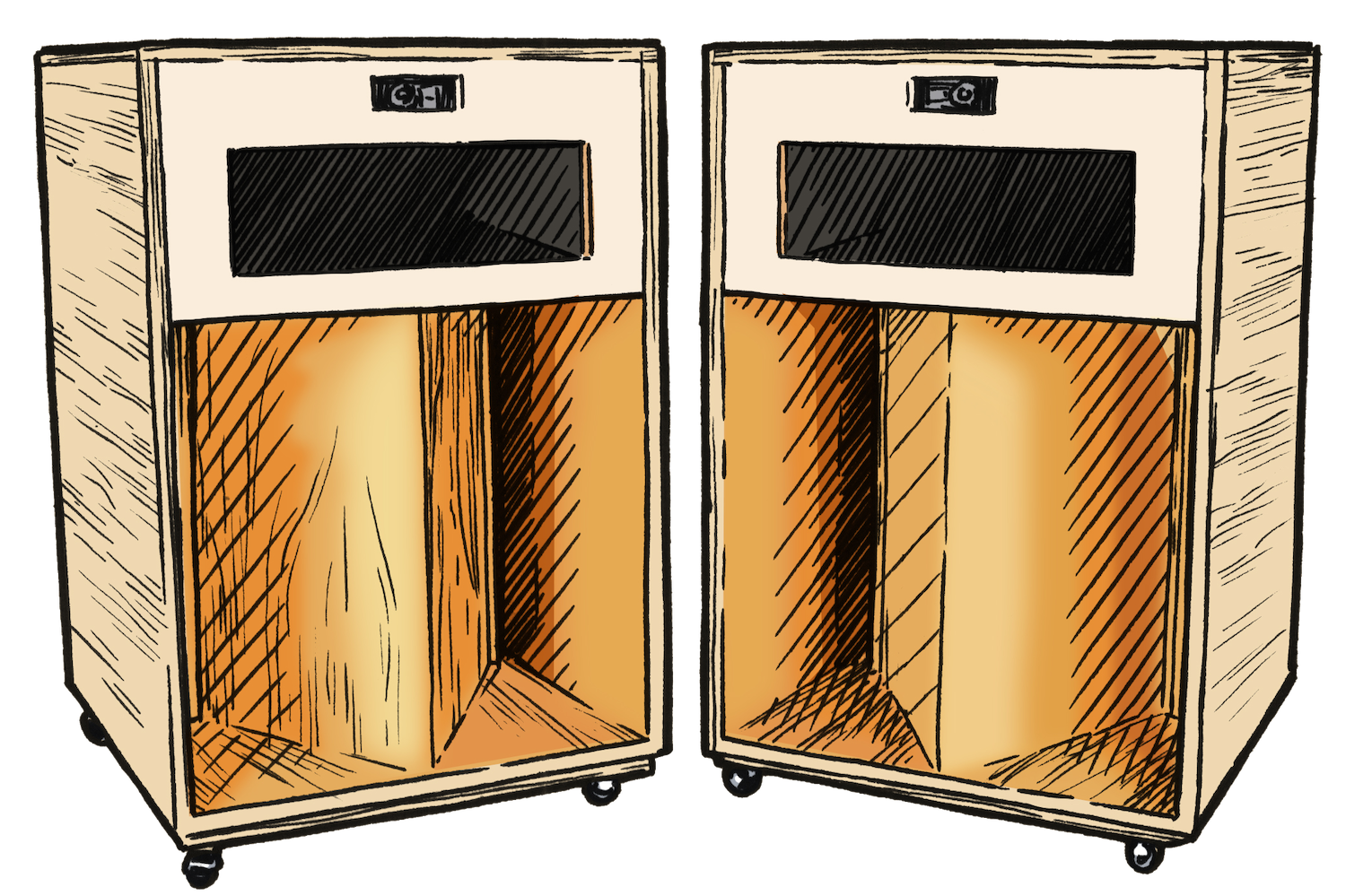
Where some see a plywood box, audio experts see one of the best speakers ever made. In 1963, American engineer and amateur cornet player Paul Wilbur Klipsch invented a high-fidelity loudspeaker with a built-in horn that produced a clearer, more powerful sound than any phonograph that had come before. It was originally designed as a more compact version of the Klipschorn for Arkansas gubernatorial candidate Winthrop Rockefeller to bring along on the campaign trail. Rockefeller might have lost his initial bid but the La Scala won over the public, as well as musicians such as Willie Nelson and JJ Cale.
|
Following his success, Klipsch built a factory and became one of the first to market professional-grade speakers to the average person, ushering hi-fi setups into suburban American homes. It helped that the sound quality was often described as the next best thing to having a live band in your living room. Today Klipsch produces the La Scala in wood veneer but audiophiles covet the vintage plywood editions.
|
|
in the picture: ‘White Out: The Future of Winter Sports’, Italy
Weathering the storm
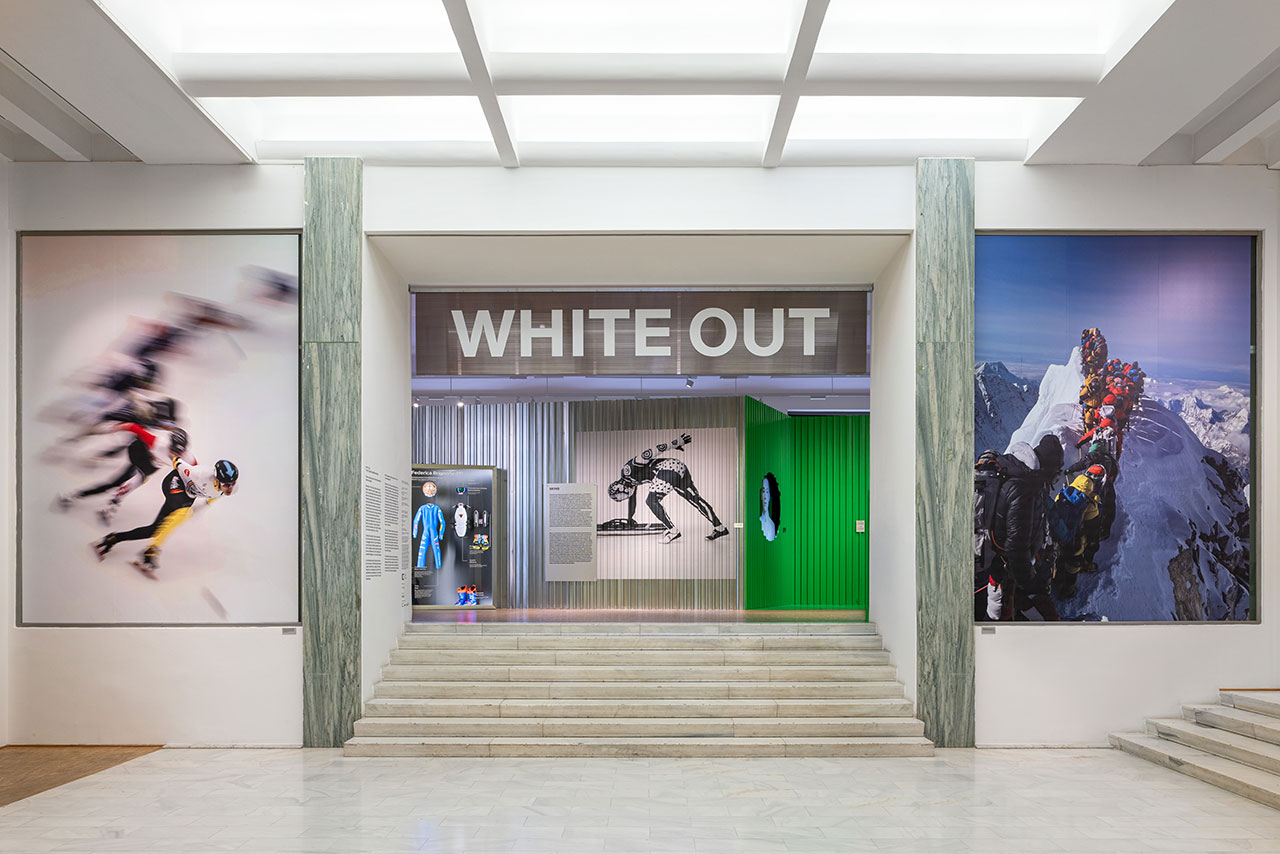
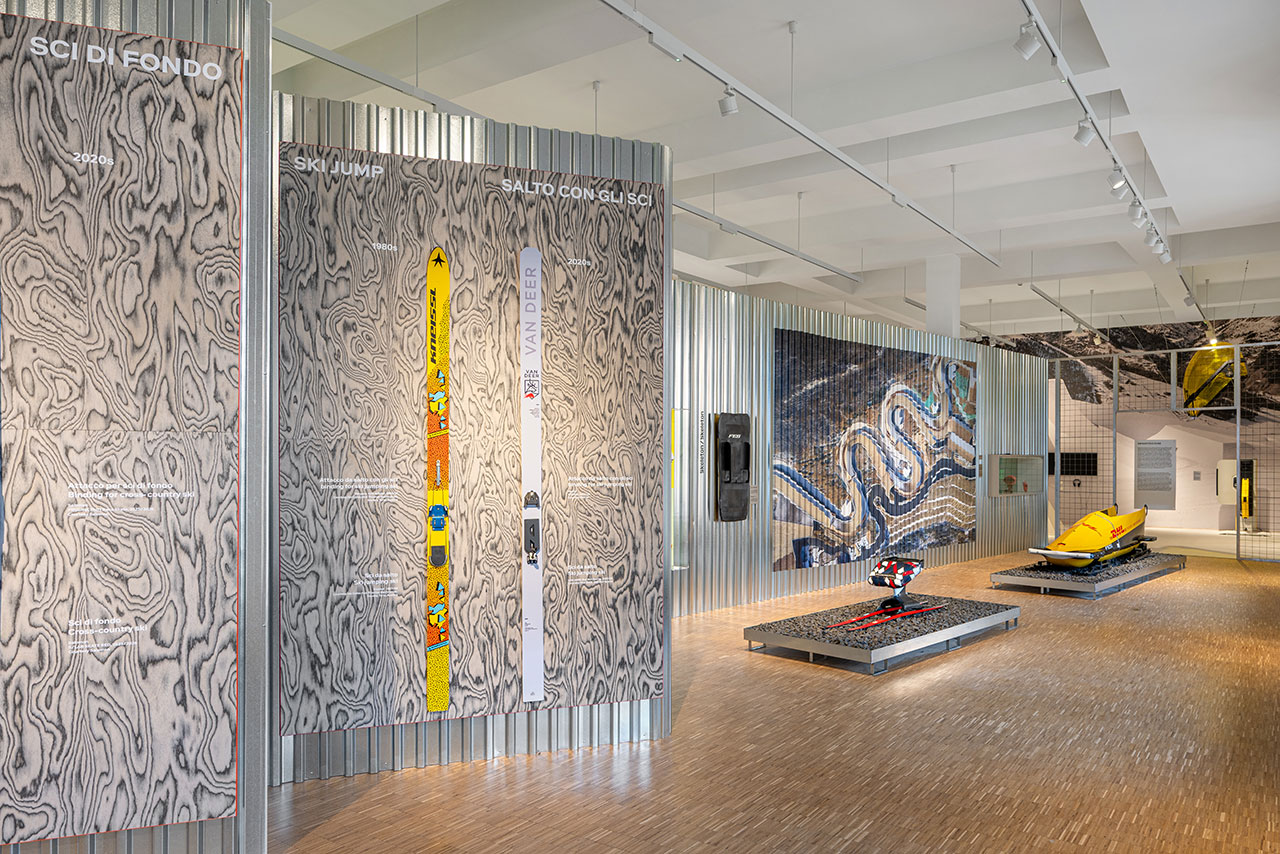
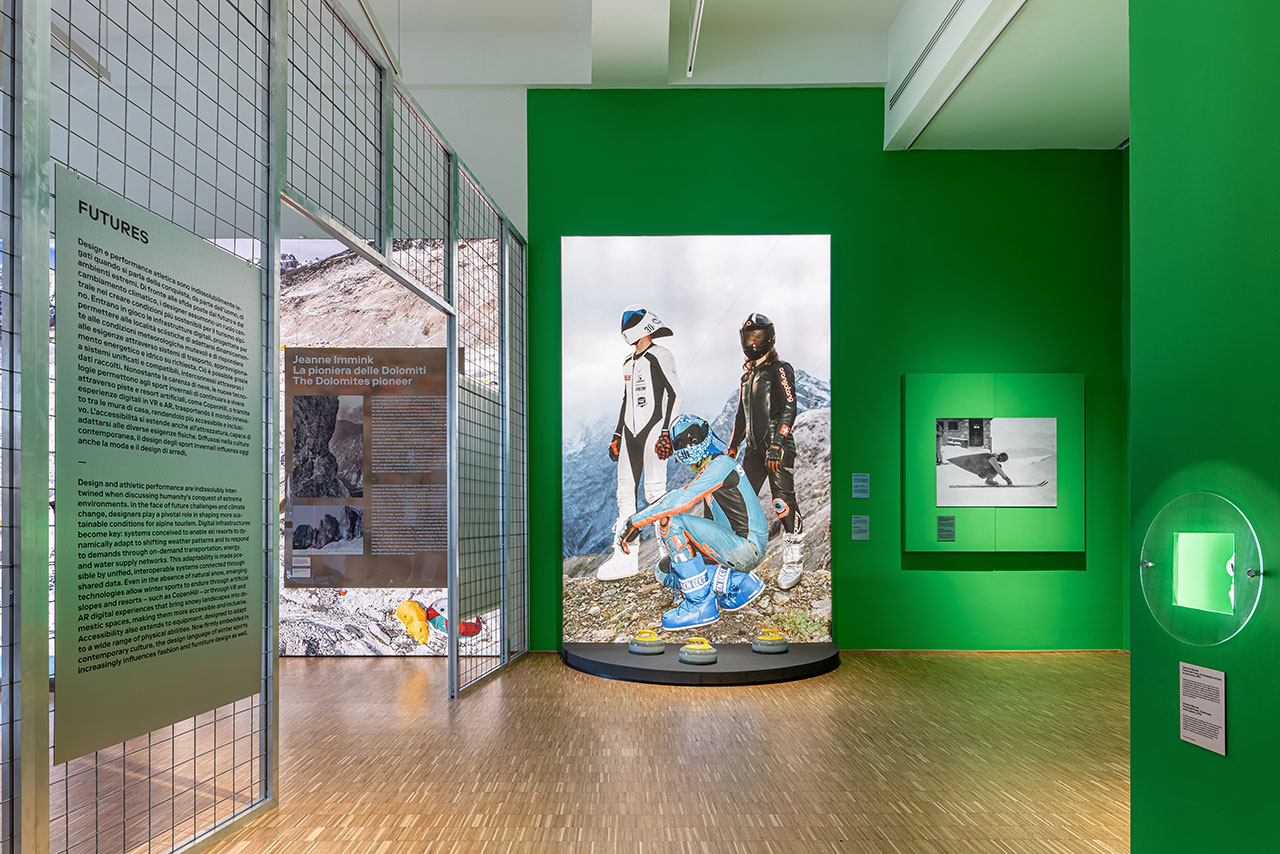
To coincide with the Winter Olympics, the Triennale Milano is hosting White Out: The Future of Winter Sports. The exhibition, curated by German industrial designer Konstantin Grcic, takes its title from the “whiteout” phenomenon, an optical condition where snow-covered landscapes and the sky merge into a single field of white. The showcase explores the effect that extreme weather conditions have on winter sports – and celebrates the ingenuity required to overcome environmental crises and compete in such conditions.
|
|
“The exhibition springs from the creative ingenuity of Konstantin Grcic and is dedicated to the materials, equipment and sports personalities of winter sports,” says Stefano Boeri, president of Triennale Milano. “It’s also dedicated to the future of these disciplines, which have always been linked with innovation.” The show features nearly 200 objects designed between 1938 and 2026, which are presented in nine themed sections: Skins, Dainese, Safety, Infrastructure, Bob Track, Ski, Extremes, Futures and Material Index. Those lamenting the fact that the Winter Olympics wrap up this weekend can still visit the exhibition until 15 March.
triennale.org
For more Milano Cortina Winter Olympics coverage, tune in to ‘Monocle in Milan’, broadcast daily from the Lombard capital.
|
|
| | |