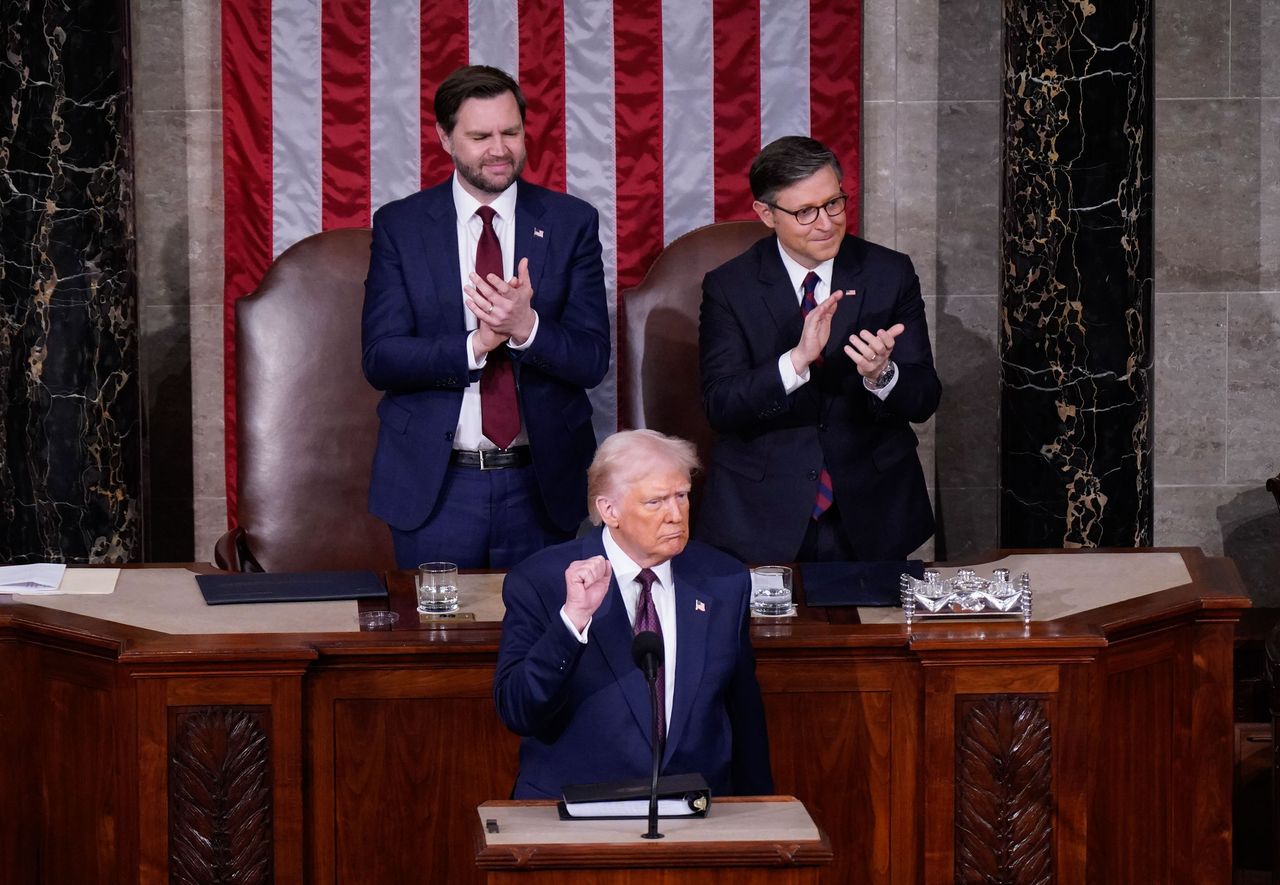
| |  | The Lead Brief | President Donald Trump will tell Americans that the country is “strong, prosperous, and respected” at Tuesday night’s State of the Union address, according to an administration official. On the health care front specifically, industry experts expect Trump to emphasize his administration’s efforts to tackle high medicine costs, wading into health policy as congressional Republicans would rather he focus on other issues. Top Trump pollster Tony Fabrizio has been urging the president to keep focus on his push to lower the cost of prescription drugs. Meanwhile, the White House has been pushing GOP lawmakers and staff to codify deals the administration has cut with more than a dozen pharma giants to lower their prices in the U.S. to match peer nations. Cementing the concepts of the so-called most-favored nation (MFN) drug pricing policies into law is a key part of Trump’s so-called Great Health Care Plan, but I’m hearing that there’s been no real movement on Capitol Hill to even begin writing a bill. Despite urging from Trump’s top deputies and senior health officials, the effort faces fierce pushback from the pharmaceutical industry — and skepticism from some Republicans. Why it matters: Still, the speech offers Trump a chance to lay out policy priorities for 2026 — a crucial midterm election year for Republicans — in addition to signaling regulatory moves and budgetary goals. For executives, lobbyists and policy teams, it could provide a road map for pinpointing advocacy opportunities and where to direct their efforts. The speech is also an opportunity to talk about policy wins. And Trump considers the MFN deals and TrumpRx, a government website that directs people to drugmaker websites where they can purchase discounted prescriptions, a key policy victory. However, experts question how much the deals will actually lower costs for most Americans, as insurance coverage or generic options generally provide deeper savings. Trump also plans to tout “an ambitious agenda to continue bringing the American Dream back for working people,” said White House press secretary Karoline Leavitt. WHAT ELSE TO WATCH — Insurers: Trump has lambasted insurance companies in the wake of the debate over reviving enhanced federal subsidies that helped people with Affordable Care Act plans to afford their monthly premiums. It will be worth watching to see whether Trump brings up any new policies targeting the industry. Bipartisan efforts on Capitol Hill to bring back the subsidies that lowered costs for millions of Americans appear dead, but Trump may highlight his push to direct federal dollars into health savings accounts for patients who choose high-deductible Obamacare plans — or the proposal to fund so-called cost-sharing reductions to lower the cost of insurance for some people. Although some Republican lawmakers have favored giving patients money to buy health insurance directly, GOP leadership has largely tried to avoid the topic of health care legislation entirely, as it’s been perceived as a losing issue for them. — MAHA: Health Secretary Robert F. Kennedy Jr. has been making a massive public affairs push to promote the administration’s efforts to revamp the dietary guidelines and change how Americans eat. It’s an area that polls well with Americans, so it will be interesting if Trump also touts or suggests expanding these efforts. Compared to the administration’s efforts on vaccine policy, food and nutrition are the more popular aspects of Kennedy’s Make America Healthy Again movement. However, the administration has stopped short of saying it would regulate ultra-processed foods. — Tariffs: Trump is likely to bring up the issue of tariffs following the Supreme Court ruling striking down some of them. The administration’s “plan B” could take months to figure out, according to my WaPo colleague David J. Lynch. But Trump could still preview where he wants to go with tariffs next. The administration has separately been mulling industry-specific tariffs on medical devices and pharmaceuticals, and another kind of tariffs on countries with “discriminatory” trade practices. — Over-the-counter medicines: In the White House’s health policy framework, Trump mentions wanting to make more medications that currently require a prescription available over the counter. It may not warrant a State of the Union shout-out, but it has been on the administration’s radar: Food and Drug Administration Commissioner Marty Makary recently mentioned that he thought “everything should be over the counter and not [require] a prescription” as long as it’s safe, doesn’t require laboratory monitoring or isn’t prone to addiction. He made the comments to CNBC following an appearance at the PhRMA Forum, a conference held by the pharmaceutical industry. Makary said in the interview that the agency is going through “the proper regulatory processes” to overhaul the rule books governing over-the-counter drugs. Who won’t be watching: At least a dozen Democratic senators and 35 House members are reportedly not attending, according to a list compiled by CBS News’s Scott MacFarlane.) | 

_tstmp_1756933376-1920-1080.png)