✅ Where VPNs Remain Legal (For now)
In most of North America, the EU, the UK, and much of Latin America, VPNs are legal and widely used for privacy, security, and business purposes. However, governments are increasingly focused on:
- Online safety compliance
- Age-verification enforcement
- Platform accountability
- Misuse for illegal content access
It’s important to remember the technology itself is legal, misuse is not.
📈 Emerging Global Trends
Across regions, we are seeing:
- Increased monitoring of encrypted traffic
- Legislative debates around anonymity and digital sovereignty
- Growth in VPN demand during periods of platform bans or internet restrictions
- Greater scrutiny of logging policies and data transparency
At the same time, privacy remains a fundamental concern for individuals and businesses alike.
What This Means for You
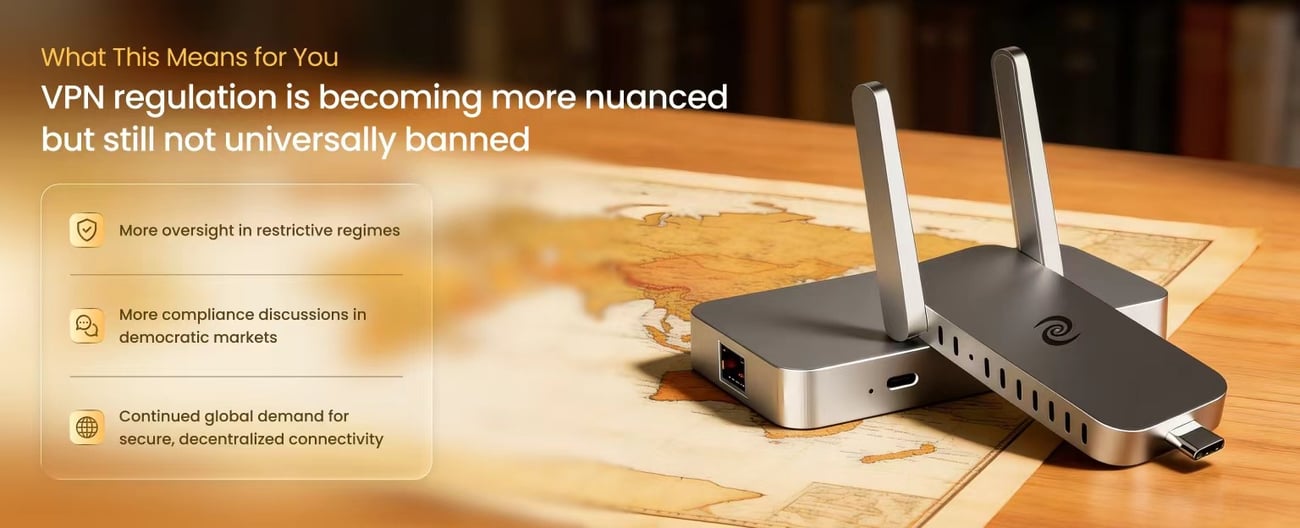
VPN regulation is becoming more nuanced but still not universally banned. The key shifts are:
- More oversight in restrictive regimes
- More compliance discussions in democratic markets
- Continued global demand for secure, decentralized connectivity
As digital infrastructure evolves, so does the conversation around privacy, sovereignty, and control.
We encourage all users to stay informed about local regulations and to use privacy technologies responsibly and in compliance with applicable laws.
If you have questions about how regulatory trends may impact your region, feel free to reach out.
Stay secure,
The Deeper Network Team
|