Thanks for reading The Briefing, our nightly column where we break down the day’s news. If you like what you see, I encourage you to subscribe to our reporting here.
Greetings!
Could fighting with the Pentagon be the best thing that ever happened to Anthropic? On Friday, Defense Secretary Pete Hegseth’s designation of Anthropic as a “supply chain risk” looked like it could pose an existential threat to the AI firm. Not only could it lose customers, but, depending on how broadly the designation is interpreted, it could force Anthropic’s cloud providers Amazon and Google to cut ties with the firm, jeopardizing its ability to even operate. Axios on Monday published a report suggesting the $60 billion in venture funding raised by Anthropic was now at risk.
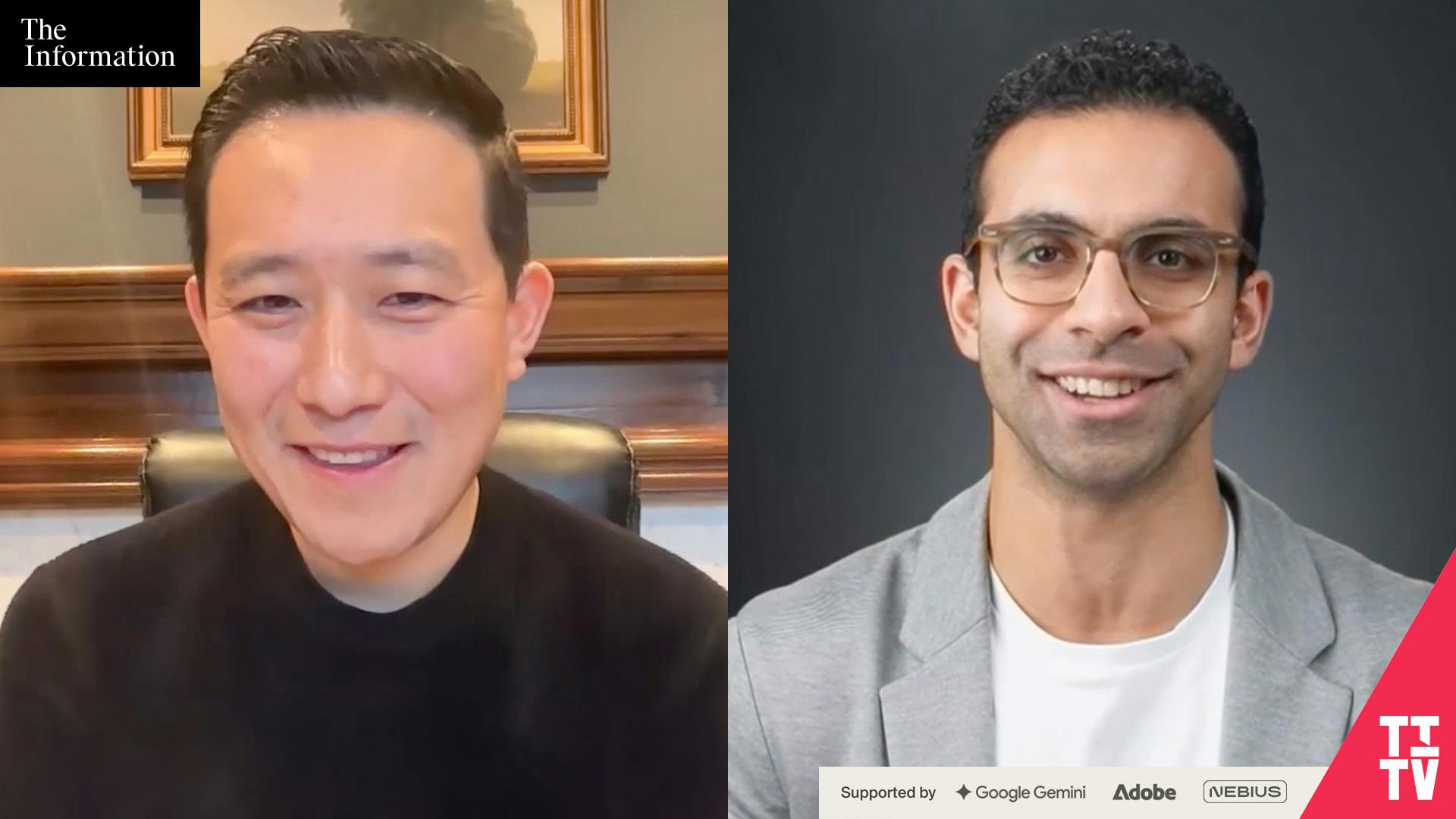
But there’s a very good chance Anthropic will come out of this stronger. For one thing, its principled stance is proving popular with consumers, while OpenAI‘s decision to strike a Pentagon deal seems to be having the opposite effect. On Monday, Anthropic’s Claude chatbot was at the top of the iOS free app rankings. In late January, before it ran a Super Bowl ad, it ranked 131 in the U.S., according to data cited by CNBC. Meanwhile, a massive surge of people uninstalled the ChatGPT app from their phones on Saturday, TechCrunch reported. People in tech are applauding Anthropic's position: Khosla Ventures partner Ethan Choi said on The Information’s TITV on Monday, “I admire Dario and Anthropic for what they’ve done, which is [to] take a stand for the values that they actually incorporated the company on.” (Khosla Ventures was an early OpenAI investor).
Claude's newfound popularity could translate to more business for Anthropic, not less, but perhaps coming from a different subset of customers. To be sure, that popularity could be fleeting if the government forces Amazon and Google to cut off Anthropic. But that seems unlikely. Given that the government has historically used the designation for hostile countries, Anthropic would seem to have a reasonable chance of winning a court fight over it—and things might not even get to that point: There has to be a chance the administration will back off, given the importance of maintaining a strong U.S. AI sector. Even if it does implement the supply chain designation, its impact may not end up being as broad as Hegseth implied on Friday.
Remember, we’ve just spent six years watching two presidential administrations try to ban TikTok in the U.S. In that time, we all spent endless amounts of time debating the implications of a TikTok ban. But in the end, the company came out of the drama virtually untouched. President Donald Trump, who initially led the charge to ban TikTok, found it politically expedient to reverse his position and keep TikTok around. Don’t be surprised if something similar happens with Anthropic.
Ellison’s Risky Paramount Bet
Larry Ellison likes borrowing money. It’s no secret that Oracle has embarked on a debt-fueled data center expansion, in hopes of using the AI boom to catch up to its bigger rivals in the cloud. Then there’s his adventures in Hollywood. On Monday, the Ellison family–controlled Paramount Skydance briefed investors on its $110 billion agreement to buy Warner Bros. Discovery, sealed on Friday after Netflix withdrew from bidding. When the new deal closes—which Paramount expects to happen in the third quarter—the combined business will have $79 billion of debt, Paramount executives said. That’s an awful lot seeing as the two companies together earned around $12 billion in 2025. Analysts expect they will earn roughly the same amount this year, according to S&P Global Market Intelligence.
That implies Paramount’s ratio of debt to earnings before interest, taxes, depreciation and amortization shortly after closing would be a whopping 6.6 times. To put that into perspective, the average debt-to-Ebitda ratio for all companies outside the finance sector was 3 times, according to data compiled in January by New York University finance professor Aswath Damodaran. On an investor call on Monday, Paramount executives cited a lower debt-to-Ebitda ratio of 4.3 times, based on their estimate that “synergies” from combining the two companies will lift combined Ebitda 50%. Forget the inherent uncertainties in achieving those synergies. Even based on that scenario—which has to be the best case—this company is taking on way too much debt given the business it’s in.
Close to 80% of its Ebitda last year came from its slowly shrinking broadcast TV and cable channel business, whose combined revenues fell about 11% last year. Moreover, film accounts for a big chunk of what’s left, which isn’t great given that the film business is inherently unpredictable. To be sure, the streaming businesses—Max and Paramount+—have a lot of potential. But right now that’s a relatively small piece of the pie: Their combined Ebitda last year was only around $1.5 billion. The big variable is how much cable channels will continue to decline. Paramount CEO David Ellison said today he believed “operational efficiencies” from the combination would “keep those businesses healthier for significantly longer than they would be on a stand-alone basis.” Maybe. But who wants to bet tens of billions on that?
The bottom line is that Paramount has to cut costs quickly. But Warner has spent the last four years slashing costs as it tried to reduce the roughly $50 billion in debt it ended up with after the merger of Warner and Discovery. Warner’s owner before Discovery, AT&T, also cut costs. How much more can Warner cut before its business suffers?
In Other News
• Apple is refreshing its low-priced iPhone and iPad models. The company announced the $599 iPhone 17e, which comes equipped with Apple’s A19 processor, its latest chip, released last year alongside the flagship iPhone 17.
• SpaceX is aiming to launch a new generation of satellites next year that will use the spectrum licenses it’s buying from EchoStar to offer a more powerful version of its direct-to-cell service, company executives said in a conference presentation on Monday.
• Chinese AI developer MiniMax said Tuesday that its revenue more than doubled to $79 million last year, from about $30 million in 2024, driven by the growth of its Hailuo AI video generation app and other products.
Today on The Information’s TITV
Check out our latest episode of TITV in which we speak with an OpenAI investor about the company's agreement with the Department of Defense.
Recommended Newsletter
Start your day with Applied AI, the newsletter from The Information that uncovers how leading businesses are leveraging AI to automate tasks across the board. Subscribe now for free to get it delivered straight to your inbox twice a week.
Join The Information at the New York Stock Exchange on Monday, April 27, to hear from top executives and investors on how the rapid buildout of AI is reshaping tech, finance, and capital markets