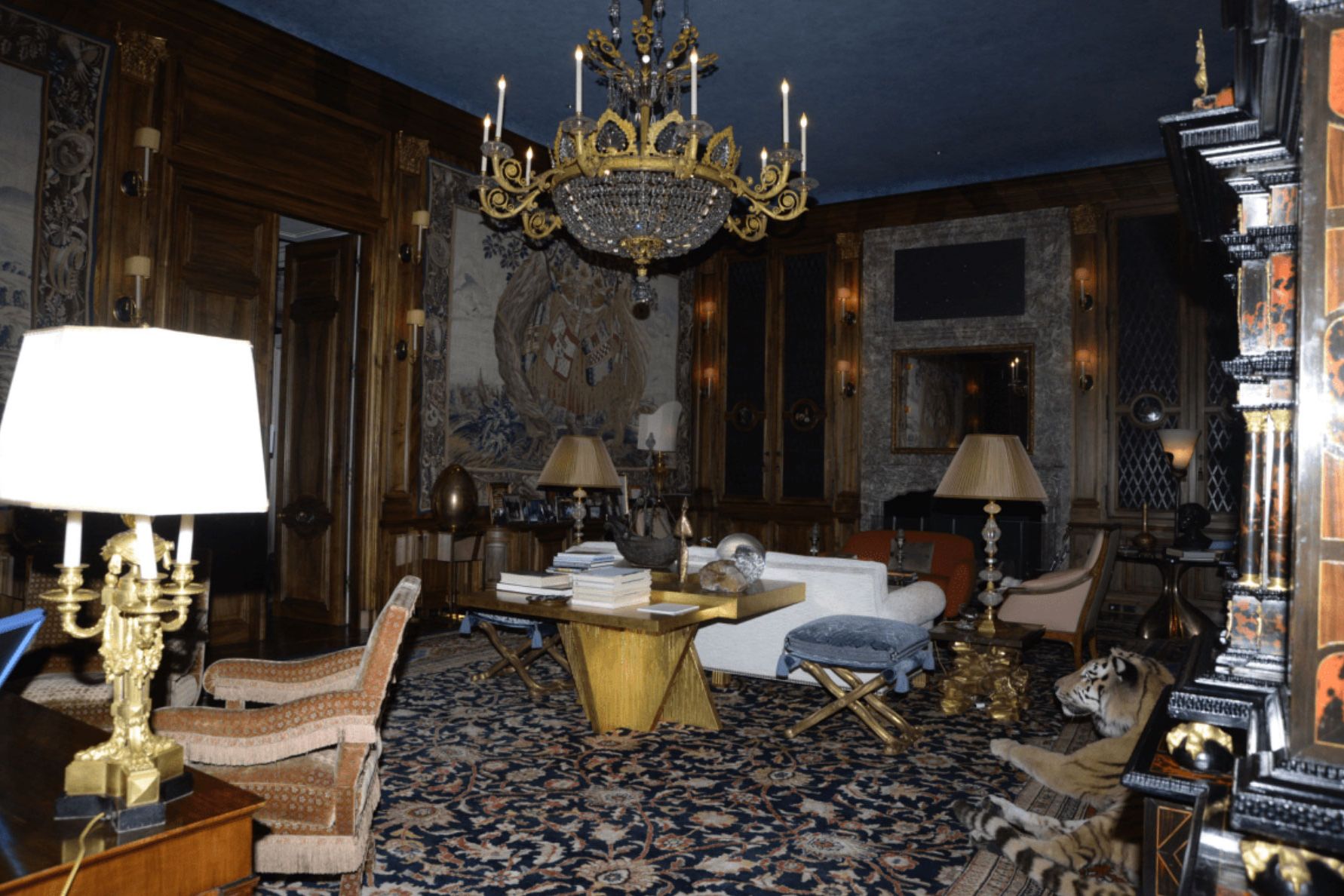
Late last year, a New Jersey auction house brokered a three-day sale of nearly a thousand lots of art and antiques that included a “palatial Viennese desk” and a bronze sculpture of a life-size nude woman hanging on to a rope— items that the New York Post recognized from Jeffrey Epstein’s now-infamous East 71st Street townhouse. At least a dozen other items in the sale, including a tooled-leather bed frame from Epstein’s bedroom and a giltwood table seen in his office, bore the description “ex-Alberto Pinto” or “Alberto Pinto-sourced” or “supplied by Alberto Pinto.” These objects underscored the role that the lauded French-Moroccan interior designer played in decorating Epstein’s home — and the value attached to his name.
Many architects, firms, and prominent figures in the field appear frequently in the Epstein files — Gensler, Neri Oxman, and Tom Pritzker among them. But Alberto Pinto and his sister Linda Pinto, who ran the company after Alberto’s death in 2012, have a special place in the correspondence with Epstein. Alberto Pinto ran one of the most prestigious interior-design firms in the world, with clients who ranged from heads of state like former French president Jacques Chirac and King Hassan of Morocco to the royal families of Saudi Arabia and Qatar, Russian oligarchs, and billionaires like David Koch, for whom the designer customized homes, private jets, and yachts to their exacting tastes. In 2003, a Vanity Fair profile of Epstein named Pinto as the interior designer behind his New York townhouse, but no new information about the extent of their relationship has surfaced over the past 20 years.