|
 |
Welcome to the latest edition of Receipts. This week’s newsletter is about how Donald Trump’s war of choice in Iran is causing a surge in prices in energy markets, in what S&P Global warns may soon become “the largest oil supply disruption in history.” The conflict will likely raise costs for other consumer products, too, both because fuel is necessary for shipping freight around the world and because chemicals made from oil and gas are ingredients in lots of household goods. (Did you know that your toothpaste probably has petrochemicals in it?)
It can feel a little crass to talk about the economic fallout of a war. Needless to say the most significant impact of the conflict is the loss of life, including of six U.S. service members to date. But most Americans still appear relatively unaware of the war itself, let alone its casualties. I suspect lots of people may start to come to terms with the reality of our new war in the Middle East only when they directly encounter the financial costs—like when they show up at the gas station and realize fuel prices have spiked.
Is there other major economic fallout I’ve missed? If so, drop me a note to let me know. And if you’re not already a Bulwark+ member, I hope you’ll consider becoming one today. You’ll not only get access to all our locked content—including members-only newsletters and ad-free videos—but you’ll have the gratification that comes from knowing you’re making it possible for us to track the economic consequences of the conflict from every angle. You can join us right here:
–Catherine
Trump’s “Warflation” Has Just Begun
If he were trying to increase prices on purpose, would he be doing anything differently?
|

| ||||||||||||


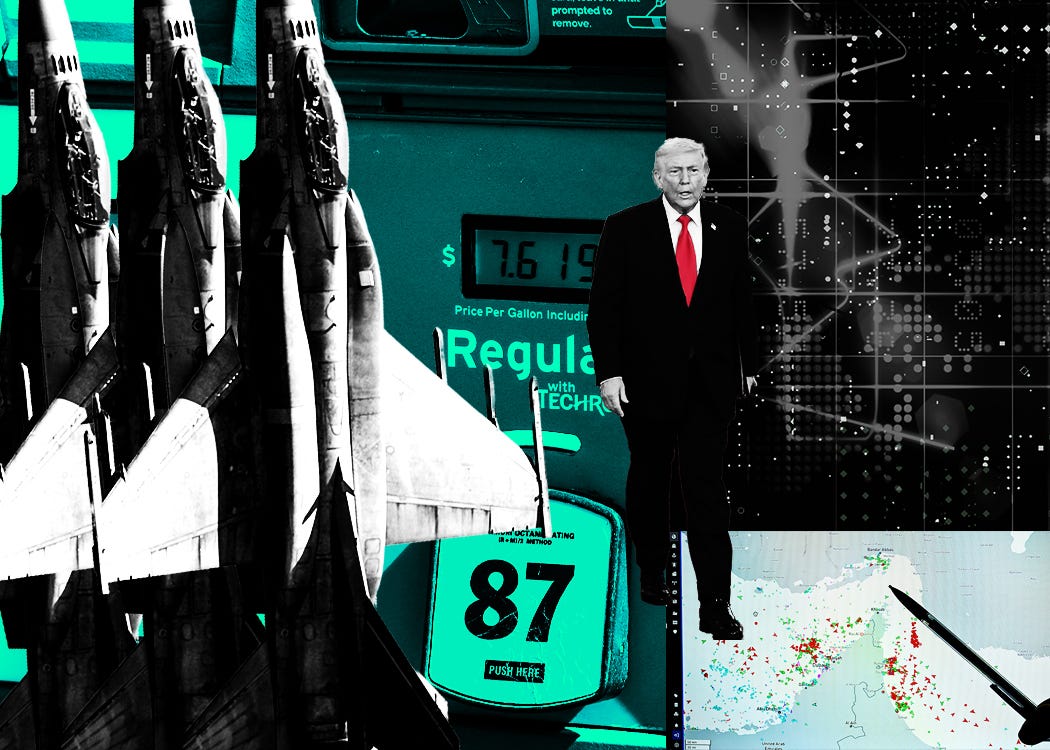 |
AHEAD OF THIS NOVEMBER’S MIDTERM ELECTIONS, the White House has reportedly grown worried about high consumer prices, particularly for fuel. Trump aides are now “looking under every rock for ideas on improving energy prices, especially gasoline prices,” per Politico.
Hmm. Have they perhaps tried not starting a war in the Middle East?
Until quite recently, oil and gasoline prices had been a bright spot in the affordability fight, registering modest price declines since Trump took office. But since we bombed Iran, energy costs have risen sharply. To put things in perspective: Oil prices are up about 20 percent so far just this week.
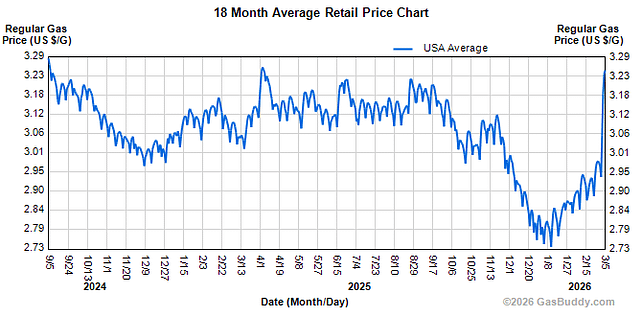 |
In other words: If Trump intended to start a war abroad to distract from problems at home, as some have proposed,¹ he has instead made his domestic problems much worse. Trump’s “warflation” has just begun.
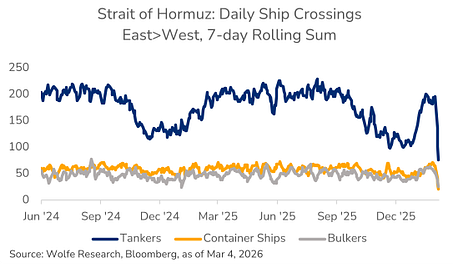
The top crude oil expert at S&P Global Energy warned that the military conflict has the potential to become “the largest oil supply disruption in history.” That’s because about a fifth of the world’s oil passes through the Strait of Hormuz, on Iran’s southern coast—or at least, it used to. Iran warned tankers and other commercial vessels not to transit the strait, and at least nine of them have now come under attack in the Gulf region. Shipping traffic through the strait has virtually stopped.
 |
Trump has offered U.S. Navy escorts (and insurance) to vessels transiting the strait, but as my colleague Ben Parker explained, that’s not a feasible solution. We’re now seeing the fallout: Iraq, for instance, slashed oil production by nearly 1.5 million barrels a day because it’s unable to load tankers and is running out of storage. Refineries in