Nearly two weeks into the U.S.-Israeli war with Iran, a war-modified, anxiety-riddled version of daily life is emerging in the Gulf.
At a post-Iftar spin class in Doha, the instructor’s usual “positive energy” mantra hit differently on Tuesday: “We need it now more than ever!” Leaving the gym, our phones screeched with another missile alert, and we waited out the blasts in the parking garage. Outside, some security guards now wear white hard hats, flimsy protection against falling shrapnel.
Across the UAE, daily life is adjusting too. Dubai beachgoers watched a fighter jet chase a drone overhead, and Ramadan cannons have been cancelled to avoid adding more explosions to the mix. Corporate workers fled offices on Wednesday after Iran threatened U.S. and Israeli financial interests and Google Maps glitches keep placing users in the desert or at sea — complicating things for delivery drivers. The UAE is even turning down the volume on overnight mobile phone alerts, to help residents get a better sleep.
Reuters energy correspondent Yousef Saba, after 12 days spent logging attack after attack on Gulf energy facilities, says even a drone strike on a refinery now prompts “cold math” rather than shock – traders and executives simply price it in like a surprise maintenance shutdown, he said In this week’s Gulf Currents: renewed hits on shipping, drones near Dubai airport while some Gulf states begin reviewing sovereign wealth fund investments to absorb war‑related losses. We explain why Gulf anger focuses on Tehran, not Washington — and examine some fears that ending the war too soon could leave an “injured lion” Iran on the region’s doorstep. |
|
|
Top headlines from the region |
|
|
-
Some Gulf states are reviewing sovereign wealth fund investments — including possible reversals, asset sales and sponsorship cuts — to offset war-related losses from the Iran conflict, a Gulf official told Reuters. The move underscores how deeply the war’s economic shock is biting, even into the region’s $5 trillion reserve funds.
-
Three more vessels were hit by unknown projectiles in the Strait of Hormuz on Wednesday, bringing the number of ships struck since the Iran conflict began to at least 14 and further paralysing traffic through the waterway that usually moves a fifth of global oil. Ships are damaged, crews are missing and plans for U.S. naval escorts through the Strait are yet to materialize as risk premiums — and oil prices — climb.
-
Two drones fell near Dubai International Airport and Gulf Air removed most aircraft from its Bahrain base on Wednesday as continued strikes on Gulf infrastructure disrupted regional aviation and deepened a crisis that has already triggered tens of thousands of global flight cancellations. The Iran war has shut down key Middle East air corridors, straining global airlines, pushing up jet fuel costs and threatening knock-on disruptions as far away as Asia.
|
|
| Why Gulf anger is aimed at Tehran – not Washington |
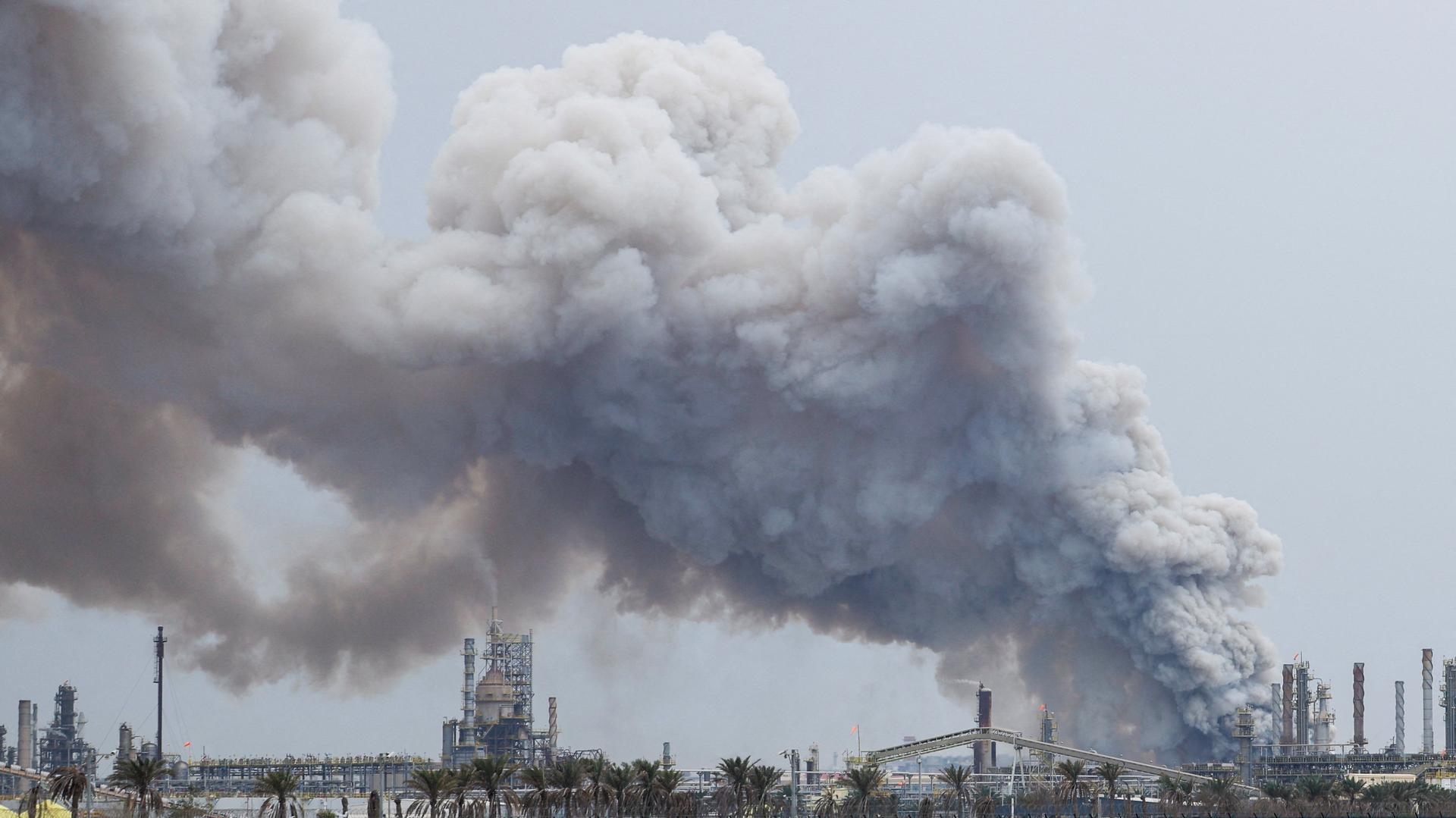
Smoke rises following a strike on the Bapco Oil Refinery, amid the U.S.-Israeli conflict with Iran, on Sitra Island Bahrain, March 9, 2026. REUTERS/Stringer |
Public fury at Washington is notably scarce across the Gulf states, even as they absorb some of the heaviest shocks of a regional war they had urged the United States to avoid. With few exceptions, senior Gulf figures have steered clear of publicly blaming Washington for its decision to confront Iran. Gulf capitals are reserving the language of betrayal for Tehran, not for the United States, even as American actions helped set the conflict in motion.
A rare public deviation came from Emirati tycoon Khalaf Al Habtoor, who briefly challenged Donald Trump over “dragging” the region into war before retracting the comments - a sign, some Gulf sources said, of a tightly contained unease inside Gulf circles about Washington’s choices.
Aramco CEO Amin Nasser pointedly avoided criticising Washington on Tuesday, even as he warned that the disruption had triggered “a severe chain reaction” with potentially “catastrophic” consequences for global oil markets.
Iran’s behaviour has made this restraint easier to maintain. After years of slow rapprochement – and assurances from Gulf Arab states that their territory would not be used to launch attacks on Iran – many expected Tehran to acknowledge those efforts. Gulf officials had even mounted an intense round of diplomacy in January, warning Washington and Tehran alike that a U.S. strike on Iran would trigger exactly the kind of regional blowback now unfolding.
Instead, Iran struck Gulf Arab territory on day one and has rattled Gulf capitals ever since.
Qatar’s Prime Minister called Iran’s moves a “betrayal,” saying they were preplanned and unleashed despite Gulf guarantees of neutrality. Doha had worked to preserve “a peaceful neighbourhood” and facilitate U.S.–Iran diplomacy, he said, but Iran’s miscalculation “destroyed everything.”
Still, officials say this is not the moment to rethink ties with Washington. Qatar’s spokesperson Majed Al Ansari said the U.S. partnership was “not up for question” and that this moment strengthens the case for reinforcing — not diluting — Qatar’s security cooperation with American and European militaries.
Yet a wider lesson is sinking in: reliance on a single guarantor has left Gulf states exposed. European countries, not America, have taken a conspicuous role in bolstering regional defences, from French Rafales patrolling Emirati airspace to British Typhoons intercepting threats over Qatar. The trajectory is not a pivot away from Washington but an expansion outward, a Gulf official told Reuters. “Gulf countries expect a major shift in security and defence posture. Not moving away from the U.S., but diversifying; some might go to China, some might go closer to Israel, others to Europe, Turkey, Pakistan or India,” the official said.
Gulf states aren’t breaking with Washington – they’re hedging against what comes next. |
|
|
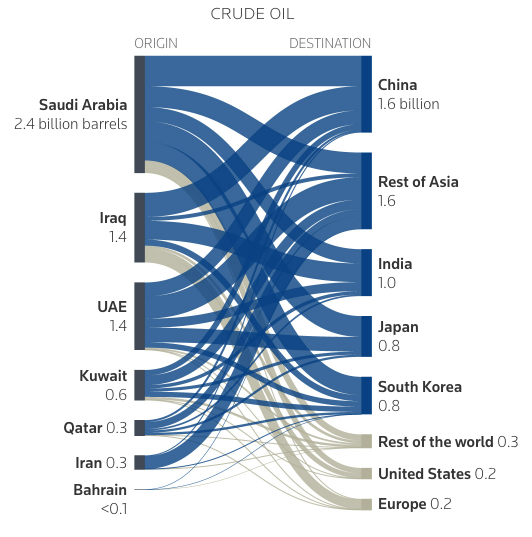
Volumes of crude oil via the Strait from Gulf nations in the last 14 months |
The U.S.-Israeli war on Iran has effectively shut the Strait of Hormuz, the narrow shipping lane between Iran and Oman through which around a fifth of the world’s daily oil and liquefied natural gas (LNG) supply passes. Top Middle East oil producers Saudi Arabia, Iraq, and Kuwait have all cut production at their oilfields because they have to pump oil into storage if they cannot load it onto oil tankers — and their oil storage facilities are brimming after 10 days with no shipping. |
|
|
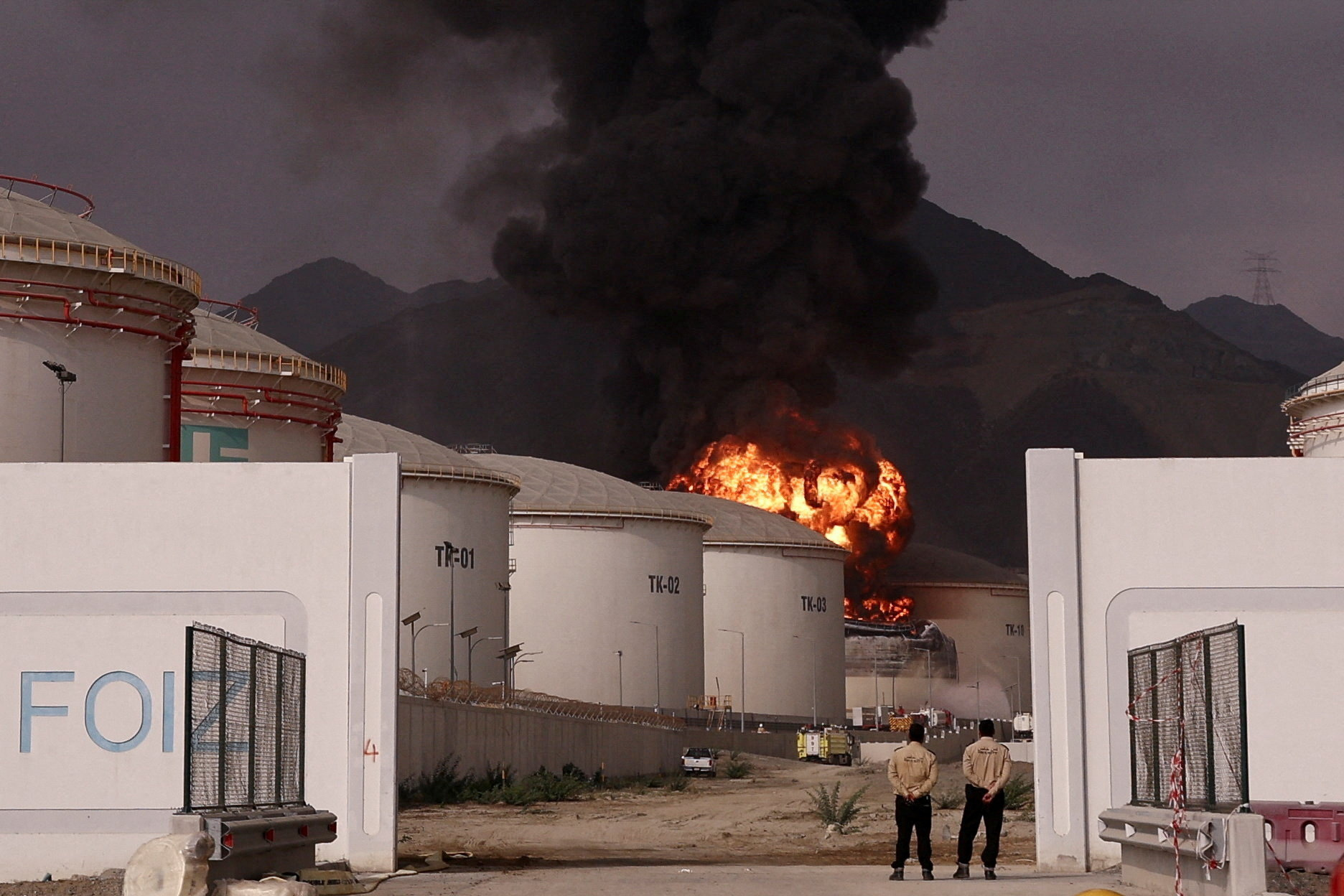
Fire and smoke rise in the Fujairah oil industry zone, caused by debris after interception of a drone by air defenses, according to the Fujairah media office, amid the U.S.-Israel conflict with Iran, in Fujairah, United Arab Emirates, March 4, 2026. REUTERS/Amr Alfiky |
While disquiet about U.S. President Donald Trump is growing over a conflict many believe he launched without consultation, some regional sources argue that having started the war, Washington should now see it through to eliminate what they see as a persistent Iranian threat on their doorstep.
“If America leaves the war now without achieving victory, it will be like abandoning an injured lion,” Ebtesam Al-Ketbi, President of the Emirates Policy Center, told Reuters. “Iran will remain a threat to the region, capable of striking again. And if the regime collapses, leaving a power vacuum, neighbouring states will suffer the consequences.”
Asked for comment, the White House said U.S. and Israeli strikes had reduced Iran’s retaliatory missile attacks by 90%, "crushing their ability to shoot these weapons or produce more". White House spokeswoman Anna Kelly added that Trump was in close contact with Middle East partners and that Iran’s attacks on its neighbours underscore why the threat had to be eliminated. |
|
|
|