| | In today’s edition: Iran targets oil tankers and fuel depots, the costs mount for the Gulf’s hospita͏ ͏ ͏ ͏ ͏ ͏ |
| |  Kuwait City Kuwait City |  Frankfurt Frankfurt |  Dubai Dubai |
 | Gulf |  |
| |
|
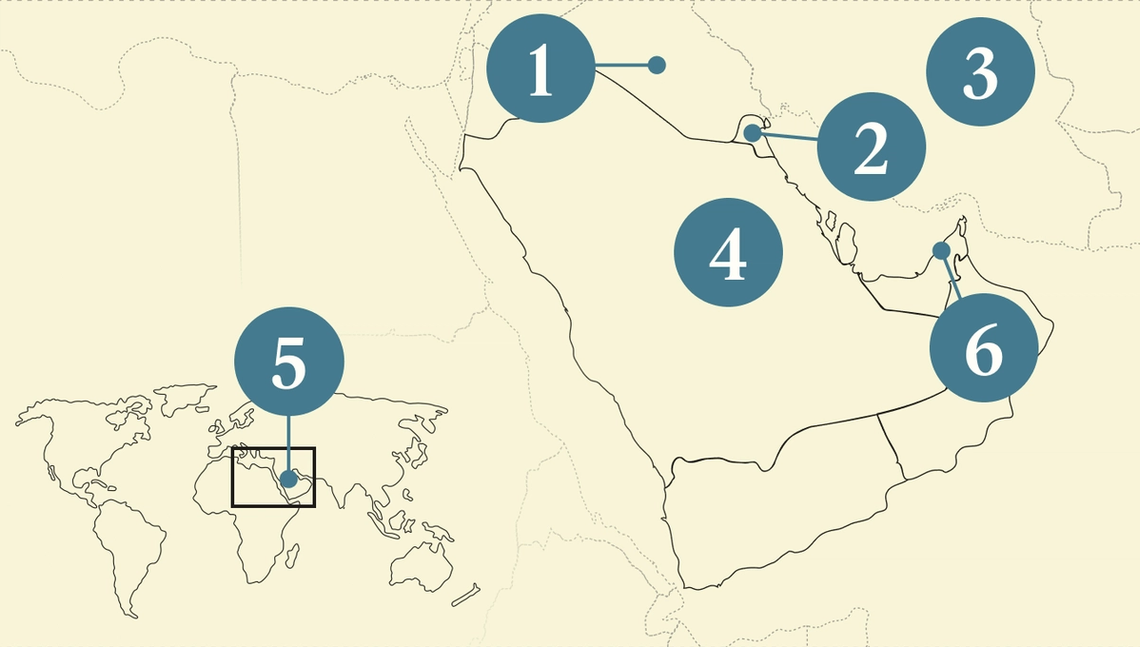 - Iran strikes ships, tankers
- Kuwait expats’ tough exit
- Scenarios for the war…
- … and the Saudi economy
- Tourism losses mount
- Social media crackdown
 Free waterslides for the war-weary. |
|
Iran steps up tanker strikes |
 Mohammed Aty/Reuters Mohammed Aty/ReutersImages of oil tankers and fuel depots consumed by fire are becoming a feature of the Iran war. Over the past day alone, Iranian drones have hit two tankers in Iraqi waters and fuel storage facilities in Bahrain and Oman. Saudi Arabia has been dealing with a steady barrage targeting its oil fields, and Oman evacuated ships from the Mina Al Fahal oil export terminal. Amid the onslaught, the International Energy Agency’s announcement that its member countries would release 400 million barrels from their oil reserves had little impact on prices, which topped $100 once again. The move could bring 4 million barrels a day to the market, but 15 million barrels a day of Gulf output is offline. The assault on energy infrastructure has not been one-way. Fuel depots in Tehran were hit by US or Israeli strikes last weekend, prompting the authorities there to warn people to stay indoors. — Dominic Dudley |
|
Kuwait exit permits trap expats |
 Stephanie McGehee/Reuters Stephanie McGehee/ReutersSome expats in Kuwait are finding themselves trapped as they try to flee Iranian attacks on the country, restricted by a law introduced fewer than two years ago requiring foreigners to obtain exit permits from their employers. Kuwait’s airspace is closed, and without an exit permit, expats can’t cross into Saudi Arabia — a route many are using to reach airports in Dammam or Riyadh in order to leave the Gulf. The policy has affected some teachers, who have been denied permission to leave, according to text messages viewed by Semafor. The process isn’t cumbersome and can be done by app or online, but approval is still at the employer’s discretion: The Kuwaiti immigration authority is urging employers to approve exit permit requests, according to one person helping to coordinate expat departures. The Kuwaiti consulate in the US did not respond to a request for comment. — Kelsey Warner |
|
The shape of a post-war Gulf |
 Majid Asgaripour/Reuters Majid Asgaripour/ReutersWith fighting still at a high tempo, the chances of outright triumph for either side in the Middle East conflict seem limited, analysts said. Tehran’s opponents may be seeking regime change — though the White House has been remarkably inconsistent in its stated war aims — but for the Iranian government mere survival would represent a sort of victory. The Wall Street Journal’s Walter Russell Mead wrote that the most likely outcome was “an in-between scenario in which the US largely clears the Gulf but the current regime survives.” Among the big unknowns are what happens inside Iran’s political and security elite as the war continues, and how far the US and Israel are actually willing to go in pursuit of their objectives, according to Nicole Grajewski at the Carnegie Endowment for International Peace, who adds: “while the military balance heavily favors the United States and Israel, the political dynamics of war are much harder to control.” — Dominic Dudley |
|
Iran war could narrow Saudi deficit |
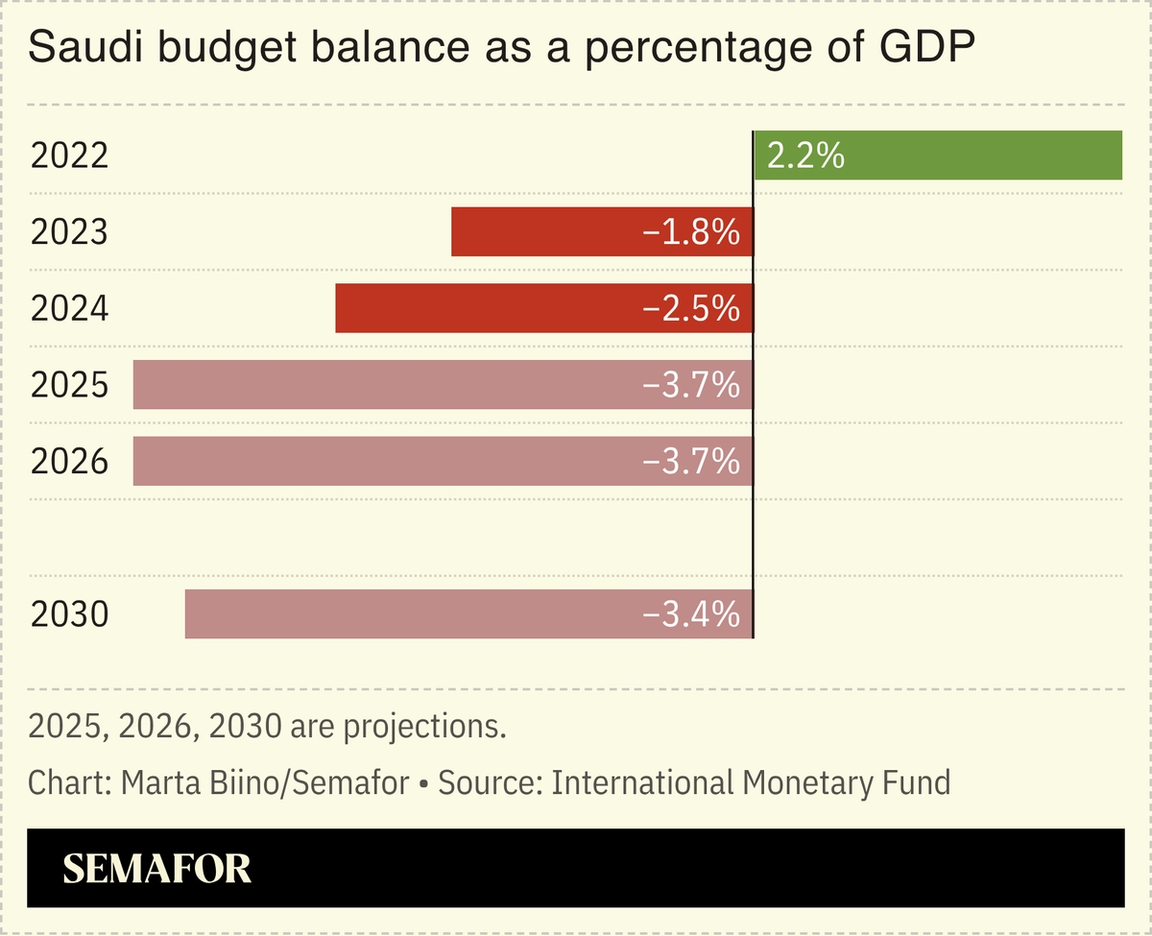 The Iran war will complicate Saudi Arabia’s push to attract foreign investment, but it could help ease pressure on the kingdom’s finances this year if oil production rises once the conflict is over, according to new analysis. In one of the first detailed assessments of the war’s impact on the biggest Gulf economy, Monica Malik, chief economist at Abu Dhabi Commercial Bank, said there was scope for OPEC+ to increase output “more meaningfully,” noting that much of the world’s spare capacity is in Saudi Arabia and the UAE. Higher oil prices and output could offset the current hit to production and help narrow Saudi Arabia’s budget deficit to 3-3.5% of GDP if Brent crude averaged $80 a barrel over the year; last year’s budget shortfall was 5.8% of GDP. If oil averages a more conservative $72, the deficit would come in at 4.2%, Malik estimates. The big caveat: These scenarios assume that the conflict’s duration will be limited, and Gulf crude can start flowing freely again. |
|
War decimates Gulf tourism |
 The daily cost of the war to the Middle East’s tourism industry, in terms of lost visitor spending, according to the Financial Times, citing World Travel & Tourism Council data. The trade body had previously predicted $207 billion in tourism spending this year. The $600 million drop assumes nothing is being spent in the sector, which isn’t likely. But airlines have had to trim their schedules, and airports are prone to closures if drones are nearby. On the ground, premium venues are being hit hard in what should have been peak season, and more than 80,000 short-term rental bookings in Dubai were also cancelled in the first week of Iranian airstrikes alone. When peace returns, it will take time for the Gulf states to rebuild their reputations for sunny, tranquil luxury, with tourists from within the region expected to start rebooking first. In the meantime, others are picking up some of the slack. European carriers are adding capacity on routes to Asia for passengers unwilling or unable to transit through the Gulf, using aircraft that would usually be heading to Doha or Dubai. — Dominic Dudley |
|
Take a beat before posting |
 @DubaiPoliceHQ/X @DubaiPoliceHQ/XIf you see warnings from Gulf authorities about posting war footage on social media, take them seriously. For all the region’s advances in economic development, education, technology, and leisure, bastions of free speech they are not. In wartime — when adversaries mine social media for intelligence about targeting accuracy and air defense capabilities — officials are especially sensitive. The prohibitions are expansive: Dubai Police has warned against “sharing rumors, false information, or any content that contradicts official announcements or that may cause public panic or threaten public safety, order, or health.” Violators could face at least two years in prison and fines of more than $50,000. A British tourist was reportedly arrested in Dubai after allegedly filming missiles during an attack. Not everyone who posts will end up behind bars and many cases end with pardons. But those who do get caught end up experiencing the Gulf’s penal system for at least a while, which is something most tourists and residents would prefer to avoid. — Mohammed Sergie |
|
 - AGBI: Under the shadow of Dubai International Airport, a smaller facility in nearby Al Ain is doing its part to evacuate people during the Iran conflict.
- AP: There is no end in sight for the war, and the contest now between the US and Iran is which side is able to endure the most pain, the AP’s news director for the Gulf and Iran Jon Gambrell writes.
- Bloomberg: Israel is eyeing up a potential military base in Somaliland, from where it could easily strike the Iran-backed Houthis in Yemen.
- Hudson Institute: The US hit more than 5,000 targets in Iran over the first ten days of the war, with the operation largely dismantling the Islamic Republic’s military infrastructure, according to this detailed assessment.
- Observer Research Foundation: Gulf countries are navigating a precarious balance between containment and active self-defense, while Iran and its foes are engaged in a conflict of attrition.
|
|
 Karim Sahib/AFP via Getty Karim Sahib/AFP via GettyFor anyone feeling a bit tense, Atlantis Dubai has a suggestion: come ride a waterslide. The resort on the tip of the iconic Palm Jumeirah is offering free day passes to its waterpark — the world’s largest — through March 22. Tickets normally run about $85. The goodwill gesture (or brazen PR stunt, depending on your standpoint) comes less than two weeks after an Iranian drone struck the Fairmont The Palm hotel roughly three miles away, injuring four people. Tourists are essential to Dubai’s economy, which, unlike its Gulf peers, has almost no oil or gas reserves. |
|
|


