We know, technically, that a driverless car doesn’t need a good steering wheel that won’t whiff out the window when you’re driving, but Lucid’s announcement yesterday that its new robotaxi, like Tesla’s Cybercab, will have just two seats and no steering wheel doesn’t make us eager to jump in and ride. We understand it would add unnecessary costs at a time when Lucid is doing everything it can to boost profitability, but we’re comforted by the useless steering wheel Waymos still have.
The S&P 500, Nasdaq 100, and Russell 2000 fell on Thursday as Brent crude oil closed above $100 per barrel for the first time in over three years after a flurry of attacks on ships sailing by the Strait of Hormuz. Energy was once again the best-performing sector, while industrials was the worst.
❓ In lieu asking you how much you know with our Snacks Seven Quiz, we want to know more about you: |
|
|
After a brief bout of relief earlier this week, markets remained under duress yesterday as tankers were struck sailing through or near the Strait of Hormuz, where nearly a fifth of global oil supply flows daily. As a result, the impact on petrochemicals has been moving the worst-smelling and the best-smelling industries:
|
-
They’re not the most glamorous stocks in the market, but chemical-slash-fertilizer companies CF Industries, Mosaic Co., Dow Inc., and LyondellBassell were the belles of the ball in Thursday trading, topping the list of S&P 500 performers.
-
Natural gas is a crucial input for the chemical and fertilizer industries, and the closure of the strait is basically cutting off supply from the region, which European and Asian chemical companies depend on. That leaves these US giants — with access to abundant stateside gas supplies — able to produce and take advantage of pricing power in the absence of robust global competition.
-
Those are the sellers. The buyers are screwed. “Fragrance companies and chemicals names are heavily exposed via large purchases of petroleum product inputs for their businesses,” wrote Bespoke Investment Group, noting that Estée Lauder and International Flavors & Fragrances are among the 37 Russell 1000 stocks that have dropped 15% or more since February 27.
- Perfume is composed in part by another P-word: petrochemicals. Of course, higher prices at the pump might also dent consumers’ willingness to pay up for a good musk.
|
Some of these companies, like Dow, Mosaic, and CF Industries, are also major suppliers of fertilizers, which influence food prices. And that suggests the world economy is experiencing growing inflationary pressures stemming from the less than 2-week-old war, which could eventually become a problem for the market. |
|
|
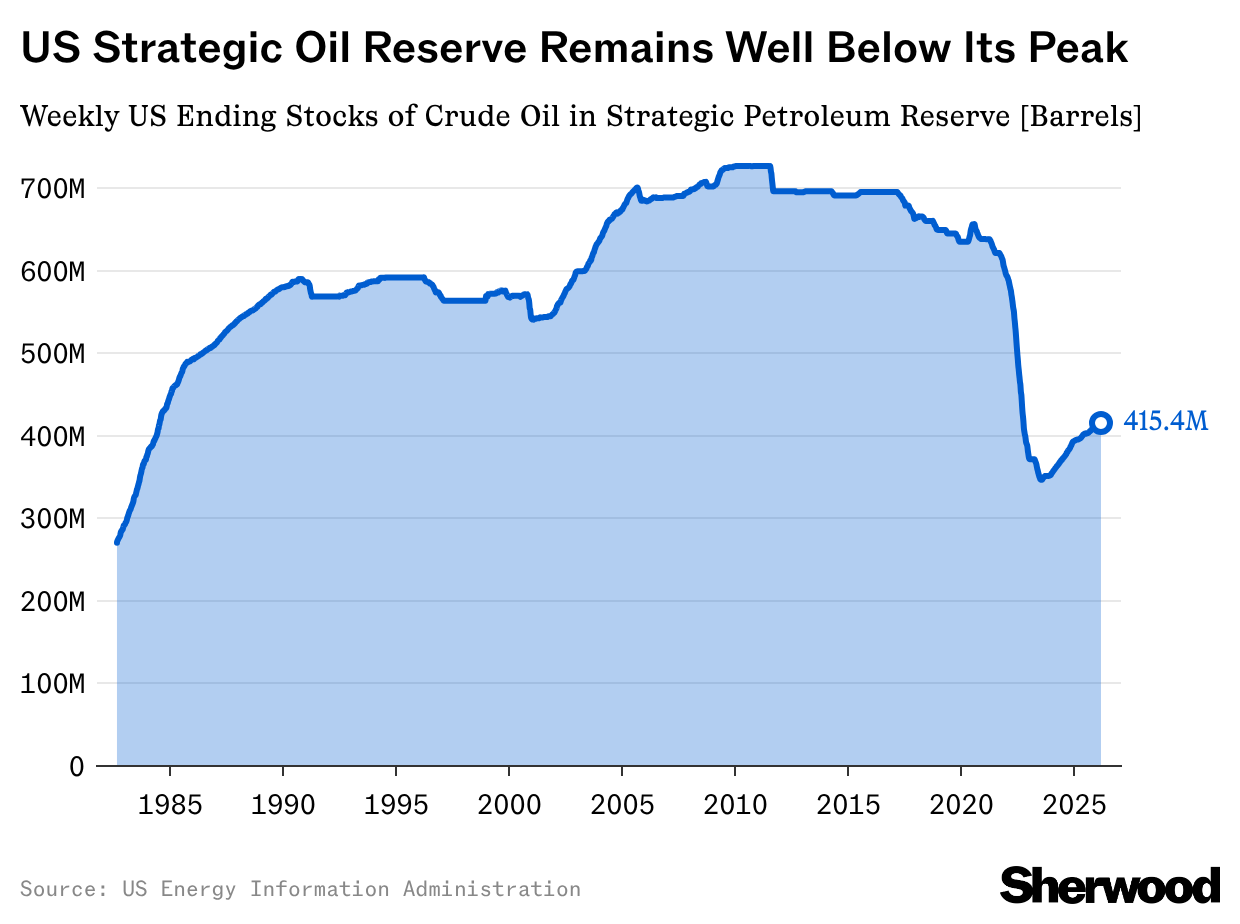
If the disruption continues, governments releasing oil from their strategic reserves will likely only be a temporary solution, with the International Energy Agency calling the Iran war the “largest supply disruption in history” for global oil markets — not to mention the hydrocarbon markets that flow from there, and all the other chemicals (like helium!) that flow from there.
|
|
|
Scott Rubner, head of equity and equity derivatives strategy at Citadel Securities, recently called retail investors the “strongest hand in the entire market.”
War, and the ensuing spike in oil prices, looks to be prompting some of those strong hands to consider folding. |
- “For the first time this year, retail investors are showing persistent signs of weakness, with weekly purchases decelerating by ~30% after defying seasonal patterns and making February their 3rd largest month on record,” wrote JPMorgan strategist Arun Jain.
-
“In fact,” he continued, “Monday marked the largest net-selling day in single stocks in a month, before purchases resumed at a positive, yet below YTD average pace on Tuesday and Wednesday.”
-
Extreme oil price volatility like the kind we’ve seen over the past month is typically accompanied by elevated stock market volatility and increased recession risk. Of course, deceleration is not contraction. Aggregate retail inflows are slowing, but not yet turning into outflows.
|
Retail traders crushed it last year due to both market timing and stock selection, with a heavy focus on AI-linked plays. In 2026, their stock preferences remain pretty much the same, per Jain. The cohort has also preferred to get exposure to the war-induced supply crunch in crude through ETFs like the United States Oil Fund, which offers exposure to the commodity through futures and swaps, rather than baskets of large energy companies like the Energy Select Sector SPDR Fund.
|
|
|
It takes a lot to break the resolve of retail traders. In 2025, the group was undaunted by the tribulations that the market encountered in the first four months of the year. The masses were buying the dip in megacap tech stocks well after their momentum had sputtered in Q1 2025, and were a net buyer of stocks through the entire month of March even as tariff risk escalated, according to JPMorgan.
April 3, 2025, the worst day for stocks since 2020 — the session following the announcement of reciprocal tariffs on “Liberation Day” — was met with the largest level of retail stock purchasing in a decade, per JPM. |
|
|
Take control of your tech exposure. |
|
|
|