|
 |


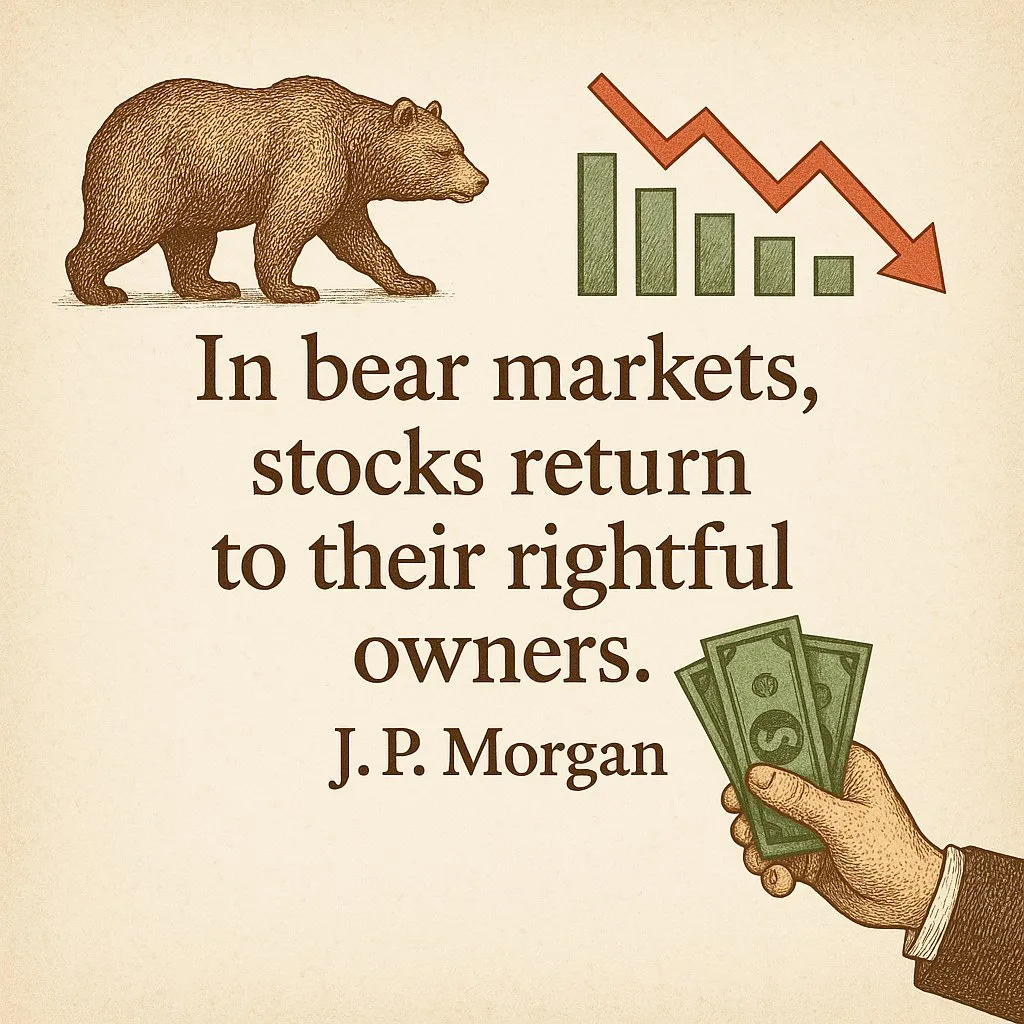
Rational investors love declining markets.
It offers great investment opportunities.
Let’s dive into how you can handle market volatility and make sound decisions.
 |
COVID Crash
The COVID crash of 2020 was the fastest market crash in modern history.
Markets plunged, and billions were lost in record time.
The interesting part?
It didn’t just fall fast, it bounced back even faster.
Just six months later, markets were hitting new all-time highs.
Imagine being in a coma, and when you wake up, your other half tells you a global pandemic is taking place.
With a lot of anxiety, you open your broker app to check your stock portfolio…
To your surprise, your portfolio is up +20%.
That’s exactly what happened.
In the chart below, you can clearly spot the COVID crash of March 2020, followed by the lightning-fast rebound for the S&P 500:
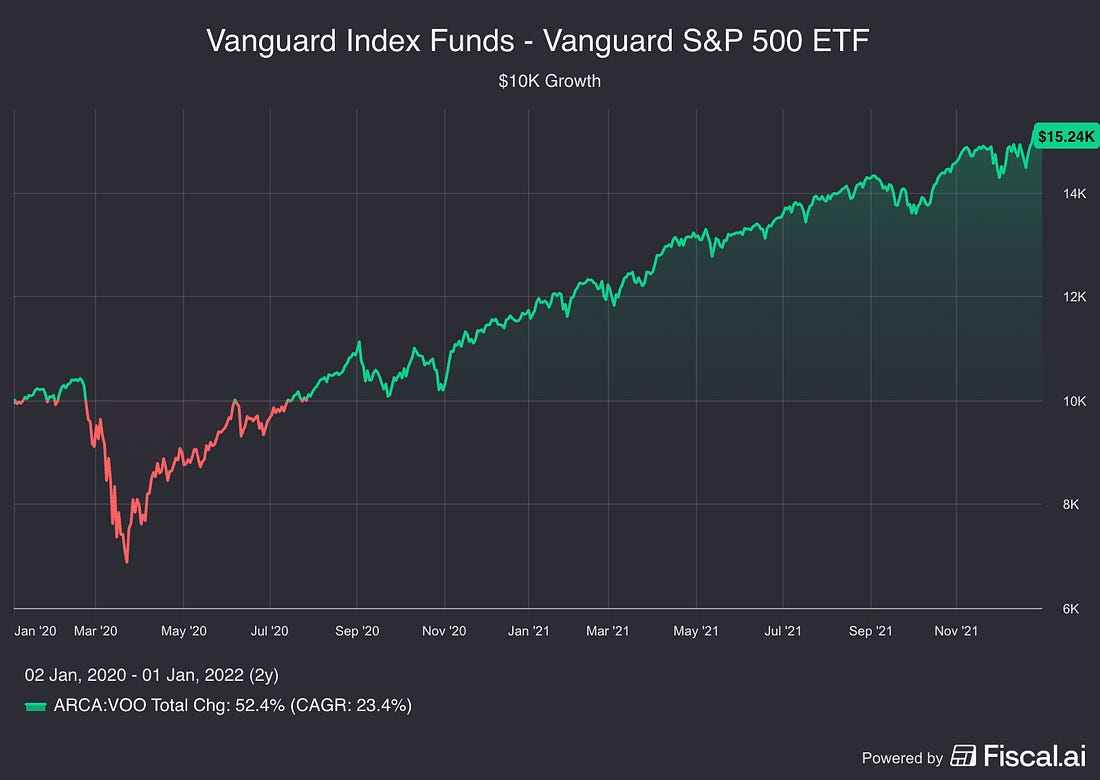 |
The COVID crash proved once again that you can’t time the market.
Dollar-Cost Averaging
You can’t time the market. But you can tame it.
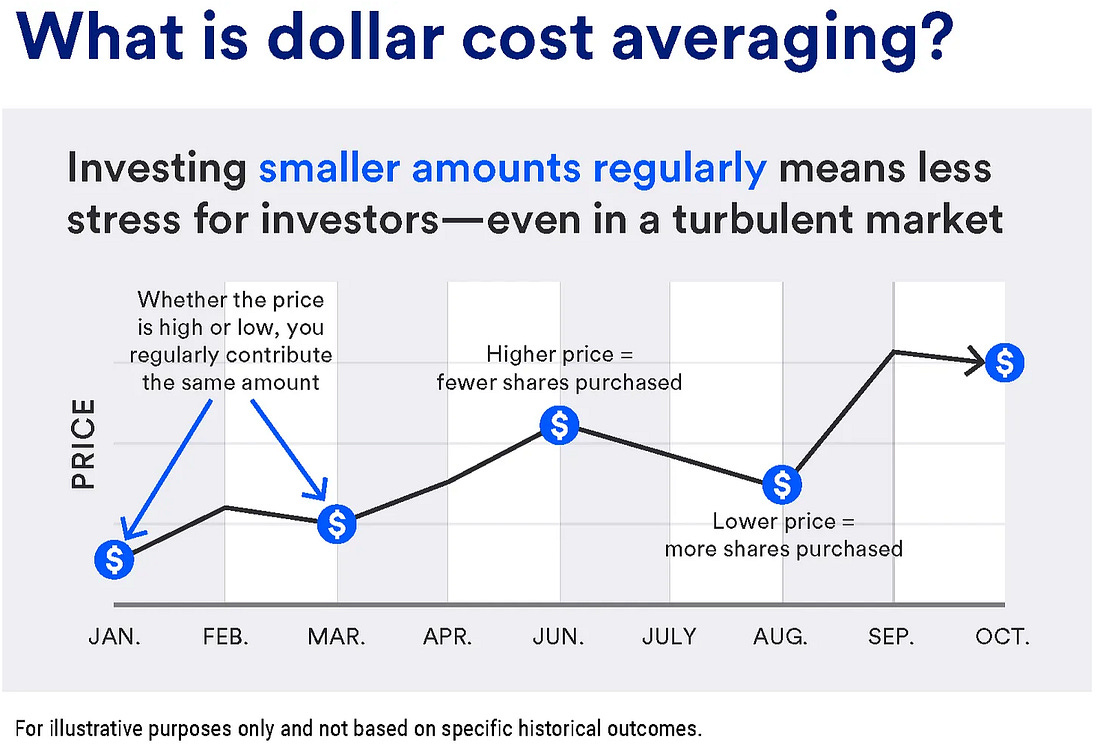
That’s exactly what you do with Dollar-Cost Averaging.
It means regularly investing a part of your income into stocks.
My parents do this every single month on the first Monday of the month, for example.
This way you:
Spread your risk
Stay calm when markets drop
Build real wealth over time
 |
But the market doesn’t always recover as quickly as it did after the COVID crash.
In the first decade of this century, investors were hit by two major crises:
The Dot-Com bubble in 2000
The global Financial Crisis eight years later.
It wasn’t until 2012 that markets began to recover.
A lump sum of $14,400 in 2000 shrank to $11,181 by 2012.
But if you had invested $100 every month instead (called Dollar-Cost Averaging), you'd have ended up with $16,351.
Dollar-Cost Averaging outperformed lump sum investing by 35.9%.
The lump sum ended up making a loss, while DCA protected your capital through this exceptionally long bear market.
A period like that, 10 years or more without real growth, is what we call a lost decade.
The market may rise, but not enough to outpace inflation.