Good afternoon! It’s Ellie Austin here again, standing in for Emma who is on vacation. In today’s newsletter: A Columbia University protestor is finally released from ICE detention, Susie Wiles announces her breast cancer diagnosis, and my exclusive interview with the new CEO of Hinge.Anyone who is single will tell you that dating in 2026 is a struggle. Digital burnout, combined with financial pressures, a loneliness epidemic, shifting gender norms, and increasingly rigid beauty standards have led many young adults to withdraw from the dating scene, in what the
Institute of Family Studies has dubbed a “
dating recession.” This is despite technological advances, such as AI-driven matchmaking, claiming to make the process of finding a partner more efficient than ever.
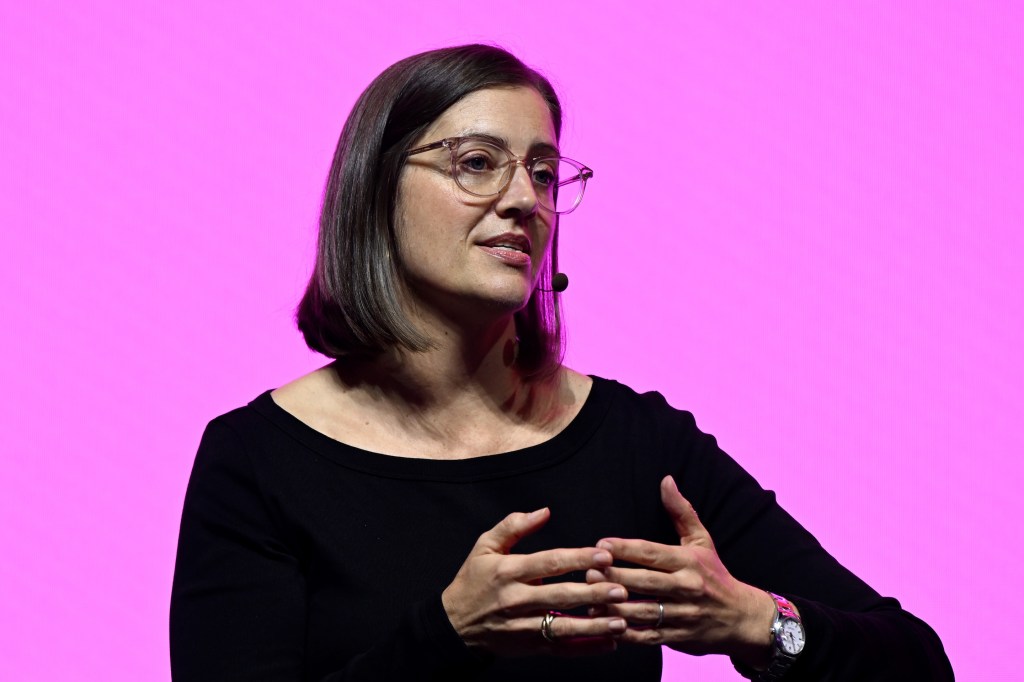
Into this complex landscape, enter Jackie Jantos, the new CEO of Hinge. Jantos took over at the end of last year, following the departure of the company’s founder, Justin McLeod, who had run the company since its 2011 launch. (McLeod is now working on an
AI-first dating app.) In 2018, Hinge was acquired by Match Group, which owns a portfolio of dating platforms, including Match.com and Tinder. Jantos, who previously held leadership roles at Spotify and Coca-Cola, was an internal hire: She joined Hinge in 2021 as CMO, adding the president title to her résumé in March 2025. “Justin and I had been plotting this path for a while,” she tells me. “In some ways it felt like a big shift, stepping into the role, but in other ways, it’s just really familiar and we’re continuing to do what we’ve always done.”
As Jantos describes it, that is delivering “the goal of getting people off the app” and into happy relationships. (Hinge’s tag line is “designed to be deleted.” She says the company’s ultimate mission is to “
create a world that feels less lonely.”) “The success of daters is the success of the business,” she adds. And the business is doing well in an otherwise rocky category. While competitor Bumble
saw revenue decline by 14.3% year-on-year in the last quarter of 2025, Hinge’s
revenue grew 26% in the same time period. (While Hinge reports
15 million monthly active users globally, Tinder remains the
most popular dating platform, with around 50 million users per month.) “Hinge is absolutely an anomaly in the category,” says Jantos, who met her husband on Match.com. “Our focus on bettering the product experience for daters has singularly been the reason that we have been able to continue this growth.” On a concrete level, this translates to new features such as AI-generated prompts to help users start conversations, reminders to reply to messages (an attempt to reduce ghosting), and a “longer onboarding experience” with the goal of users creating in-depth profiles that encourage thoughtful engagement, she says.
And yet, when I speak to my friends using Hinge—and other dating apps, many feel disillusioned. Heterosexual women, in particular, describe infrequent matches, lackluster conversations, and being upsold to see the most interesting profiles. The academic, author, and podcaster Scott Galloway
speaks regularly about how, at a time when more women go to university than men, the dating pool has been upended, with young professional women struggling to find male partners who match their level of education and ambition. This, in turn, makes young men feel left behind by society. What does Jantos make of this theory? “I don’t see any group’s challenges in life or in relationships as sizably larger or smaller than another” she says. And, as she reminds me, some problems are timeless. “Dating,” she says, “has never been easy.”
Ellie Austin
Editorial Director, Most Powerful Women
ellie.austin@fortune.comThe Most Powerful Women Daily newsletter is Fortune’
s daily briefing for and about the women leading the business world. Subscribe here.