Welcome back to Buffering, where we’ve had this version of The Circle of Life on repeat in honor of the first week of the Josh D’Amaro era at Disney. The House of Mouse’s new head cheese has kept things pretty low-key so far, which is probably a good thing considering the dramatic early days of Bob Iger’s last successor. This week’s newsletter has some scoop on a possible U.S. revival of the long-running UK hit I’m A Celebrity… Get Me Out of Here!, some thoughts on this year’s Oscar ratings, and, thanks to another appearance here from our colleague Nate Jones, a look at why Timmy Chalamet didn’t get an Academy Award (again). But our lead story is about all the drama surrounding Hulu’s decision to not move forward with its reboot of Buffy the Vampire Slayer. Thanks for reading.
|
— Joe Adalian, West Coast editor
|
|
|
Subscribe now to get unlimited access to everything New York, including subscriber-only newsletters, exclusive perks, the New York app, and more. |
|
|
➽ I’m a Celebrity… Get Me on Peacock!
|
Peacock may be getting ready to import another big international reality format. Having already scored hits with UK-born Love Island USA and Dutch-bred The Traitors (Netherlands), Buffering hears that the NBCUniversal streamer is now in talks to remake the long-running British hit I’m a Celebrity…Get Me Out of Here! for Stateside audiences. While no deals have been signed, two reality industry sources say Peacock is in advanced talks with I’m A Celeb producer ITV Entertainment to launch a U.S. version of the show, which assembles a group of famous folks, drops them in a remote location (usually somewhere in Australia), takes away all their usual comforts, and has the group compete for food and treats. The action typically takes place in near real-time over the course of three weeks, with home viewers voting out contestants on a regular basis. Essentially, it’s Love Island meets Survivor, but with a cast of reality stars, comedians, influencers and performers.
If Peacock ends up closing a deal, it wouldn’t be the first time an American platform has taken a stab at making the nearly 25-year-old UK show work here. Early on in the modern reality boom, in 2003, ABC rushed a take on the concept not long after it premiered on ITV, assembling a contestant roster that included the likes of Melissa Rivers, Downtown Julie Brown, and Caitlyn Jenner. Though some episodes of the 15-night run scored solid ratings, reaching as many 10 million viewers, it wasn’t enough of a sensation to merit a second season. Six years later, the format returned to America via an NBC reboot that aired over the summer of 2009 and featured no less than three stars of The Hills (including Spencer Pratt), two Baldwin brothers (Stephen and Daniel), and one American Idol reject (Sanjaya.) The NBC reboot started solidly but quickly faded and was not renewed.
There are no details yet as to how exactly Peacock might revive I’m a Celebrity — again, if the deal gets done — but there’s some logic to the streamer taking another stab at the format, which continues to be a very big success in Blighty (last year’s edition premiered to even bigger ratings than the first episode of BBC’s Celebrity Traitors). As Love Island, also from ITV, proved, live event shows can work on streaming even when they don’t click on broadcast TV (the format never caught fire when it aired on CBS.) Plus, as it did with Traitors, Peacock can draw from the deep well of Bravolebrities for an I’m a Celeb revival (imagine Love Island losers or any of the Real Housewives being banished to the jungle for a few weeks). We’ll let you know if a deal for the show gets closed, but if it does, here’s hoping it’s at least half as entertaining as this promo for the Australian version of the show featuring Robert Irwin.
|
|
|
➽ The Just-OK Oscars Numbers |
Conan O’Brien’s second consecutive year hosting the Oscars drew mostly good reviews — and not-bad ratings. Sunday’s ABC-and-Hulu simulcast combined to attract 17.86 million same-day viewers, per Nielsen’s so-called Big Data Plus Panel ratings. That’s a huge number in 2026, and more than the combined audience for the most recent Golden Globes (8.66 million) and Emmy (7.42 million) ceremonies. But it was also down about 12 percent from last year’s show, which averaged 20.34 million viewers in the Nielsen Big Data numbers (which weren’t publicly reported at the time; the panel-only number released at the time was 19.69 million).
While this year’s ratings were the show’s lowest since 2022, Oscar viewership has always gone up and down, and 12 percent is hardly a massive decline. Industry insiders also note that last year’s show benefited from being held before the switch to Daylight Savings Time (which can sometimes cut into ratings as people enjoy the extra sunlight), while Sunday’s ceremony faced unexpectedly strong competition from the World Baseball Classic semi-finals simulcast on Fox Sports 1 and Fox Deportes, which drew 7.4 million viewers — triple the audience for the same game in 2023. In any case, ABC won’t have to sweat Oscars ratings for much longer: In 2029, the show moves to YouTube.
|
|
|
Photo: 20th Century Fox/Everett Collection |
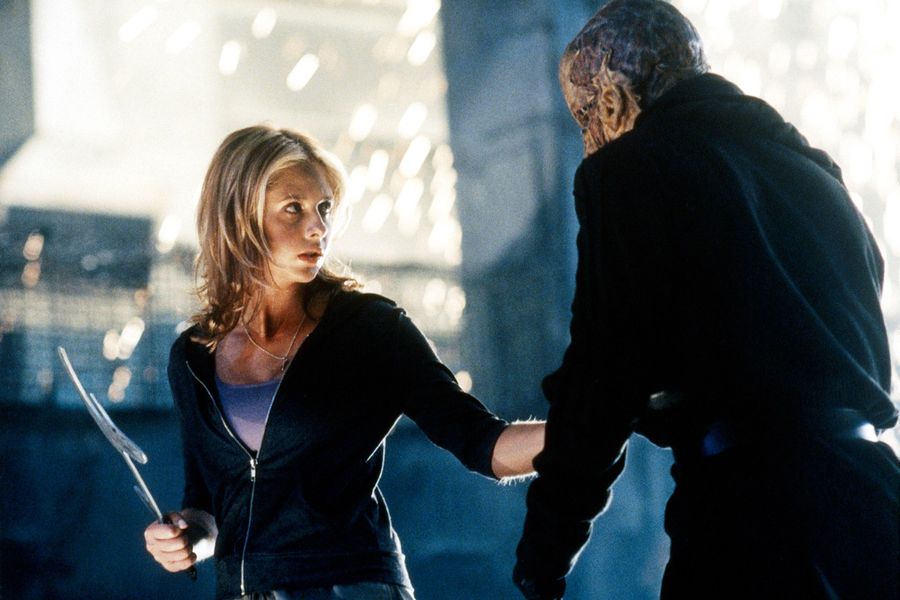
It has been quite a week for veteran Disney TV executive Craig Erwich. On Monday, as part of a broader restructuring at the company, the longtime head of programming for Hulu (and, more recently, ABC) got a promotion, adding day-to-day oversight of Disney studios 20th Television and 20th Animation to his portfolio. But on Tuesday, Deadline broke the news that Erwich was the unnamed executive being called out when, in response to the news that Hulu had passed on the planned Buffy the Vampire Slayer reboot, OG series star Sarah Michelle Gellar told People about “an executive on our show who was not only not a fan of the original, but was proud to constantly remind us that he had never seen the entirety of the series and how it wasn’t for him.” Messy!
While Buffy fans are understandably bummed that the Chloé Zhao–helmed New Sunnydale isn’t happening at Hulu, it’s far from unheard-of for programmers to walk away from much-hyped reboots. In 2022, for example, HBO Max nixed a long-in-the-works reboot of The Boondocks, despite having given it a two-season order; two years earlier, Disney+ called off its planned Lizzie McGuire revival even though two episodes had been taped. By contrast, Hulu had only ordered a pilot for Buffy, and the whole point of making a pilot in TV is so that executives can decide whether or not to commit to making a full season of a show. Even the HBO network — one of the most talent-friendly TV platforms out there — fairly regularly says “no” to pilots, even when they’re very expensive and based on beloved IP: Just ask Naomi Watts or George R.R. Martin. Pilots not taking off is just a fact of life in the television business.
What’s less common, of course, is for talent such as Gellar to put executives like Erwich on blast, even semi-anonymously. It usually only happens when said star feels particularly aggrieved over how the rejection went down. In this case, the timing of Hulu’s decision may have been a contributing factor to how Gellar responded. The streamer told her and the Oscar-nominated Zhao (Hamnet) that New Sunnydale was dead on Friday, just as the former was about to attend the SXSW premiere of Ready or Not 2: Here I Come, and as the latter was prepping for her big night at the Academy Awards. There’s never a good time to inform someone you’re not moving forward with a project, but Hulu clearly picked a terrible moment to break the news. Per multiple trade reports, the streamer felt the Buffy crew had been expecting a decision by the end of last week and didn’t feel like it could hold off any longer. Perhaps, but delaying the call just one more business day — after Gellar’s premiere and the Oscars — sure would have helped with the optics. (On the other hand, it was Gellar’s decision to reveal the decision in an Instagram post on Saturday, ensuring Zhao would be asked about the news on a night that should have been all about Hamnet.)
As for Hulu’s decision to not go forward with New Sunnydale, it’s worth remembering that executives such as Erwich don’t just evaluate whether something is “good,” “bad,” or “meh”; they also have to judge whether a project is likely to find a big enough audience to justify its expense. The Ankler’s Leslie Goldberg put the price tag on the Buffy pilot at $12 million, and while subsequent episodes would have cost less, this wasn’t going to be a cheap show to make. The more a show costs, the bigger the ratings expectations, and the higher the bar for success. Critics may have ended up kvelling over Zhao’s take on Buffy, but Hulu Originals is not FX Originals (even if they share a distribution platform): Erwich needed to be sure this reboot would be a big hit and not just something where audiences checked out a few episodes for a nostalgia fix and then moved on. He clearly wasn’t, so he cut his losses. That doesn’t mean Erwich made the right call — executives frequently misjudge things — but based on the reporting to date, the explanation for what happened seems to be pretty straightforward. As Variety’s Kate Aurthur put it in her account of this weekend’s drama, “Given the high bar set by fans for such a revered franchise, executives at Hulu felt that it wasn’t worth throwing good money after bad and pulled the plug.”
So what comes next? While failed pilots sometimes end up being revived by other platforms, such an outcome here seems a long shot. Disney, via 20th Television and Fox Searchlight, owns the Buffy IP, and it’s hard to imagine it allowing, say, Netflix the chance to possibly score a big hit with its project. The company would still make money if that happened, and I’d never rule anything out — but letting this project go would also mean giving up the chance for Disney to fully profit from a title executives there clearly think still has value. (Erwich did order the reboot, after all.) For now, I’d expect Disney to lay back and let the whole situation cool down. Then, if Gellar shows any signs of still being interested in working on a revival after her experience working with Hulu, perhaps Buffy Summers will rise from the dead once again.
|
|
|
In the words of Public Image Ltd.: “This is what you want; this is what you get.”
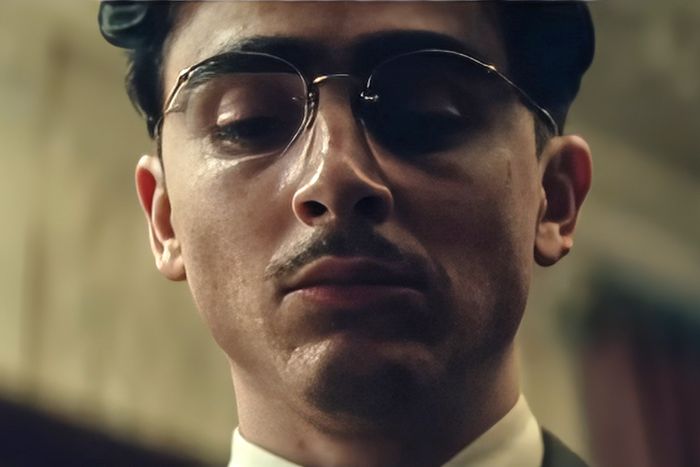
What Timothée Chalamet wanted was to become the second-youngest Best Actor winner in Oscars history. What he got instead was a three-week festival of disappointment as every corner of the film industry — the Brits in BAFTA, the TikTok influencers in SAG-AFTRA, and the living legends in the Academy — proclaimed in one voice: Not yet.
Chalamet’s Best Actor loss to Michael B. Jordan on Sunday night was the final step in what turned out to be a head-spinning rise and fall for the 30-year-old actor over the course of this awards season. Ever since early October, when Marty Supreme premiered with a secret screening at the New York Film Festival, Chalamet had been considered a strong candidate to take the prize that had eluded him on his two previous nominations. “Timmy is a live wire,” my colleague Joe Reid raved of his performance. “Funny and infuriating and kinetic, it’s the kind of performance you know will become signature. It’s the kind of performance that could win an Oscar.” When Chalamet followed up these raves with wins at the Critics Choice Awards and Golden Globes, the Oscar appeared to be his to lose.
And then he lost. What happened?
While Monday-morning quarterbacking Chalamet’s reversal of fortune, it will be impossible to avoid the étoile in the room: his controversial comments on ballet and opera and their relative importance to the average consumer vis-à-vis the movies. Or, translated into Chalamese: “No one cares about this thing anymore.” While these comments spurred a media firestorm, they blew up only on the final day of Oscars voting, so it’s hard to know how much weight the controversy had on the eventual result. (Unless you’re one of those Oscars-watchers who theorizes that the new rules meant more voters waited until the last minute to turn in their ballots, in which case it might have contributed a great deal.)
Still, whether or not you think the ballet controversy created the Oscar loss, it seems clear that both events are downstream of the same root cause: People just got a little sick of Timothée Chalamet by the end of the season in a way that illuminates the struggle of the young A-lister hoping for an Oscar.
Even as he was piling up precursor trophies, Chalamet was walking the tightrope of overexposure. As Hunter Harris noted, since Wonka opened on Christmas 2023, Chalamet has essentially been on a never-ending publicity tour. Up next was Dune: Part Two, then A Complete Unknown, and finally Marty Supreme. That’s a lot of Chalamet for one media ecosystem to handle, particularly when two of those films also require six-month Best Actor campaigns and, especially, when one of those campaigns was the Marty Supreme campaign.
|
|
|
|