| Forwarded this email? Subscribe for more |



 |
| By The Free Press |
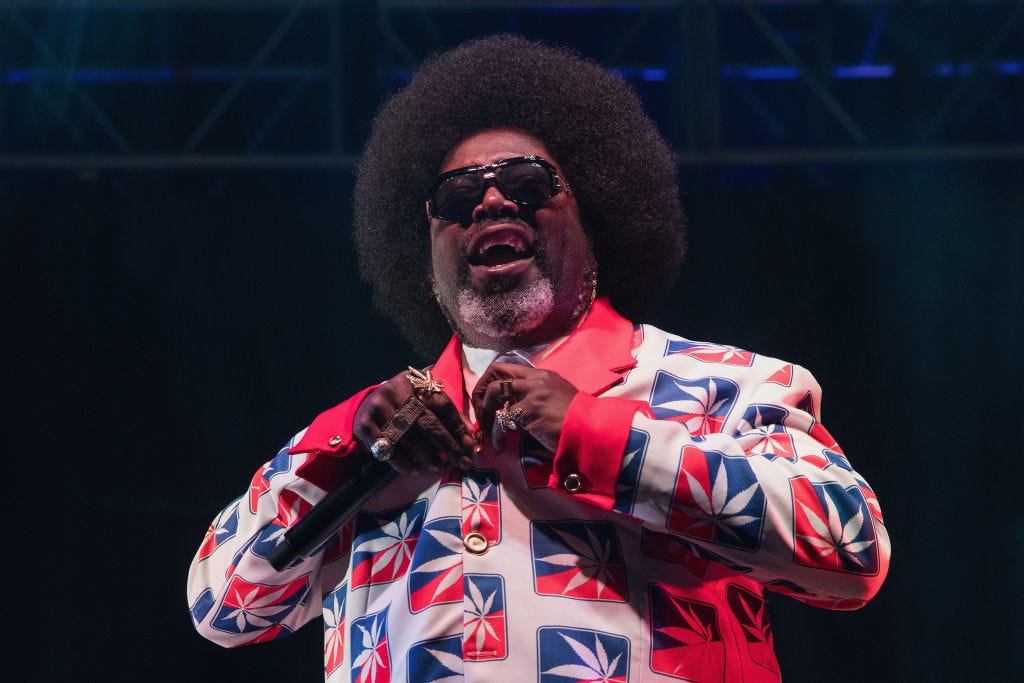
Welcome back to The Weekend Press! Today, Josh Kaplan congratulates Afroman on knowing his constitutional rights. Maya Sulkin speaks to Bridgit Mendler, the Disney kid turned space CEO, about how to do it all. A titan of Jewish literature, Howard Jacobson, reflects on George Eliot’s humanitarian case for the Jewish state. Suzy Weiss loves “Project Hail Mary.” And more!
But first: This is what bad therapy looks like.
Right now, there’s a lot of bad therapy going on in America—something that, here at The Free Press, we’ve written and worried about for years. There are psychologists out there changing lives for the better, but there are also those who tell gay men they should be straight, encourage girls to become boys, and accuse patients of perpetuating “white supremacy culture.” Meanwhile, social media is awash with “therapy-speak,” which influencers use to justify cutting off family members or accuse ex-lovers of being narcissists.
This week, a couple of our writers noticed that bad therapy is also being celebrated in two very different smash-hit television shows—so we’re bringing you an essay about each of them.
First up: The No. 1 show on Apple TV right now is the comedy Shrinking. It centers on a therapist named Jimmy, played by Jason Segel, who decides one day that he doesn’t want to practice “traditional” therapy anymore but instead wishes to play a more active part in his patients’ lives. As someone who once made an entire podcast series about an abusive psychiatrist, Joe Nocera is disturbed by this show.
Jimmy offers one patient a place to live. He tells another that if she doesn’t get a divorce, he’ll end their sessions. He goes to another’s home, sits on her bed, and tells her she’s amazing. And in this latest season, he justifies his behavior by insisting it gives his patients hope. “If I break a traditional boundary, they get to see how far I’m willing to go to help them,” Jimmy says.
This, Joe writes, is troubling—because it promotes the idea that a therapist isn’t doing his job if he doesn’t show up at your house with a bunch of flowers on your birthday.
And then there’s The Secret Lives of Mormon Wives, the wildly popular reality show (it’s basically The Real Housewives of Utah) which has just dropped all 10 episodes of its fourth season. What struck Kara Kennedy, who watched it this week, is how often the moms use therapy-speak to justify their terrible decisions and awful behavior.
“No one embodies this dynamic more than Taylor Frankie Paul,” writes Kara. In the last season, the 31-year-old mom of three went on a monthlong therapy retreat—to process a complicated divorce followed by a tempestuous relationship with a recovering drug addict named Dakota Mortensen. She returned ready to draw “boundaries” and reframe her messy life as her “narrative.” In this latest season, she says, “Maybe it’s time to break the cycle of generational trauma”—moments after screaming at her mother.
And this week, Paul burst into the headlines when three-year-old footage emerged of her throwing a chair at Mortensen, who accused her of domestic violence in 2023. Because of the allegations, the filming of the fifth season of Secret Lives has been paused, and the coming season of The Bachelorette, which was set to feature Paul, has been shelved. Kara writes that viewers are left wondering whether all that “slippery therapy-speak” is just being used “for self-justification, not self-improvement.”
 |
 |
Afroman Is an American Hero | ||||
 | ||||
|
Ryan Gosling’s New Film Will Have You Crying Over a Rock | ||||
 | ||||
|
Two Drinks with . . . Bridgit Mendler, the Disney Star Turned Space Founder | ||||
 | ||||
|
Things Worth Remembering: If You Will It, It Is No Dream | ||||
 | ||||
|