| | Oil up and stocks down as the Iran war drags on, although Washington hints at an off-ramp; China’s b͏ ͏ ͏ ͏ ͏ ͏ |
| |  Beirut Beirut | Paris |  Buenos Aires Buenos Aires |
 | Flagship |  |
| |
|
The World Today | 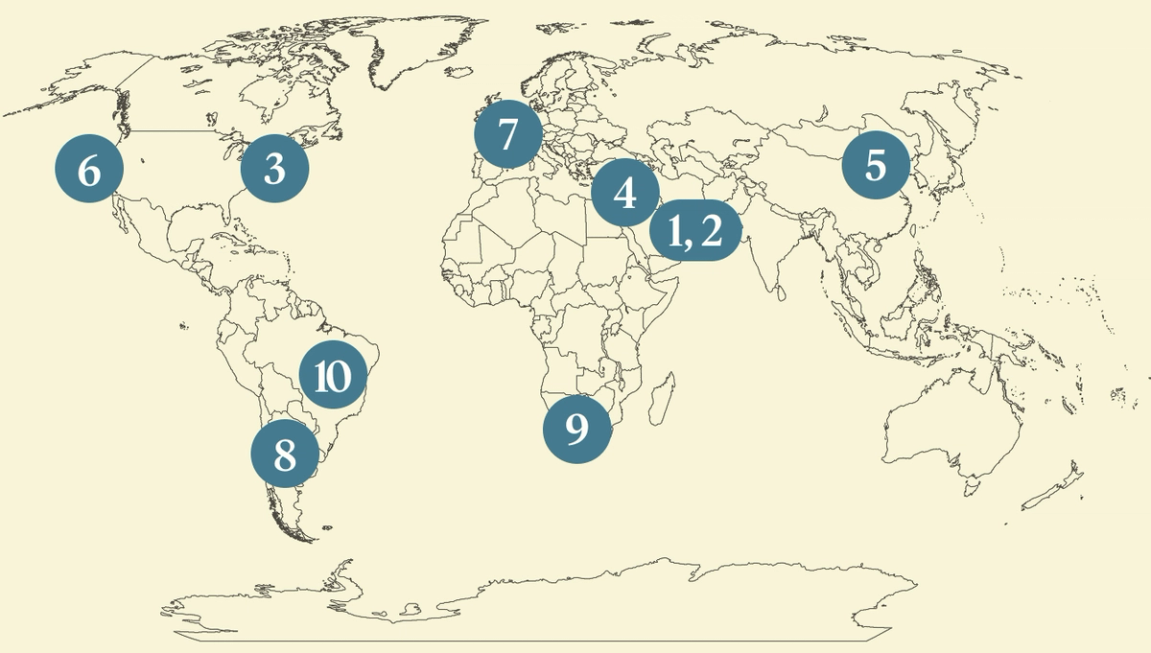 - Iran war hits stocks…
- …and energy prices
- US hints at off-ramp
- Israel Lebanon ‘invasion’
- China battery firms’ boost
- Pentagon turns to Palantir
- Left gains in France
- Argentina’s economic boom
- VC funds to Africa surge
- Recycled World Cup jerseys
 A special Iran-focused London Review of Substacks, and a journalist’s ‘tale of love and devotion’ about the World Cup. |
|
Asian, Europe stocks slide over war |
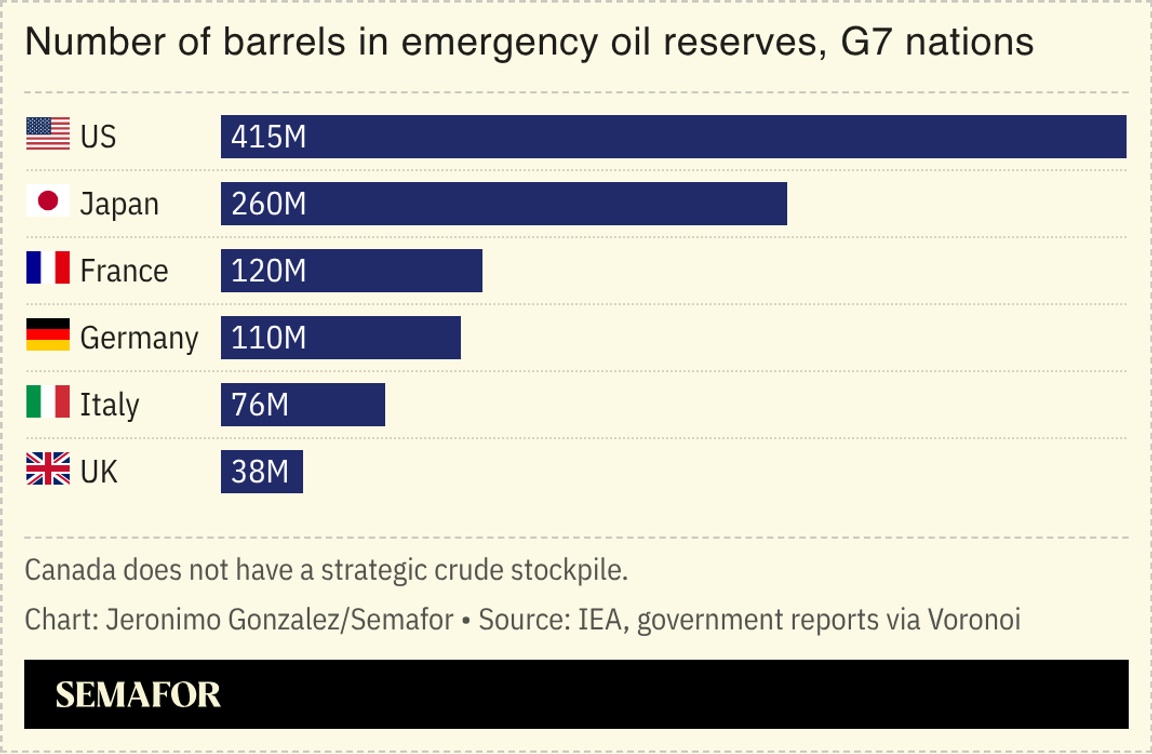 Asian and European stocks plummeted on Monday as Iran’s threat to completely close the Strait of Hormuz sent oil prices soaring. Analysts’ expectations of an extended energy crunch are weighing on markets: The head of the International Energy Agency said the current crisis was akin to the 1970s oil shock and the fallout from Russia’s invasion of Ukraine combined, while economists have downgraded growth forecasts and central banks are increasingly warning of the risk of accelerating inflation. US President Donald Trump’s promises to reopen the key waterway have done little to assuage investor fears, forcing Trump to “gift” Tehran the lifting of sanctions on its oil exports in a bid to tame the price spike. |
|
War’s lengthy economic impact |
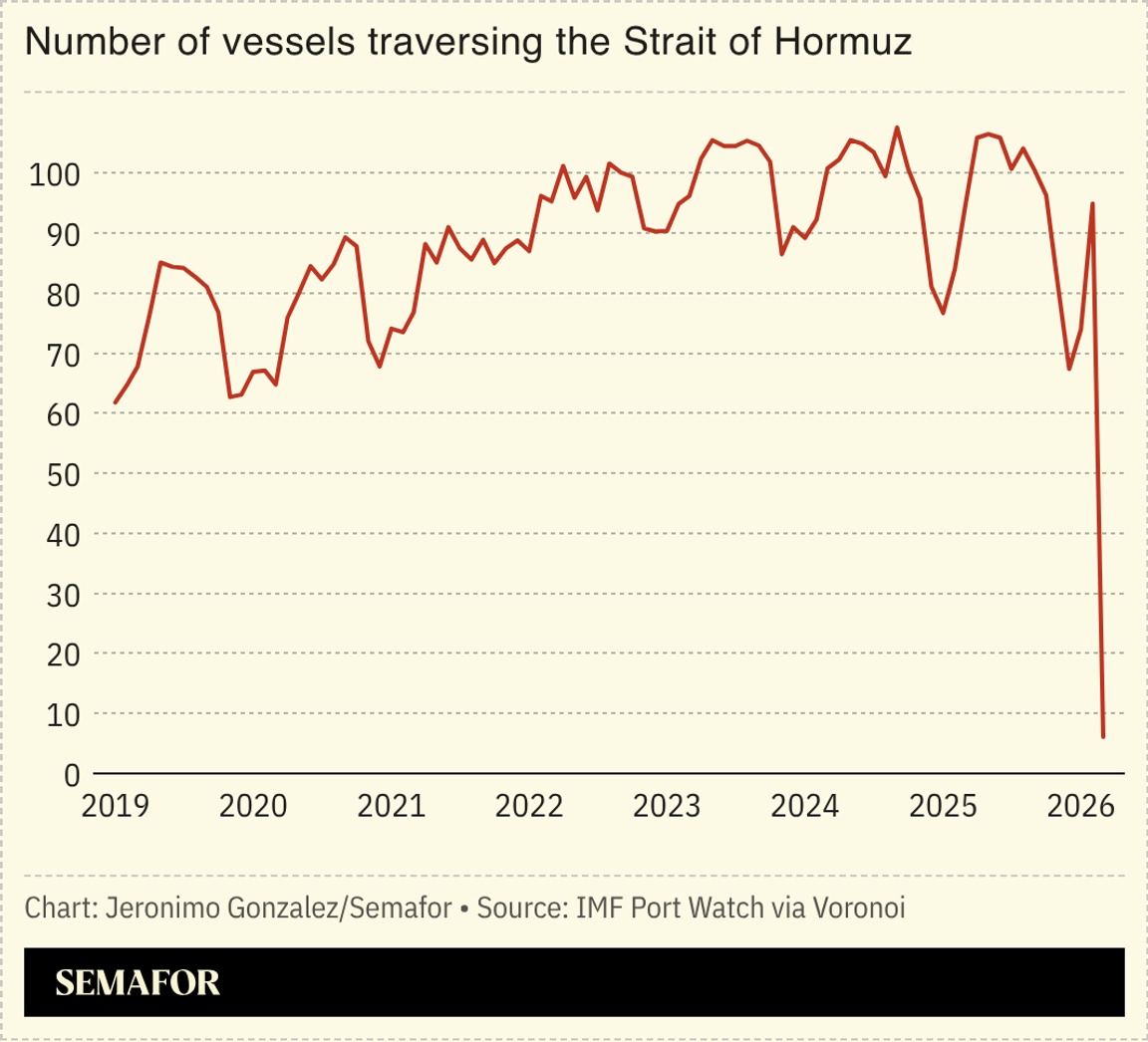 Analysts and businesses are concerned that the Iran war could drag on for months and have devastating economic consequences. Goldman Sachs told investors that it assumed oil flows through the Strait of Hormuz would remain at 5% of normal levels for six weeks before a slow recovery; Qatar Airways sent 20 of its largest aircraft to storage in Spain, as it prepared for months of disruption. A group of executives told CNBC that the worst could be yet to come: If the Strait is not opened within two weeks, they predicted oil prices up to $175 a barrel. Whatever happens, a prolonged period of high prices is coming, said The Economist: “Even the best-case scenario for energy markets is disastrous.” |
|
White House eyes Iran war exit |
 Majid Asgaripour/WANA via Reuters Majid Asgaripour/WANA via ReutersThe Trump administration may be weighing an off-ramp in the Iran war, even as it presses on with its campaign. US President Donald Trump said Washington was “very close to meeting our objectives” and potentially “winding down” proceedings, but his list of objectives is much reduced, The New York Times noted. Talk of overthrowing the regime has been dropped, and his goals for ending Iran’s nuclear ambitions watered down. Signals from Washington remain inconsistent: Trump threatened to “obliterate” Iran’s power plants if the Strait of Hormuz doesn’t reopen. Still, Trump’s key Middle East envoys are reportedly laying groundwork for potential peace talks, with messages passed between Washington and Tehran via intermediaries. |
|
Lebanon says Israel planning invasion |
 Karamallah Daher/Reuters Karamallah Daher/ReutersIsrael attacked a key Lebanese bridge over the weekend as Israeli authorities approved an expansion of attacks, in what Lebanon’s president called a “prelude to ground invasion.” Israeli forces have been hitting crossings over the Litani River and homes close to the border since a ground assault targeting Hezbollah began a week ago. Beirut says more than 1,000 have been killed and a million displaced. The expansion of the Lebanese conflict, and growing fears of an all-out invasion, coincide with a major uptick in violence by Israeli settlers in the West Bank; six Palestinians have been killed, with European governments and an Israeli general both denouncing the “terror.” |
|
China battery firms gain on Iran war |
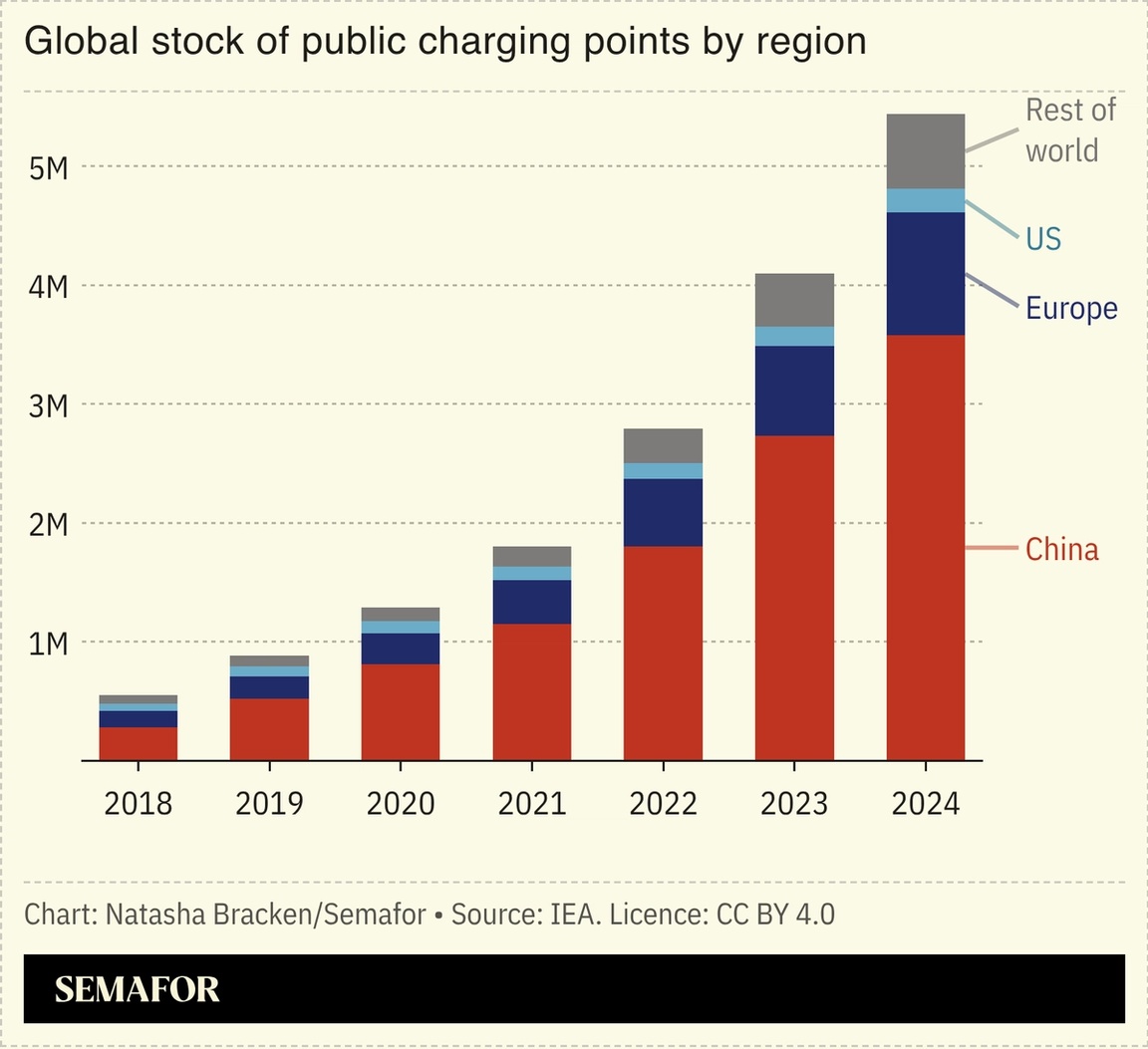 The market capitalization of China’s top battery manufacturers has soared by $70 billion since the start of the Iran war, as investors predict the conflict will boost clean energy growth. BYD, CATL, and Sungrow have all outperformed global oil majors since the conflict began, the Financial Times noted; batteries are vital to smooth out the flow of intermittent renewable energy. Countries are expanding their investment in renewables to reduce exposure to future geopolitical energy shocks. The battery giants are also making rapid technological strides: BYD recently upgraded its fastest chargers to provide 600 miles (966 kilometers) of range in nine minutes, four times the speed of a typical US charger. Thousands are already installed in China and Europe. |
|
Pentagon reportedly adopts Palantir |
 Palantir CEO Alex Karp. Denis Balibouse/Reuters Palantir CEO Alex Karp. Denis Balibouse/ReutersThe Pentagon will reportedly adopt Palantir as its main AI system after a fallout with Anthropic. The firm’s Maven model is already deeply embedded in US defense: It gathers battlefield data and identifies targets. The new move designates it the “program of record,” which streamlines its adoption across the military, Reuters reported. The decision follows a high-profile dispute between the Pentagon and Anthropic, after the latter refused to permit its Claude model to be used for mass surveillance or fully autonomous weapons; the government has moved to render Anthropic a “supply chain risk,” meaning no other defense suppliers can use it. A complicating factor is that Maven itself uses Claude to analyze the data it collates. |
|
France’s right lags in municipal polls |
 Emmanuel Gregoire, Paris mayor-elect. Sarah Meyssonnier/Reuters Emmanuel Gregoire, Paris mayor-elect. Sarah Meyssonnier/ReutersThe French left won the Paris mayor’s race, one of a number of blows to far-right and center-right challengers in nationwide municipal polls. Emmanuel Grégoire won just over 50% of the vote, a result that Le Monde characterized as “the left’s greatest victory in Paris since 2001,” while Marine Le Pen’s National Rally — which had targeted a number of southern cities — suffered several defeats, though it made inroads in smaller towns and said it was building momentum ahead of next year’s presidential race. Another winner: One of President Emmanuel Macron’s former prime ministers, Édouard Philippe, who won reelection as mayor of Le Havre and is seen as the favorite to advance to the 2027 presidential runoff against the National Rally. |
|
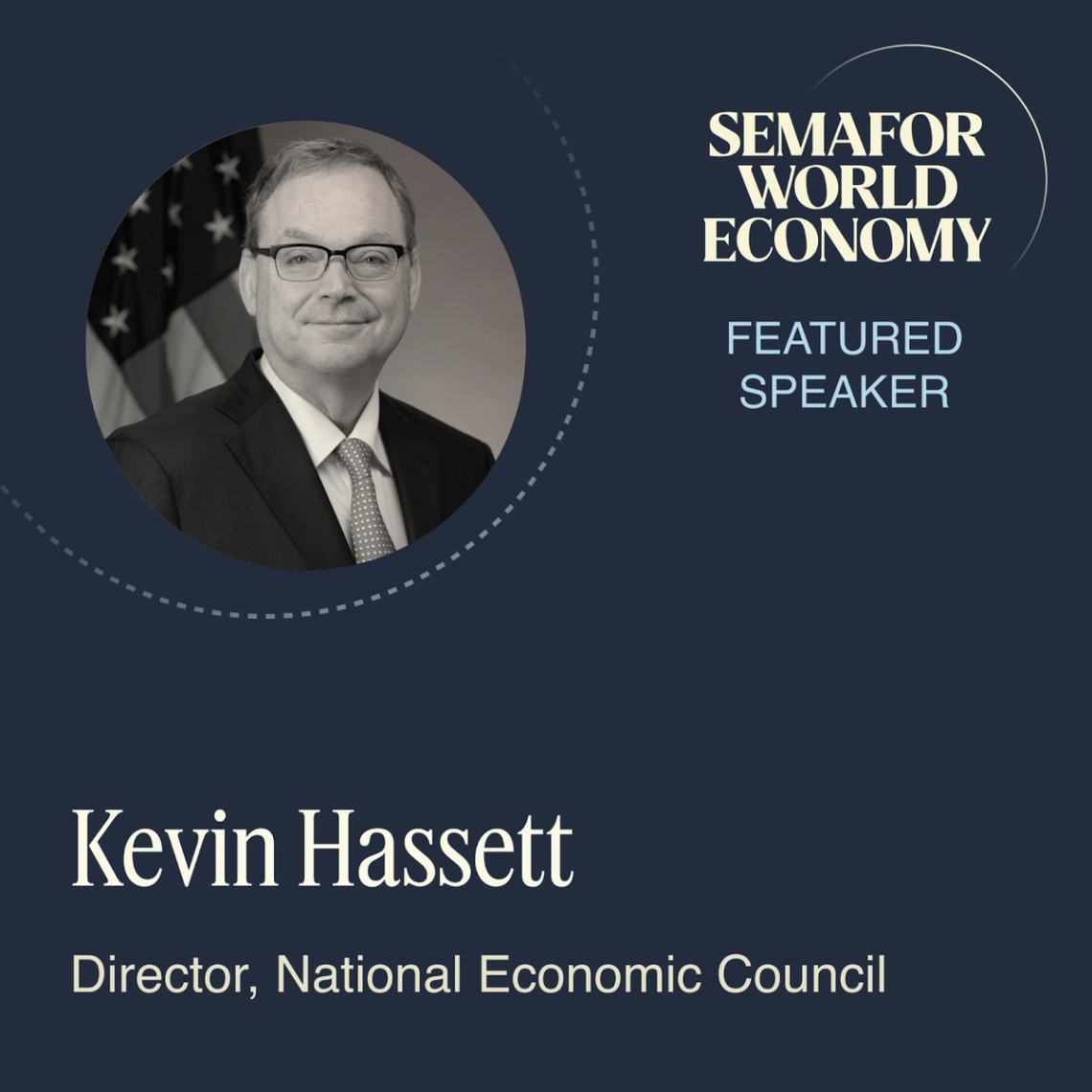 This April, Kevin Hassett, the director of the National Economic Council, will join global leaders at Semafor World Economy — the largest convening of top global CEOs and government officials in the United States — to sit down with Semafor editors for conversations on the forces shaping global markets, emerging technologies, and geopolitics. See the full lineup of speakers, including Global Advisory Board members, Fortune 500 CEOs, and top elected officials from the US and across the G20 here. |
|
Argentina’s economic recovery |
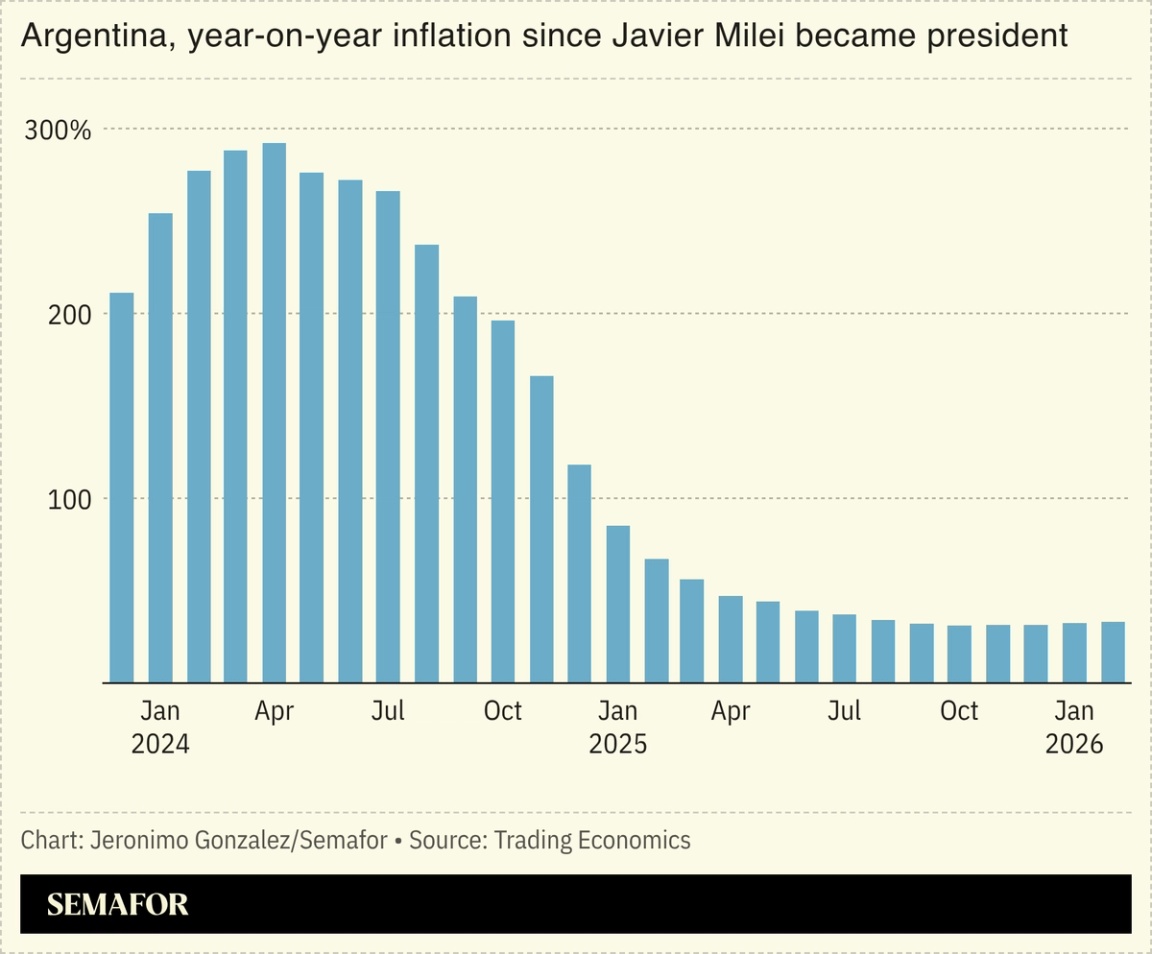 Argentina’s GDP expanded 4.4% last year, further confirmation of President Javier Milei’s success in turning around the economy. The growth was the highest in years, apart from a pandemic bounceback, and part of Milei’s remarkable shift in South America’s second-largest economy. Since taking power in 2023, annual inflation — 160% when he became president — has plunged and is now at the lowest level in eight years, though it remains high. Poverty has fallen too, despite Milei’s sharp cut to subsidies that sparked mass protests. Still, the self-described anarcho-capitalist’s approval rating has fallen in recent months, driven in part by accusations of corruption as well as concerns over stagnating incomes. |
|
 Monicah Mwangi/Reuters Monicah Mwangi/ReutersVenture capital flows to Africa soared last year, the latest sign the continent’s economies are being shaped by investment, not aid. VC funds ploughed around $4 billion into African economies in 2025, up around fourfold from 2020 levels, helping to mint several new unicorns. The surge points to investor appetite to tap into the huge, largely underserved market, but also the sudden shift in foreign finance flows to Africa: Since the start of US President Donald Trump’s second term, Washington has replaced aid programs with co-investment deals. Investors hope the moves will unlock more capital: “If local capital invests, foreign capital follows,” a South African asset manager told The Economist. |
|
|


