| | In today’s edition: Trump offers mixed messages on the likely duration of the Iran war, and the Sena͏ ͏ ͏ ͏ ͏ ͏ |
| |  | Washington, DC |  |
| |
|
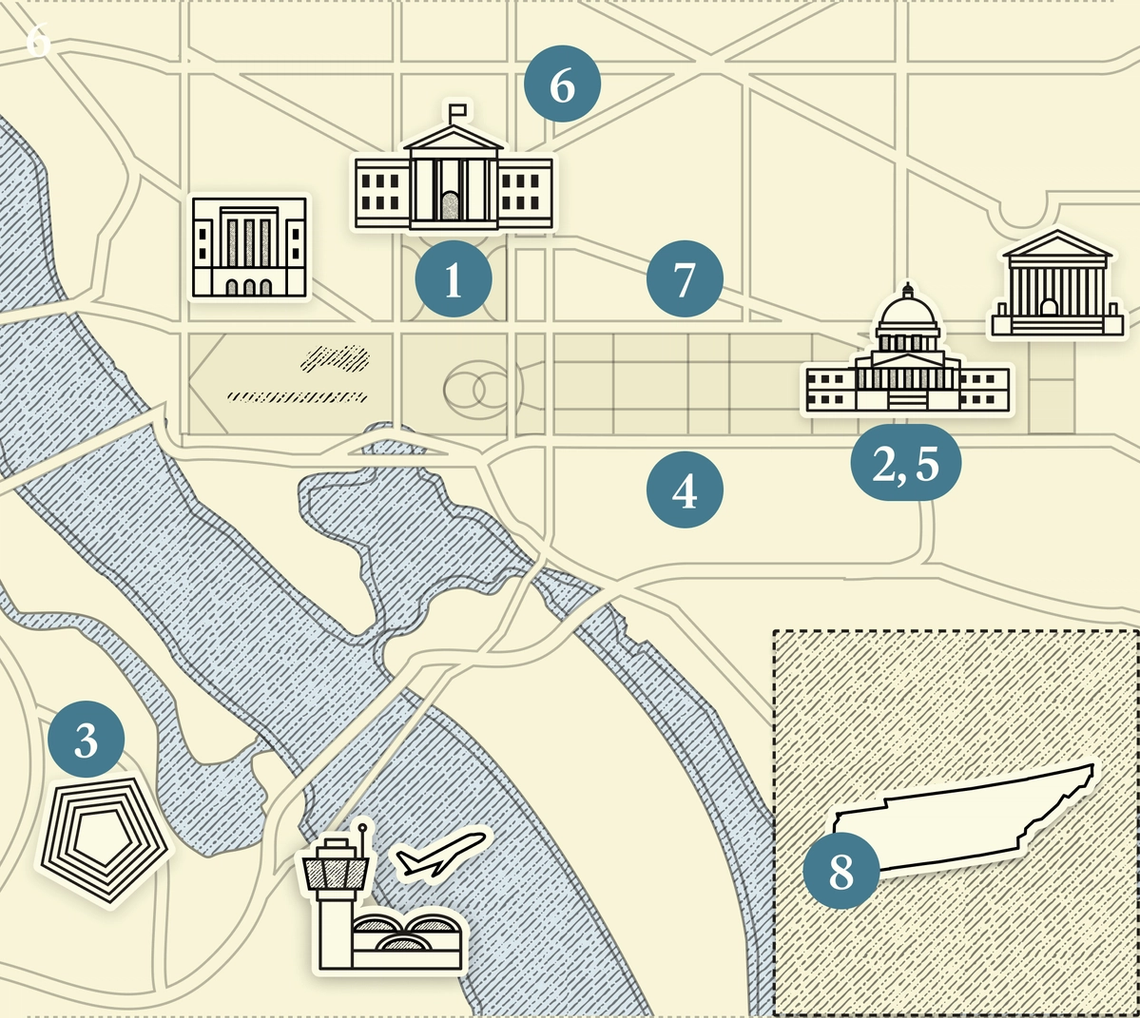 - Mixed messages on Iran
- War spending challenges
- US is ‘not keeping up’?
- Wright in spotlight
- DHS funding divide
- BlackRock CEO’s message
- Dems on merger watch
- Trump visits Memphis
PDB: ICE agents dispatched to airports today  Trump: ‘No deal’ on DHS unless SAVE Act passes … LaGuardia shut, two pilots killed after Air Canada crash … Floods batter Hawaii |
|
Trump signals in both directions on war |
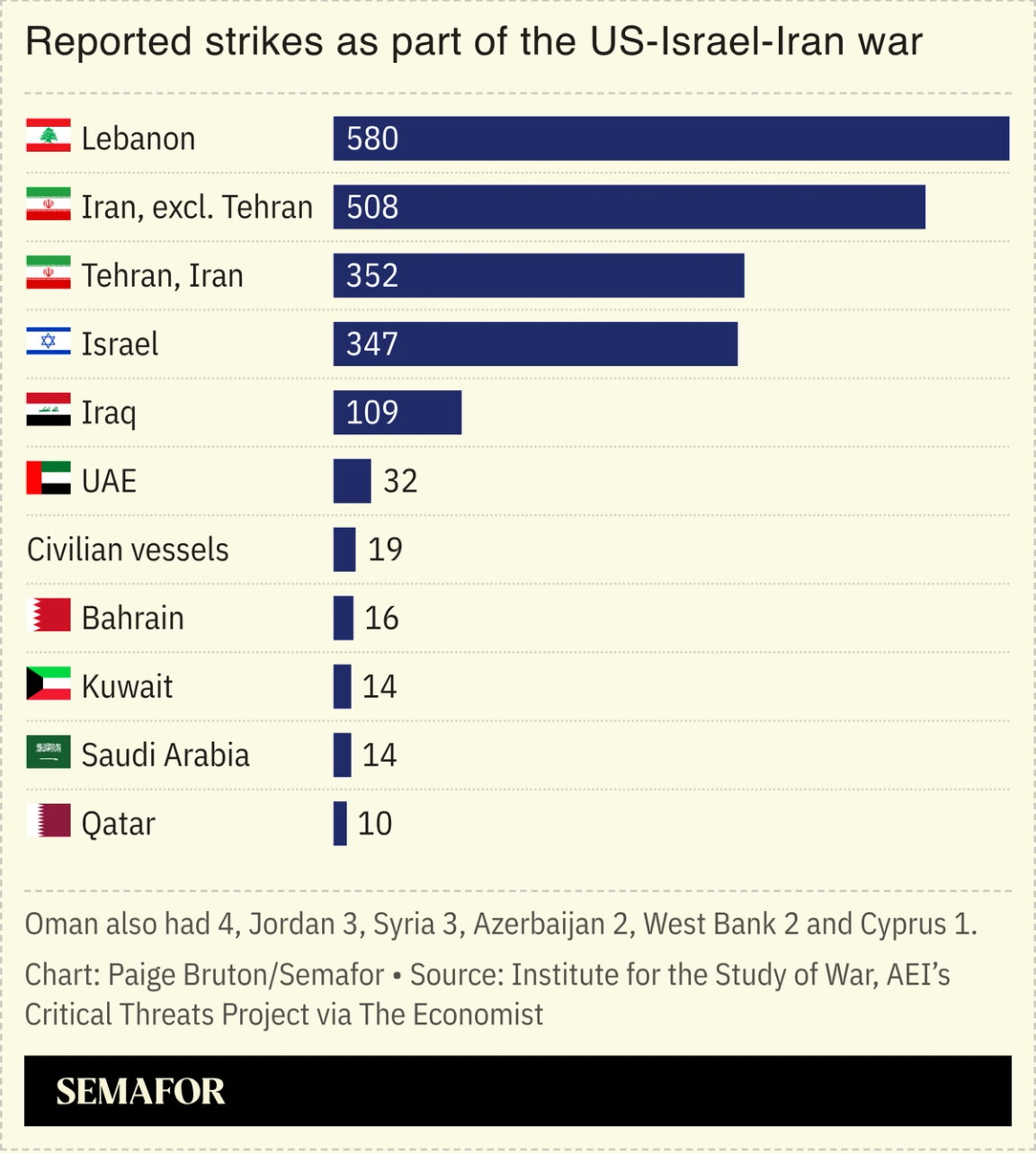 Is the war with Iran winding down or ramping up? Signs point in both directions: President Donald Trump said he’d “hit and obliterate” Iran’s power plants if the Strait of Hormuz isn’t “fully open” within 48 hours, a deadline he suggested should be taken literally — and one that expires this evening. Notably, Trump’s statement came one day after he indicated the US is “getting very close to meeting” its objectives and is considering “winding down” military efforts. Trump’s key Middle East envoys are reportedly laying groundwork for potential peace talks, with messages passed between Washington and Tehran via intermediaries. Nonetheless, in response to Trump’s latest threat, Iran vowed to completely close the strait and strike “power plants, energy,” and communications infrastructure in the region — sending stock markets plummeting Monday, while oil prices soared; the State Department recommended “Americans worldwide… exercise increased caution.” — Shelby Talcott |
|
War spending pitch meets GOP doubts |
 Jonathan Ernst/Reuters Jonathan Ernst/ReutersAs some congressional Republicans eye another party-line spending bill to fund Trump’s war in Iran, they’re confronting a harsh reality: They probably don’t have enough GOP support. Lawmakers like House Budget Chair Jodey Arrington, R-Texas, have advocated for using the reconciliation process, which allows members of Congress to pass spending-related legislation with a simple majority vote, to fulfill the president’s potential request for $200 billion. But with Republicans in the House and Senate signaling reservations, that may be out of reach. Skeptics include Sen. John Kennedy, R-La., who told C-SPAN that he would not vote for any amount until Congress can hold hearings. “If we’re going to get anything close to the $200 billion supplemental request, we got to get 60 votes” by bringing along Democrats, Sen. Thom Tillis, R-N.C., told ABC. — Eleanor Mueller and Nicholas Wu |
|
Why the future of war eludes US leaders |
| |  | Ben Smith |
| |
 Steve Dipaola/Reuters Steve Dipaola/ReutersBob Work is no armchair war commentator. More than a decade ago, Work, then deputy secretary of defense, started sounding the alarm on military readiness. He believed that the United States had lost track of the future of war, so he convened leaders from across the defense bureaucracy to come up with solutions. Now a generation of defense intellectuals are watching their warnings come true, from the Gulf and Ukraine, where drones and counter-drone measures dominate, to the Taiwan Strait, where China has amassed a vast arsenal of missiles. “Our attention is diverted once more into the Middle East, and China is just going crazy with AI and hypersonics and cyber-warfare and space,” Work said. “We’re not keeping up.” How are we going to pay for all this stuff? Andreessen Horowitz’s David Ulevitch had some ideas on Semafor’s Compound Interest podcast. |
|
Energy sec faces Iran fuel crisis at confab |
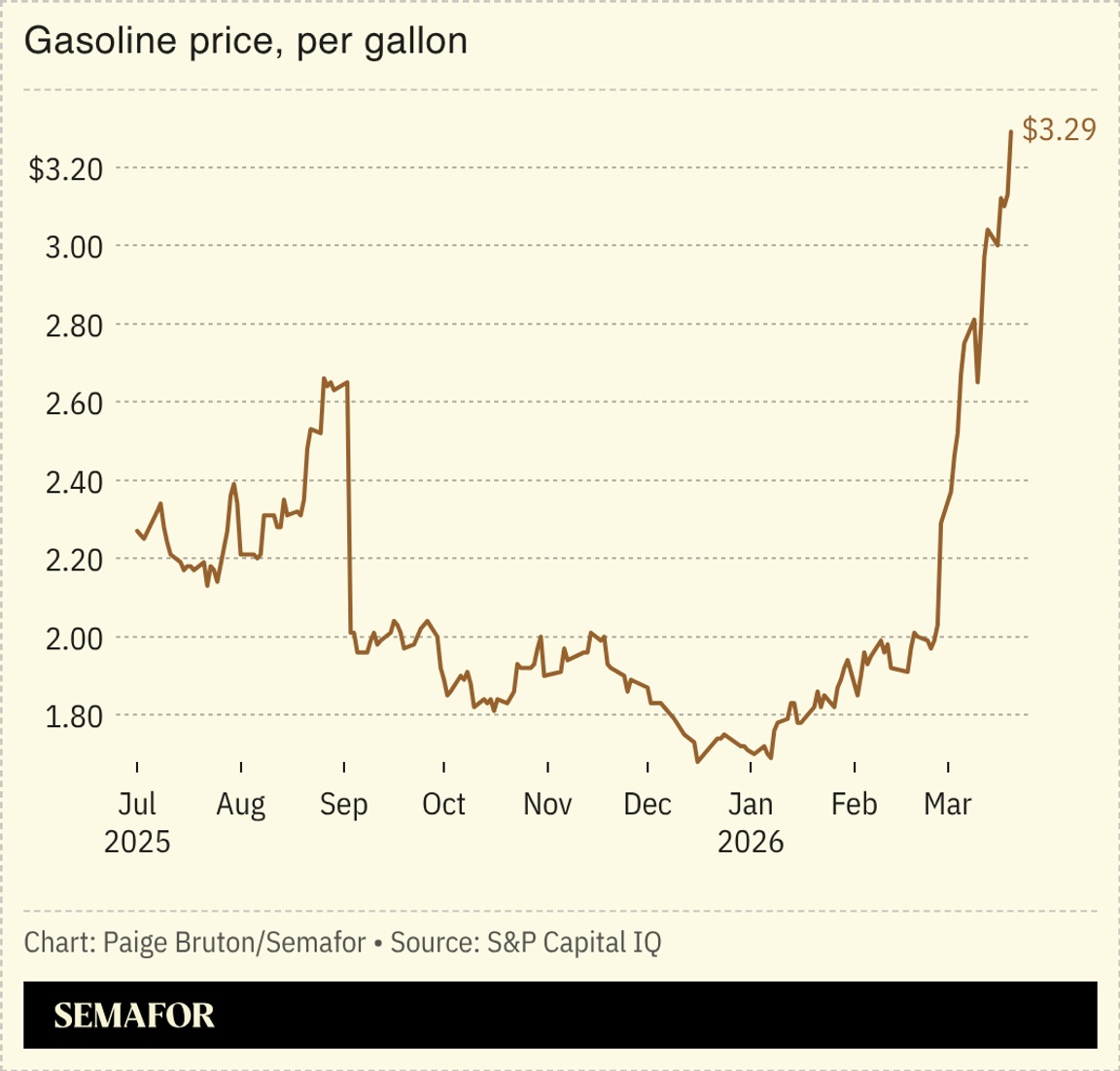 The world’s top energy officials and executives will meet in Houston this week to chart a path through the massive energy crisis that the Iran war has created. First up on the program today at the CERAWeek conference will be Energy Secretary Chris Wright. His mandate will be reassuring US consumers about the trajectory of their energy bills — gasoline is now nearly $4 per gallon on average nationwide, the highest level since 2023. But he’s also trying to persuade Big Oil CEOs to tune out capex-averse shareholders and mount a drilling push to offset disrupted supplies from the Gulf. And Wright will need to explain how the administration’s latest emergency measure to keep oil flowing, a temporary sanctions waiver on Iran itself, won’t undermine US military objectives. On the conference sidelines, expect plenty of chatter about AI and the overall electricity supply crunch. — Tim McDonnell |
|
Senate tries frantically to reopen DHS |
 Annabelle Gordon/Reuters Annabelle Gordon/ReutersLong airport security lines, an impending recess, and today’s confirmation of Markwayne Mullin as Homeland Security secretary are driving urgent Senate talks to reopen the department. But Republicans are split on whether to continue negotiating with Democrats on immigration enforcement or fund the rest of DHS, leaving ICE and CBP for later. “We should surprise ourselves and do something intelligent,” said Kennedy, who supports the latter. Senate Appropriations Chair Susan Collins, R-Maine, said that would curtail DHS investigations into child trafficking and drug smuggling. She wants Democrats to reengage with the White House; Sen. Patty Murray, D-Wash., offered to meet this morning. Sen. Catherine Cortez Masto, D-Nev., told Semafor judicial warrants and masks are unresolved, but surmised: “Conversations are happening, and that’s good.” Senate Majority Leader John Thune’s view: “There are lots of ideas swirling right now.” |
|
Fink: ‘Self-reliance is costly’ |
 Kylie Cooper/Reuters Kylie Cooper/ReutersGlobal economies will require investors to stop seeking financial profits around the world and deploy more money at home, BlackRock CEO Larry Fink wrote in his annual letter to shareholders, Semafor’s Liz Hoffman reports. “Self-reliance is costly,” Fink wrote in a dispatch closely read across the financial world. “There’s a natural logic to making sure more of [the money] comes from domestic investors.” Building out AI, energy production, and national defense will cost more than debt-strapped governments can pay for, and bank savings won’t be enough, Fink said. He said private investment will fill the gap and suggested that governments explore ways to nudge more of that money to stay local. The world Fink describes, as Liz explains, is a less efficient and more expensive one. It adds redundancy and moves economic activity away from the lowest-cost providers. |
|
Dems demand FCC probe of WBD deal |
 Mike Blake/Reuters Mike Blake/ReutersA group of Senate Democrats is demanding that FCC Chair Brendan Carr probe the foreign money funding Paramount’s planned takeover of Warner Bros. Discovery, Semafor’s Rohan Goswami scoops. “This constellation of foreign investment from China and from Gulf states, with complex and sometimes competing relationships with the United States, demands rigorous, not perfunctory, review,” the Democrats, led by New Jersey Sen. Cory Booker, wrote to Carr. About $24 billion of that comes from Abu Dhabi, Qatari, and Saudi sovereign wealth funds, and the deal’s current structure prevents them from exercising influence over the governance or management of the combined company. But their sizable equity checks are worrying lawmakers, and investors in recent days have fretted about the footing of Paramount’s bid. While US federal antitrust regulators have signaled a likely lack of significant opposition to the deal, Paramount will still face a review in Europe. |
|
Trump to tout law and order in Memphis |
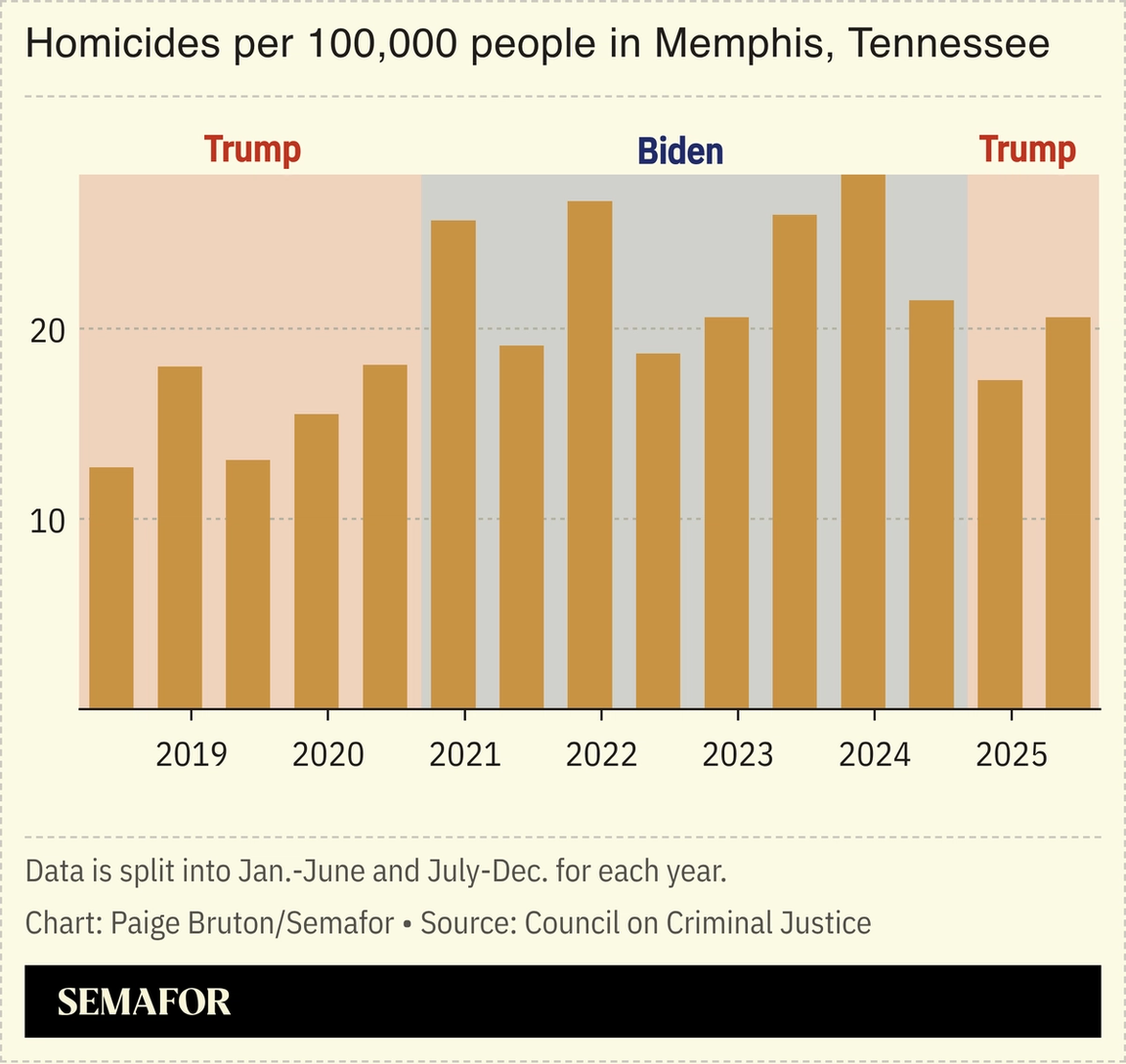 Trump is heading to Memphis, Tenn., today to highlight the ongoing efforts of a crime task force spearheaded by the administration. Last September, the president established the Memphis Safe Task Force, which brought together state and federal agencies to address crime in the city — and the White House is touting more than 7,200 arrests since the program started. The visit will be a throwback to Trump’s 2024 campaign, where his focus on crime in blue cities helped propel him to a second term. It suggests Trump may be looking for a way to regain a positive “tough on crime” image after backlash to aggressive immigration enforcement in Minnesota and elsewhere. And the trip signals the administration’s interest in further highlighting Trump’s domestic agenda as the GOP barrels toward the midterms — and as his foreign policy continues to dominate the conversation. — Shelby Talcott |
|
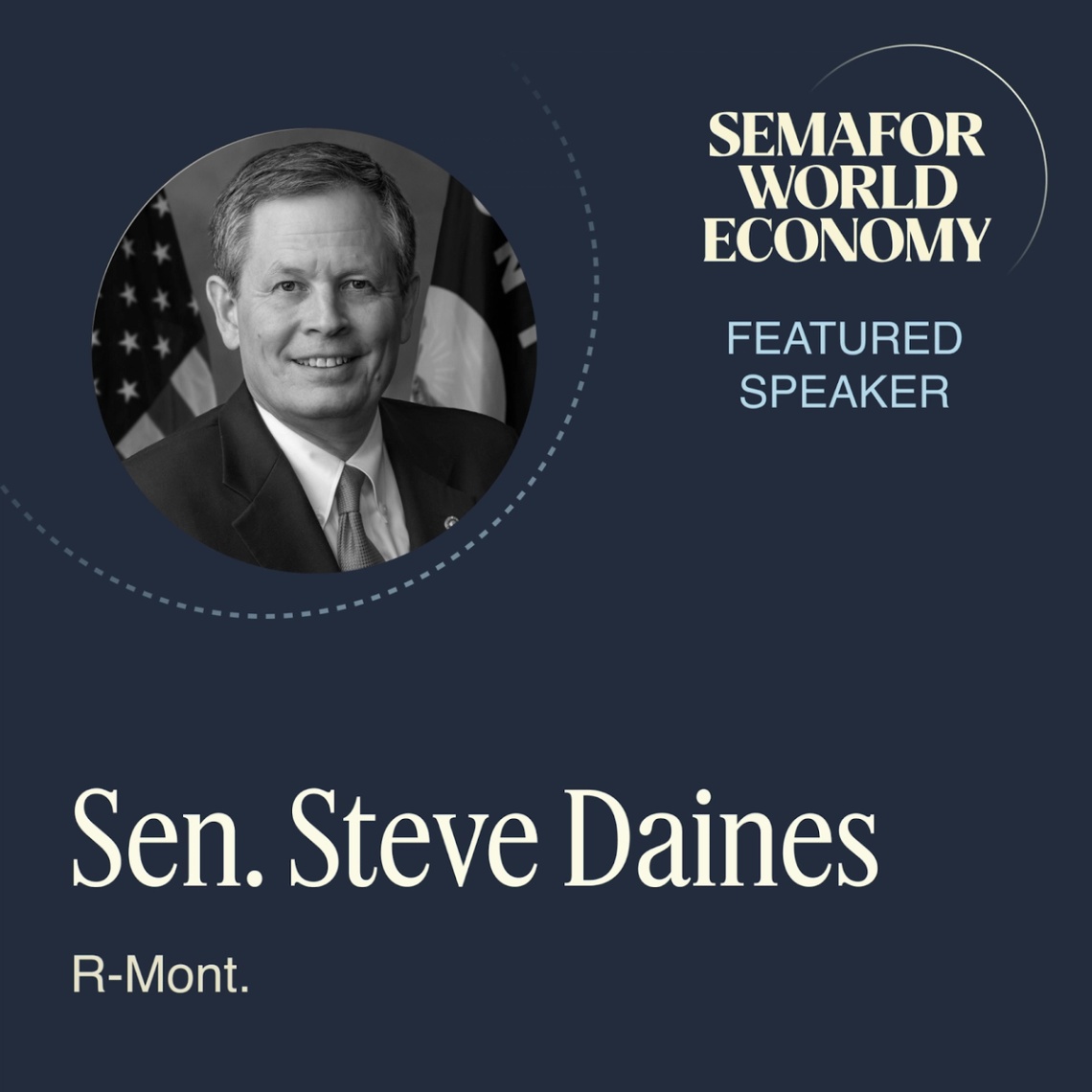 This April, Sen. Steve Daines, R-Mont., will join global leaders at Semafor World Economy — the largest convening of top global CEOs and government officials in the United States — for conversations with Semafor editors on the forces shaping global markets, emerging technologies, and geopolitics. See the full lineup of speakers, including Global Advisory Board members, Fortune 500 CEOs, and top elected officials from the US and across the G20 here. Applications for Semafor World Economy Principals are now open — apply now. |
|
Blindspot: Ábrego and Orbán |
 Stories that are being largely ignored by either left-leaning or right-leaning outlets, curated with help from our partners at Ground News. What the Left isn’t reading: The Trump administration asked a judge to let it deport Kilmar Ábrego García to Liberia, a country to which he has no ties. What the Right isn’t reading: Hungarian Prime Minister Viktor Orbán’s foreign minister regularly gave his Russian counterpart “live reports” on the contents of EU Commission meetings, The Washington Post reported. |
|
|


