| | The world’s top energy officials and executives will meet in Houston this week to chart a path throu͏ ͏ ͏ ͏ ͏ ͏ |
| |  | | | CERAWeek Special Edition |
| |
|
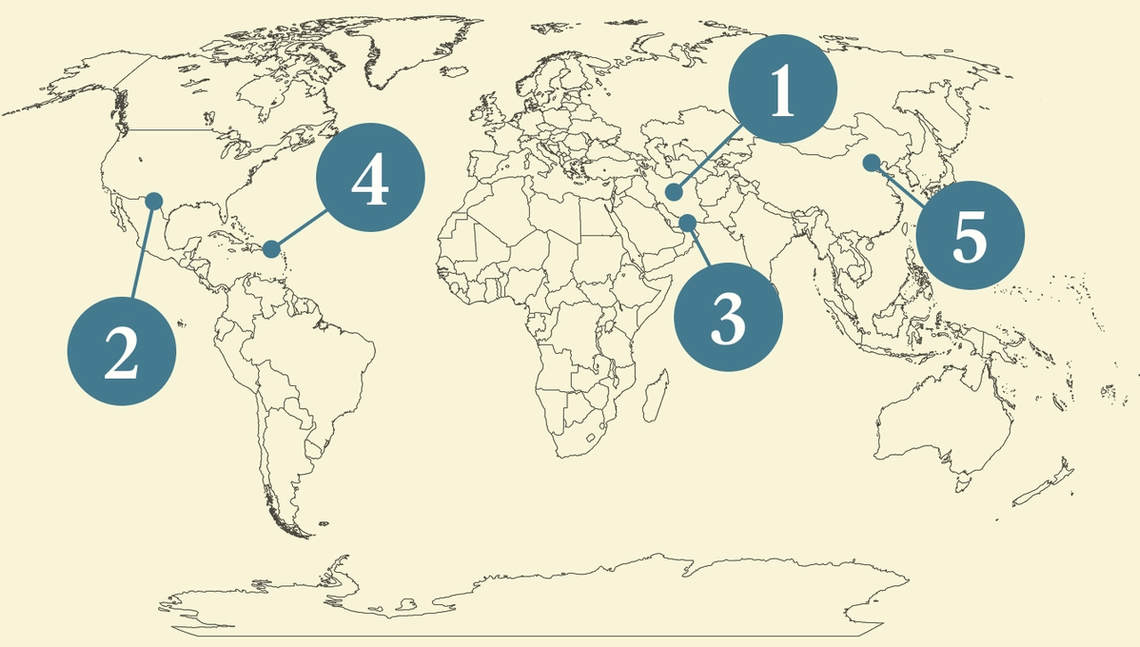 - Power plants under threat
- Upside for shale
- Chip risk
- Grid risk for US bases
- Battery boom
 Climate protestors storm CERAWeek, and Iraq declares force majeure. |
|
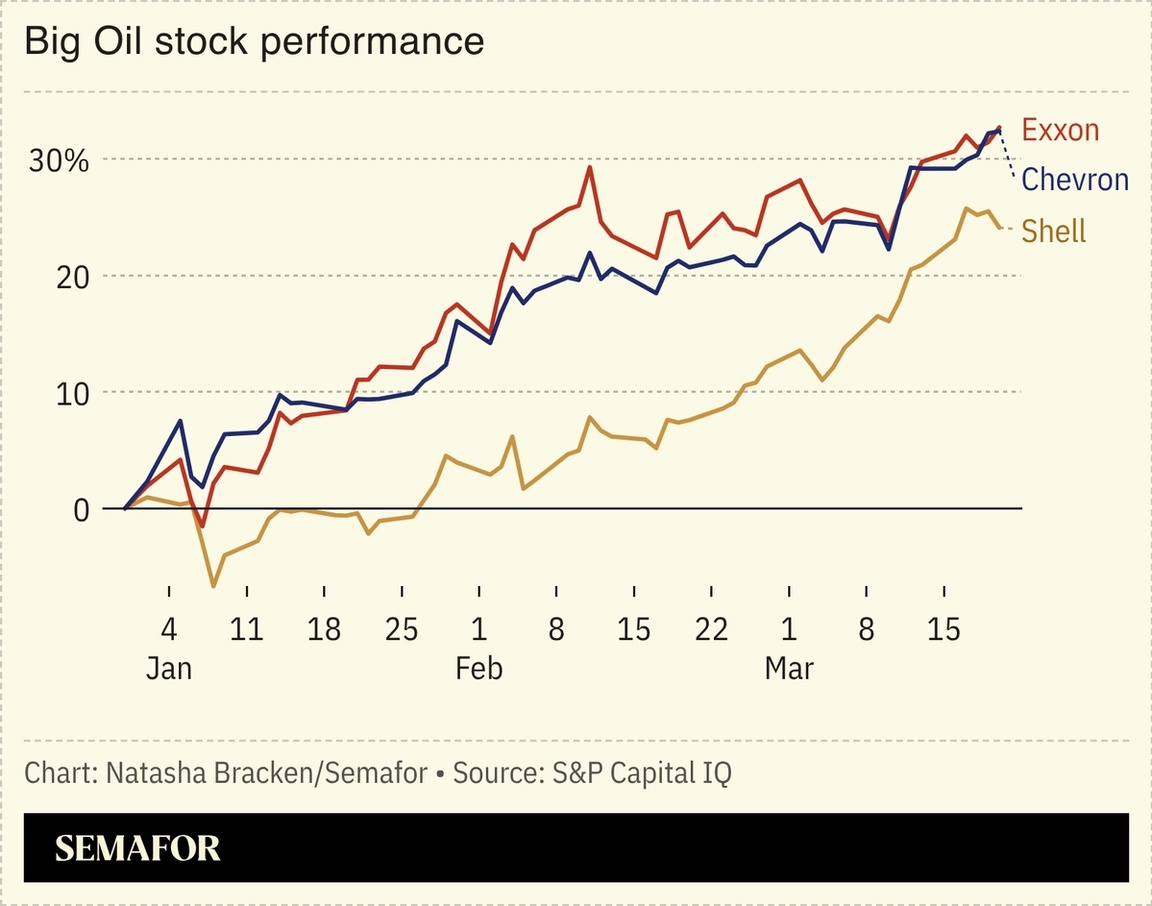
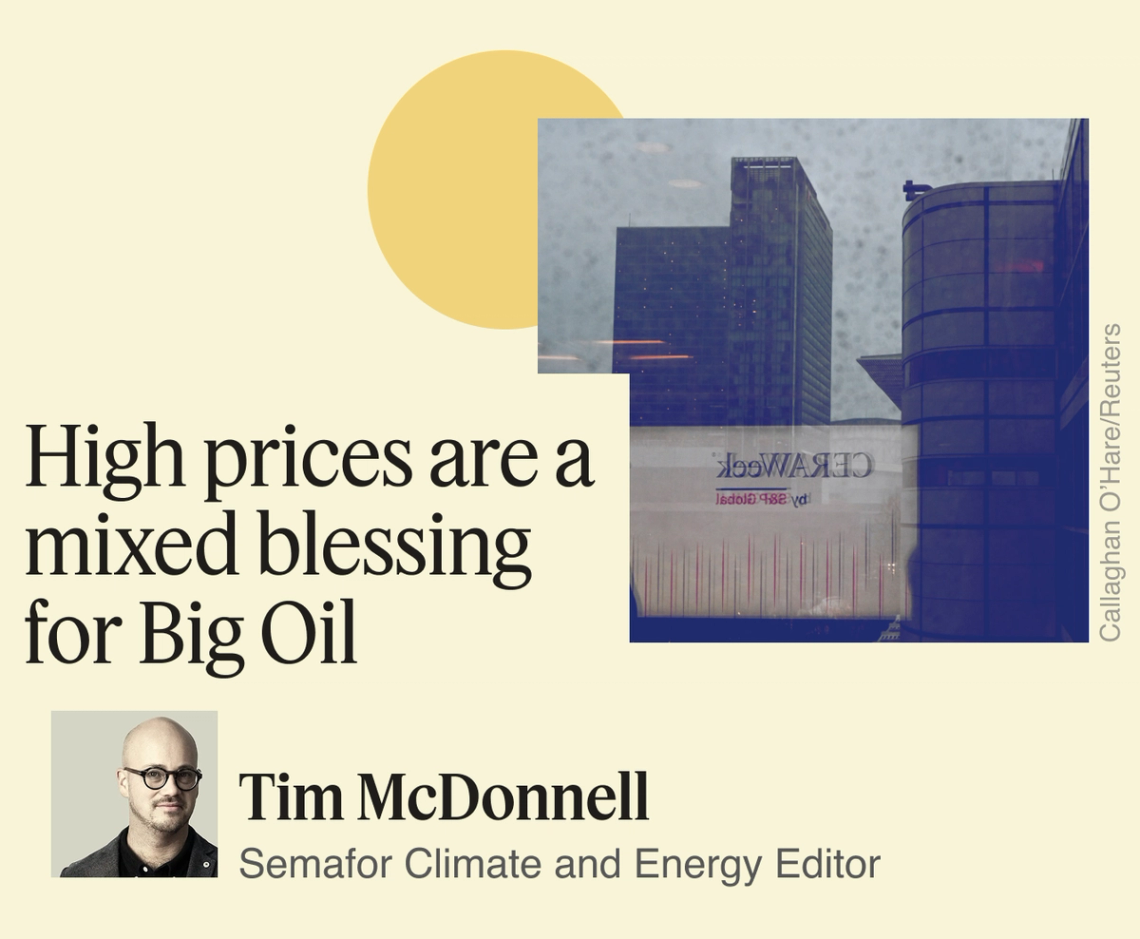 The world’s top energy officials and executives will meet in Houston this week to chart a path through the biggest oil and gas crisis in history. US Energy Secretary Chris Wright will in his remarks today need to telegraph a reassuring message to domestic consumers about the trajectory of their energy bills — gasoline is now at its highest level since 2023 — while also pitching Big Oil CEOs on why they should tune out their capex-averse shareholders and put their weight behind an all-out drilling push to offset disrupted supplies from the Gulf. And he’ll need to explain how the administration’s latest emergency measure to keep oil flowing, a temporary sanctions waiver on Iran itself, won’t undermine its military objectives. Wright’s myriad challenges point to how delicate the situation in Iran is for the global oil and gas industry. Needless to say, it’s a massive problem for producers in the Gulf, as well as foreign firms with assets there, which includes most of the majors. US companies will benefit from the price spike in the near term, but for the big producers, prices this high could ultimately create more problems than they solve: Companies like ExxonMobil and Chevron are still highly profitable at much lower prices, and could now run into more competition from smaller shale players with higher breakeven costs. Elevated prices also mean demand destruction; the International Energy Agency’s new roundup of solutions to the supply shock boils down to “use less oil.” And if companies do jump in to close the gap, they could be left with stranded assets when the price dips back down. Still, extreme price volatility is as old as the industry itself, and nothing the CEOs in Houston this week haven’t been through before. Up until a few weeks ago, the consensus wisdom among industry watchers was that global oil and gas markets were going to be oversupplied for the next few years. When I attended CERAWeek last year, Exxon’s shale boss told me he was focused on how to stay competitive with prices hitting multi-year lows. That’s all obviously out the window now. Drop me a line if you’re around the Hilton Americas this week and we can get a coffee. |
|
Power plants under threat |
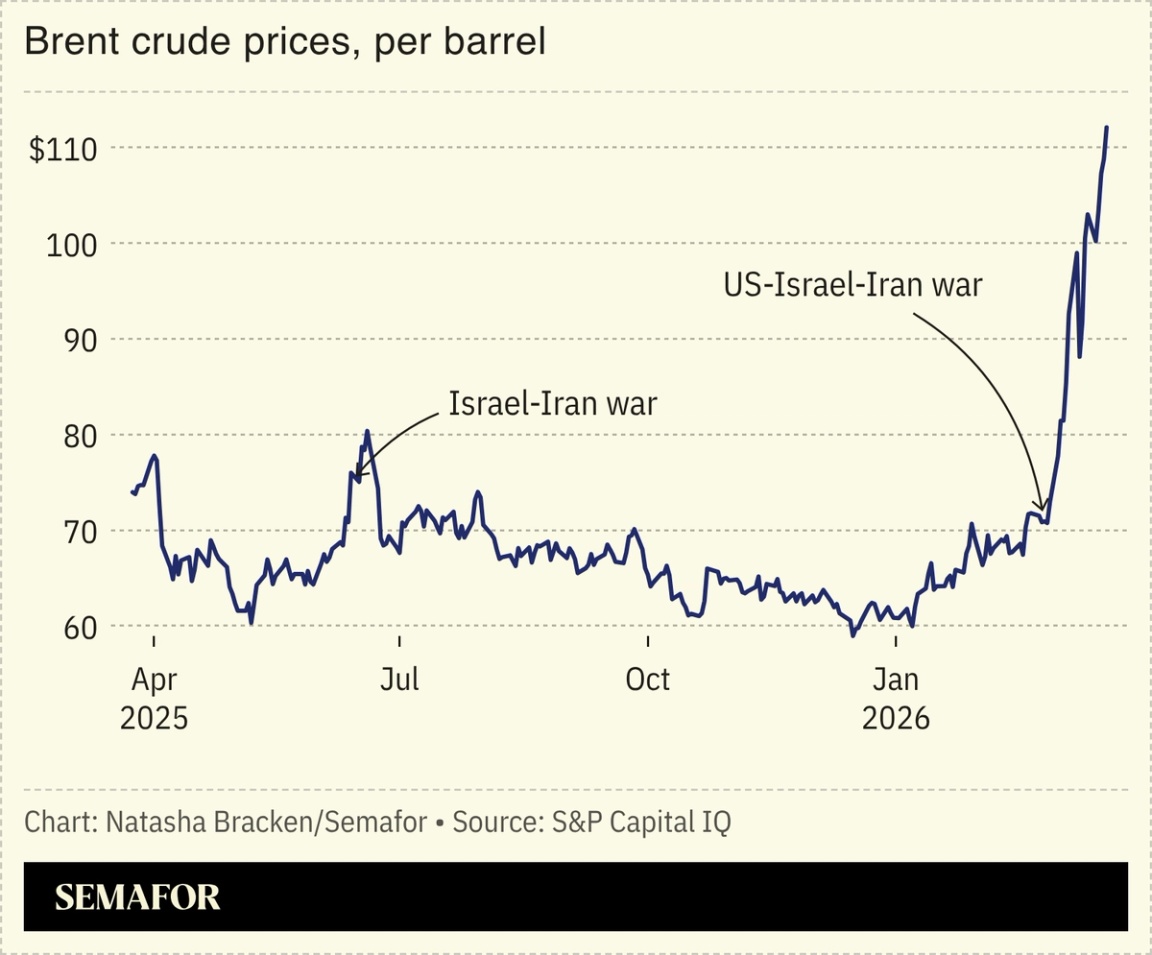 Oil prices plummeted after US President Donald Trump said he had ordered a five-day suspension to any potential strikes against Iranian power plants and energy infrastructure, underscoring how the weeks-long war has driven extreme price swings. Tehran earlier threatened to completely close the Strait of Hormuz, target power plants in the region, and mine maritime routes across the Gulf if its coastal areas were targeted. Trump’s latest post — following what he described as “good and productive conversations” with Iranian authorities — came after he threatened to “obliterate” Iran’s power plants if the country did not fully reopen the strait by 23:44 GMT today. The head of the International Energy Agency said the current crisis was akin to the 1970s oil shock and the fallout from Russia’s invasion of Ukraine combined, while Goldman Sachs said prior to Trump’s post that it projected that oil flows through the strait would remain at 5% of normal levels for six weeks before a slow recovery. Saudi Arabia, meanwhile, forecasts that oil prices will soar past $180 a barrel if disruptions persist until late April. |
|
 Reduced oil flows from the Gulf could have some upsides for more nimble US shale producers, as a projected glut in oil supplies quickly evaporates. Analysis by JPMorgan suggests US shale companies and Canadian oil sands producers could emerge as “relative winners” as oil consumers seek alternative supplies in stable economies with secure supply chains outside the Middle East. Rystad Energy agrees there is a “theoretical upside potential in the short-term.” But the industry, which drilled itself into bankruptcy in the 2010s, has learnt lessons the hard way and is reluctant to ramp up production only to see prices fall as US President Donald Trump eyes the midterm elections in November. The number of wells operators could bring online quickly is also limited, adds Rystad Energy. |
|
 Florence Lo/Illustration/File Photo/Reuters Florence Lo/Illustration/File Photo/ReutersThe war in Iran could soon disrupt the AI supply chain, upending the prospects for East Asian firms that drive chip manufacturing but which rely on the Middle East for energy imports. Two major South Korean companies dominate memory chip production, while Taiwan’s TSMC makes 90% of advanced semiconductors; both places depend heavily on fossil fuel imports through the Strait of Hormuz. Much of the critical materials needed for chip manufacturing, including helium, sulphur, and bromine, likewise transit the strait. Abundant US natural gas could help cushion the fossil fuel shock for Americans, but a chunk of it will be needed to help Europe and Asia offset lost LNG imports, ultimately driving up domestic energy prices, which already account for half of data center operating costs. For at least a little while, South Korea and Taiwan can rely on their stockpiles, but “the longer the Strait of Hormuz remains closed, the deeper the fallout will be, the Financial Times wrote. |
|
| |  | Tim McDonnell |
| |
 Marco Bello/Reuters Marco Bello/ReutersUS President Donald Trump’s security strategy for the Western hemisphere — which has already seen him unseat Venezuela’s leader and threaten to overthrow Cuba’s regime — is tangled up in a legal battle over Puerto Rico’s electricity grid. At least 11 projects aimed at improving power reliability for two US military bases on the island — both of which played a role in the capture of Nicolás Maduro and are expected to expand as part of a Pentagon effort to strengthen the US military’s presence in the Caribbean — have been frozen in early planning stages or suspended, according to public filings reviewed by Semafor. The suspended projects, which the territory’s top energy official blocked over alleged permitting “deficiencies,” are among a total of more than 200 grid upgrades across Puerto Rico that are on ice amidst disputes with the private utility that manages the grid. The situation illustrates that the notoriously red-tape-bound grid management process — bain of investors, permanent headache of lawmakers, driver of higher power prices — can also be a vulnerability for national security, at a time when grids everywhere are increasingly at risk from physical and digital attacks. “Any delay in grid investments tied to areas like [the two bases] is a serious concern,” Rep. Pablo Hernández (D), the territory’s nonvoting member of Congress, told Semafor. “A reliable power system is not just an economic issue, it’s a national security issue.” |
|
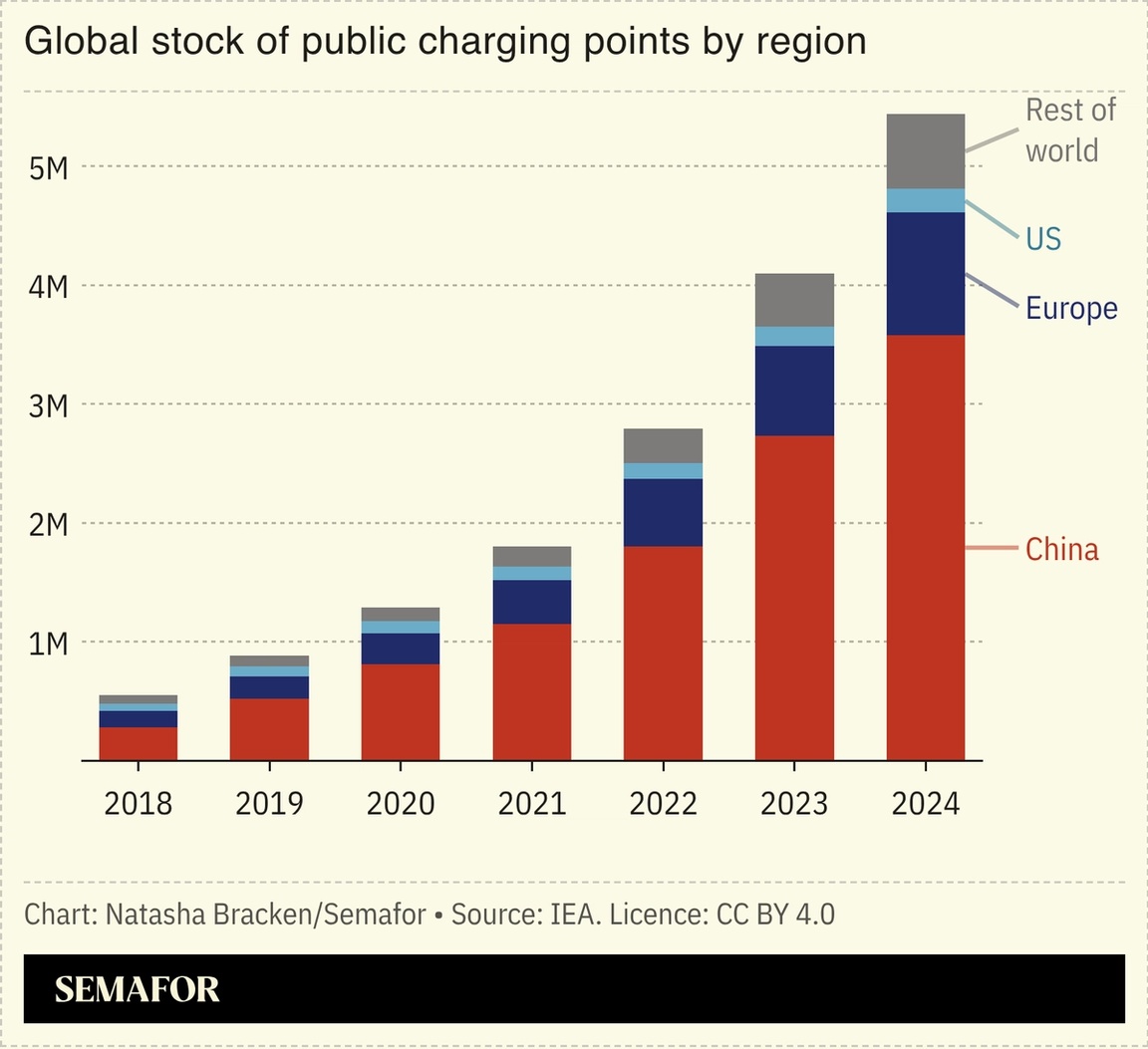 The market capitalization of China’s top battery manufacturers has soared by $70 billion since the start of the Iran war, as investors predict the conflict will boost clean energy growth. BYD, CATL, and Sungrow have all outperformed global oil majors since the conflict began, the Financial Times noted; batteries are vital to smooth out the flow of intermittent renewable energy. Countries are expanding their investment in renewables to insulate from future energy shocks. The battery giants are also making rapid technological strides: BYD recently upgraded its fastest chargers to provide 600 miles (966 kilometers) of range in nine minutes, four times the speed of a typical US charger. Thousands are already installed in China and Europe. |
|
 New Energy- China rolled out a three-year action plan to drive energy efficiency for major industrial equipment and processes such as electric motors and electrolysis hydrogen production.
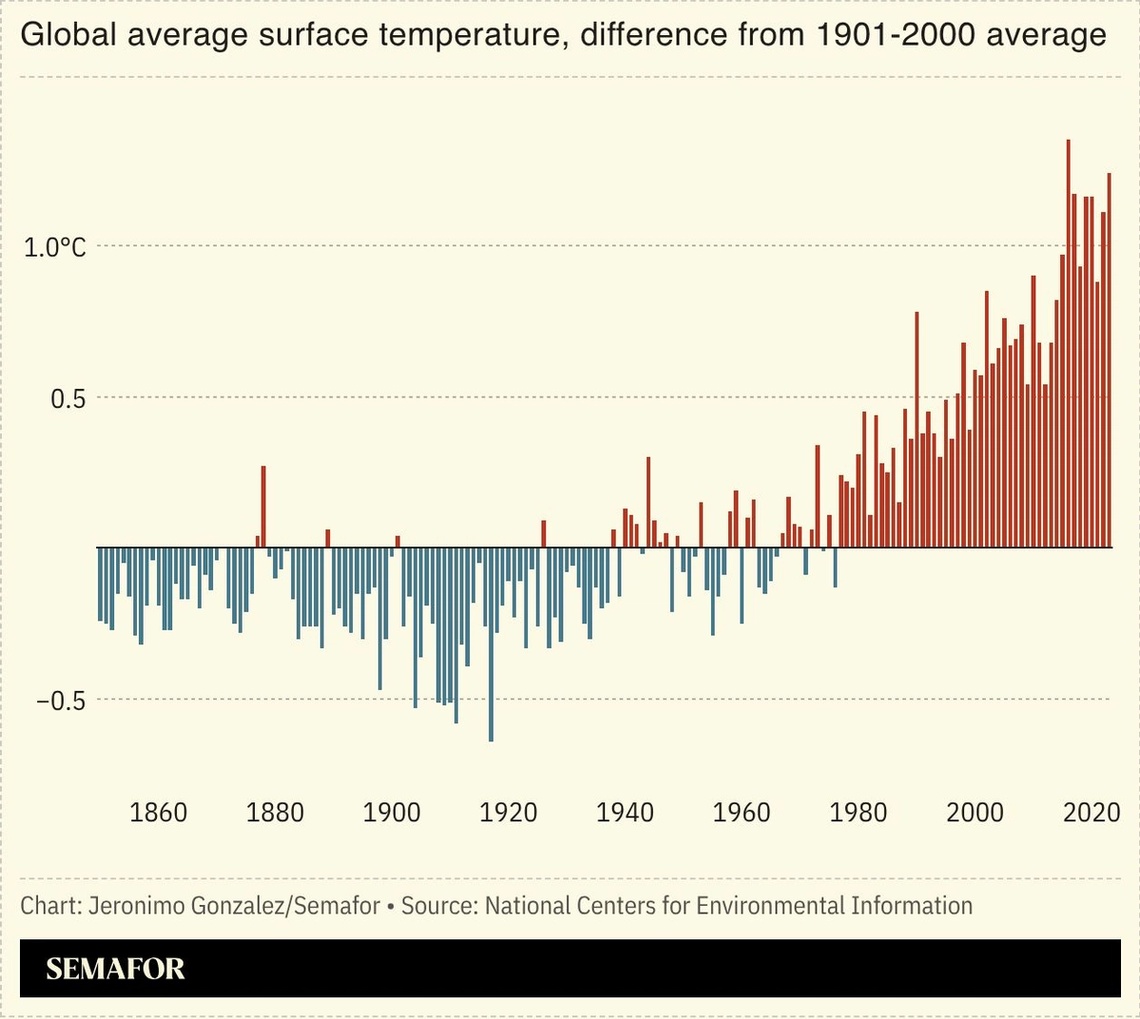
Fossil Fuels- The last 11 years were the hottest ever recorded as the world continues to burn climate-warming fossil fuels. The World Meteorological Organization warned that rising greenhouse gases in the atmosphere is increasing the Earth’s energy imbalance — the rate at which energy enters and leaves the Earth system.
 - Iraq has declared force majeure on all oilfields developed by foreign companies as Iran maintains its chokehold on the Strait of Hormuz and storage capacity has reached its limits, halting most of the country’s crude exports.
- An Iranian missile strike on Shell’s “crown jewel” gas plant in Qatar could leave the company facing a $750 million hit.
- Australia’s New South Wales will ban new coal mines to reduce emissions and meet its net zero goal, the state government said, adding the ban won’t affect the expansion of existing projects.
Finance- Online prediction markets are increasingly betting on future energy and climate shocks. Last year, $239 million was traded on prediction platform Kalshi’s climate markets with trading expected to grow to more than $1.2 billion in 2026, according to the company.
Minerals & MiningEVs- Record numbers of customers are visiting BYD showrooms across Asia as drivers seek to switch to EVs amid soaring oil prices.
- Meanwhile, Ford, Honda, Mercedes-Benz, Rolls-Royce, and Stellantis are among 12 global carmakers to roll back their EV targets amid ongoing demand for combustion engine vehicles and a reduction in supportive policies in the US and Europe.
|
|
Shiv Srivastava, policy director of the advocacy group Fenceline Watch, is among the organizers of a large protest scheduled outside the CERAWeek venue today. 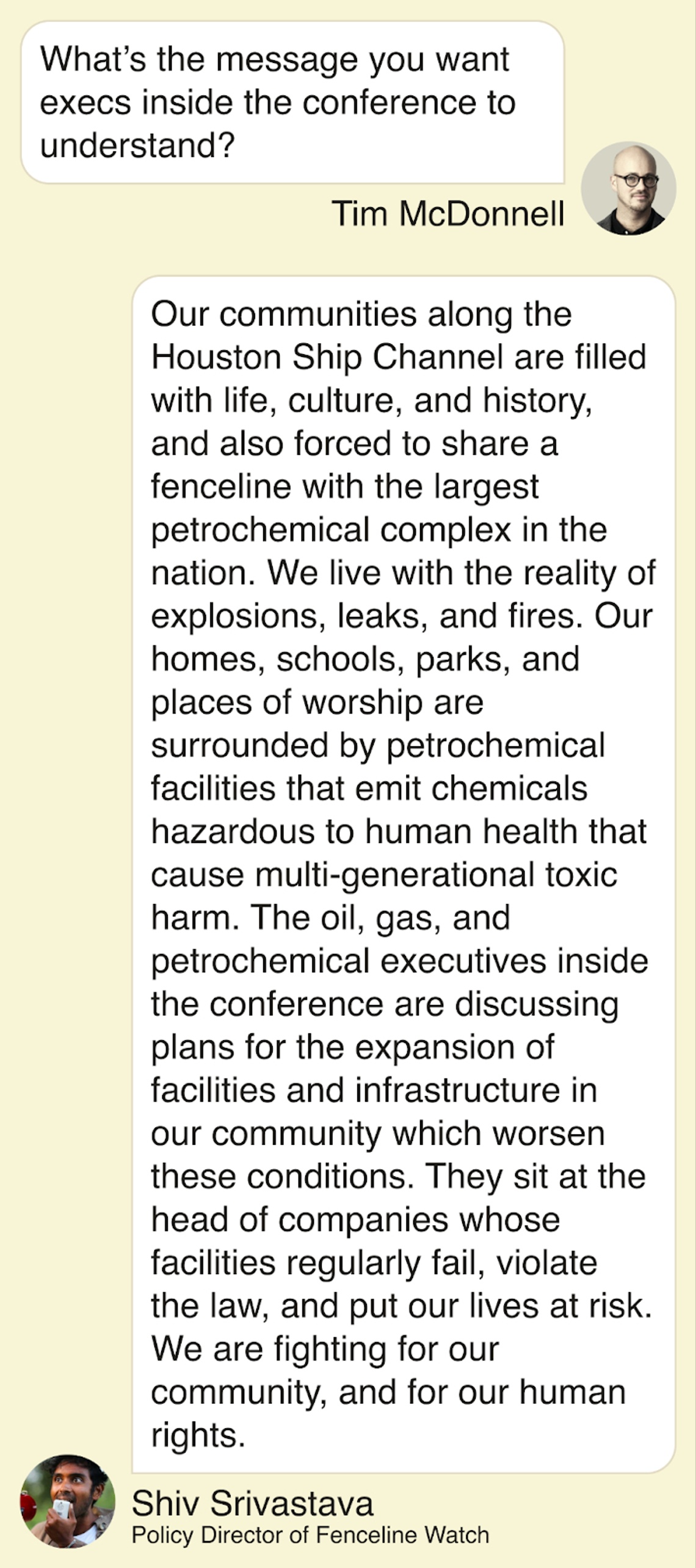 |
|
|


