The term book doctor contains an alluring promise: A wise professional closely examines your manuscript, diagnoses its ailments, and then sends the patient home with aftercare instructions and, hopefully, a road map to full health. The notion that some of the best book editors out there might be working independently, even covertly, only adds to the mystery around them. Imagine: A freelancer you’ve never heard of may be the behind-the-scenes whiz who cracked the plot or refined the prose of your favorite book without your even knowing it.
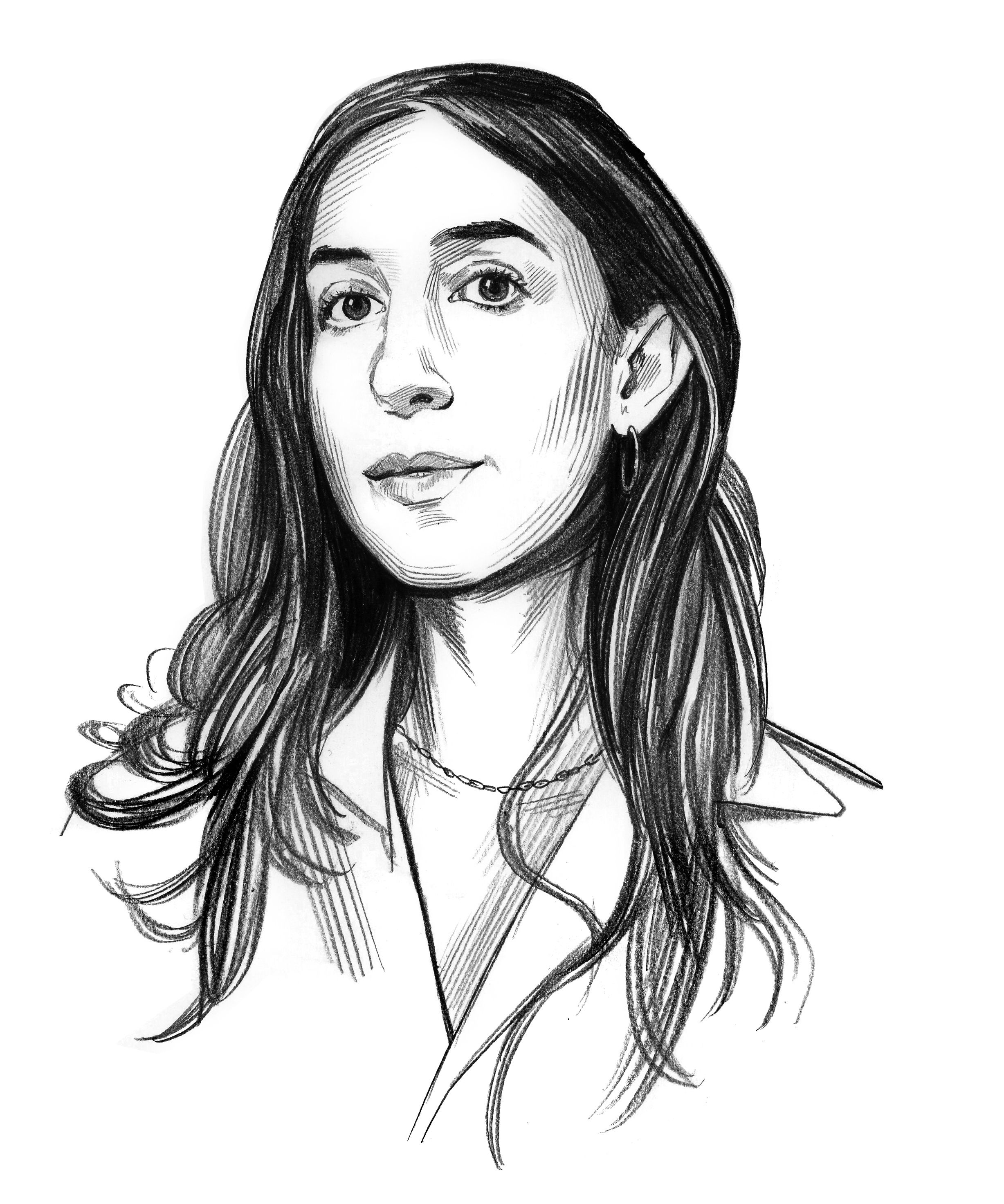
Though freelance book editors and book doctors are often referred to interchangeably, not all freelance editors provide book doctoring, the kind of intensive editing that might veer into ghostwriting territory. Carrie Frye, who for the last decade has earned a reputation for helping writers overcome blocks and polish their manuscripts, identifies as both book doctor and doula, depending on the services she’s providing. When New Yorker staffer Jia Tolentino was working on her New York Times best-selling collection, Trick Mirror, she turned to the Asheville-based freelance editor behind Black Cardigan Edit for extra editorial support generating nine essays while working her day job. Together they hatched a plan: Tolentino would file a draft of an essay every six weeks, and Frye would give it “a full scrub,” meaning a complete read with line edits. Once they had a full-length manuscript, Frye gave the whole thing a final read before Tolentino submitted the draft to her publisher’s editor.
Reporters and journalists make up the majority of the writers Frye works with since they are “often used to having an editor be more present in their work,” and Frye considers herself “handsy,” and collaborative. This fit the bill for Tolentino, who craved “someone deeply in my business and critiquing.” Tolentino said that she had no complaints about her Random House editor — she may not have ever thought to bring on a freelancer had it not been for her prior experience blogging for Frye. “She's doing things that are better than anything my brain could come up with, and it's seamless and natural,” Tolentino raved. Plus she wanted a tough edit.
People in the magazine business often joke that book editors don’t actually edit — or, at least, not nearly as intensively or collaboratively as they think they do. In-house book editors worth their salt may balk at the assertion, but the demands on their time are seemingly more intense than ever. Sources that I spoke to on all sides of the book industry mentioned that in-house editors today are increasingly expected to function as project managers — and that being pulled in so many directions may be preventing them from doing deep editing work.
“Plenty of editors don't edit. It is exhausting. They'll farm it out to their assistants or they just will do such a cursory look,” an editor at Simon & Schuster told me on the condition of anonymity. But she personally takes pride in helping an author shape a project and will devote several years to a nonfiction book, which is why she would “take it a little personally” if one of her authors enlisted outside help. But she considers overwork an industrywide problem. “Everyone’s workload is bonkers,” she said, her own included: “The last few months, I've been editing around the clock, on the weekends and in the evenings.” An anonymous big five editor affirmed that while many editors still do deep editorial work, there “are definitely editors who ghost their writers or do edit but turn it in three months late.”
Unlike peers of her caliber, Frye did not begin her career in-house before going freelance. In 2010, she was hired as managing editor at the Awl, the late, beloved blog, where she met some of her first freelance clients, including Tolentino. Like Trick Mirror, the majority of projects Frye takes on are nonfiction books sold on proposal by journalists on deadline to deliver a manuscript and who have their advance money in hand, which is key, because her services range from a “revision blueprint,” the fee for which starts at $9,000, to the “full scrub” that Tolentino got. Other recent Black Cardigan clients include The Paris Review’s new online editor Tarpley Hitt, New Yorker staffer Lauren Collins, Oscar-nominated filmmaker Julian Brave NoiseCat, the musician Neko Case, and many more whose names Frye’s confidentiality policy prevents her from sharing — unless the author chooses to rave about her in interviews or on her website. When I spoke to Frye earlier this month, she told me that she was at her maximum workload: twenty active projects, including a “really beautiful but massively researched nonfiction book” that she’s been working on for five years.
Some freelance book editors start in-house and build their own businesses in response to a changing or tumultuous publishing landscape. Anne Horowitz has been combining copyediting gigs for houses and part-time editing for an agent with freelance developmental editing since she was laid off from Soft Skull in 2010 with the closure of its New York office. Leslie Wells, former executive editor at Hyperion Adult, spent three decades working in New York publishing houses before starting her own business after Hyperion Adult folded. Since then, Wells has worked on memoirs with Candace Bushnell, Michael J. Fox, and Julie Andrews, alongside mysteries, literary fiction, and book-club fiction. Her current rate for an editorial memo on a complete manuscript starts at $2,000 but can vary with word count. The biggest difference between freelancing and working in-house? Flexibility and focus. “In-house, you're in meetings a lot of times. There are tons of submissions from agents. You have so many balls in the air,” said Wells. Before going freelance, Wells had up to 20 books a year — “plus you’re looking to acquire future projects. You’re working on past, present, and future all at the same time.” Now, Wells enjoys the fact that she can focus on one project at a time.
As Wells and current in-house editors explained, there are also occasions when the house may enlist a freelance editor for help, most commonly when a book’s original editor has left or a project must be turned around quickly. It can also happen when an in-house editor is too strapped for time to handle a particular edit — or when the writer has delivered a manuscript that diverges too much from their proposal.
“There are a lot of talented editors out there who don't have access to big-five infrastructure and get to use those skills toward the betterment of the entire literary ecosystem,” an anonymous big-five editor shared. He did wonder, though, whether writers using Reedsy — an online marketplace where aspiring and indie authors can shop for a freelance editor or book doctor — were wasting their money. “Young writers starting out should just have friends reading their work,” he said, “and there's no cheat code to getting a book deal.” Literary agent Kate McKean agreed that writers should not be hiring freelancers “to ‘fix’ their book,” as if it were a box to tick on the path to a sale.
Not all contracted authors who elect to use outside help do so because they are unhappy with their in-house feedback, though an anonymous agent affirmed that it’s not uncommon for magazine writers especially, who are used to a certain kind of collaborative back-and-forth, to be left wanting. “That's not often how book publishing works, even with the best editors,” she argued. Of course, some cases are more extreme than others. A first-time author with a nonfiction contract at a big five who spoke to me on the condition of anonymity considered bringing in a freelancer after receiving his editor’s response to a large section of his manuscript. He was hoping for feedback on ideas, but the most substantive note was a reminder to watch his word count. (He specified that after switching editors, he did eventually get more help from in-house.)
As long as publishers continue to produce books at their current rate, the cottage industry of freelance book editing isn’t going anywhere. “We're cutting on staff, but we're increasing volume, and so inevitably people are going to have to farm out the editing,” said a senior big-five editor. Last week, Publishers Weekly reported that the number of traditionally published books in 2025 increased 6.6 percent from the previous year. “The only answer people have come to for how to get more people to read is to put out more content and see if something sticks,” ventured the anonymous editor at Simon & Schuster. “It’s unfair because we just don't have the editorial, marketing, publicity, or sales capacity to sell this many books.” Perhaps the industry is in need of a health check too.