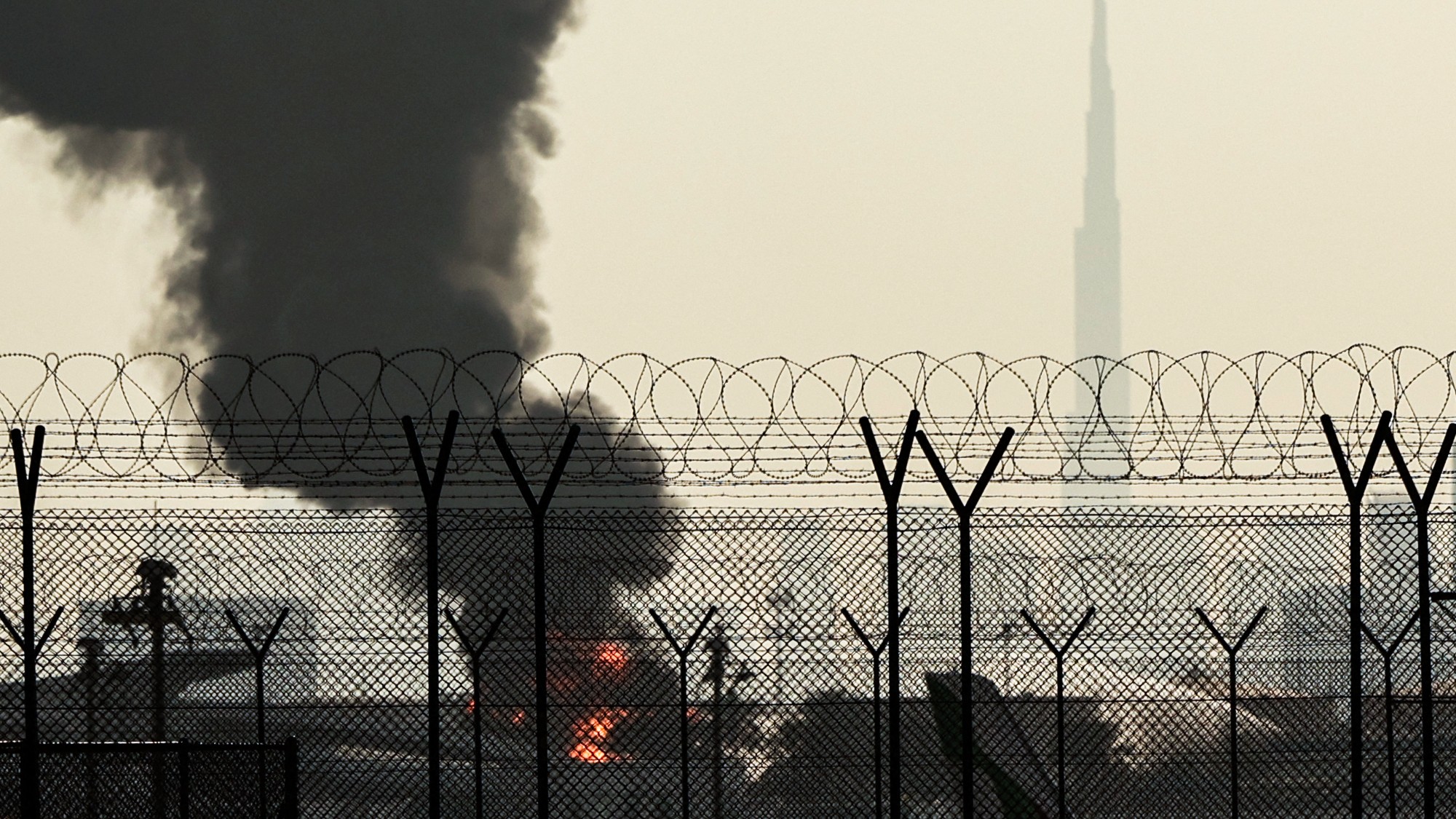
Weeks of violence across the Middle East have seen U.S. and Israeli forces bombard targets across Iran, Lebanon and Syria as Iranian armaments strike positions across Israel and the Persian Gulf at large. To date, those attacks have targeted not only American and Israeli assets but also those of host nations like Qatar and Saudi Arabia, forcing Iran’s regional neighbors to consider the once unimaginable: actively joining the currently binational Iranian campaign.
Iran’s “persistent attacks” have “disrupted” many Gulf State economies and “risk giving Tehran long-term leverage” over the oil-crucial Strait of Hormuz, said The Wall Street Journal. Gulf States are now “inching toward joining the fight” with operational support, but “don’t yet go as far as deploying their militaries openly.” The “attack against us is unjust,” said Turkish Foreign Minister Hakan Fidan at a regional summit last weekend, articulating Gulf State concerns. “We need to respond to it.”
Iran’s bombardments and Trump’s shifting wartime narratives are “forcing Gulf nations into a stark decision,” said NBC News. Iranian attacks on Qatari and Saudi gas and oil production facilities have “in particular angered Gulf allies,” prompting a “reassessment of how to deal with Tehran,” said Middle East Eye.
Still, while there remains “some frustration” among Gulf States over how the U.S. and Israel are conducting this war, there’s a “desire,” particularly in the United Arab Emirates, Saudi Arabia, Bahrain and Qatar, to see the conflict ended with Iran’s military power “sufficiently degraded to cease posing a threat to them,” said The Times of Israel. |