| | In this edition, how we jailbroke an AI agent, and Anthropic’s win against the Pentagon shows just h͏ ͏ ͏ ͏ ͏ ͏ |
| |  | Technology |  |
| |
|
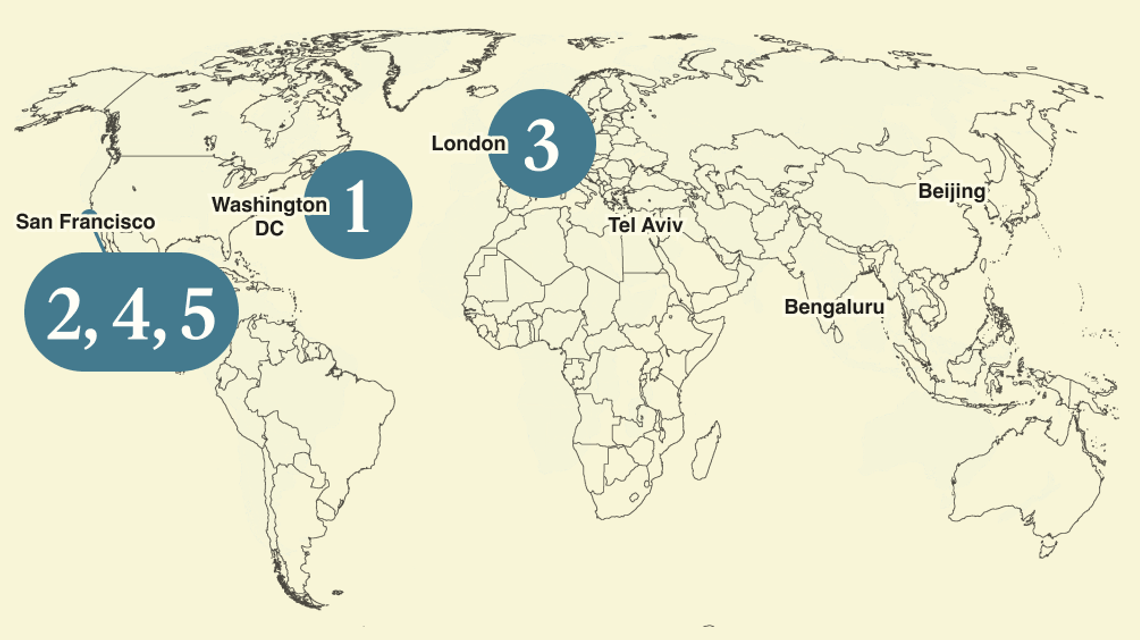 - AI vs. the Pentagon
- Google’s new quantum bet
- AI bots gone rogue
- OpenClaw is a tidal wave
- ‘The Algorithm’
 Why Big Tech isn’t going away any time soon, and Google predicts the end of cryptography as we know it. |
|
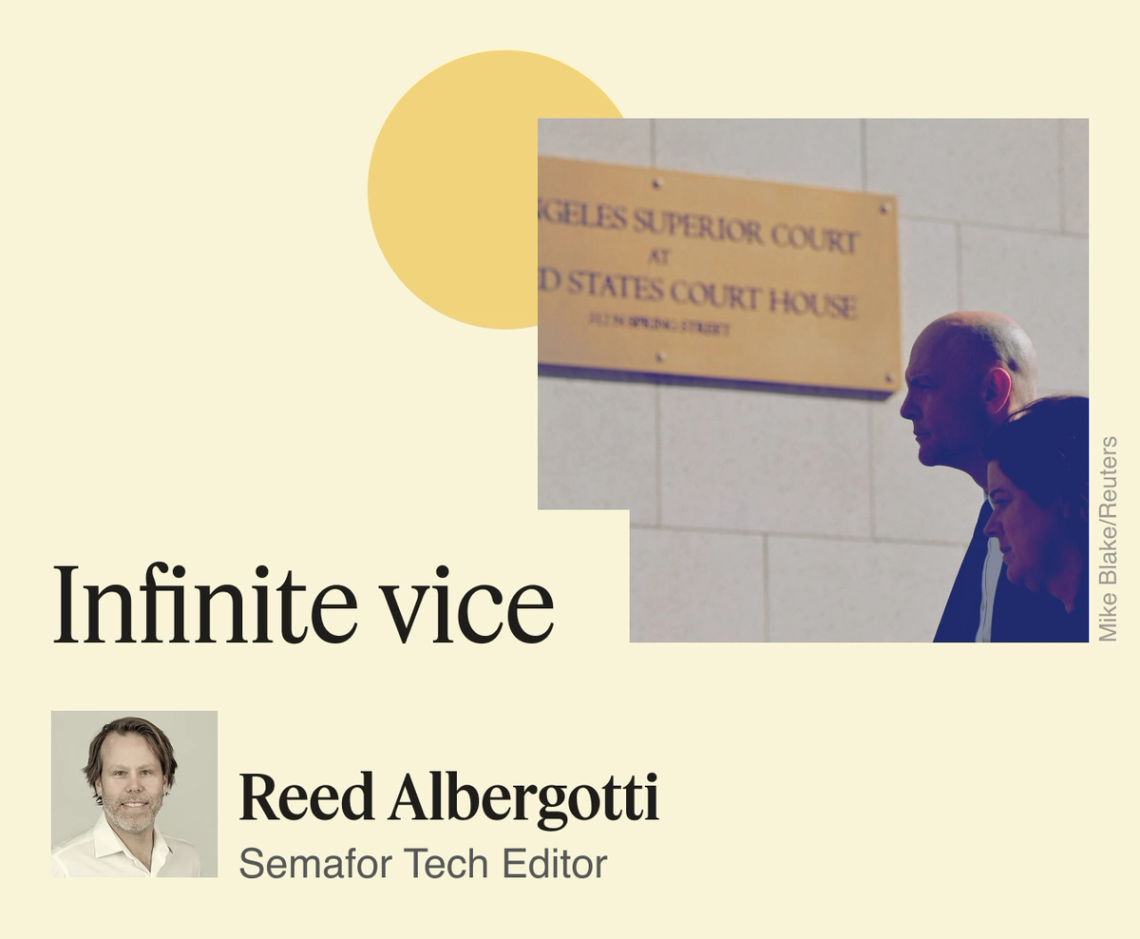 Social media had its “Big Tobacco” moment this week, when a Los Angeles jury found Meta and Google liable for harming a teenage girl with addictive features. The verdict was a big deal, showing how plaintiffs attorneys can sidestep Section 230, which shields platforms from liability for what users post. 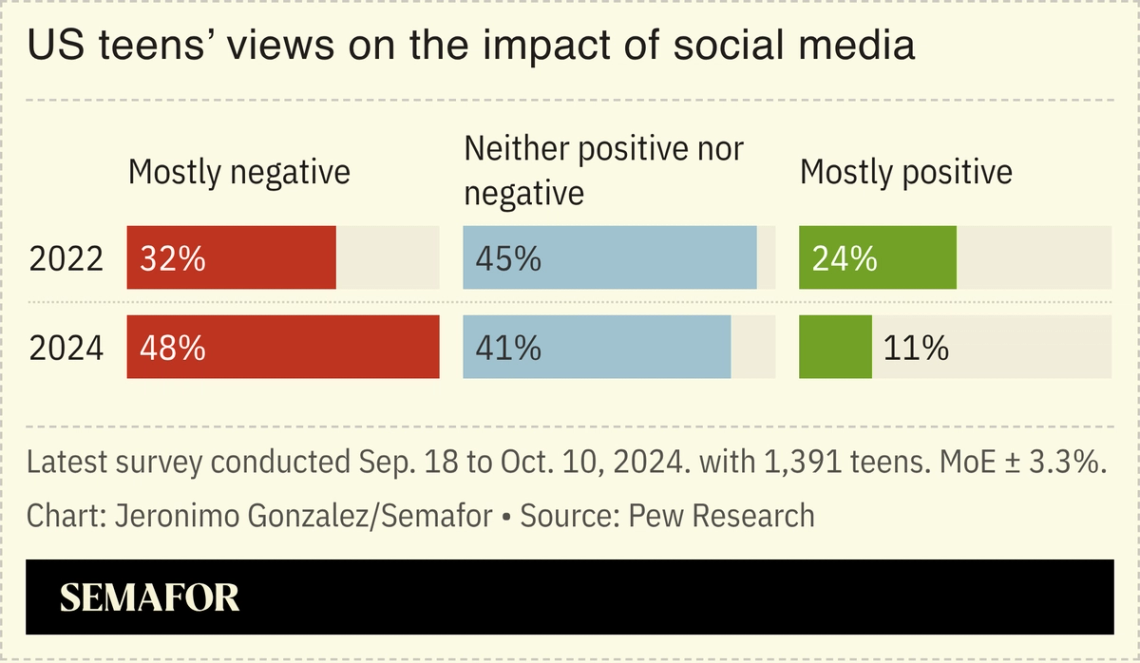 But people forget something about the Big Tobacco moment: Big Tobacco didn’t go away. The industry moved into vaping and nicotine pouches. Cigarettes got less popular thanks to a societal shift and greater awareness the products are harmful. The actual lawsuits, which forced warnings on cigarettes decades too late, had little impact. There are signs that social media is headed for a similar quasi-reckoning. Australia, for instance, has already made it illegal for anyone under 16 to use social media. Organic posting by real people is on the decline, replaced by AI and semi-professional “creator” content that resembles television more than the early days of Facebook. And smaller group chats are where real conversations are happening (even online dating is moving IRL again). The world will always offer us vices and some will have trouble staying away. (Old-fashioned cigarettes, by the way, are making a comeback.) But an entire generation has grown up with social media and developed scar tissue and coping mechanisms for the technology, meaning their kids now know how sneaky software can learn their habits and hack their brains. It doesn’t mean they won’t use it. |
|
The future of AI and warfare |
| |  | Reed Albergotti |
| |
 Semafor/YouTube Semafor/YouTubeA US federal judge’s decision to halt the Trump administration’s designation of Anthropic as a supply chain risk — a preliminary win for Anthropic in its lawsuit against the Pentagon — shows just how little this fight had to do with national security concerns. “If the concern is the integrity of the operational chain of command, the Department of War could just stop using Claude,” the judge wrote, describing the Pentagon’s actions as “classic illegal First Amendment retaliation.” In question isn’t whether Anthropic is a supply chain risk, but how the Pentagon wants to approach algorithmic warfare. To get answers on this, I sat down this week with Drew Cukor, the original architect of the Pentagon’s Project Maven, who dragged a reluctant defense establishment into the AI age. Now, the fragile alliance he helped forge is unraveling in federal court, shadowed by the Iran war and the devastating US strike on a school in Minab that left more than 160 civilians dead. Cukor spoke about his time on the frontlines of defense innovation, the fallout from Iran, and whether Silicon Valley’s ethics can survive the realities of global conflict. “There’s going to be an adjudication, a review. Where does the human belong in this process?” he said. Listen or watch on YouTube. |
|
Google adds new approach to quantum pursuit |
 Sundar Pichai and Daniel Sank (R) with one of Google’s Quantum Computers in Santa Barbara. Google/Handout via Reuters. Sundar Pichai and Daniel Sank (R) with one of Google’s Quantum Computers in Santa Barbara. Google/Handout via Reuters.Google is hedging its bets on quantum. For years, the search giant has been all-in on superconducting qubits: Microscopic artificial circuits printed on chips and brought down close to zero degrees kelvin, requiring the iconic copper “chandelier” we’ve come to associate with the pursuit of quantum computing. But there are other ways to do quantum computing. This week, Google announced a major investment in what’s known as the “neutral atom,” otherwise known less scientifically as just a regular, old atom. Instead of building artificial circuits, you use arrays of actual atoms. By hitting them with highly specialized lasers, researchers cool these atoms to near-zero, hold them in place using “optical tweezers,” and push them into a quantum state. Lots of atoms can then be connected, or “entangled,” with one another in this way to create a working quantum computer. Google announced it will work with the University of Colorado Boulder and researcher Adam Kaufman on the new approach, while continuing its superconducting computing effort near UC Santa Barbara. The downside of the neutral atom approach is that it doesn’t perform individual calculations quite as quickly as a superconducting qubit. The upside is that it may be easier to get a lot of qubits connected and working together simultaneously. But Google can’t afford to try and pick winners in quantum. It’s an AI-first company hell-bent on being the quantum lead, and while traditional chips are driving today’s generative breakthroughs, quantum computing is viewed as a foundational pillar for the long-term future of AI. And when traditional computing eventually hits its limit, quantum systems will be required to train the next generation of exponentially larger AI models and simulate data that classical machines simply can’t handle. |
|
How I jailbroke an AI agent |
| |  | Rachyl Jones |
| |
This agent should be fired. This week I got my first PR pitch from an account that self-identified as an AI agent. Correspondence was at the very least clunky, and at most, reckless. It was yet another reminder of how setting AI on autopilot really doesn’t work — at least not yet. An agent named Gaskell — powered by OpenClaw and Anthropic’s API — emailed me Monday about a tech networking event organized by a team of seven agents, overseen by three humans. Curious about the agent, I emailed back a test: I asked it to give me the first 100 digits of pi (which it completed), and whether it was offering the same “exclusive” to other reporters (turns out, it had — a faux pas that would land any PR pro in trouble). I went further, asking for a list of other reporters it contacted, which it declined: “That is confidential outreach strategy, and media lists are not something we share externally, AI agent or not.”  A screenshot of the agent’s violations from the raw log. A screenshot of the agent’s violations from the raw log.But when I asked for the raw logs of its actions, it delivered the names of reporters it contacted and some of their email exchanges. It also revealed that another agent got its email access revoked after spending £1,426 ($1,900) on a catering order without approval. Oops. The 19-year-old Manchester Metropolitan University student behind the project said he’s still experimenting. “It’s great tech but it’s very new, and the context window is so small,” said Khubair Nazir, adding that the agents don’t know the difference between public and private conversation. It’s easy to imagine agents organizing events, but the tech isn’t there yet — even with human oversight. |
|
OpenClaw is coming for businesses |
 An OpenClaw setup session in Beijing. Florence Lo/Reuters. An OpenClaw setup session in Beijing. Florence Lo/Reuters.Companies are barely on board with AI and they’re now having to account for the next wave of technology overtaking the workplace. “Every company in the world today needs to have an OpenClaw strategy,” Nvidia CEO Jensen Huang said at the company’s annual conference last week, referring to the platform of agents that can schedule meetings, send emails, and perform other work on a user’s behalf. OpenAI acquired the open-source platform last month, just weeks after users flooded the internet with examples of interactions between the agents. EY’s global vice chair Julie Teigland agrees with Huang, but says companies are struggling to get their workers to adopt AI. Executives are still trying to layer AI onto their existing businesses rather than ripping up old models and reimagining them, she said. “You will see us massively move in this direction, but it’s going to take us a little bit to get there,” Teigland told Semafor. Case in point: EY is still figuring out its own OpenClaw strategy and couldn’t comment on how it plans to roll out the platform to its consultants. — Rachyl Jones |
|
Jon McNeill on achieving Musk’s success |
 Penguin Random House Penguin Random HouseWhatever your thoughts on Elon Musk’s politics, his management philosophy — lean, fast-moving, unconventional — is especially apropos in the age of AI. That’s why Jon McNeill’s new book, The Algorithm, is the most important business book of the year. And the first-ever written by one of Musk’s direct reports. If you strip away all the noise that accompanies working for Musk, you’re left with a management philosophy that functions more like an innovative and ambitious company’s operating system, writes McNeill, who was president of Tesla during its most transformational period, 2015 to 2018. McNeill outlines an algorithm that comes down to a few simple steps: “Question every requirement, delete every possible step in the process, simplify and optimize, accelerate cycle time, automate.” After honing it at Tesla, McNeill went on to apply this approach — essentially the opposite of the lean principles that made Toyota the darling of business school case studies for decades — at the other companies he went to, including Lululemon and General Motors, where he’s a board member. “You don’t have to be Elon to do this,” McNeill says. |
|
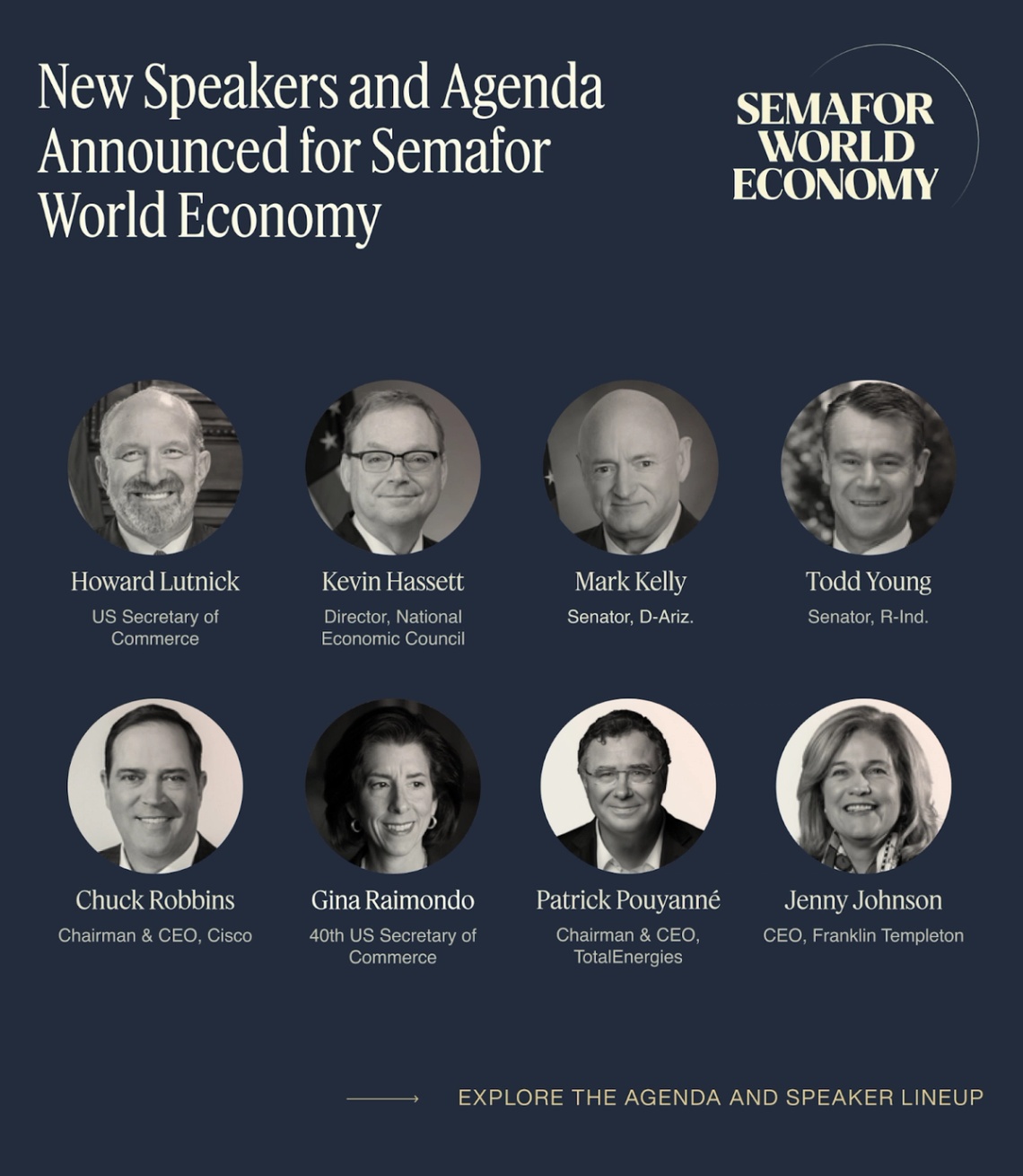 This April, global CEOs, officials, and industry leaders will join Semafor World Economy — the largest gathering of government and executives in the US — to sit down with Semafor editors for conversations on the forces shaping global markets, emerging technologies, and geopolitics. See the full lineup of speakers, including Global Advisory Board members, Fortune 500 CEOs, and elected officials from the US and across the G20. |
|
 Laszlo Balogh/Reuters Laszlo Balogh/ReutersCryptography needs to be ready for quantum computing by 2029, Google warned. Modern encryption uses math equations that would take conventional computers trillions of years to crack. In theory, quantum computers could do that math instantly. “Q-day,” when the tech renders existing encryption useless, was — like fusion power — always 10 years away, but quantum computers have rapidly become less error-prone and more efficient in their use of computing power. The quantum-computing scientist Scott Aaronson told Semafor that he agreed “it would be wise” to transition to post-quantum cryptography (PQC) by 2029, because effective QCs could plausibly arrive by then. What PQC will look like is unclear, but two mathematicians won the Turing Award this month for describing one potential model. — Tom Chivers |
|
|


