On the tram with Takaoka’s mayor, Marimekko’s 75th anniversary and Mius’s Kobe-style highball.
|
Monday 30/3/26
|

|
|
London
Paris
Zürich
Milan
Bangkok
Tokyo
Toronto
|
|
|
|

Good morning from Midori House, where we have just sent the May issue of Monocle to print and are still leafing through the beautiful April edition. For more news and views, tune in to Monocle Radio. Here’s what’s coming up in today’s Monocle Minute:
THE OPINION: Danish politics gets more complicated
FASHION: Marimekko’s 75th anniversary splash
DAILY TREAT: Mius’s Kobe-style highball in Hong Kong
FROM MONOCLE.COM: Riding to work with Takaoka’s mayor
|
|
Denmark’s politics is all a bit chaotic right now – but Danes like it that way
By Michael Booth
|

|
Following last week’s general elections, Danish lawmakers are locked in the routine negotiations that come with forming a coalition government. The closed-door talks are led by the kongelig undersøger or “royal investigator”, which sounds like a great pitch for a new detective series but is actually the party leader appointed by the king after receiving the most combined backing from other parties. Fans of the TV show Borgen will be familiar with the protocol.
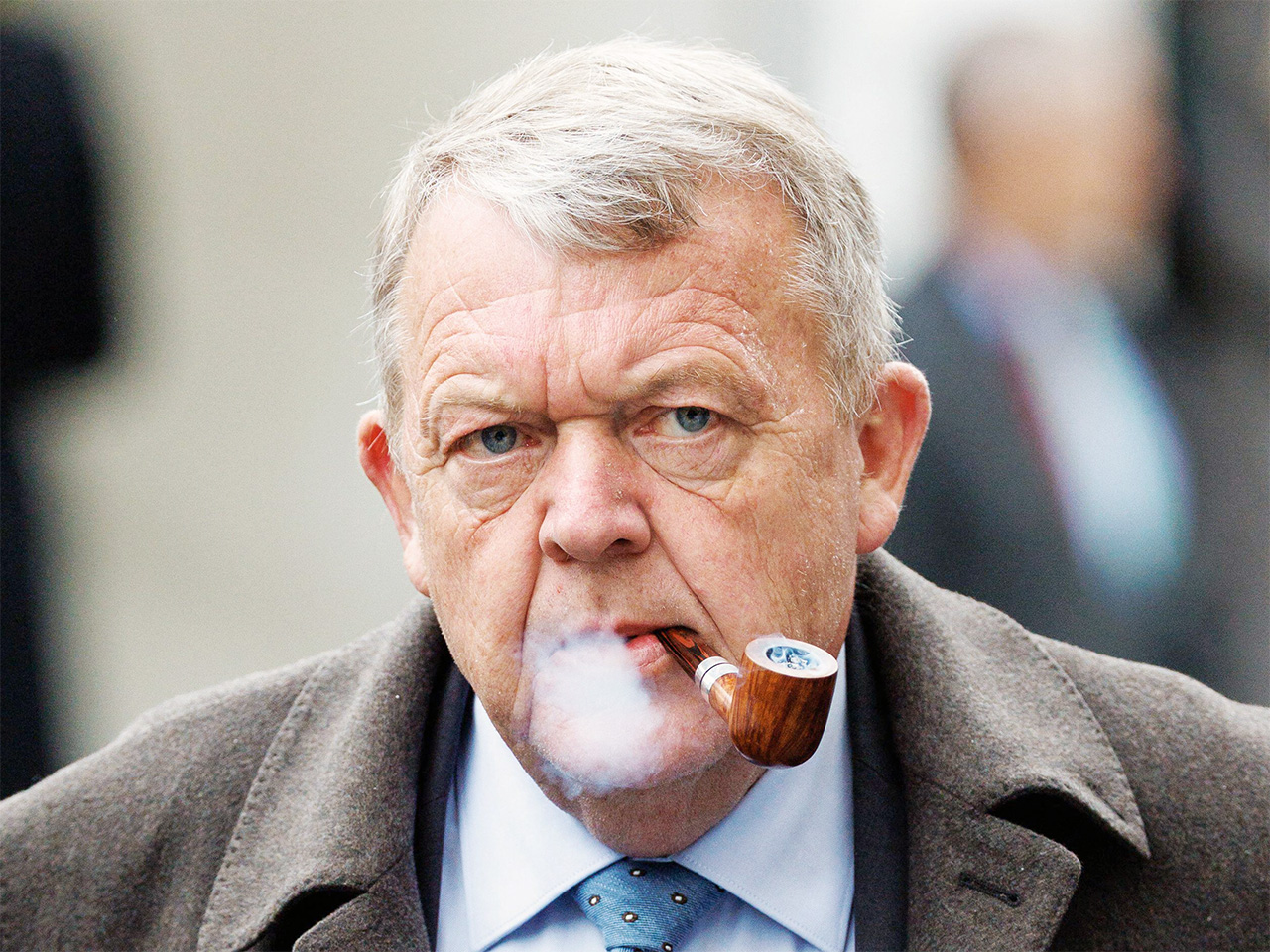
In the run-up to last Tuesday’s election, wily old stager and current foreign minister, Lars Løkke Rasmussen, put himself forward for the role. Løkke, as he is known, recently rose to global prominence after his celebratory cigarette outside the White House following talks with the US government over Greenland in January. But he is also a former prime minister, once leader of Venstre (Denmark’s main centre-right party) and currently leading his own party Moderaterne (The Moderates). Løkke’s move was met with much eye-rolling from rival leaders familiar with his political machinations. The role of kongelig undersøger instead went to prime minister Mette Frederiksen, leader of the Social Democrats, which, against expectations, only won 38 seats. It’s the party’s worst election result in more than a century.
| |
|
Piping up: Lars Løkke Rasmussen
|
|
Frederiksen’s outgoing government had been an unholy alliance – “across the middle”, as it was called – with former deadly rivals, Venstre, and Løkke’s Moderaterne as the sandwich filling. Venstre has been so wounded by being in power with her that its popularity plummeted to an all-time low. There is little chance that it would seek a coalition with the prime minister again as that would likely be terminal.
There are now 12 parties in parliament, most of them with 10 to 20 MPs. A total of 90 is needed to form a majority, which is more difficult than it has been in the past, largely because Løkke intentionally broke the traditional red- versus blue-block division in Danish politics when he formed Moderaterne, blowing the whole negotiation process wide open.
Trying to get these politicians to form a majority makes cat-herding look like a relaxing mindfulness exercise. The challenge is not helped by some of the deep enmities festering among the party leaders. Both heads of the far-right parties, Dansk Folkeparti (the Danish People’s Party) and Danmarksdemokraterne (Denmark’s Democrats), have refused to form a government with Løkke. The aversion is not so much political as personal. Løkke, on the other hand, wants nothing to do with the far-left Enhedslisten (the Red Green Alliance).
That leaves us with the first round of talks involving (take a deep breath, folks): the Social Democrats, the resurgent Socialistisk Folkeparti (Green Left or, literally the Socialist People’s Party), the Konservatives (Conservatives) and Radikale (the Radicals, a centre-left party, not really that radical) and, of course, Løkke. Despite losing two seats, he still, somehow, finds himself as the kingmaker, with the 14 deciding seats in parliament. Rather optimistically, Venstre, Enhedslisten and the far-left Alternativet have also been invited, for now at least.
Presented with such a melange, only a deeply foolish man would risk making a prediction. So here’s mine: Denmark will end up with a minority government led by Frederiksen that will rely on far-left and moderate right-wing parties for support on an ad hoc basis. The country has been here before. In fact, Danes seem to quite enjoy the sport of it all – to the extent that some media outlets are currently offering popular “build your own majority” online games. And though it is perhaps not the ideal basis on which to move forward in such tumultuous times, this is, above all, a pragmatic country.
For now, Denmark must await the white smoke from Løkke’s pipe to herald a new government.
Michael Booth is Monocle’s Copenhagen correspondent.
Further reading:
-Martin Krasnik is the newspaper veteran restoring trust in the media with Denmark’s most resilient title
- Should Denmark take over the Shetland Islands?
- Denmark has never had it so good. So why are its voters so unhappy?
|
|
Fashion: FINLAND
Marimekko dresses up in bold colours to celebrate its 75th anniversary
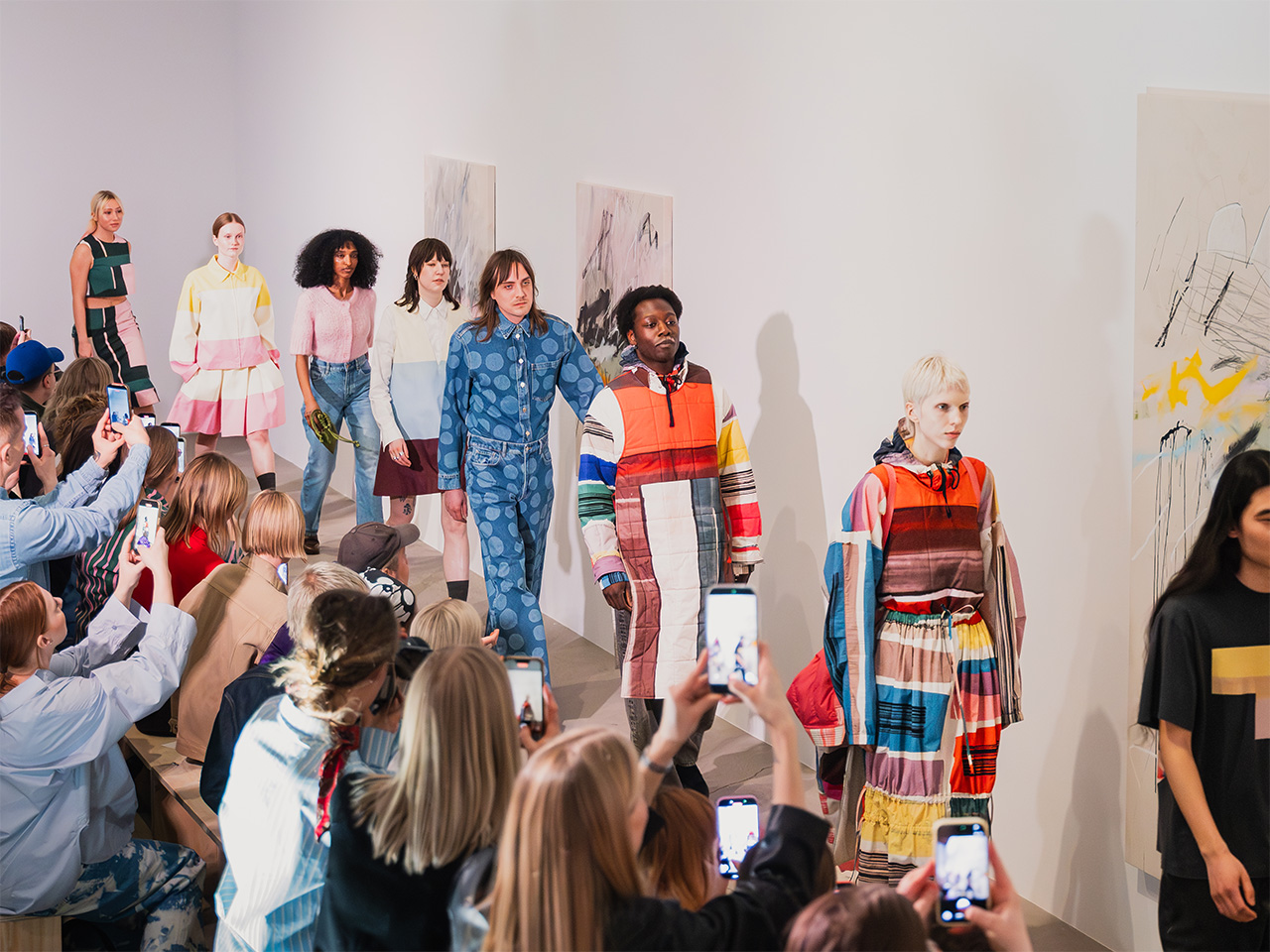
Last week, for the first time in more than a decade, Marimekko returned to the runway in Helsinki (writes Petri Burtsoff). The autumn/winter 2026/2027 show marked 75 years since founder Armi Ratia debuted the brand’s first runway show in the Finnish capital, catapulting it to global fame. Marimekko’s visual language remains bold, with graphic prints rendered at scale in vivid colour. The recently released collection sharpened those signatures with geometric compositions, such as Maija Isola’s Attika (blocks of colour arranged with architectural precision), Masaru Suzuki’s Kukkahattu and Antti Kekki’s Lossi.
| |
|
Bright line: Marimekko’s autumn/winter 2026/2027 show
|
|
Creative director Rebekka Bay continues to evolve the wardrobe around the brand’s 3,500 archived patterns but this season she reversed the process. “For the first time in a long time we built the collection around new prints and only then looked back at the archive,” she tells The Monocle Minute. The mix includes a confident move into eveningwear. Dresses now play a larger role, shifting from flame red to striking black-and-white, energetic pink and electric blue. Through these bold colour choices, Marimekko aims to bring vitality to the darker months and remain relevant from, as Bay puts it, “the moment you get up in the morning until you go to bed at night.”
The show coincides with a global retail recalibration. While expanding in Asia, now home to most of its shops, the company is refocusing on Europe and recently opened a new flagship in Paris’s Le Marais.
To join Rebekka Bay on her morning commute through Copenhagen, click here.
|
|
• • • • • DAILY TREAT • • • • •
Sip on Mius’s Kobe-style highball
All 16 years of Shelley Tai’s bartending experience have been poured into her first solo venture, Mius. The new spot, which is open until 01.00 every night on Gough Street in Hong Kong, is already attracting a lively crowd. A stainless-steel bar stretches almost the length of the main space, while a second room has cosy seating around low tables. With its clean lines and mid-century aesthetic, Mius is a calming backdrop for raucous evenings.
The bar specialises in subtle twists on old classics, adding fennel pollen to a margarita or mixing its negroni with strawberry and pink peppercorn. “The highball is my favourite cocktail on the menu,” says Tai. “That’s what I drink every night after work and on my day off.” Mius’s Kobe-style highball features frozen whiskey and chilled Japanese soda, keeping the drink as cool as the bar itself.
mius.hk
|
|
|
SPONSORED BY HITACHI ENERGY
|
|
|
|
|
|
from monocle.com: Takaoka, Japan
Step aboard Takaoka’s city tram with mayor Yuzuru Demachi
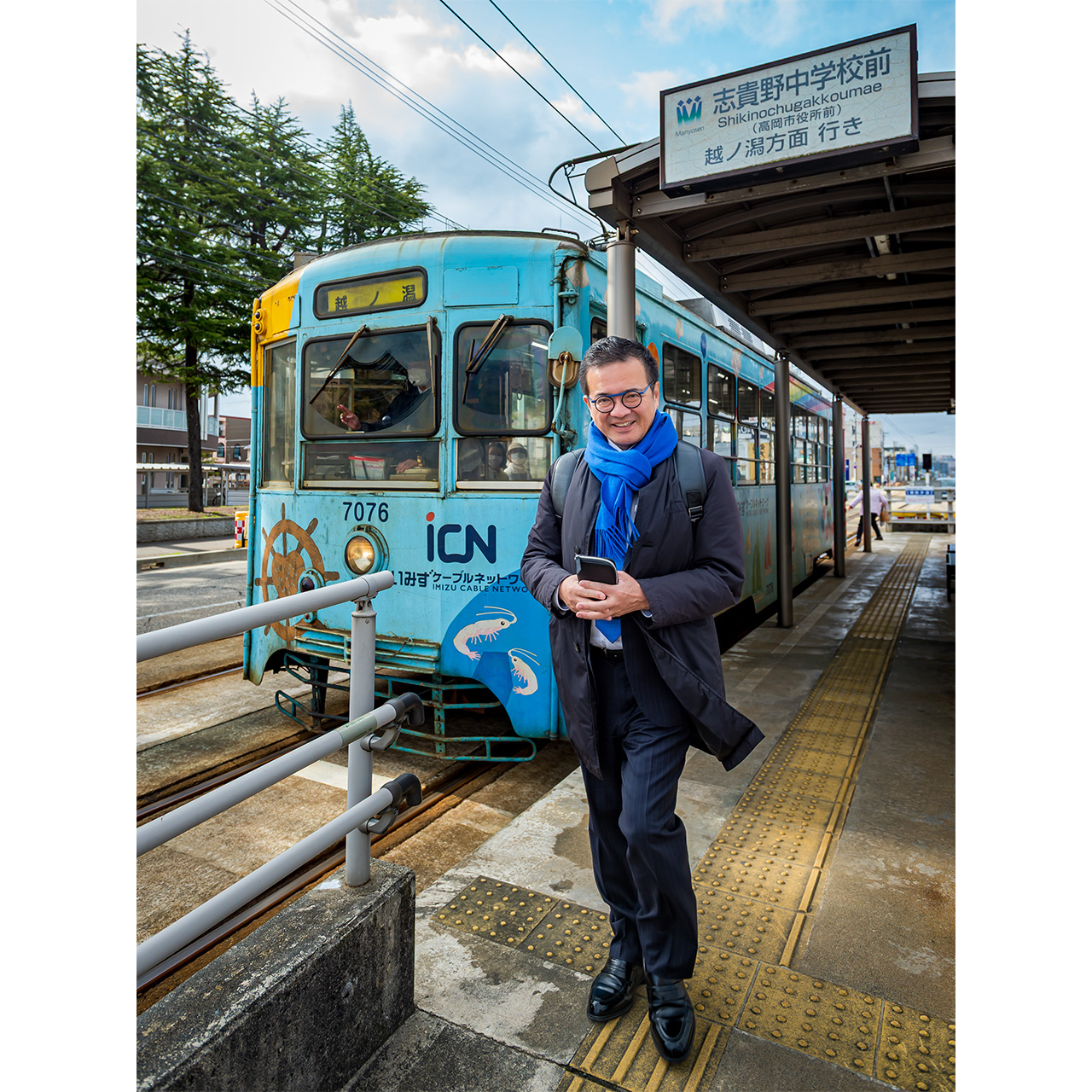
In the latest stop for our regular magazine feature The Commute, we head to coastal Japanese city Takaoka, 500km west of Tokyo, to meet its mayor, Yuzuru Demachi. A former foreign correspondent, he was elected to city hall in 2025 and uses his crosstown tram ride to make a broader point about his politics and meeting the electorate. Monocle hopped aboard.
You have said that taking the tram is a statement…
The easiest changes are those that you can make yourself. I cancelled the lease on the official car and stopped travelling in [more expensive] green-car seats on the bullet train. And I cut my own salary. I want to build a city that works with public transport, where people can walk around. It’s a burden on society when parents drive their kids to school every day. And, honestly, I also want more than just going back and forth between home and city hall in an official car.
Click here to step aboard the Takaoka tram and hear the full interview with mayor Demachi.
|
|
| | |