Image

Daily News Brief

April 3, 2026

Welcome to CFR’s Daily News Brief. Today we’re covering continued escalation in the Iran war, as well as...

  • A restructuring of U.S. metals tariffs
  • Cuba’s prisoner release announcement
  • Attorney General Pam Bondi's departure


Top of the Agenda

Iran struck a defiant tone yesterday despite weathering two high-profile attacks after President Donald Trump’s prime-time address earlier this week. A U.S. airstrike on Iran’s largest bridge killed eight people, Iranian state media reported. Trump touted the bombing on social media and threatened more attacks on bridges and power plants. An airstrike amid U.S. and Israeli bombings also destroyed one of the country’s preeminent public health establishments. Meanwhile, Iran’s mission to the United Nations rebuked Trump’s Wednesday speech as a show of “ignorance, not strength.”


Regional spillover. Iranian drones hit a Kuwaiti desalination plant, Kuwaiti officials said; they also reported an attack on a Kuwaiti oil refinery. Iran’s Revolutionary Guards blamed Israel for attacking Kuwaiti power and desalination facilities. The United Arab Emirates closed a set of gas facilities following a reported fire caused by debris from an intercepted missile. More than a month into the war, U.S. intelligence suggests around half of Iran’s missile launchers remain intact, unnamed sources told CNN.


War crimes accusations. Amnesty International yesterday accused Iran of child recruitment—a war crime—saying it had sought to draw children as young as twelve into its war effort. Separately, U.S.-based international law experts published a joint letter yesterday saying the conduct of all three parties in the war—Israel, Iran, and the United States—raises concerns of “serious violations of international law,” and pointing to U.S. actions they said could amount to war crimes. 


Hormuz diplomacy. At the UN Security Council yesterday, China, France, and Russia objected to draft resolution language that would sanction military force to reopen the Strait of Hormuz. A vote is expected in the coming days. Meanwhile, Iran and Oman are preparing a framework to monitor transit through the Strait of Hormuz, Iranian state media reported yesterday. 


Military shakeup. Even as the U.S. offensive presses ahead—with thousands of additional troops being deployed to the Middle East—its military leadership faces an overhaul at home. Three U.S. generals were reportedly removed yesterday. A Defense Department spokesperson announced the departure of General Randy A. George, the former army chief of staff, without citing an explanation. Unnamed U.S. defense officials told multiple news outlets that generals responsible for chaplains and training were also removed. 


“How will Trump square bombing Iran ‘back to the stone ages’ and letting others re-open the Strait of Hormuz with his promise not to let U.S. Gulf allies ‘get hurt or fail in any way, shape, or form’? Putting aside the fact that indiscriminately targeting civilian energy infrastructure is a war crime, Iran would almost certainly retaliate against its Arab neighbors in kind. That would create a massive humanitarian disaster in the Gulf.”

—CFR Senior Fellow James M. Lindsay in an Expert Take


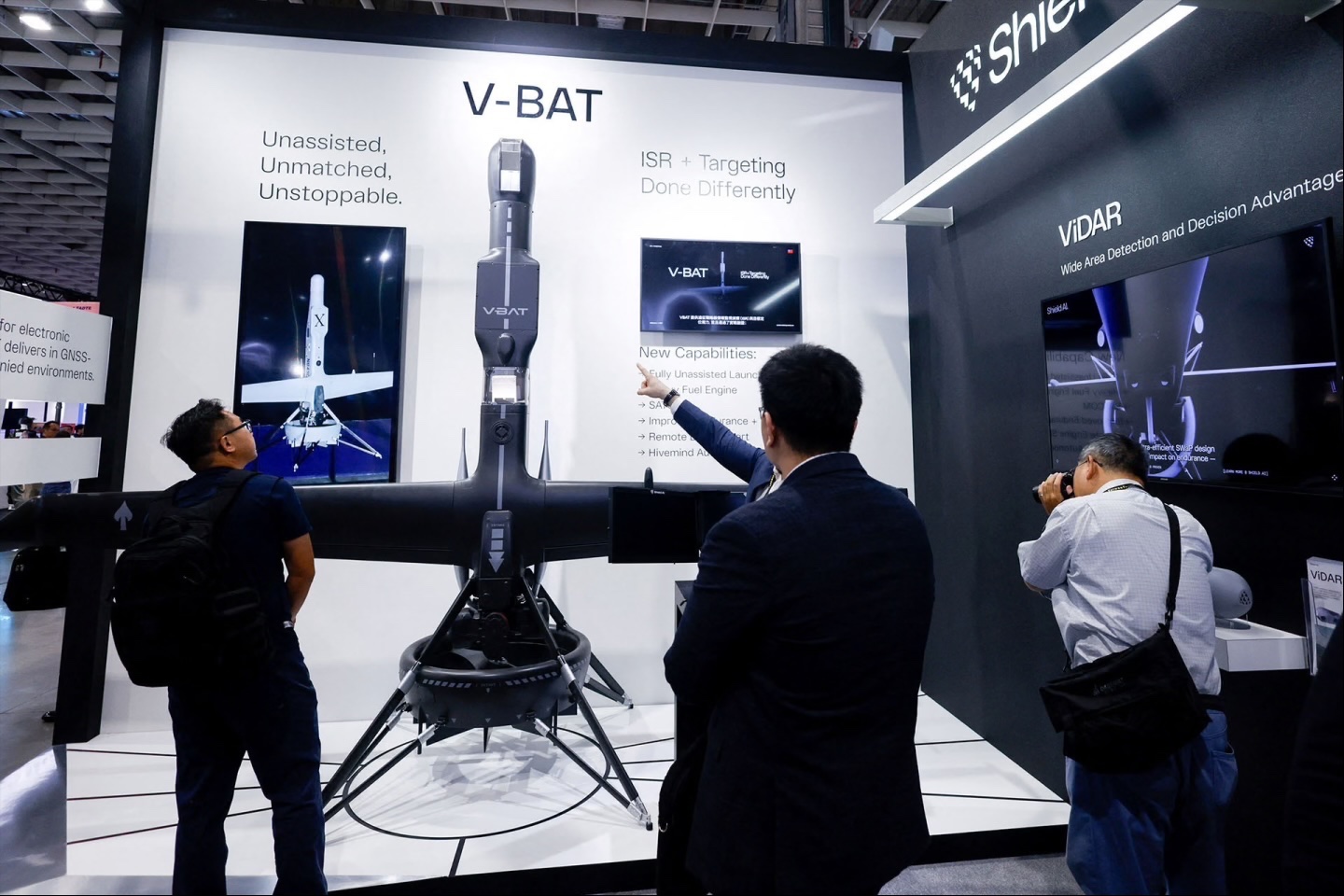
AI Is Facing a Crisis of Control—and the Industry Knows It  

Visitors look at Shield AI’s V-BAT unmanned aerial vehicle on display during the Taipei Aerospace and Defence Technology Exhibition in Taipei, Taiwan, on September 18, 2025.

Ann Wang/Reuters

The artificial intelligence (AI) community must look to international security professionals with experience in chemical and biological proliferation threats and emergent cybersecurity risks, CFR Adjunct Senior Fellow Gordon M. Goldstein writes in this article.


Across the Globe

Trump consolidates metals tariffs… The White House announced yesterday it was updating the way it calculates aluminum, copper, and steel tariffs. Goods made with those metals will receive either a flat 50 percent or 25 percent tariff depending on their metal content, and be tariff-free if the metals constitute less than 15 percent of the product. Previously, metals products were also subject to additional tariffs based on the source countries of their ingredients other than aluminum, copper, and steel.


…and announces new drug tariffs. A new 100 percent tariff on patented drug products will take effect in either 120 or 180 days depending on the size of importing companies, the White House announced separately. It added that companies can avoid the tariff by pledging to increase manufacturing in the United States or negotiating deals with the U.S. government to lower prices. Generic drugs, which make up the majority of pharmaceutical imports to the United States, are exempt. Some countries with existing U.S. trade deals will see a lower 15 percent tariff rate. 


Trump removes Attorney General. Bondi is leaving her post, Trump announced on social media yesterday without an explanation. She is the second cabinet member fired by Trump in under a month and will be temporarily replaced by her deputy. Trump had complained to aides that Bondi did not move fast enough to prosecute his political adversaries, multiple news outlets reported. Trump hailed Bondi’s tenure as “tremendous,” while she called it “the honor of a lifetime.”


Cuba prisoner release. Havana announced yesterday it will free 2,010 prisoners, as the island contends with a U.S. pressure campaign that seeks economic and political liberalization. If completed, it would be Cuba’s largest prisoner release in years. The government did not mention the United States in its announcement, saying that the move was linked to the Holy Week ahead of Easter. The Vatican has historically helped broker agreements between Washington and Havana.


Russia’s battlefield stagnation. Russia did not make any territorial gains in Ukraine in March, according to the Institute for the Study of War. Its researchers said Ukrainian counteroffensives, Russia’s loss of access to Starlink’s satellite internet data, and Russia’s own ban on the use of Telegram in favor of a government-run alternative all limited Russian advances in recent months. 


Austria’s stance on overflights. Austria has denied U.S. requests to use its airspace during the Iran war, a defense ministry spokesperson told Politico yesterday. Austria’s vice chancellor wrote on social media yesterday that the non-NATO country wants “nothing to do with Trump’s chaotic policies and his war.” 


Italy-Japan-UK jet program. Italy, Japan, and the United Kingdom (UK) said yesterday they had signed a first international contract with defense firms related to their joint pact to develop next-generation fighter jets. The approximately $900 million contract covers three months of work, and the program aims to deliver the first fighter jet by 2035.


Astronauts power toward the moon. The Artemis II mission fired a thruster engine yesterday that will propel the astronauts out of Earth’s orbit and toward the moon. They spent the first part of their ten-day trip circling the Earth and testing equipment. Now that the thruster is fired, they will be largely propelled by orbital forces for the rest of the mission.


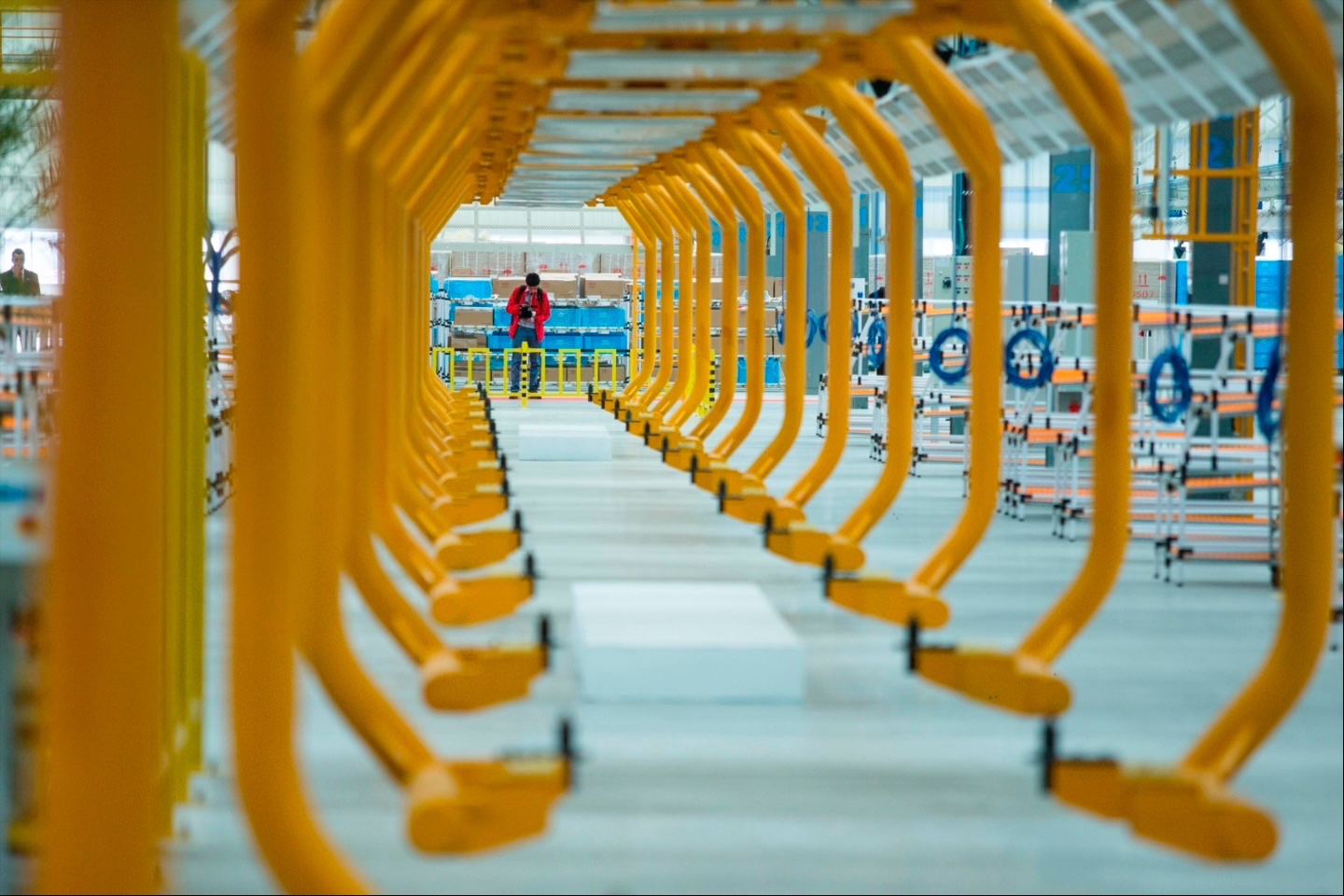
Tracking Chinese Investments in Overseas Industrial Parks

A view of the assembly floor inside Chery’s first automobile assembly plant in Brazil, in Jacarei, August 28, 2014. Chery executives inaugurated the plant with the presence of Sao Paulo state governor Geraldo Alckmin and Brazil’s Vice-President Michel Temer.

Roosevelt Cassio/Reuters

Over the past three decades, Chinese private and state-owned firms have aggressively expanded overseas, building and financing factories, warehouses, logistics hubs, and industrial parks, CFR Senior Fellow Zongyuan Zoe Liu writes in this CFR Tracker.


What’s Next

  • Today, Russia hosts an economic forum with officials from post-Soviet states in Moscow.

  • Today, French President Emmanuel Macron concludes a visit to Seoul. 

  • Sunday, OPEC+ members hold a virtual meeting about oil output levels.


Gulf States Under Fire

The President's Inbox podcast

Rather than a quick truce, Gulf States seek a broader security reset so that Iran is not able to take the Strait of Hormuz hostage or attack its neighbors, The National’s Mina Al-Oraibi says on this episode of The President’s Inbox.

Listen