This issue: Checking in on Adult Braces’s sales figures, French novelist Marie NDiaye answers The Book Gossip Questionnaire, and our reviews of three April titles out this month. |
|
|
| Senior newsletter editor, New York |
|
|
Is Controversy Helping Lindy West Sell Books? Not as well as you might think.
|
Photo-Illustration: New York Magazine |
|
|
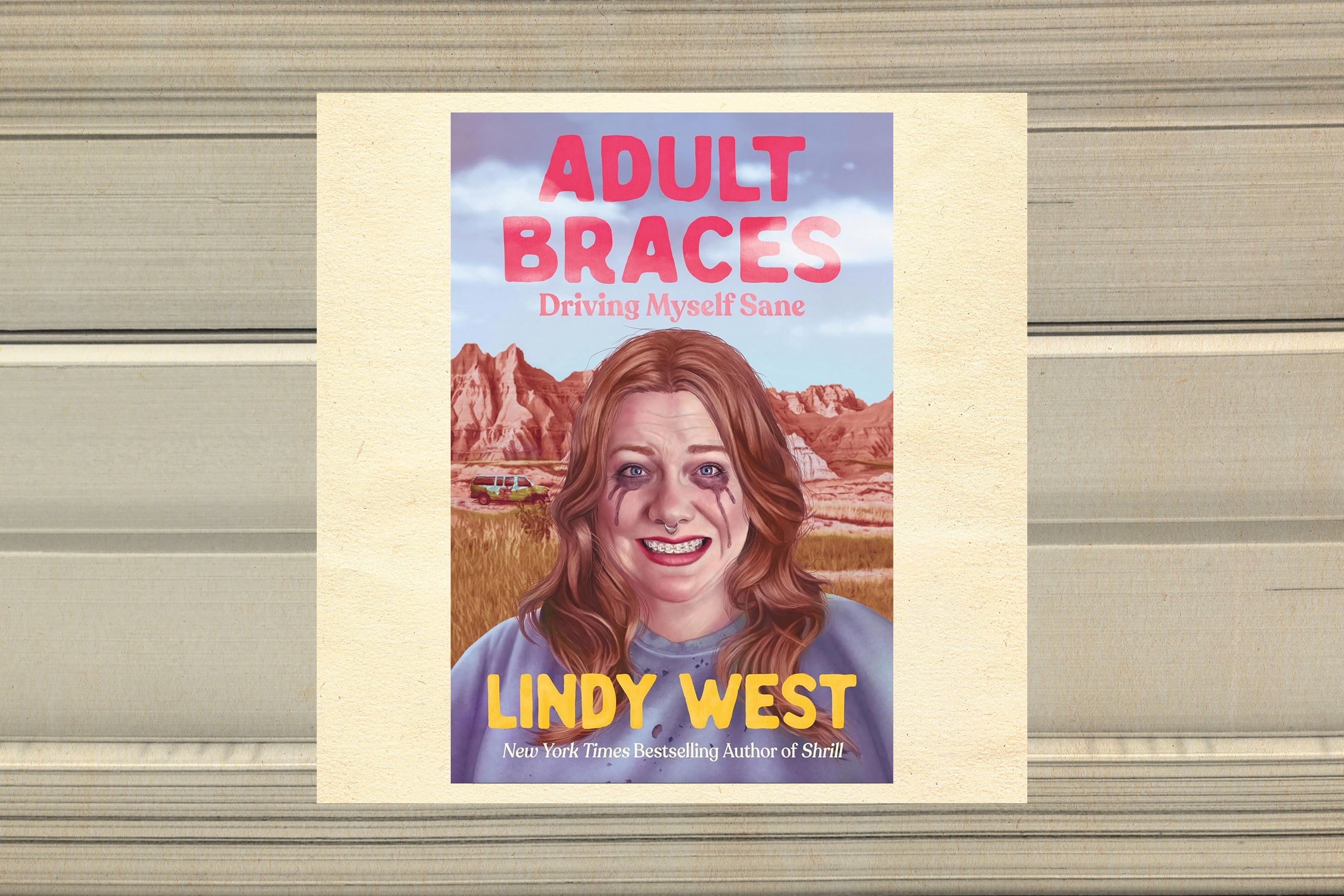
Can you even write a newsletter called Book Gossip without somehow getting into the Lindy West of it all? The former Jezebel writer, author of Shrill, and popular feminist who made her name by being outspoken online is no stranger to pushback or scorn, and, following the release of her second memoir last month, West has been subject to another round of endless chatter.
In Adult Braces, West threads the tale of her solo cross-country road trip to the Florida Keys with the story of how she conquered her fear of polyamory at the behest of her husband, Ahamefule Oluo. A memoir about a public figure like West openly wading into non-monogamy was always going to light the internet on fire, but many are now claiming that the arrangement was built on coercion rather than consent. Haters and defenders alike are particularly incensed by the revelation that Oluo had not one but two secret girlfriends by the time a fan spotted him kissing another woman in public and broke the news to West. The author is now in a throuple with Oluo and one of his formerly secret girlfriends, and she’s painted their unit as a utopian one in which there’s more love to go around and more hands to do the dishes. Her depiction of the polycule has been cast online as everything from a “blue-state mirror image of tradwifery” to a repackaging of “emotional abuse as empowerment,” an instance of the Shrill author “psyop-ing herself into being poly,” and a sign that the millennial feminism that West so significantly helped shape is officially dead.
West’s defensiveness since the memoir’s release has only fanned the flames. “If believing that I am a brainwashed, abused woman helps you process your own traumas in some way—or even if you just find it fun—I guess that’s simply a different facet of how people have always used my work,” the writer commented in a since-deleted Substack post. To make matters worse, Oluo personally insulted Slate’s Scaachi Koul over her even-handed profile of West for which Koul traveled to West’s family’s remote Washington home, where the throuple now lives. In the profile, West admits that she wrote Adult Braces at least in part for the money. “I feel a pressure to take care of my family, and so on this very cynical surface level, I would love for the book to be a success,” she said.
What’s undeniable is that a lot more people have opinions about West’s personal life than have bought her book. According to BookScan — the leading industry tracker that captures mostly print sales and with a week or so delay — total Adult Braces sales stand, as of this writing, at just over 3,000 copies. It is generally believed that authors need to sell between 5,000 and 10,000 the first week to make the New York Times’ best-seller list; West sold only 1,800 in that time. On the other hand, Belle Burden’s divorce memoir, Strangers — which is currently at the top of the Times best-seller list for combined print & e-book nonfiction — sold nearly 7,000 its first week and saw another bump after it was announced that Gwyneth Paltrow would star in a screen adaptation.
“For all the online discourse, we’ve sold a lot fewer copies of Adult Braces than you might think,” said Jack Kyono, the director of marketing at McNally Jackson. Kyono mentioned that he had seen a fair amount of bookstore patrons pointing at the cover, summarizing the drama, then summarily moving on. Kyono also contrasted West’s book to Burden’s, a consistent best seller at McNally. While there may have “plenty of online summaries of Strangers’s splashiest, most discourse-inducing moments, that’s not stopping customers from wanting to take it home with them and actually read it.” Over at Greenlight, buying manager Matt Stowe agreed. “Strangers is going crazy. We’ve sold about 40 each week the past couple of weeks,” he said. Meanwhile, the store has only sold about four copies of Adult Braces a week.
Whether or not the drama around West’s memoir dies down anytime soon, for now it doesn’t appear that West is cashing in on all that talk. As Kyono noted, that is not so rare — other recent memoirs “about which the internet seemed to have a lot to say by Olivia Nuzzi, Elizabeth Gilbert, and Molly Roden Winter” also had small spikes, then quickly petered out. And as for Adult Braces? “I think it’s not long for the tables,” he said. |
|
|
Subscribe now to get unlimited access to everything New York, including subscriber-only newsletters, exclusive perks, the New York app, and more. |
|
|
THE BOOK GOSSIP QUESTIONNAIRE |
Marie NDiaye Says Cleaning Is Her Vice “If I’m not writing, it’s because I don’t feel like it, not because I’m blocked.”
|
Photo-Illustration: New York Magazine; Photo: Francesca Mantovani © Editions Gallimard |
|
|
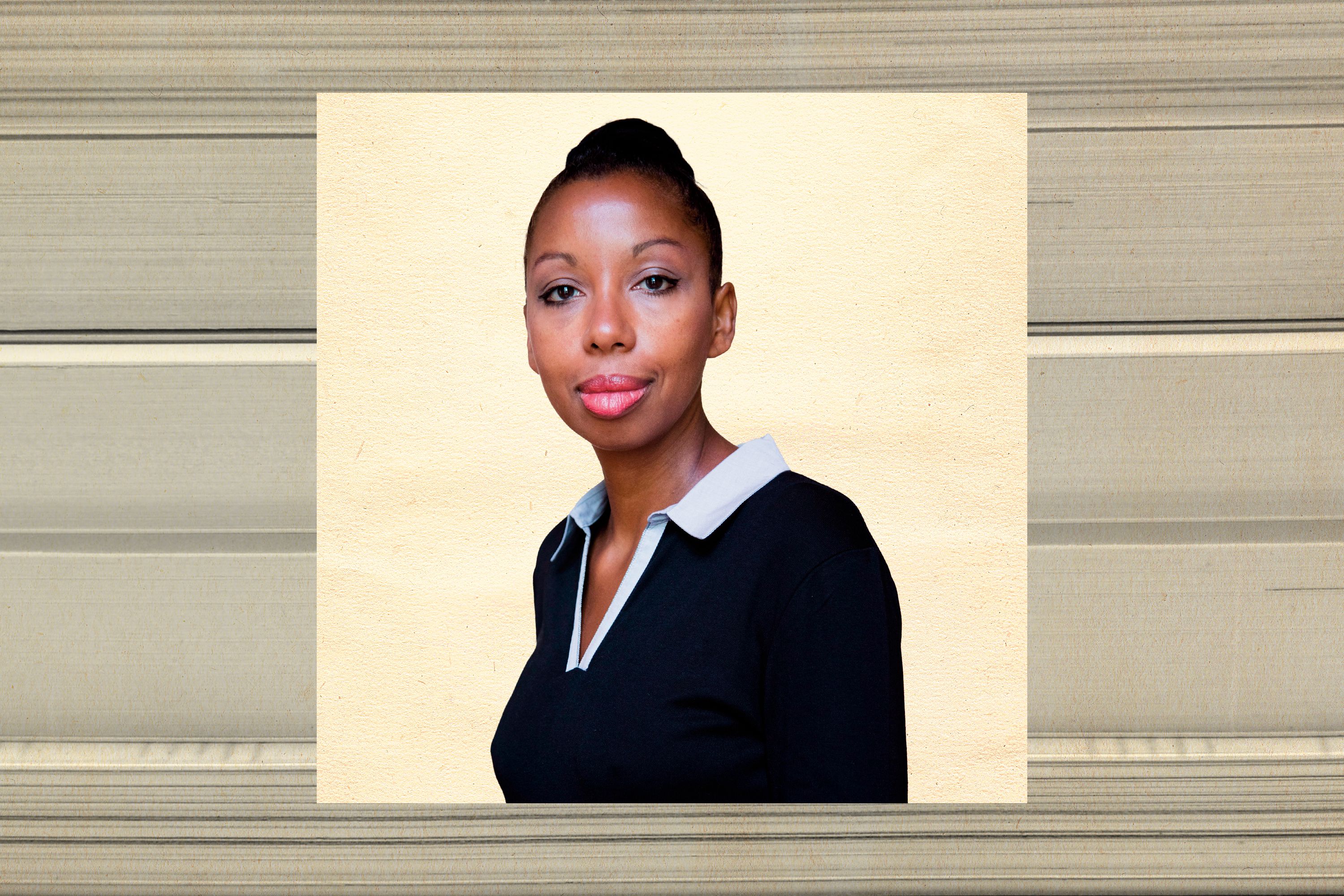
In France, few living authors share the celebrity status of Marie NDiaye, who last week, alongside her English translator, Jordan Stump, made the International Booker longlist with her novel The Witch, which hits bookstores today. Her origin story is something of a legend. NDiaye, now 58, was discovered at the age of 17 by Jérôme Lindon, the Editions de Minuit editor who worked with Samuel Beckett and Claude Simon and published her first novel before she finished high school. NDiaye has since written over 20 novels and won the biggest prizes in French letters, including the Goncourt in 2009.
You can tell a NDiaye book by her ability to slip the unsettling into the banal, to imbue familiar forms of rural or suburban life with an atmospheric sense of the uncanny. Like much of her work, The Witch probes feelings of alienation lurking within members of a family as a premise: Lucie, a mediocre witch who learned to see the future from her own mother, is initiating her twin daughters into their powers just as the family patriarch suddenly disappears, taking Lucie’s inheritance with him. Although the book first appeared in French 30 years ago, it may now become a new entry point into her oeuvre for English-language readers. When I spoke to NDiaye last week from her partner’s home near Bordeaux, she said, “It’s great that the book is a Booker finalist, but it’s a bit strange. It’s a different me who wrote it.”
|
| |
-
Finish the sentence: I can’t write without _____.
My computer. - The book you’ve reread the most often?
Under the Volcano, by Malcolm Lowry. I’ve reread it plenty of times since I was a teenager. - Recount a recurring dream.
I don’t know where I am exactly, but I absolutely have to get somewhere at a certain time, and then plenty of obstacles are preventing me from doing so. Not exactly horrible, but very unpleasant. - The last album you listened to all the way through.
I never listen to full albums. I just listen to songs on YouTube. Lately, I’ve been listening to a song by Lorde: “What Was That.” But I change quickly too. I’m not very faithful when it comes to listening.
- How many hours a day do you write and where?
I write every other day for about two hours. If I’m at home, I write on a classic wooden table in my living space. I don’t need to have a room that I would call an office. I don’t have a ritual, really. I could write in another room or in the yard if it’s nice out. The only place I can’t write is in a café because there’s music and noise. Otherwise, I adapt.
-
Describe what you’re working on now without revealing the plot.
I’m currently working on a theater piece with the choreographer Gisèle Vienne, which will play in Paris in December. And recently, I did a few readings of my most recent text, which came out two weeks ago. It is very short and called Ma Chérie. - Describe a physical place of great importance to you.
My apartment in Paris, which I bought two or three years ago. It’s very important to me because it was the first time I was choosing a place by myself and the first time that I picked everything in it, the furniture and everything. So it’s really my home. It’s a simple Parisian apartment with wood floors and four rooms. I had everything redone. I love the view. There’s a bit of sky in each room. It’s in a neighborhood that isn’t especially beautiful. It’s just everyday life.
- The book you wish you’d written.
Same answer as before: Under the Volcano, by Malcolm Lowry. - A director, living or dead, you’d most like to see adapt one of your books.
Claire Denis. - Describe your reading habits in three words.
A room, some time, and silence. -
When was the last time you reread your first book?
I never reread any of my books, so the first one is really vague now. It was a very, very long time ago. I don’t even know what it is really about anymore. - The writer you’d most like to have a conversation with, living or dead?
Joyce Carol Oates. We don’t know each other, but the problem is that I don’t think she speaks French and my English sucks. So it would be limited. She was born the same year as my mother, in ’38. As clearly as I can see that my mother is 88 years old, I can’t bring myself to see Oates as an 88-year-old woman. - What was the last meal you cooked and who was it for?
It was last night because I love to cook when I’m with my partner. I made mashed potatoes and cooked a bit of fish — pollack — with onions in oil with herbs. - Your most successful tool/method/substance/behavior for getting unblocked?
That never happens to me. If I’m not writing, it’s because I don’t feel like it but not because I am blocked. - Your vice, if you identify as having one?
I don’t know if I have one. Well, I do love spending hours doing housework. Dusting, doing dishes, I love that kind of chore. It does me a world of good. I don’t play any sports, but cleaning, doing the dishes, cooking, washing the floors, I love that. And increasingly, I don’t use vacuums. I find the sound annoying. I love brooms. - Your favorite piece of book gossip, whether historical or current.
It wasn’t really gossip, but I loved the way Marguerite Duras expressed her opinions, which were sometimes completely bizarre and sometimes indicative of a brilliant acuity. She said what she thought. It used to be rare to see a woman writer share her perspective on politics or the role of women in society. In the ’80s, she said the kind of things people just didn’t say, which, especially coming from a woman, were a bit too direct, too raw, too moralistic. She spoke really openly about homosexuality and also about her own desire for men. She was articulate about the twisted relationships she had had with men, but despite all that she was never a victim.
- A writer you want to sound like:
Maybe Claude Simon, not in terms of subjects but in the writing itself. Duras too. Russell Banks. And then Oates, obviously. - A writer you actually sound like:
I could never say! It’s up to other people to do that. - The question you wish more people asked you?
Did having children play an important role in your life as a writer? But at the same time, I’m not sure if I’d like to get that question because it’s too much in the vein of questions only women would be asked. Still, in an artist’s life, having children must play a role. Oates has no children, but adolescence in her books is really present and incredibly true to life. I’m fascinated by the way she creates very young characters without having lived with any.
|
|
|
This conversation was translated and condensed for clarity. |
|
|
The New Releases You Should Buy, Skip, or Put on Hold at the Library |
|
|
Yesteryear, by Caro Claire Burke
There are at least four books about tradwives coming out this year, two of them actually titled Trad Wife. This month’s entry is Yesteryear, a debut novel that churned up a 15-publisher bidding war (Knopf won) with film rights already sold to Amazon (Anne Hathaway will co-produce and star). In it, a Ballerina Farm–style influencer named Natalie Heller Mills, pregnant with her sixth child, puts out a constant stream of content selling followers on her farmhouse life and enraging her detractors, whom she calls the Angry Women. A mind-bending form of comeuppance arrives when she wakes up in 1855, confronting a dank, rundown version of her sprawling property. Her children and husband are there, but they’re slightly off too. The book’s politics are not subtle, and Burke constantly tips her hand about her feelings toward this strain of anti-feminism. But the twists are satisfying enough to make up for the bluntness of its message. Borrow. —Emma Alpern
Body Double, by Hanna Johansson; translated by Kira Josefsson
Johansson’s second novel is more of a surreal literary thriller than Antiquity, her debut “queer Lolita,” but her musings on obsession and identity — as well as the insistence on unnamed characters — persist. In Body Double, an (unnamed) woman is transcribing interviews for her ghostwriter boss when one day she hears something different, a message she feels is meant for her: I have seen you. Have you seen me? Meanwhile, Laura and Naomi, who only just met through a coat mix-up in a café, are falling for each other quickly and codependently. When they meet, Naomi has a job and a life, and Laura, apparently, does not. Eventually the parallel narratives intersect — though it’s not always clear exactly how. As we follow these women around a (presumably) Swedish city, we see their lives begin to overlap, their individual experiences echoing the other’s, seemingly without their knowledge. Routines and lipsticks are passed between them along with the unnerving feeling that they’re disappearing from real life altogether. But why? And how? Johansson’s obsession with detail combined with her refusal to spell everything (or really anything) out for us makes for an enjoyable undercurrent of creepiness and confusion but may leave you a bit blurry. Recommend, but not if ambiguity makes you uncomfortable. Borrow. —Daisy Grant
London Falling: A Mysterious Death in a Gilded City and a Family's Search for Truth, by Patrick Radden Keefe
The New Yorker reporter and Empire of Pain author’s latest nonfiction deep dive, London Falling, is his most gripping book yet, using its initially narrow premise — the sudden, mysterious death of a 19-year-old London boy, Zac Brettler, who had pretended to be a Russian oligarch’s son — as an entry point into the more expansive story of London’s underworld and the downstream effects of what happens when greed corrupts a city at its highest levels. As always with Keefe the pages turn themselves, and he sidesteps the exploitative pitfalls of the true-crime genre by finding thrills in the margins, taking long diversions to explain the details of London’s biggest gold heist, for instance, or to illustrate how a Ugandan Asian businessman built a house-of-cards empire in London after fleeing Idi Amin. When Keefe returns to Brettler’s story, it becomes one about modern parenting and the search for peace amid unresolvable grief. For all the praise Keefe receives for the depth of his reporting, the graceful humanity with which he approaches his subjects in London Falling is what ultimately leaves an impact. Buy. —Chris Stanton
|
|
|
|