| | An Iran war ceasefire triggers relief in energy markets and tepid optimism over the reopening of the͏ ͏ ͏ ͏ ͏ ͏ |
| |  | Flagship |  |
| |
|
The World Today | 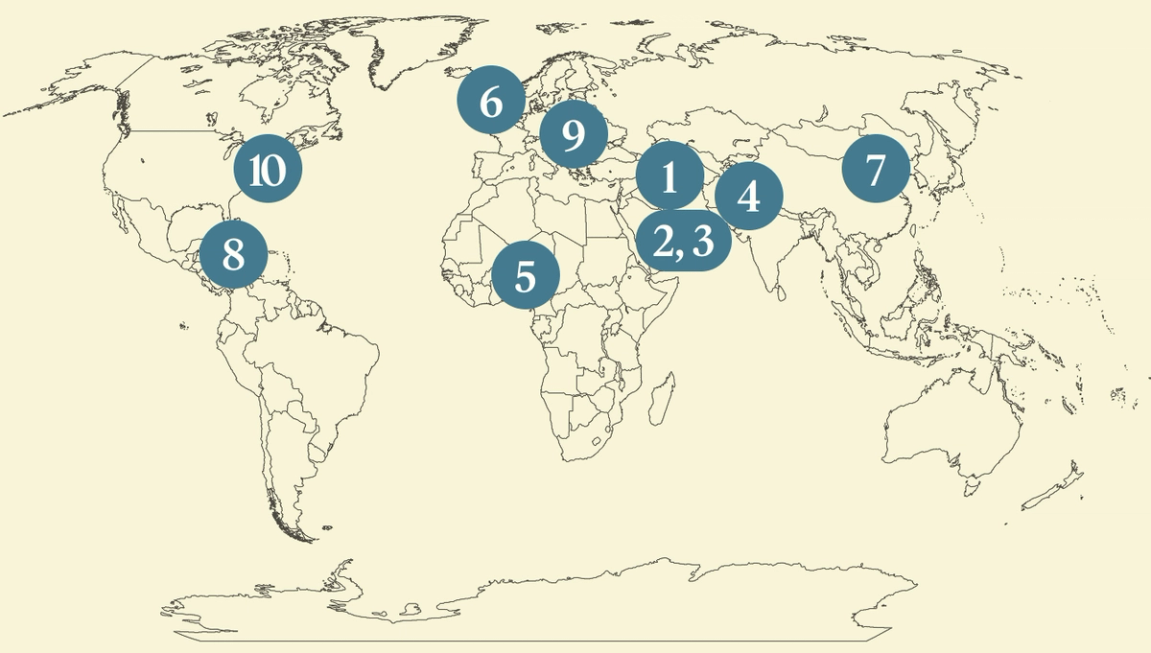 - Iran war truce unveiled
- Energy market relief
- Cautious Hormuz optimism
- Pakistan plays key role
- Africa scrambles for fuel
- UK navy’s anti-drone tech
- Xi purges Politburo, again
- Cuba’s new banknotes
- Democracy’s surprise boost
- Neptune thrown off balance
 An astonishing photo from space, and revisiting Christopher Nolan’s Memento, 25 years after its release. |
|
Iran, US agree to ceasefire |
 Majid Asgaripour/WANA/Reuters Majid Asgaripour/WANA/ReutersThe US and Iran agreed to a two-week ceasefire, offering hope for millions battered by weeks of war, as well as for global economies hammered by surging commodity prices. The countries are to hold talks this week on cementing the truce, which each hailed as an unalloyed victory. Yet a permanent peace looks unlikely. For one, Israel said Lebanon was not part of the agreement, and maintained its offensive there. Gulf nations, meanwhile, said on Wednesday that they were continuing to face Iranian missile attacks. And, ultimately, when it comes to tensions between Washington and Tehran — centered around Iran’s nuclear and missile program, and now its control of the strait — “the same core challenges remain,” Bloomberg noted. |
|
Oil drops on war pause news |
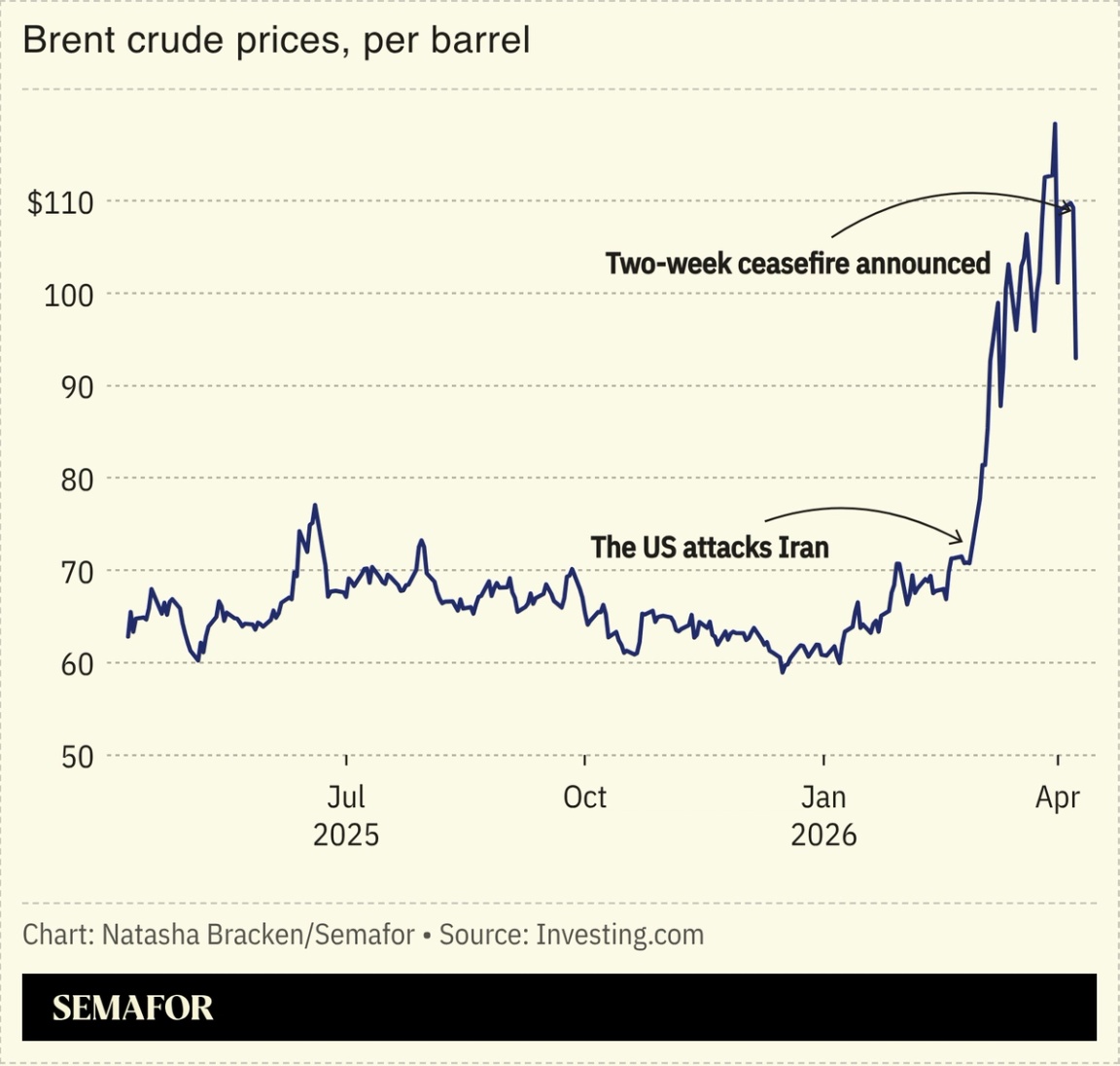 Oil and gas prices plummeted in a relief rally following the announcement of a ceasefire between Iran and the US, but experts cautioned that huge fuel supply risks remain. The truce offers the prospect of shipments resuming from Gulf fossil fuel producers; benchmark oil prices fell below $100 a barrel on the news. Yet the lack of a durable peace deal means “volatility [is] likely to persist,” ING economists warned, and in any case production will not immediately rise: Gulf nations suffered damage to energy facilities and markedly reduced operations in recent weeks. Refined products are also likely to be in shortfall, with the world airline body warning that it would take months for jet fuel supplies to return to prewar levels. |
|
All eyes on Hormuz traffic after truce |
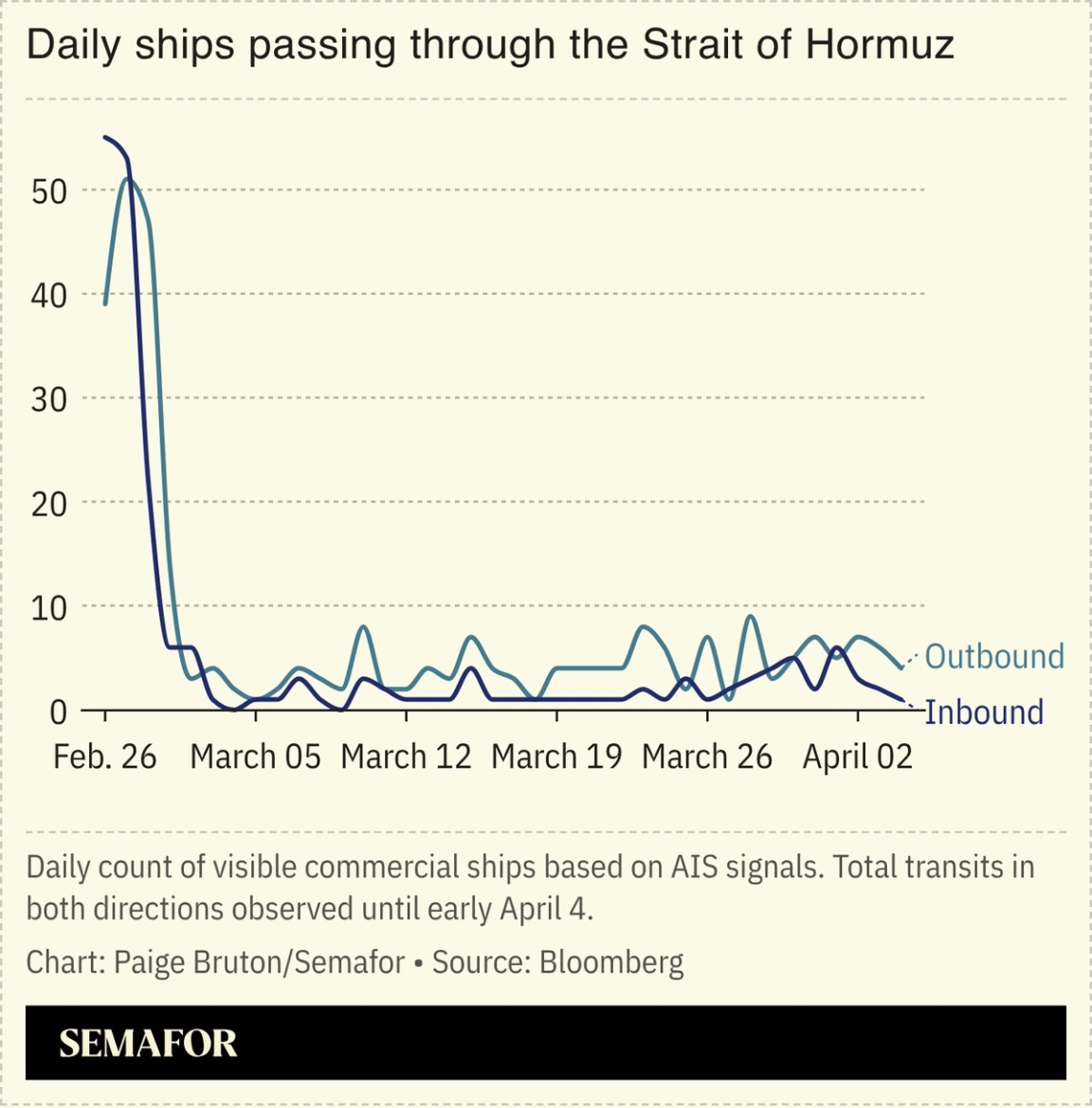 Businesses and governments offered cautious optimism over the promised — albeit temporary — reopening of the Strait of Hormuz as part of the Iran war truce agreement. The effective closure of the waterway has choked off access to energy and other key global commodities. More than 800 vessels are still trapped in the Persian Gulf, according to Bloomberg; the shipping giant Maersk said the deal offered some respite, but added, “we are not making any changes to specific services.” The agreement should hopefully offer a reprieve, at least, for the the vessels’ staff who have been running short of food and fresh water: “I am, of course, scared,” one told The Wall Street Journal before the ceasefire. |
|
Pakistan in from the diplomatic cold |
 Donald Trump and Pakistani Prime Minister Shehbaz Sharif. Suzanne Plunkett/Pool/Reuters Donald Trump and Pakistani Prime Minister Shehbaz Sharif. Suzanne Plunkett/Pool/ReutersThe US-Israel-Iran ceasefire marks a diplomatic triumph for Pakistan, which was until recently a Western pariah. Islamabad — which faced crippling fuel shortages as a result of the strangling of the Strait of Hormuz — was a central mediator between the warring parties, and, alongside other nations, proposed peace initiatives, hosted talks, and passed messages to facilitate the truce. The effort was surprising, given successive US administrations froze it out over its alleged support for militant groups, accusations Pakistan repeatedly denied. The transformation was a result of “deft diplomacy” as well as “flattery as foreign policy,” an expert on Pakistan’s military told The New Yorker. Longtime rival India, meanwhile, is worried of being sidelined in global diplomacy as a result. |
|
Africa gets $10B support over war |
 Sodiq Adelakun/File Photo/Reuters Sodiq Adelakun/File Photo/ReutersAfrica’s main multilateral lender unveiled a $10 billion emergency program to support countries on the continent scrambling to pay for fuel, fertilizer, and medicines as a result of price surges sparked by the Iran war. The package — along with an announcement by Africa’s biggest oil refiner that it was increasing exports of gasoline to energy-starved countries — underlined the huge global impacts of the Middle East conflict, and the likelihood that, despite the ceasefire, its consequences were likely to reverberate for months. Several African countries have instituted short-term interventions, including direct subsidies and mandatory rationing, as they grapple with the economic fallout, while Madagascar declared a national emergency just hours before the Iran truce was announced. |
|
UK navy gets anti-drone weapons |
 Britain’s Royal Navy confirmed that it would deploy new anti-drone laser weapons on its ships from next year. The DragonFire system can target 400 mph drones and, while the weapon itself costs around $200 million, each shot is only $13, compared to hundreds of thousands of dollars for a high-tech interceptor missile. The deployment is five years ahead of schedule, evidence of a global scramble for cost-effective means of destroying cheap drones. The US Army is experimenting with electromagnetic pulse weapons that can fry the electronics of drone swarms, while Ukraine has developed hand-launched anti-drone drones that cost around $2,000 per unit and have so far destroyed around 4,000 deadly Shahed projectiles. |
|
China’s graft drive ‘has not worked’ |
 Ma Xingrui. Tingshu Wang/Reuters Ma Xingrui. Tingshu Wang/ReutersChinese leader Xi Jinping’s purging of a third Politburo member points to the failure of his long-running anti-corruption program, as well as that of the Communist Party’s promotions system, analysts said. Authorities said this week that Ma Xingrui was being probed for graft, confirming experts’ suspicion that he was in trouble; he had not been seen in public for months. The ensnaring of top officials indicates that “Xi’s 13-year (!) anti-corruption campaign has not worked” and “the Party’s personnel system is not functioning properly,” analysts at the China-focused research firm Trivium said. Still, as a biographer of Xi wrote in The Wall Street Journal, the campaign may be meeting an unstated goal of “keeping officials loyal and on their toes.” |
|
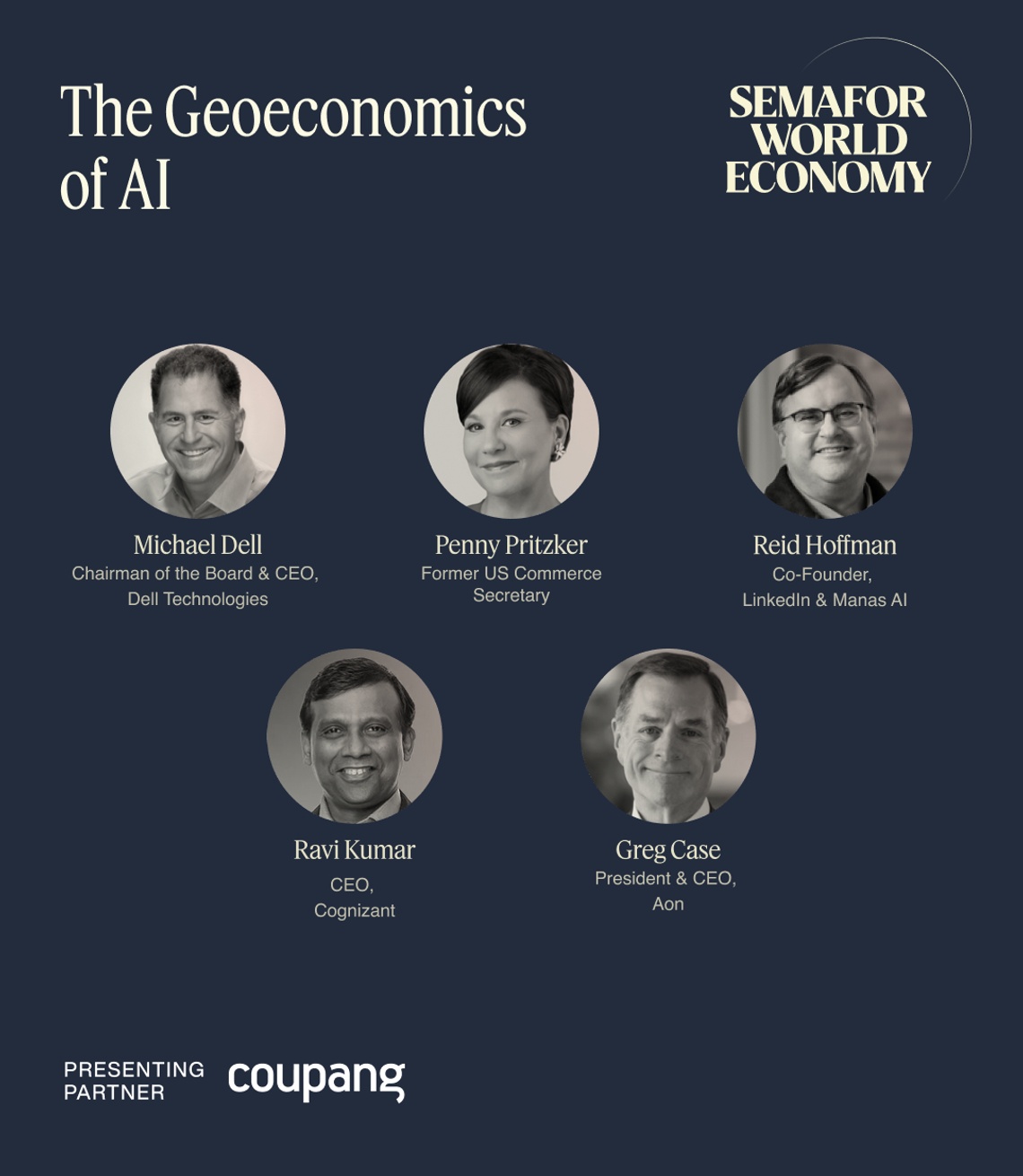 Michael Dell, chairman of the board and CEO of Dell Technologies; Penny Pritzker, former US commerce secretary; Reid Hoffman, co-founder, LinkedIn and Manas AI; Ravi Kumar, CEO of Cognizant; Greg Case, president and CEO of Aon; and more will join The Geoeconomics of AI session at Semafor World Economy. This session will examine how AI is reshaping productivity, industrial capacity, and national advantage with unprecedented speed. April 14, 2026 | Washington, DC | Apply to attend |
|
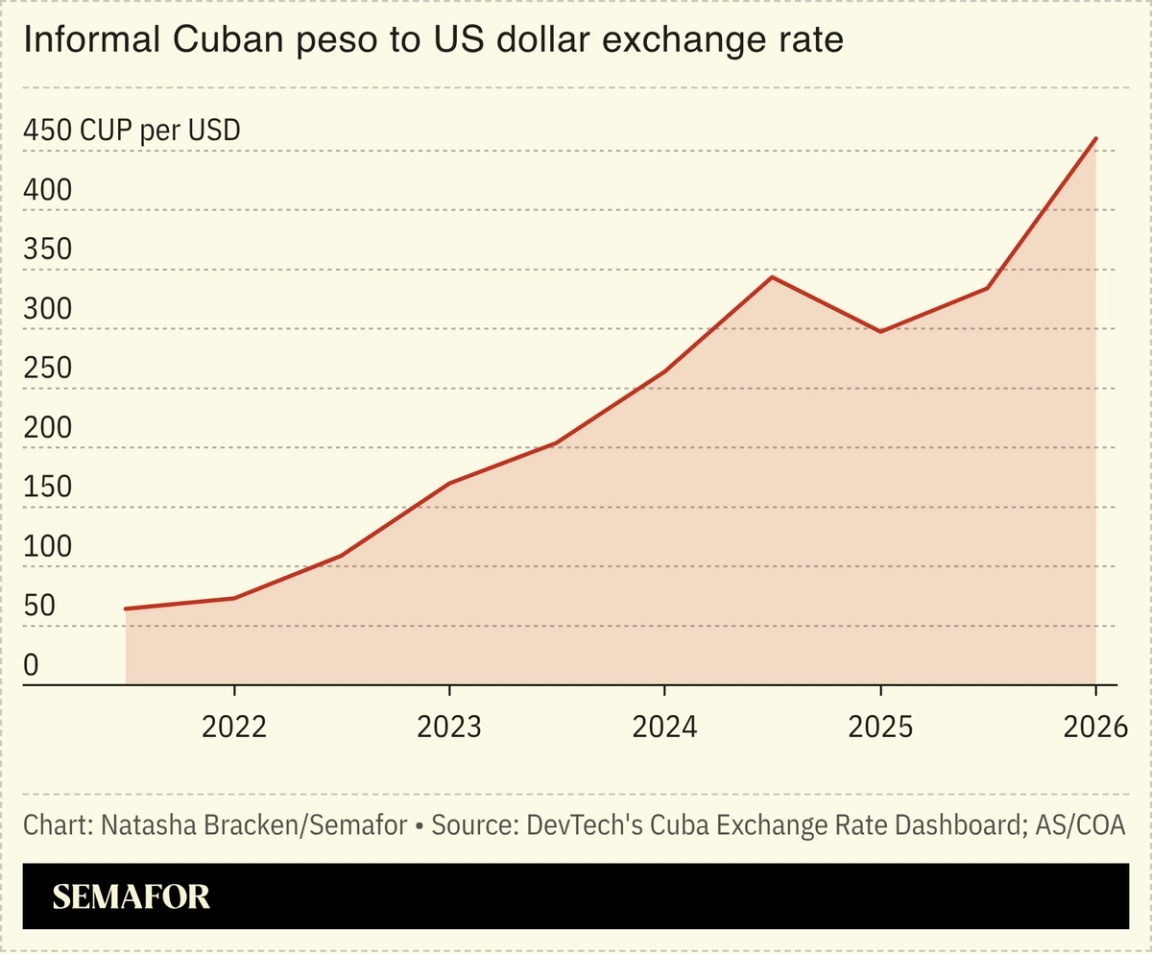 Cuba introduced two new banknotes in a bid to simplify transactions amid runaway inflation. Cubans have long been accustomed to shopping with wads of cash stuffed into bags after compounding bouts of soaring inflation. But a tightened US embargo — including restrictions on oil imports, which generate the vast majority of Cuba’s electricity — has pushed inflation higher still, the Associated Press reported. Havana hopes the two new banknotes, including one which is five times more valuable than the previous highest, will make paying easier. Meanwhile, the island’s population, almost all of which lives below the poverty line according to some estimates, continues to face essential scarcities, raising fears of a humanitarian crisis. |
|
Democracy improves globally |
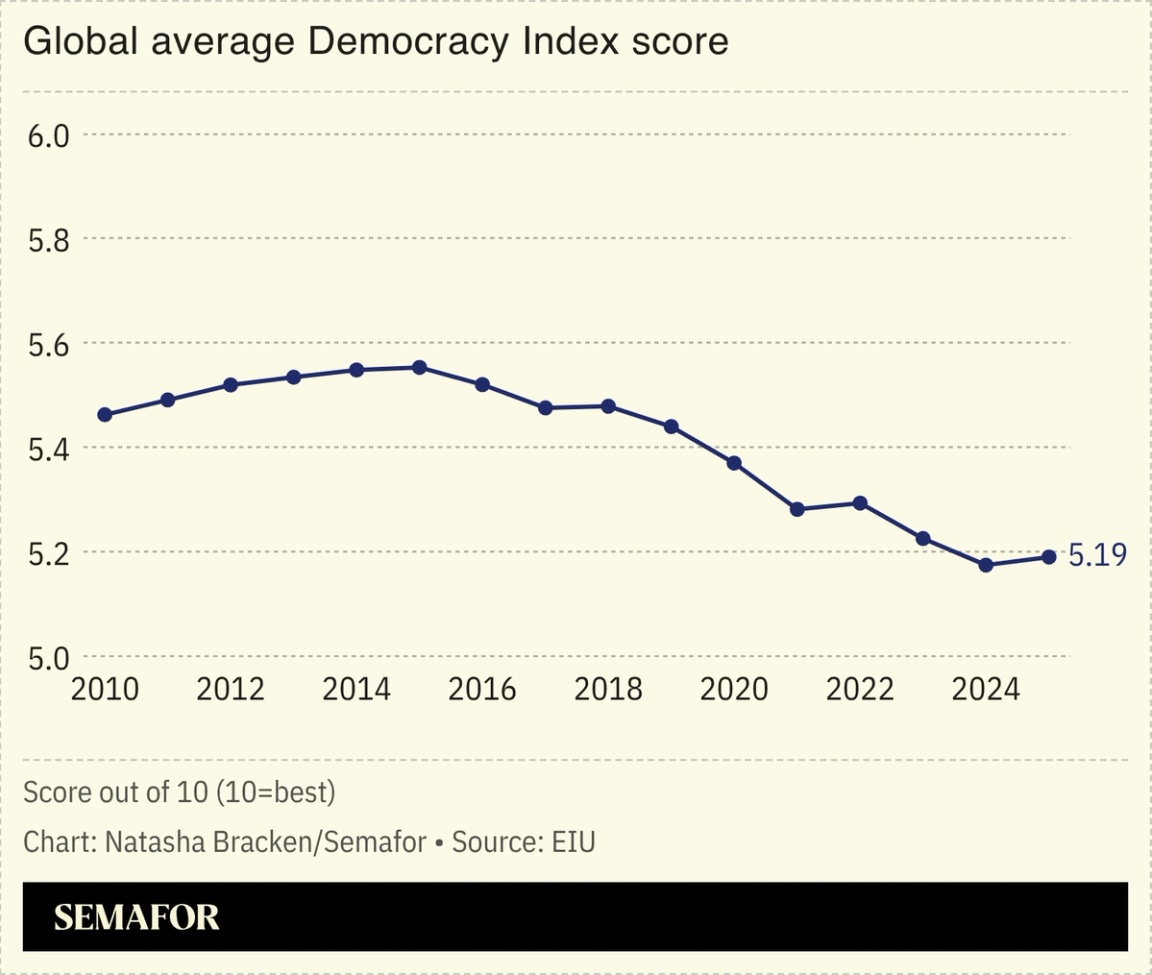 Democracy is strengthening worldwide, according to a leading index, but the improvement is far from universal. Nearly 75% of countries held firm or saw measures of democracy improve, according to the research firm EIU. The most marked growth has been in Latin America and the Caribbean, |
|
|


