| | In this edition: Afreximbank’s $10B Iran war support package, Dangote boosts oil exports, and Somali͏ ͏ ͏ ͏ ͏ ͏ |
| |  | Africa |  |
| |
|
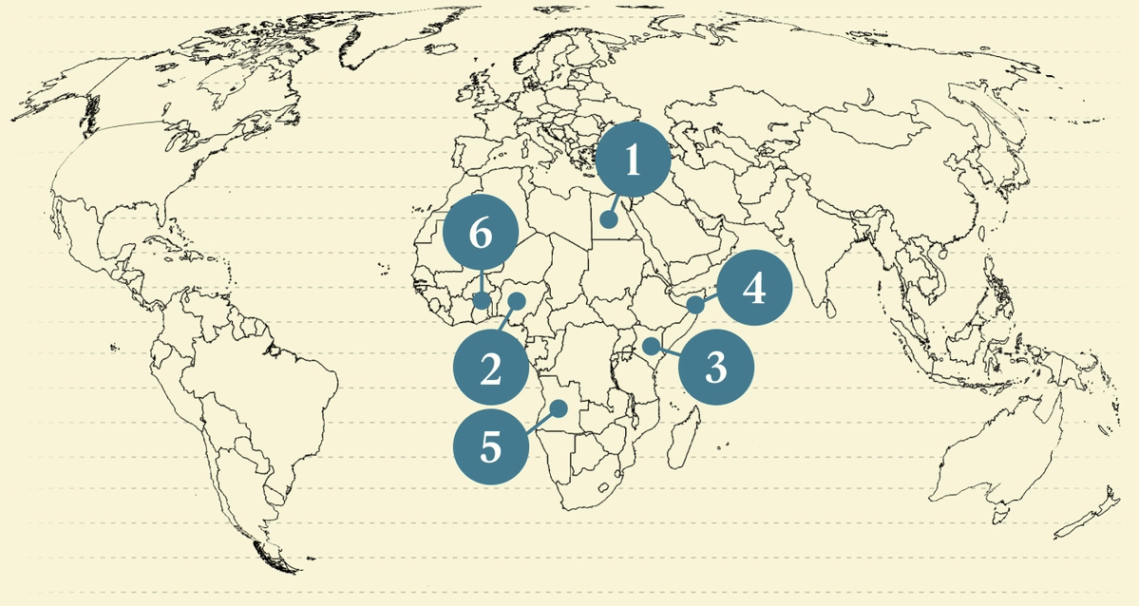 - Afreximbank’s war support
- Dangote boosts oil exports
- Shipping turmoil hits Kenya
- Somalia’s first oil drill
- Lobito Corridor rail cost
- Ghana’s gold shift
 Lagos Island locals celebrate their Afro-Brazilian heritage. |
|
 The conflict in the Middle East is reshaping Africa’s economic outlook, pushing inflation higher and forcing a downward revision to growth forecasts by the World Bank, just as the region was finding its footing. The bank has cut its 2026 estimate for growth in sub-Saharan Africa by 0.3 percentage points, and warned that inflation will accelerate to 4.8% on a “combined energy and food shock for African countries.” Growth is now projected at 4.1%, unchanged from 2025, and signaling an economic recovery that is losing steam. After years of overlapping shocks, from the COVID-19 pandemic to Ukraine war-driven commodity volatility, the region is once again exposed to forces beyond its control. The risk is not just slower growth, but stalled job creation and renewed pressure on living standards. Higher oil and gas prices, alongside rising fertilizer costs linked to disrupted shipping routes, are set to drive up food prices. The shift comes at a delicate moment. Inflation had been easing across many African economies, helped by a weaker dollar and strong export revenues from metals, cocoa, and coffee. Now those gains are under threat, particularly in oil-importing countries where policymakers may be forced to tighten monetary policy even as growth softens. Debt remains the binding constraint. Even where fiscal positions are improving, the cost of servicing debt is crowding out essential spending. In four out of five African countries, interest payments exceed public investment in health or education. Africa’s outlook is not collapsing, but it is becoming more fragile. External shocks are returning, and the space to respond is narrowing fast. |
|
Afreximbank unveils $10B support plan |
 Rogan Ward/Reuters Rogan Ward/ReutersAfreximbank, Africa’s main multilateral trade-finance lender, rolled out a $10 billion emergency program for countries scrambling to pay for fuel, fertilizer, and medicines after the Middle East conflict disrupted shipping and pushed up prices. The move was announced hours before the US and Iran agreed a two-week ceasefire conditioned on the reopening of the Strait of Hormuz. The lender’s package is designed to give governments enough foreign currency, and quickly enough, to keep essential purchases from stalling, offering a lifeline for some of the world’s most import-dependent nations. The program, which is also open to the 15 members of Caribbean economic bloc CARICOM, comes as governments across the continent activate emergency committees, pulling in policymakers to map out supply risks. Several African nations have already pushed through emergency interventions, ranging from direct subsidies to mandatory rationing, to blunt the impact of soaring global energy prices. South Africa has announced a temporary cut in fuel tax, Ethiopia has expanded fuel subsidies, and Senegal has cracked down on foreign travel for government ministers. — Tiisetso Motsoeneng |
|
Dangote refinery increases exports |
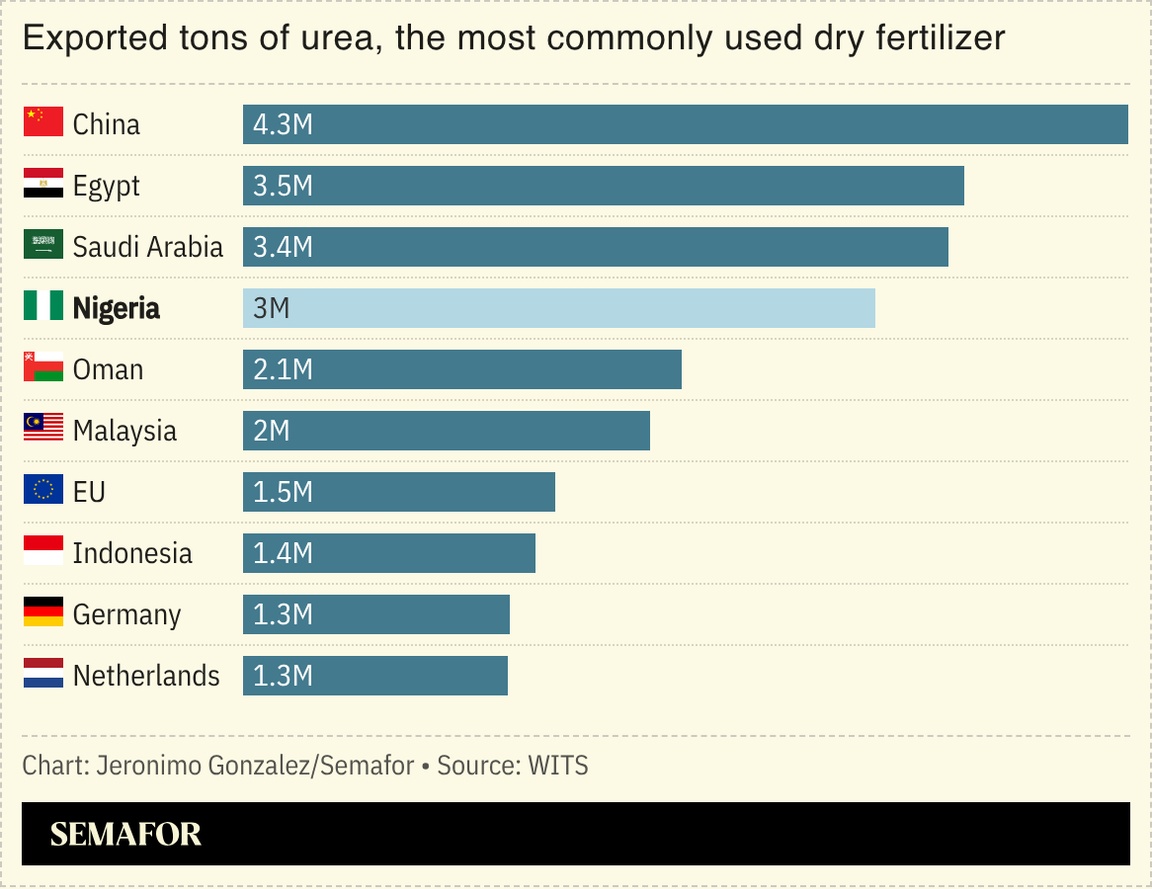 The Dangote oil refinery increased exports of gasoline, its owner said, as African countries grapple with supply disruptions caused by the Iran war. Aliko Dangote, Africa’s richest person, also told reporters that Nigeria’s state-owned oil company last month doubled the supply of crude to the continent’s largest refinery, located on the outskirts of Lagos. Efforts to shore up fuel availability come as other African countries — including Angola and South Africa — build up their refining capacity to safeguard against future supply shocks. Exports of urea fertilizer from the Dangote processing plant have also recently risen, as buyers seek alternative supply sources, the conglomerate’s boss said. Urea demand has surged since the closure of the Strait of Hormuz pushed buyers to scramble for limited volumes. Prior to the Iran war, around a fifth of global fertilizer exports passed through the shipping route. The Middle East conflict threatens food security in countries that source a large share of their urea from the Gulf, such as Kenya and Tanzania, and others that were previously hit by the fertilizer supply disruptions due to Russia’s war in Ukraine. — Alexis Akwagyiram |
|
Shipping disruption rocks Kenya |
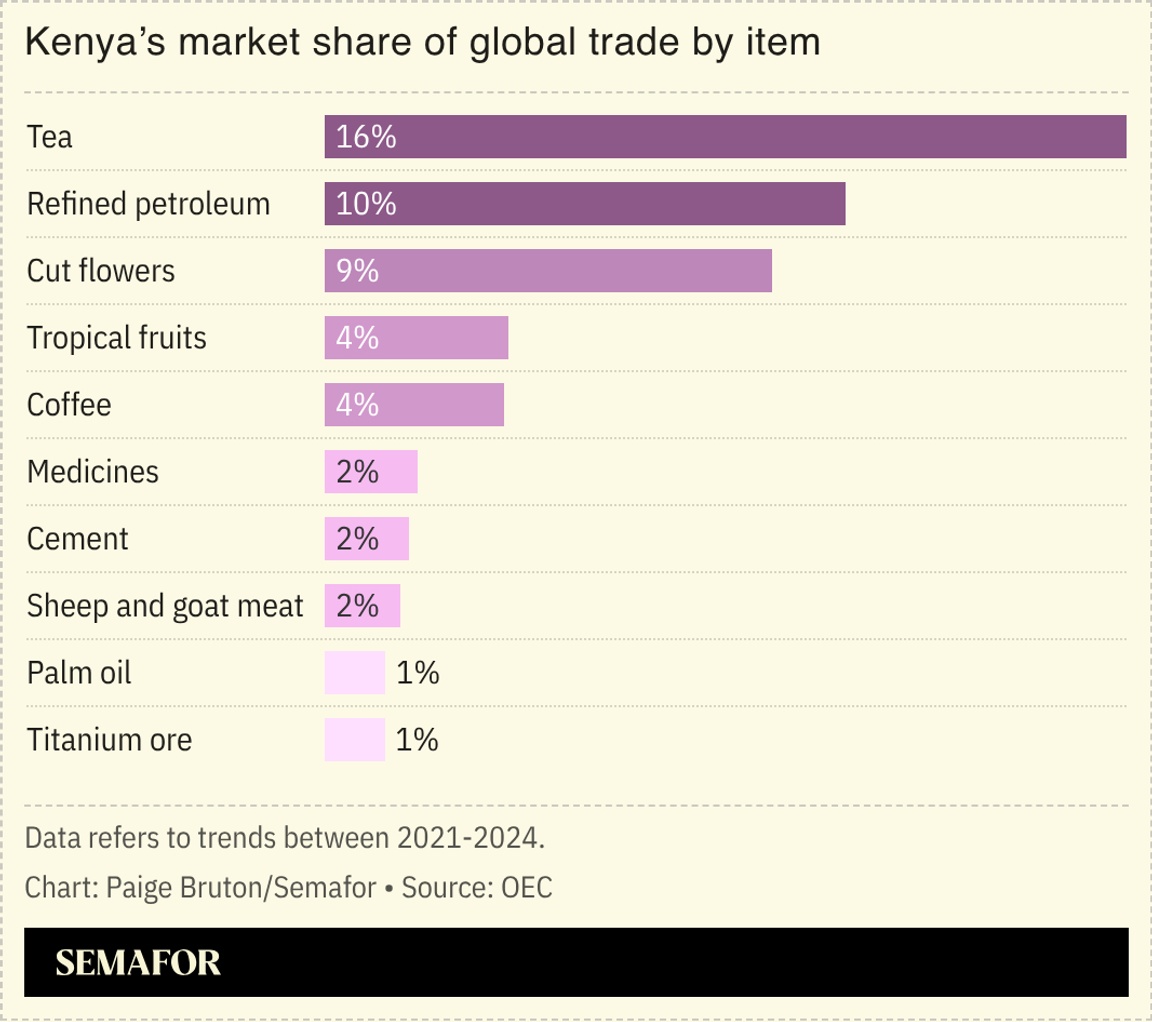 Disruption to global shipping routes has taken a huge toll on Kenya’s economy. Millions of kilograms of Middle East-bound tea are stuck in warehouses in Mombasa’s port, threatening the incomes of Kenyan farmers and exporters alike: A regional trade body said the losses amounted to roughly $8 million a week since March 1. A survey, meanwhile, found private sector activity in Kenya contracted in March for the first time since August, in part due to the war. But whereas the upending of global shipping has been a blow to East Africa’s biggest economy, which relies heavily on fuel imports, the disruption has had the opposite effect elsewhere on the continent. Maritime traffic to South Africa has jumped as shipping companies look for safer routes around the Cape of Good Hope — even if the journey is much longer and pricier — while Tanger Med, Africa’s largest container port, is bracing for a surge in demand. |
|
Somalia to kick off oil project |
 Mike Blake/Reuters Mike Blake/ReutersSomalia is set to begin its first ever offshore drilling operation, which Mogadishu hopes will unlock a major new income stream and turn the country into a regional energy player. A Turkish drilling ship is due to arrive into Somalia’s territorial waters on Friday as part of an energy cooperation deal signed by Ankara and Mogadishu in 2024. Somalia, which has the longest coastline in mainland Africa, has long been cautiously optimistic about developing a domestic oil industry, driven by early geological surveys that suggested potentially significant hydrocarbon reserves. However, decades of civil conflict have halted progress, forcing foreign firms to withdraw and leaving these resources largely untapped. A version of this item first appeared in Flagship, Semafor’s daily global affairs briefing. Subscribe here. → |
|
|
Zambia-Lobito copper rail link cost |
 The cost of a proposed railway to connect Zambia’s copper mines with the Lobito port in Angola, according to projections in an environmental study. Construction of the 516-mile (830-kilometer) line is set to begin this year and is expected to be completed by 2030, a new report from the Zambia Environmental Management Agency said. Africa Finance Corporation is the lead developer of the project, with funding commitments from the African Development Bank. The US is providing $553 million in funding to upgrade the existing railway line in Angola that runs from the Lobito port to the border with DR Congo, but it is not yet clear whether it will offer additional funding for the link into Zambia. |
|
Ghana hands gold mine to local operator |
|
 Henry M. Paulson Jr, chairman of Paulson Institute and former US Secretary of the Treasury; Georges Elhedery, group CEO of HSBC; Jenny Johnson, CEO of Franklin Templeton; Sim Tshabalala, CEO of Standard Bank Group; La June Montgomery Tabron, president and CEO of W.K. Kellogg Foundation; and more will join the Future of Capitalism session at Semafor World Economy. This session will examine how the notion of capitalism and free markets as the best system for economies is being challenged in the US and elsewhere. April 14, 2026 | Washington, DC | Apply to attend |
|
 Business & Macro |
|
|


