| | In this edition, why we might be interpreting OpenAI’s revenue projections the wrong way, and Mustaf͏ ͏ ͏ ͏ ͏ ͏ |
| |  | Technology |  |
| |
|
 - The cybersec problem
- Suleyman on AI and voice
- China chips gain ground
- Mobile is here to stay
- ‘Team Elon’
- Data center attacks
 A different look at OpenAI’s revenue projections, and a research foundation has a new test to warn when true AGI arrives. |
|
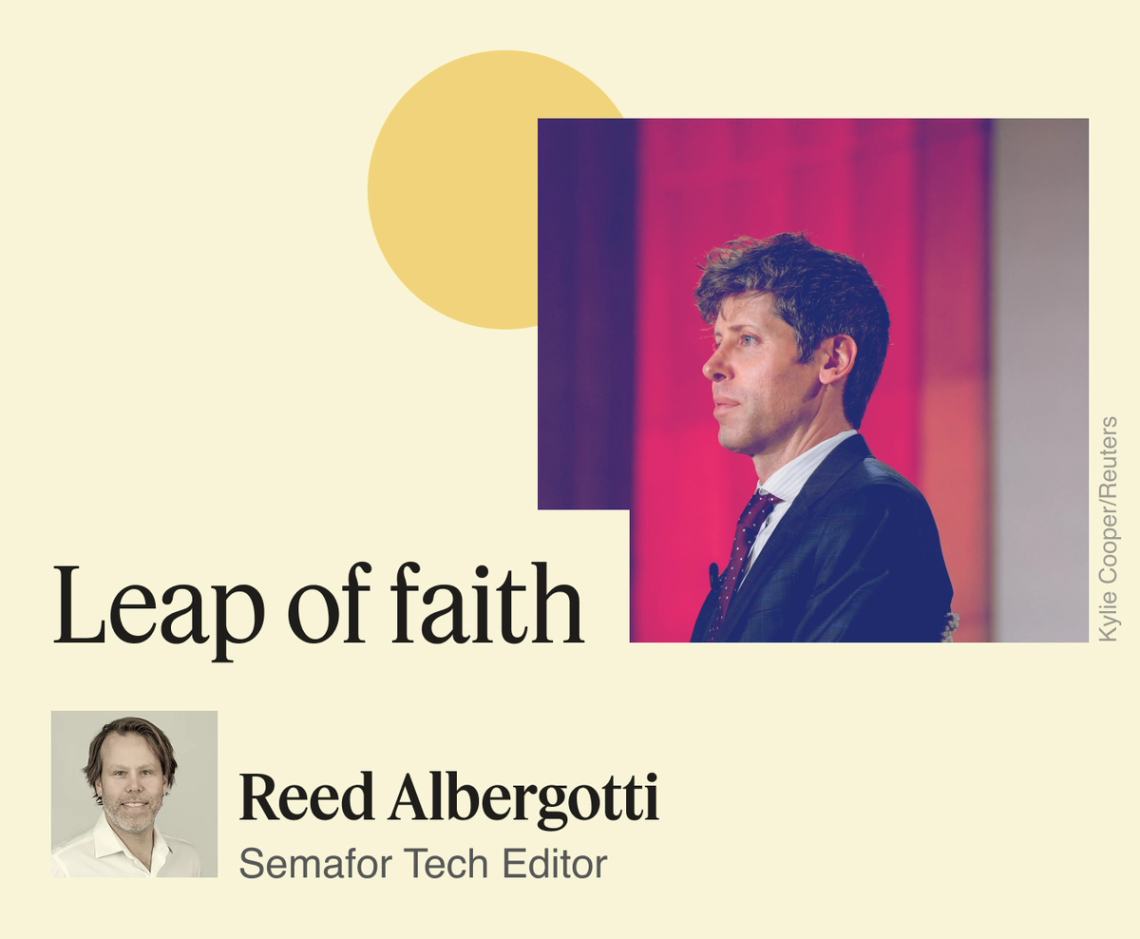 OpenAI is chaotic, even by Silicon Valley startup standards, so the palace intrigue chronicled by The New Yorkers’ 10,000-word opus is table stakes. What really matters though, as we approach one of the world’s largest IPOs, is how OpenAI is performing. Slowing revenue growth, which The Information first reported, sounds bad. A CFO with reservations about going public because of that sounds even worse. But maybe we’re looking at these numbers all wrong. After tripling its revenue last year to $21 billion, OpenAI’s current run rate — at around $25 billion — implies a slowdown to 19% growth in 2026, according to people familiar with the company’s financials who weren’t authorized to speak publicly on the matter. Other projections shared with investors put that number north of $30 billion, or 43% growth, these people said. A little better, but nowhere near the 3x growth investors saw last year as they pushed the company’s valuation up to $852 billion. So, is OpenAI cooked? Absolutely not. Today’s revenue numbers actually tell us very little about the future prospects of a company where many of its nearly 1 billion users pay nothing to use the service. In other words, it’s futile to slap any real financial projections on a consumer app business in a new category that has yet to define its economics. Think about the early days of Google or Amazon — there were plenty of investors who doubted the tech startups would ever find their footing. Whole business models — cloud, AI, devices — didn’t exist. A lot of that clarity came only after years of public markets learning to digest brand new growth metrics. Rather than bringing in sales, the most important thing for OpenAI is to bring in users. If the consumer chatbot morphs into an operating system that connects users’ entire digital lives in one place, OpenAI could compete with Apple and Google to become the next tech giant. It’s a very different business model from Anthropic, which is laser-focused on enterprise businesses who need its employees to use a certain kind of technology. The real fight among the two rivals is the hunt for compute power. Right now both OpenAI and Anthropic have products so popular they’re essentially sold out. And if you look at compute demand, there’s no indication anything is slowing down. The profit model might look a little fuzzy today, but investors in the most promising tech IPOs are used to taking big leaps of faith. |
|
Mythos won’t solve cybersecurity crisis |
 Courtesy of Anthropic Courtesy of AnthropicAnthropic says its new AI model, Mythos, is so powerful and so good at coding that it can’t be released publicly. Instead, Anthropic launched Project Glasswing, an effort to share the software with certain companies to bolster cyber defenses before inevitable attacks cripple the world. The situation is almost reminiscent of Y2K, when the software industry scrambled to update its systems to avoid fears of a tech meltdown striking at midnight on Jan. 1, 2000. Except, in this case, cyber defenses have already melted down. The state of cybersecurity is abysmal and AI-assisted coding has been making it worse. Part of the problem is that world governments, which are in the best position to do something about cybersecurity, also exploit software vulnerabilities for spying and other national security purposes. And while we may hear more about big companies that are victims of cyberattacks, it’s actually small business owners and individuals who are often most hurt by hackers. It would be great if Mythos were the wakeup call the world needed to finally do something about cybersecurity, but that seems unlikely. If anything, as the US seems poised to further cut spending on cyber defenses, it appears the opposite is happening. — Reed Albergotti |
|
AI is all about the voice command |
 Semafor/YouTube Semafor/YouTubeAI power users are increasingly controlling their agents via voice commands, but there’s still a lot of work to be done to get computers to understand us. Voice is our most natural form of daily communication, and the transition from keyboards and mice to conversation is profound. But it’s not just about turning our words into text, we have to train the technology to understand what we mean, Microsoft AI CEO Mustafa Suleyman told Semafor last week in an interview about the company’s new voice transcription model, MAI-Transcribe-1. There’s so much data in the spoken word that gets lost when those words are converted to text — just like compressing an audio file into a fuzzy MP3 removes some of the music. We’ll be watching this space more closely. In the meantime, you can watch the whole conversation with Suleyman here. |
|
China’s homegrown AI chips gain ground |
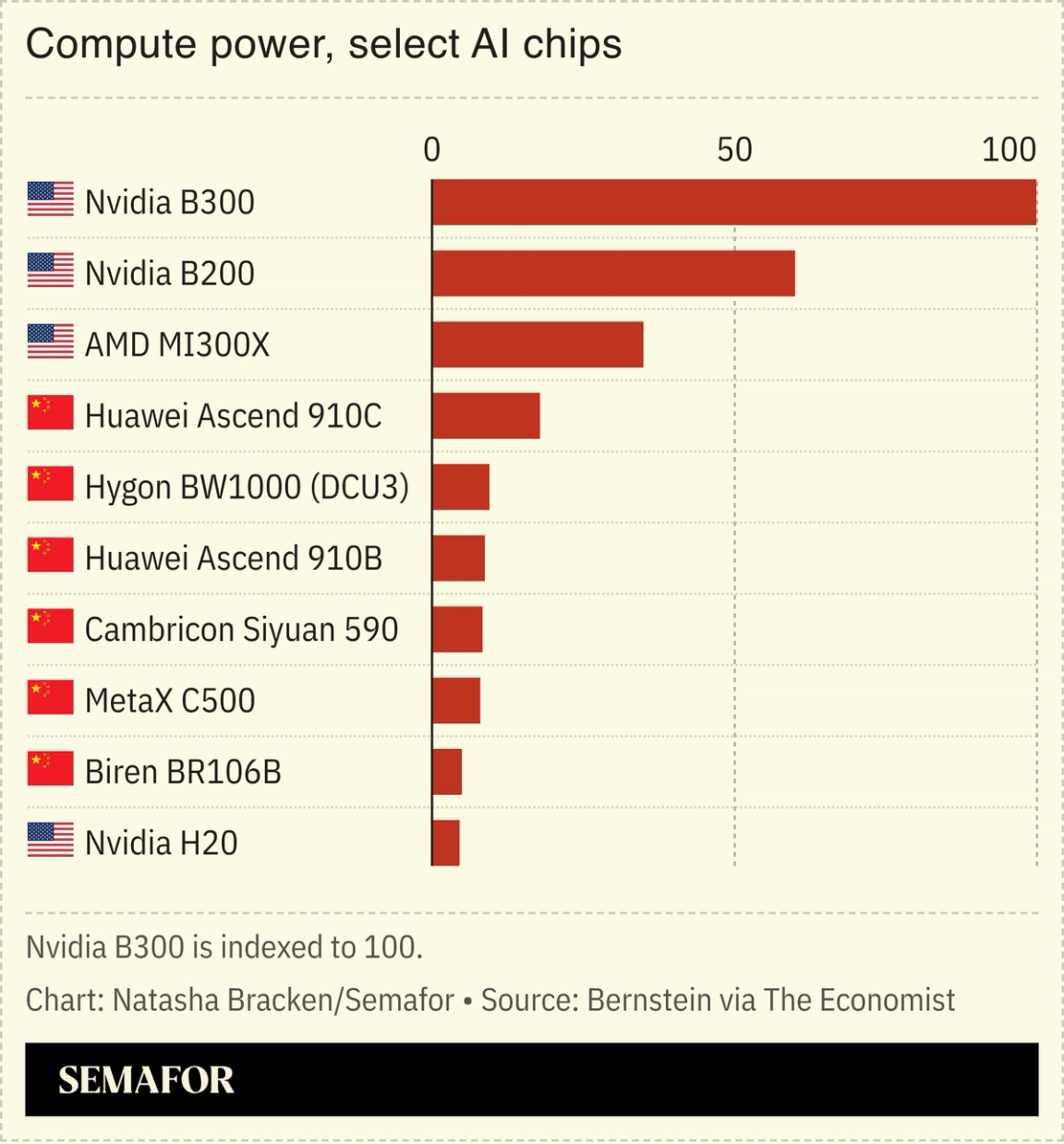 China looks to be making progress in its push for self-sufficiency on AI chips. EV-maker XPeng announced last week that it completed a transition away from Nvidia chips in favor of its in-house processors; industry peer Nio has made a similar shift and is looking to get other automakers on board. And Chinese AI startup DeepSeek’s next model will run on Huawei-designed chips, rather than Nvidia’s, The Information reported. While Beijing and Washington have approved sales of one of Nvidia’s most high-powered chips to China, it’s unclear when those processors might arrive. In the meantime, Chinese firms are grabbing a larger slice of the domestic market, eating away at Nvidia’s lead as Beijing pushes for reduced reliance on the US giant. |
|
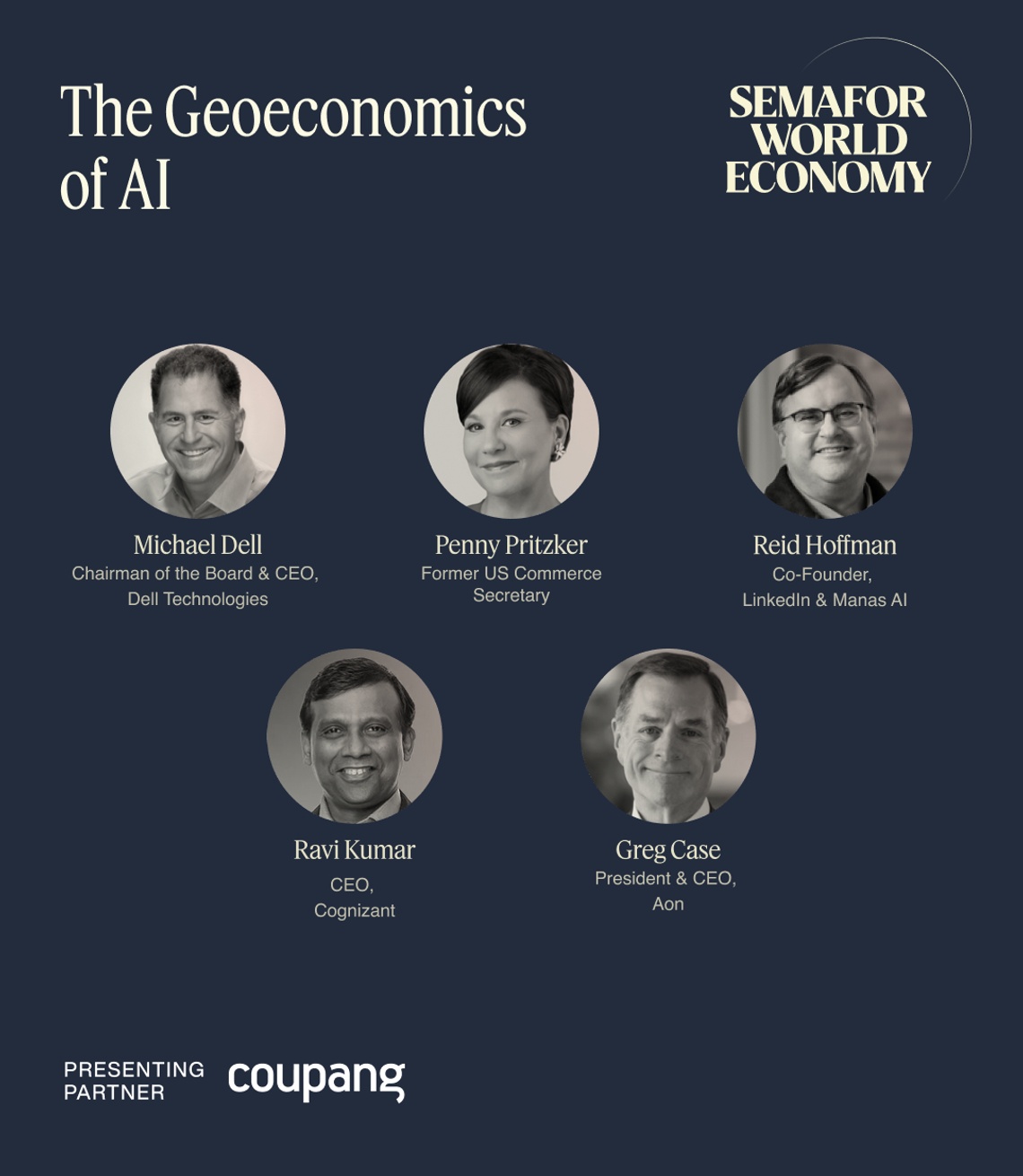 Michael Dell, Chairman of the Board & CEO, Dell Technologies; Penny Pritzker, Former US Commerce Secretary; Reid Hoffman, Co-Founder, LinkedIn & Manas AI; Ravi Kumar, CEO, Cognizant; Greg Case, President & CEO, Aon; and more will join The Geoeconomics of AI session at Semafor World Economy. This session will examine how AI is reshaping productivity, industrial capacity, and national advantage with unprecedented speed. April 14, 2026 | Washington, DC | Apply to attend |
|
Oura’s CEO on why mobile’s here to stay |
 Liz Hoffman, Oura CEO Tom Hale, and Rohan Goswami. Semafor/YouTube. Liz Hoffman, Oura CEO Tom Hale, and Rohan Goswami. Semafor/YouTube.Tech companies and investors are paying smart people a lot of money to figure out what the device of the AI era will be. But according to Tom Hale, who operates smart ring company Oura, the answer is right in front of us — and it’s not worn on your finger. “I think it might actually end up being the smartphone,” he said in Semafor’s latest episode of Compound Interest. The next-generation device will need to connect to the internet, have a microphone and speaker, probably a screen, and be large enough to store a battery — like a phone, he said. “I wonder if something’s really going to replace that,” he said. Hale also fought back against the idea of subscription fatigue, emphasizing that customers only tire of bad products. “What they really mean is there’s too many subscriptions that don’t provide enough value, and they’re emptying your wallet without giving you anything in return,” he said. A calling card for elite wellness-maxxers now, Oura is venturing further into the medical device realm, with ambitions to help users manage chronic illnesses. |
|
OpenAI targets WME in Musk legal fight |
 David Swanson/Reuters David Swanson/ReutersOpenAI is expanding its bitter legal dispute with Elon Musk to sweep in Hollywood mogul Ari Emanuel and his talent agency WME, Semafor’s Rachyl Jones reports. OpenAI’s lawyers have instructed the firm to preserve communications about the ChatGPT-maker and explain the work it has done for Musk and his lawyers, according to a letter an OpenAI lawyer sent to WME’s chief legal officer on Tuesday. The letter, seen by Semafor, also directs WME to disclose whether it is working with Meta or other OpenAI competitors, claiming Musk is coordinating attacks on the company alongside Meta and its CEO Mark Zuckerberg. The latest twist in the embittered legal feud follows Semafor’s reporting that press releases sent by Musk lawyer Marc Toberoff — which used to come from a PR firm — are now being sent by WME. The relationship between Emanuel and Musk is informal, but “Ari is team Elon,” a source close to WME said. Emanuel is a longtime investor and associate of Musk. He played roles in Musk’s takeover of Twitter and his bid for OpenAI last year, and Musk briefly sat on the board of WME parent Endeavor. OpenAI declined to comment. WME and a representative for Musk did not respond to a request for comment. |
|
Data-center proponents targeted |
 A sign that reads “No data center” sits outside a home in New Carlisle, Indiana. Jim Vondruska/Reuters. A sign that reads “No data center” sits outside a home in New Carlisle, Indiana. Jim Vondruska/Reuters.A person fired 13 shots at the home of an Indianapolis city councillor days after he advocated for data center construction at a local meeting. The council member was unharmed but the shooter left a chilling note in a Ziploc bag on his doorstep: “No Data Centers.” While police say the incident was isolated, burgeoning anti-tech sentiment has fueled a slew of attacks, from graffitied robots to Waymos set ablaze as AI backlash spills out in the open. It’s an industry-wide PR problem — and it’s just getting bigger. A few years ago, energy and environmental costs were mostly local issues relegated to Facebook groups and community newsletters. Now that the tech has become ubiquitous, it’s become a national issue (recent polls show trust in tech companies has dropped globally). And it means companies are having to account for new costs: security, repair, and the price of negative public sentiment. — Rachyl Jones |
|
A respected AI research foundation released a new benchmarking test which, it said, will warn when true artificial general intelligence arrives. Frontier AIs pass existing benchmarks easily — but they test knowledge more than reasoning, a comparatively easy task for AIs trained on vast amounts of text, according to researcher François Cholle |
|
|


