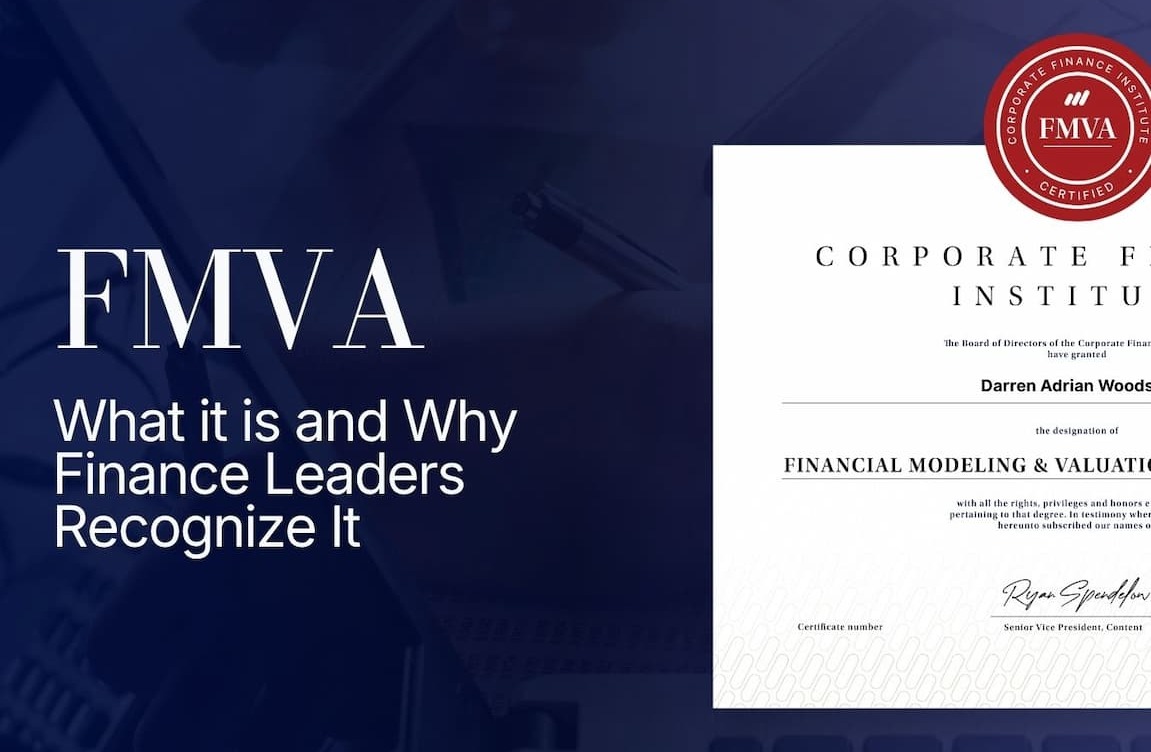
The Financial Modeling and Valuation Analyst certification is built for one purpose: to prove you can do the work, not just describe it.
Anyone can walk into an interview and talk about DCF analysis or LBO structures but when they sit down in front of a blank spreadsheet, the truth comes out fast. Most credentials test memory; the FMVA certification tests performance, mirroring exactly what happens on the job: messy data, tight deadlines, and a model someone more senior has to trust. It answers the question every hiring manager is really asking: can I hand this to you and trust what comes back?
The FMVA certification is the most widely recognised corporate finance certification in the world, held by professionals at Goldman Sachs, J.P. Morgan, Bloomberg, Amazon, Deloitte, and PwC. Here's what it actually covers:
3-Statement Modeling From Scratch
Integrated income statement, balance sheet, and cash flow with structured assumptions and outputs your team can trust.
DCF Valuation Modeling
Build a discounted cash flow model, calculate the terminal value, and defend your assumptions to a CFO.
Scenario and Sensitivity Analysis in Excel
Answer the 'what if' questions before leadership asks them. Stress-test assumptions and model multiple outcomes
M&A Modeling
Build merger-and-acquisition models, including purchase price allocation, synergies, and accretion and dilution analyses.
Excel Dashboards and Data Visualization
Clean outputs that surface key drivers instead of noise, built to present to stakeholders with confidence.
A CFA Charterholder who spent 900 hours on that designation found comparable practical value in the FMVA in 60 to 70 hours. A learner in Peru was hired into an IB role at Goldman Sachs based on FMVA skills.